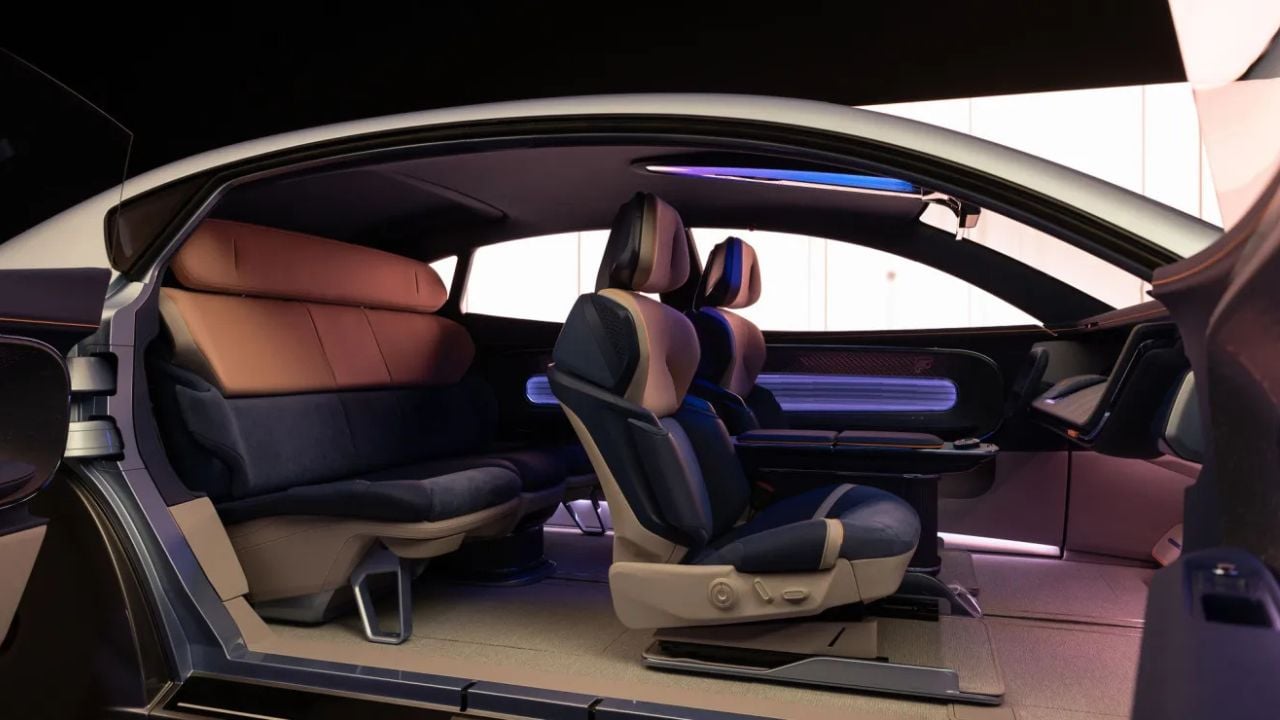

The future of driving is starting to look a lot less like driving and a lot more like living. That’s the big idea behind the new Saphir concept from Forvia. Forvia has sat quietly behind the scenes, supplying many of the parts and systems used by major car brands today. Well, they’ve just decided to build their own idea of a car.
Saphir is far removed from just another flashy concept car. The company that built it is essentially offering a glimpse into how automobiles could soon become extensions of our homes and workplaces.
You won’t leave your house and get in the car; instead, the experience continues unbroken, through static homestead to lived mobility. Think of it as a moving space designed around comfort, interaction, and everyday life rather than just getting from one point to another.
Interior Design That Disappears

Step inside the Saphir and the first thing that stands out is how calm and uncluttered everything feels. Purists have longed bemoaned how cars have suddenly (or slowly) become detrimentally cluttered with needless technology. The Saphir took that advice seriously but kept the technology.
You don’t get either the distracting screens you love to hate or the buttons you’re begging for their return. Indeed, there are no overwhelming dashboards filled with buttons or giant screens competing for attention. Instead, the interior is designed to stay quiet until you need it. Displays appear only when required, then fade away when the job is done.
Indeed, there’s no doing away with technological advancement; it’s a little too late for that. But Forvia found a way to make even the technophobe fall in love with tech because it isn’t intrusive at all. In fact, you don’t even know it’s there. Ultimately, the Saphir creates a space that feels more like a lounge than a cockpit.
Gaze Control, AI, and Sustainability
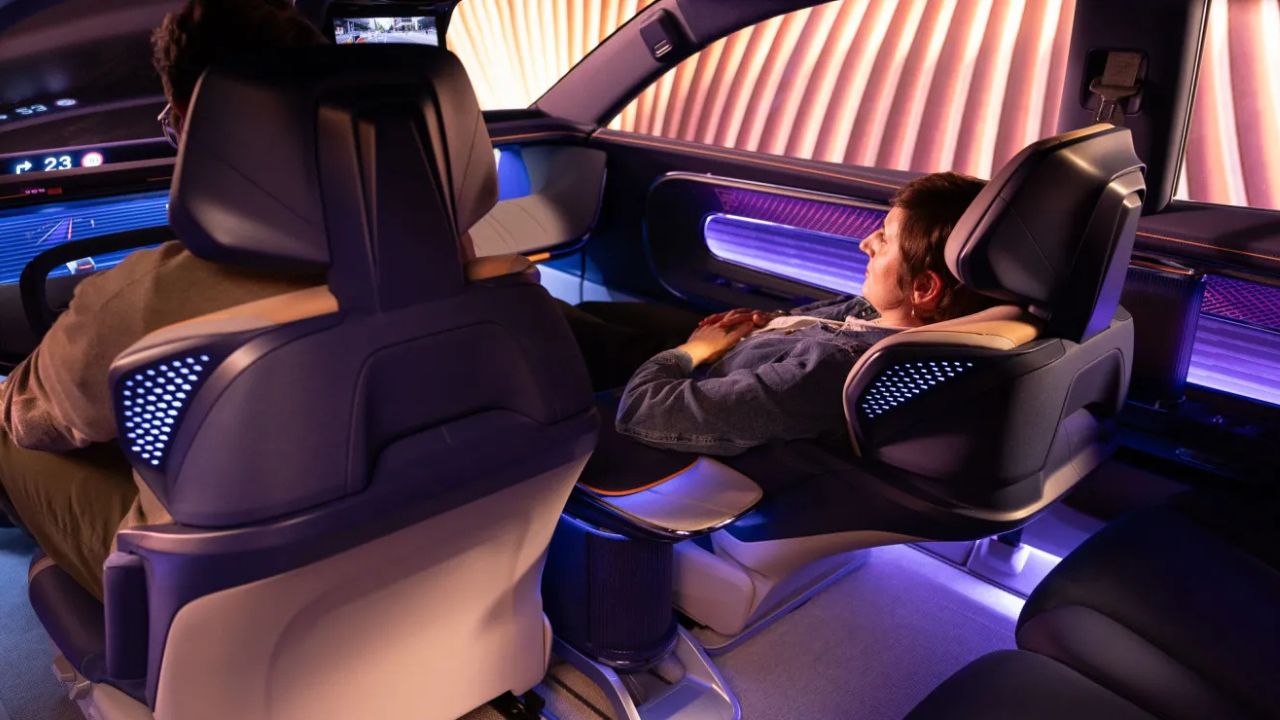
One of the most interesting features is how you interact with the car. Instead of tapping and swiping constantly, the system can respond to where you are looking. This gaze-based interaction allows the car to understand your intentions in a more natural way.
Look at a control, and it becomes active. The concept is beautiful, thoughtful, and even ingenious, but most of all, it captures the central, most consequential need for a future where driving is less distracting.
Apparently, the Saphir leans heavily into artificial intelligence. The car is designed to learn from its occupants and adapt over time. Whether it is adjusting seating positions, lighting, or entertainment preferences, the goal is to create a personalized environment that feels familiar every time you step in.
It is the kind of experience people already expect from their phones and smart homes, now brought into the vehicle.

Safety is as much a design pillar here. Forvia is exploring new ways to communicate with the outside world. The concept includes transparent sections and projected visuals that can signal intentions to pedestrians and other road users.
It is part of a broader push to make vehicles not just safer for those inside, but also easier to understand for those around them.
Sustainability is another key piece of the puzzle. The Saphir uses lightweight and eco-friendly materials throughout its design. This not only reduces environmental impact but also improves efficiency. As the industry continues to move toward cleaner mobility, concepts like this show how design and sustainability can work hand in hand.
Part of a Larger Trend
What we find particularly interesting about Saphir is that it does not focus on one single breakthrough.
Instead, it brings together many small but meaningful ideas into one cohesive vision. It asks a simple question. What if your car felt less like a machine and more like a space designed around you?
Many concepts have glorified one or more of the ideas explored in this concept, but none answers so many questions at the same time like Saphir. Yes, Forvia isn’t the first to think in this direction, particularly in the focus on lounge‑like interiors, hidden technology, and AI‑driven personalization.
For one, BMW’s i Vision Dee, unveiled in 2023, share notable similarities with the Saphir. It showcased minimalist interior with reduced physical controls, augmented reality windshield, and AI‑driven personalization, and like Saphir, it hides tech until needed and emphasizes calm, uncluttered design.
View this post on Instagram
Mercedes-Benz also envisioned adaptive environment and seamless integration of technology into daily life with its Vision EQXX concept. Unveiled in 2022, the EQXX showcased a design philosophy rooted in efficiency and sustainability. Its futuristic cabin design included AI systems that learn driver habits and advanced infotainment with adaptive displays.
Audi’s AI:ME flaunted a gaze-based interaction that mirrors Saphir’s eye‑driven control system. The AI:ME’s eye-tracking controls, retractable steering wheel, and adaptive lighting were just too futuristic for 2019 when it broke cover. Like the Saphir, it also emphasized urban mobility lounge design philosophy.
So, Forvia’s Saphir is rather part of a broader industry trend than a first in line, but it certainly delivered that vision of “the car as a mobile living space” in a way no other maker has.
That said, Saphir make us suspect automakers are converging on the idea that the future of driving is less about operating machinery and more about seamless, personalized experiences.