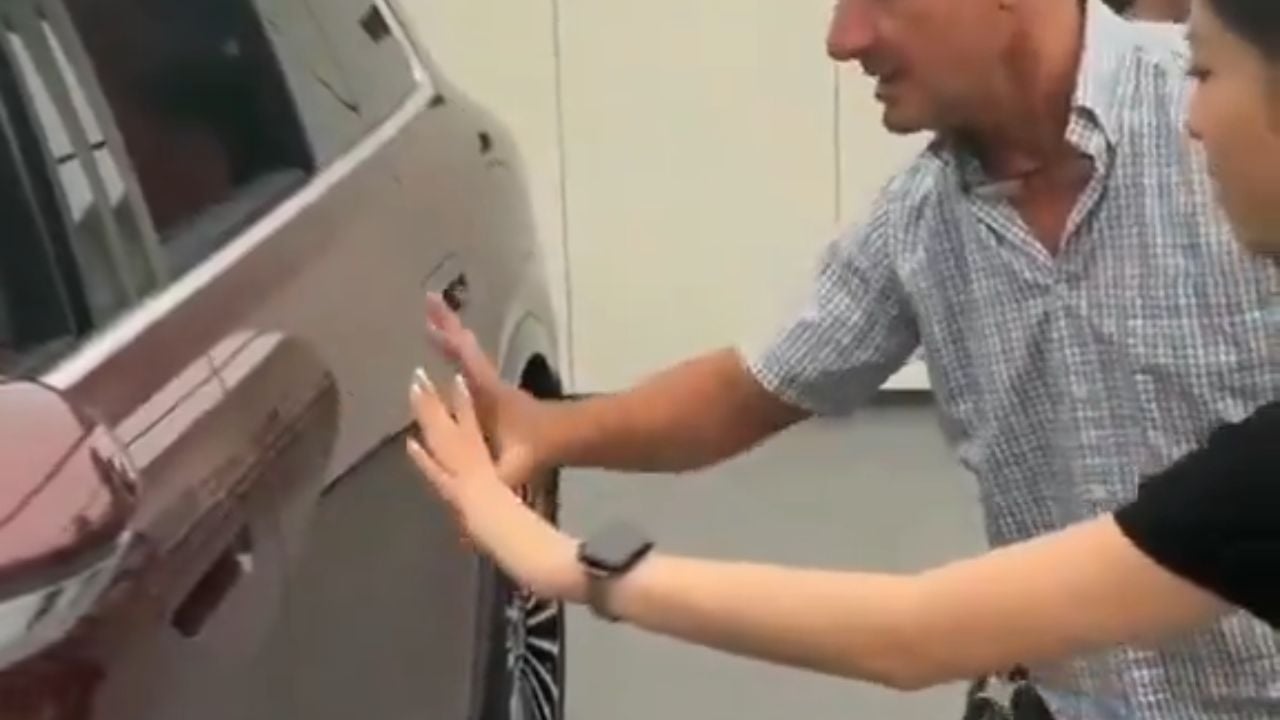

A viral video shared by X user Nia Nadell is reigniting debate over how far automakers should go in the race to make cars feel futuristic. The clip, posted on May 24, shows a luxury Chinese SUV repeatedly failing to recognize hand gestures meant to open its rear door, leaving bystanders amused and frustrated.
The footage appears to have been filmed inside a showroom for AITO, with “M9” branding visible in the background. The maroon SUV on display is believed to be the AITO M9, one of China’s most tech-heavy premium electric vehicles.
In the roughly 50-second clip, a man wearing a checkered shirt repeatedly waves his hand near the rear door handle area in an attempt to activate the SUV’s touchless entry feature. Despite several attempts, the system appears unable to respond consistently, leading to awkward pauses and visible confusion from people nearby.
The post’s caption asks bluntly whether the feature can “be called a failed product,” and the internet wasted little time weighing in. Many commenters mocked the technology as unnecessary complexity designed more for showroom theatrics than real-world convenience.
Viral Clip Puts Futuristic Features Under Scrutiny
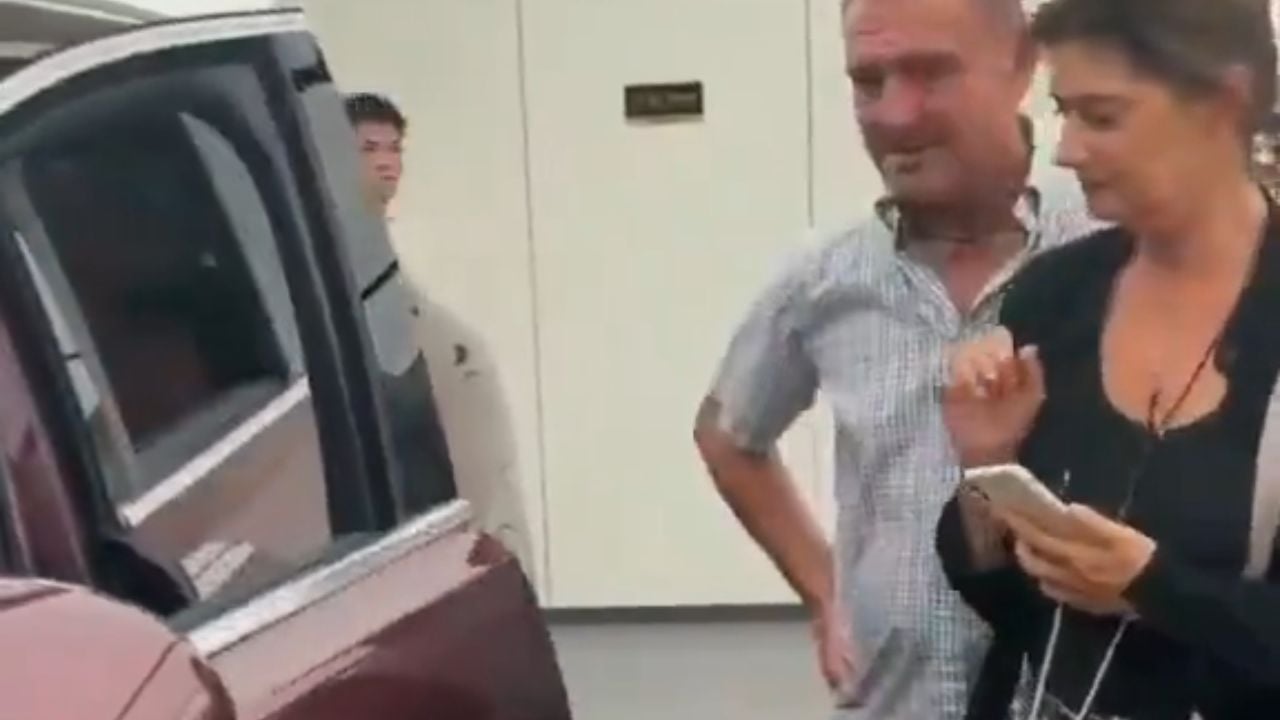
The video captures a moment that many drivers fear with increasingly automated vehicles. A feature advertised as seamless and intelligent instead appears unpredictable in front of potential buyers.
After the man struggles to trigger the rear door, a woman dressed in black tries her luck while holding a phone in one hand. She also appears unable to get the system to respond reliably, drawing smiles and reactions from people standing nearby.
Eventually, the door either responds with a delay or is manually opened by another person. By that stage, the mood in the showroom seems split between amusement and secondhand embarrassment.
The attention surrounding the clip comes partly from the growing reputation of Chinese luxury EVs for pushing advanced technology further than many Western rivals. Carmakers across China are racing to outdo one another with AI-driven features, voice assistants, automated parking systems, facial recognition, and gesture-based controls.
How Gesture-Controlled Doors Are Supposed To Work
Vehicles like the AITO M9 rely on a combination of cameras, radar sensors, and software algorithms to interpret human movement around the vehicle. In theory, the driver or passenger performs a specific hand motion near the door, prompting the system to unlock and electrically open it.
The feature is marketed as both luxurious and practical. Automakers claim it helps when a person’s hands are full, reduces contact with dirty handles, and creates a more futuristic ownership experience.
While touchless systems already exist in vehicles from brands like BMW, Mercedes-Benz, and Land Rover, those systems are often limited to trunk or tailgate activation. Chinese EV makers have pushed the idea further by integrating gesture recognition into passenger doors and broader vehicle access systems.
That ambition, however, comes with risks. Gesture controls depend heavily on lighting conditions, sensor calibration, user positioning, and software interpretation. Even a slight mismatch between expected movement and actual movement can cause the system to hesitate or fail entirely.
Internet Reactions Highlight Growing Tech Fatigue
can this be called a failed product? pic.twitter.com/oirBBWh5gv
— pwety gurls (@nianadell) May 24, 2026
The reactions online reveal a growing divide among car buyers. Some people are fascinated by ambitious technology and see occasional glitches as part of innovation, while others believe the industry is overcomplicating basic tasks that mechanical handles already solved decades ago.
Many replies to the viral clip criticized the idea of replacing something as simple as opening a door with an AI-assisted process. Others joked that the vehicle behaved like a confused automatic sliding door at a grocery store.
The criticism also reflects broader concerns about modern vehicles becoming too dependent on software. As automakers compete to advertise smarter cabins and more automated experiences, reliability and ease of use remain major concerns for everyday drivers.
For companies like Huawei and AITO, features like gesture-controlled doors are meant to showcase technological leadership. Yet viral moments like this can have the opposite effect, turning innovation into an online punchline viewed millions of times across social media.