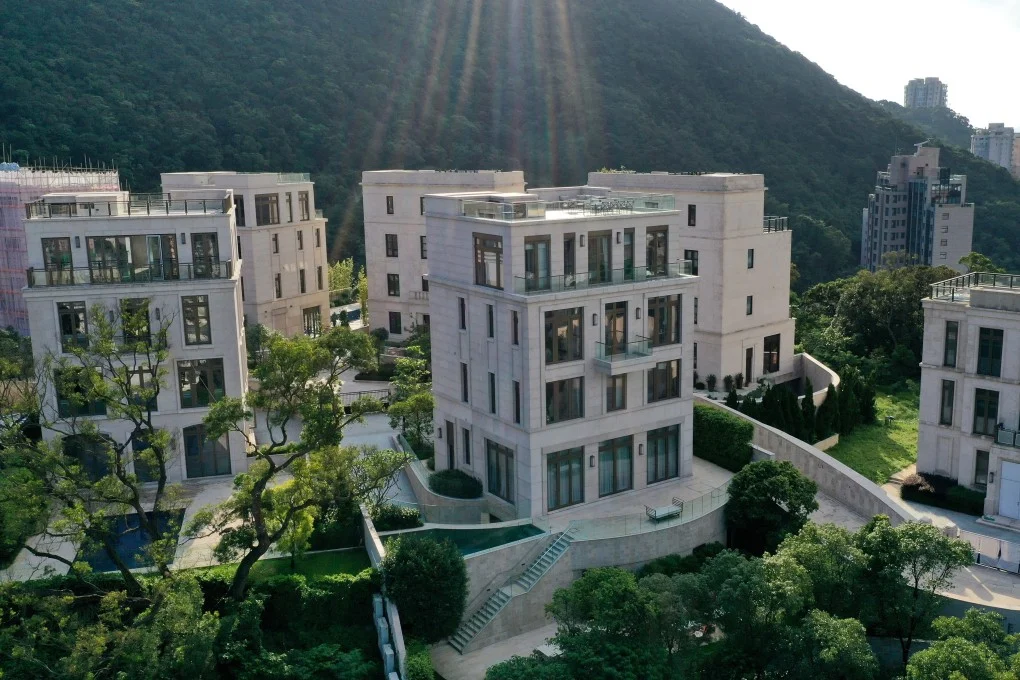
It sounds like the setup to a joke: how much would you pay to park your car? In Hong Kong, apparently, the answer is $1.3 million. No, that’s not a typo, and yes, we’re serious. A single parking spot at the ultra-exclusive Mount Nicholson development on The Peak sold for HK$10.2 million (roughly $1.3 million USD or £930,000), officially making it the most expensive place on Earth to leave your Honda. Or, more likely, your Bentley.
The story is making the rounds again online, and it’s not hard to see why. In a world where most of us are deciding between paying rent and buying groceries, the idea of someone casually dropping over a million dollars on a parking space feels equal parts absurd and deeply revealing about how extreme wealth inequality has become in one of the world’s most storied financial capitals. And yet, for the residents of Mount Nicholson, where apartments routinely sell for close to $100 million, a seven-figure parking spot is, according to one local real estate expert, “not a big deal.”
The record-breaking sale took place at the Mount Nicholson development, a luxury residential project developed by Wharf Holdings and Nan Fung Group, perched high above Victoria Harbour in the city’s prestigious The Peak neighborhood. Developers sold 29 parking spaces in phases two and three of the project through a closed tender to homeowners, with one space ultimately fetching over HK$10 million. The deal shattered the previous world record, which was also set in Hong Kong back in 2019.
Hong Kong has long been recognized as one of the most expensive cities on the planet, and stories like this one crystallize why. Space is not just a luxury here; it is a commodity, a speculative asset, and increasingly, a symbol of the city’s staggering divide between the ultra-wealthy and everyone else. With this sale, the city hasn’t just broken a record. It’s held up a mirror to the world.
What Makes This Parking Space Worth More Than Most Homes
Location, as always, is everything. Mount Nicholson sits in The Peak, the most exclusive residential enclave in Hong Kong, offering sweeping views of Victoria Harbour and the city skyline below. The development has repeatedly been called one of the most expensive addresses in Asia, and its residents are not your average homeowners. In 2017, two apartments in the project sold for about $150 million in total, translating to roughly $17,000 per square foot.
The record-setting parking space itself measures just 134.5 square feet, meaning the transacted price works out to approximately $9,500 per square foot. For context, that’s a higher price per square foot than luxury condos in most major American cities. You are, in the most literal sense, paying Manhattan penthouse rates to store your car.
William Lau, a sales director at Centaline Property Agency’s branch on The Peak, confirmed it is the most expensive car parking spot in Hong Kong, and noted that because homes on Mount Nicholson sell for close to $100 million on average, spending HK$10 million on parking isn’t considered excessive by the buyers who live there. That sentence alone deserves a moment of quiet reflection.
Hong Kong’s Property Market: A Record-Breaking Machine
This isn’t a one-off anomaly. Hong Kong’s luxury real estate market has become something of a record-breaking factory, consistently producing eye-watering transactions that make global headlines. Average home prices in Hong Kong have risen 200 percent over the past decade to $1,987 per square foot, which is double the average in London, according to the Financial Times.
The parking space record itself has a history of being set and re-set entirely within Hong Kong’s borders. The previous record of HK$7.6 million was set in 2019 by a parking space at an office tower in Hong Kong’s financial district. Parking, in other words, is its own competitive market here.
At the height of Hong Kong’s speculative parking frenzy, 8,968 parking slots worth HK$16.64 billion were recorded as transactions in 2018 alone, the most since records began in 1996, according to Centaline. Parking spots have become investment vehicles in their own right, bought and flipped by speculators looking for quick returns in a city where every square foot carries extraordinary value.
The Wealth Gap Hidden Behind the Headlines
Behind the spectacle of a million-dollar parking spot lies a more uncomfortable story. Hong Kong has an immense housing and space crisis that is difficult to control. One in five people live below the city’s poverty line, and the disparity between rich and poor is the worst it has been in 45 years.
Just as the poor are struggling in so-called “shoebox flats,” parking spaces have become speculative assets for the city’s wealthy. The contrast is jarring and impossible to ignore. While one buyer secured a record parking bay for over a million dollars, hundreds of thousands of Hong Kong residents live in subdivided apartments smaller than that parking space itself.
One in seven people in Hong Kong are millionaires, making it one of the wealthiest cities per capita in the world. And yet that wealth is extraordinarily concentrated. The $1.3 million parking space is not just a quirky real estate story. It is a data point in a much larger, and far more sobering, conversation about what cities become when land scarcity and extreme wealth collide without meaningful intervention.
What We Can Learn From a $1.3 Million Parking Spot
Strange as it sounds, this story is actually a useful lens for understanding several broader forces shaping urban economies worldwide. First, it illustrates how scarcity drives valuation in ways that can completely detach price from intuitive logic. When land is genuinely limited and demand from the ultra-wealthy is essentially unlimited, prices don’t just rise; they become untethered from any traditional framework of value.
Second, it shows how speculative markets form around anything that can be bought, sold, and held. Car parking space in Hong Kong has turned into a subsector in itself, with speculators buying and selling bays in rapid succession to make quick profits. What begins as a practical necessity becomes a financial instrument, and once that happens, prices can climb far beyond what any ordinary need could justify.
Third, and perhaps most importantly, it reminds us that the decisions cities make about housing policy, density, and land use have consequences that ripple outward in unexpected ways. When housing supply can’t keep up with demand, the pressure doesn’t just push up home prices; it inflates the value of everything adjacent to housing, including, apparently, where you park.
For most of the world, a $1.3 million parking space is comedy. For Hong Kong, it is simply Tuesday.