

You know that friend who’s had the same hairstyle since high school and somehow still looks amazing? That’s the Porsche 911. While other sports cars have gone through more identity crises than a teenager’s Instagram feed, the 911 has stuck to its guns, or should I say, its rear-mounted flat-six, since the early 1960s, debuting as the 901 in 1963 and reaching customers as the 911 in 1964.
The moment it rolled onto the stage at the Frankfurt Motor Show, with its sleek roofline and round headlights catching the spotlight, the world understood that a new silhouette had been drawn into history. It was not just another sports car, combining engineering precision with timeless design to create something special. People leaned closer at the stand that day, craning to see the curves of a car that felt familiar yet entirely new, as if it had been destined to exist all along. From its first production run at Zuffenhausen in 1964, the 911 began to mark driveways, boulevards, and highways with its unmistakable presence.
The (Dramatic) Birth of an Icon
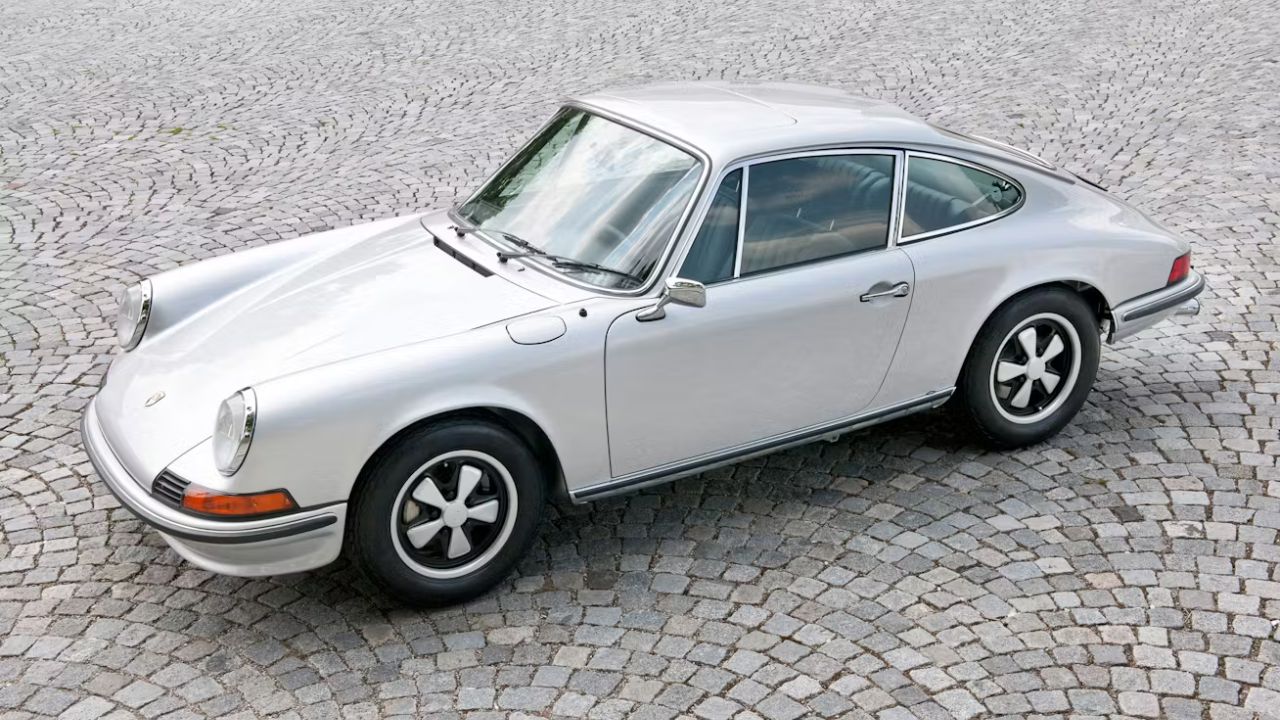
In 1963, at the Frankfurt Motor Show, Porsche unveiled what they were calling the ‘901,’ and everyone’s jaws dropped. Sleek roofline, those unmistakable round headlights, and a flat-six engine hanging out back like it’s tailgating at a football game. There was just one tiny problem: Peugeot had trademarked all three-digit numbers with a zero in the middle. Classic French move, right?
So Porsche said, “Fine, we’ll call it the 911,” and accidentally created one of the most recognizable model names in automotive history. Sometimes the best things happen by accident, like when you discover your local mechanic actually knows what he’s doing.
The original 911 packed a 2.0-liter flat-six making 130 horsepower. That might sound quaint by today’s standards (your neighbor’s Camry probably makes more power), but this was 1963. Getting to 60 mph in the high-8 to roughly 9-second range felt like warp speed, and a top speed of around 130 mph was enough to get you a very serious conversation with any highway patrol officer.
The Carrera RS 2.7: When Porsche Got Serious About Spoilers

Fast forward to late 1972, heading into the 1973 model year, and Porsche decides to build what might be the most perfect 911 ever made. The Carrera RS 2.7 wasn’t just a regular 911 with racing stripes and hopes: it was a proper lightweight monster that could embarrass Ferraris on the track and still take you to the grocery store without complaining.
The engine? A 2.7-liter flat-six pumping out 210 horsepower was serious business in the early ’70s. But the real star was that iconic “ducktail” spoiler. You know the one: it looks like someone took a regular 911 and gave it a subtle mullet. Business in the front, party in the back, and downforce all around.
Only 1,580 were made, and today they’re worth more than most people’s condos. If you see one at a car show, resist the urge to lean on it, the owner probably has it insured for the GDP of a small country.
The 930 Turbo: When Porsche Discovered Boost

In 1974, Porsche unveiled the 911 Turbo, which went on sale as the 1975 model-year 930, possibly with enough power to intimidate unsuspecting drivers who weren’t prepared for such a surge. Enter the 911 Turbo, internally known as the 930, complete with a KKK turbocharger (different KKK, thankfully) and enough boost to make grown men weep with joy.
The original Turbo made 260 horsepower, which doesn’t sound like much until you remember this was 1974, and most cars were being strangled by emissions equipment. This thing would hit 60 mph in under 6 seconds and keep pulling until you either ran out of road or courage. The infamous “whale tail” spoiler wasn’t just for show, it actually kept the rear end planted at speeds that would make your insurance agent nervous.
The 930 earned the nickname “Widowmaker,” which should tell you everything you need to know about its handling characteristics. With all that power and torque hitting the rear wheels, plus turbo lag that felt like being shot out of a cannon, it demanded respect. And proper driving gloves. Always wear proper driving gloves.
The Water-Cooled Revolution (Against Purists)

For over 30 years, the 911’s air-cooled flat-six was as sacred as apple pie or complaining about how nobody at your job works as hard as you. Then in 1997, Porsche committed what purists considered automotive heresy: they introduced the 996 generation with – gasp – water cooling.
But here’s the thing: the water-cooled engines were actually better. It was! More power, better efficiency, fewer overheating issues, and they didn’t sound like a tractor warming up on cold mornings. The 996 Turbo launched with about 415 horsepower (around 420 PS, depending on market), which was enough to shut up most of the complainers. Plus, these “inferior” water-cooled 911s are now appreciating faster than Bitcoin in 2017.
The 996 also introduced those controversial “fried egg” headlights, which looked… well, exactly like fried eggs. Porsche fixed that design quirk with the 997 generation, proving that even Stuttgart occasionally admits when they’ve made a styling mistake.
Modern Marvels: The 992 Turbo S and Its Ridiculous Numbers

Today’s 911 Turbo S is what happens when German engineers get together and ask, “What if we made a 911 that could embarrass supercars while still being comfortable enough for your daily commute?” The answer is 701 horsepower, all-wheel drive, and a 0-60 time of 2.6 seconds that’ll rearrange your internal organs.
Let’s put that in perspective: this thing is faster to 60 mph than most motorcycles. Porsche claims 0–124 mph in 8.9 seconds (with Sport Chrono), which is less time than it takes to explain to your spouse why you need another sports car. (This is still ongoing.) The top speed is 205 mph, though finding a place to safely explore that limit is about as likely as finding a mechanic who doesn’t wince when you mention you drive a Porsche.
The modern 911 Turbo S also comes with more technology than the Apollo missions. Launch control, adaptive suspension, rear-wheel steering, and stability systems that can save you from physics, at least most of the time. It’s like having a professional racing driver co-pilot who never judges your parking skills.
The GT3: For When Regular Fast Isn’t Fast Enough

While the Turbo S focuses on ultimate acceleration and all-weather capability, the GT3 is for people who think comfort is overrated and track days are a lifestyle choice. The current GT3 packs a naturally aspirated 4.0-liter flat-six that revs to 9,000 rpm and sounds like angels singing Wagner.
With 502 horsepower and a curb weight that’s actually reasonable (by modern standards), the GT3 is what happens when Porsche’s racing department gets involved in road car development. It comes with a rear wing that’s bigger than most dining room tables and makes aerodynamic efficiency its top priority – right after making sure everyone within a five-mile radius knows you’re coming.
The GT3 also offers a manual transmission, because apparently some people still believe in doing things the hard way. Respect.
Why the 911 Endures (Besides Stubbornness)

Here’s the thing about the 911: it should be terrible. The engine is in the wrong place (according to many, at least), it’s more expensive than it has any right to be, and Porsche charges extra for features that come standard on economy cars. Yet somehow, it works. So. Well, it’s been working for 60 years, through gas crises, safety regulations, and the rise of SUVs that can tow small buildings. Through it all, the design has barely changed.
Perhaps it’s because 911 has remained true to its core mission, while everything else has evolved around it. When other manufacturers were adding cylinders, the 911 stuck with six. When everyone else moved engines to the front, Porsche kept theirs hanging out back like a stubborn uncle at a family barbecue.
Or maybe it’s because the 911 represents something increasingly rare in our world: consistency. In an age where car companies change their entire lineups every few years like they’re swapping Instagram filters, the 911 remains recognizably itself. You can spot one from three blocks away, whether it’s a 1965 original or a 2024 model fresh off the truck.
The Road Ahead

Porsche has already shown us glimpses of the electric future with the Taycan, and yes, they’ve confirmed that electrification will eventually play a role in the 911’s future. Before you start planning your angry letters to Stuttgart, remember that Porsche has been through this before. They survived the transition from air-cooled to water-cooled engines, and they’ll probably figure out how to make an electric 911 that doesn’t completely destroy the soul of the car.
After all, this is the company that managed to make an SUV (the Cayenne) that doesn’t completely embarrass the brand, and a sedan (the Panamera) that looks good from most angles. If anyone can make an electric sports car that still feels like a 911, it’s the people who’ve been perfecting the formula for six decades.
The Porsche 911 isn’t perfect, nothing with this many decades of baggage could be. It’s expensive and impractical for most people’s needs, and it comes with a community of owners who can be particular about their cars. But it’s also one of the few remaining links to an era when sports cars were built by enthusiasts for enthusiasts, not by committees for focus groups.
Every generation of 911 carries forward something essential from the ones before it: that rear-engine layout that physics says shouldn’t work but somehow does, the distinctive silhouette that’s been refined but never abandoned, and the feeling that you’re driving something special. In a world full of crossovers and commuter cars, that’s worth celebrating.
To put it simply: it still looks good. Dang good.