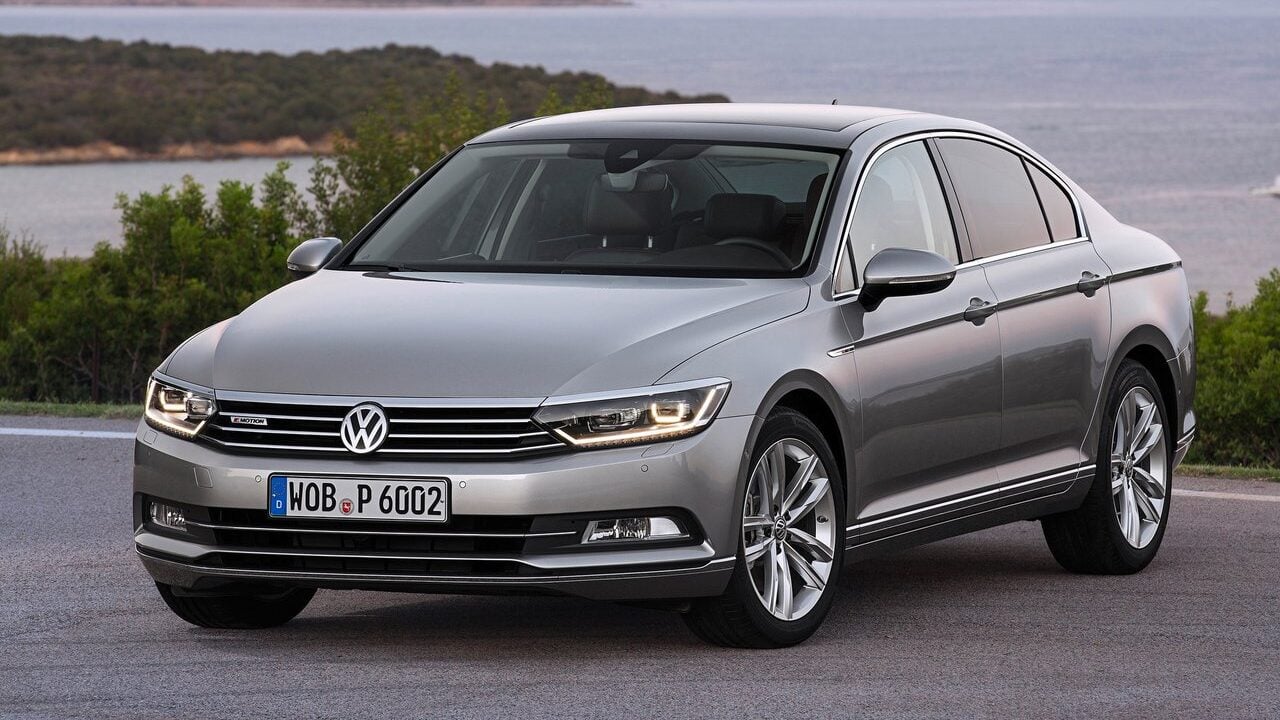

A Reddit post about a $1,600 trade-in offer for a 2015 Volkswagen Passat sparked the usual outrage cycle, but the comment section told a far more informed story than the original poster likely expected.
On the surface, a mid-size sedan with a retail value hovering near $5,000 getting a four-figure offer barely above scrap-adjacent pricing feels absurd.
But once you peel back the layers of how companies like Carvana actually price inventory, the number starts to look less like an insult and more like a cold, data-driven outcome.
Carvana is not valuing that Passat as a car someone will proudly list on its retail site. It is valuing it as a liability-adjusted asset. That distinction stands front and center to the ‘shocking’ valuation he got.
It’s Not Personal, It’s Just Math
The company’s algorithm factors in reconditioning costs, transport logistics, auction liquidity, historical turn rates, and brand-specific depreciation curves.
Comment
by
u/Successful_Bag9384 from discussionin
Volkswagen
European sedans, particularly older ones outside warranty, carry a reputation for higher ownership costs and slower retail demand in the U.S. market. Even if the car presents well, the backend math often assumes it will not make it to the front page of Carvana’s listings.
Accident history compounds the issue, and this Redditor admitted in his post that the car had been “in a few accidents,” though nothing major. He insisted; “there is nothing wrong with this car.”
That may well be the case, but each reported incident reduces not only perceived buyer confidence but also financing attractiveness. Lenders tend to be more cautious with vehicles that have diminished structural certainty, and that shrinks the pool of eligible buyers.
For a platform built on volume and velocity, anything that risks sitting longer than average becomes a drag on margins. A car that lingers is more expensive than one sold at a thinner margin but faster.
The Auction is a Harsh Judge
Then there is the wholesale fallback.
Comment
by
u/Successful_Bag9384 from discussionin
Volkswagen
When Carvana cannot justify retailing a vehicle, it routes it to auction. One comment under the post noted this fact in real-world experience:
“There was a period of time where their (Carvana’s) offers were competitive with, and at times exceeding, private party valuation, but these days they’re really only committing to trade in value. Especially for cars they’re just gonna send right to auction.”
Auction pricing is brutal in its honesty.
Dealers bid based on what they believe they can extract after their own reconditioning and markup. For a 2015 Passat with blemishes, that number might land in the $2,500 to $3,500 range on a good day, sometimes lower depending on mileage and trim.
From that, Carvana subtracts transport, auction fees, and risk buffers. Suddenly, a $1,600 offer starts to resemble a conservative but defensible position.
Trade-in context also come into play here. Carvana’s offers are structured to protect against adverse selection. Sellers tend to offload cars when they anticipate future costs or declining value.
The algorithm assumes the seller knows something, even if that “something” is just aging components like turbochargers, DSG transmissions, or electronic gremlins common in certain Volkswagen model years. That asymmetry pushes offers downward.
The Algorithm Got Burned Before
There is also a strategic layer.
Comment
by
u/Successful_Bag9384 from discussionin
Volkswagen
Carvana has spent the past few years tightening its acquisition discipline after a period where aggressive buying contributed to financial strain. The company is less interested in stretching for marginal inventory.
It prefers vehicles that align cleanly with its retail sweet spot: late-model, clean history, high demand, and predictable reconditioning. Anything outside that lane gets priced to discourage acquisition unless it is undeniably cheap.
The Reddit crowd picked up on these nuances. Some users pointed out that private-party sales could net closer to the $5,000 mark, which is true. Private buyers do not operate with the same overhead structure or risk models. They are often willing to accept imperfections in exchange for a lower upfront price.
That gap between trade-in and private sale has always existed, but algorithmic pricing has made it feel harsher because it strips away the human element that sometimes inflates offers at traditional dealerships.
Ultimately, the $1,600 figure shouldn’t be seen as a verdict on the intrinsic worth of the Passat. The Redditor who made the post describe the valuation as a “joke” and “laughable”, arguing that the decade-old Passat was “a perfectly good car.”
In his defense, Carvana’s robotic offer was more a reflection of where the car sits in the modern used-car ecosystem. It is a car that still holds value to the right buyer, just not to a platform optimized for scale, speed, and statistical certainty.