
The automotive world has always been about more than just getting you places. It’s about passion, innovation, and the pursuit of something greater on four wheels.
Throughout history, the visionaries behind our favorite brands have shared insights that reveal what drives them, and in turn, what drives us. We’re going beyond corporate slogans (ehem, Jaguar) and looking into carmakers’ philosophies that shaped every curve, every engine note ,and every moment behind the wheel.
Whether you’re a weekend warrior or someone who just appreciates a well-engineered machine, these words capture something essential about why we love cars. Here’s to the wisdom from the people who’ve dedicated their lives to making our roads more exciting.
Colin Chapman, Lotus

“Simplify, then add lightness.”
Colin Chapman’s mantra has become gospel in the automotive world, and for good reason. The Lotus founder understood that making a car faster isn’t always about adding more power, sometimes it’s about taking away everything that doesn’t need to be there.
This philosophy gave us the Lotus Seven and countless other lightweight legends that could embarrass much more powerful machines on a twisty road. Chapman proved that when you reduce weight, everything improves: acceleration, braking, handling, even fuel economy. It’s a principle that resonates today as much as it did in the 1950s, influencing everything from track-focused sports cars to everyday commuters.
The next time you’re tempted to add another accessory to your ride, remember Chapman’s words and consider what you could remove instead.
Enzo Ferrari
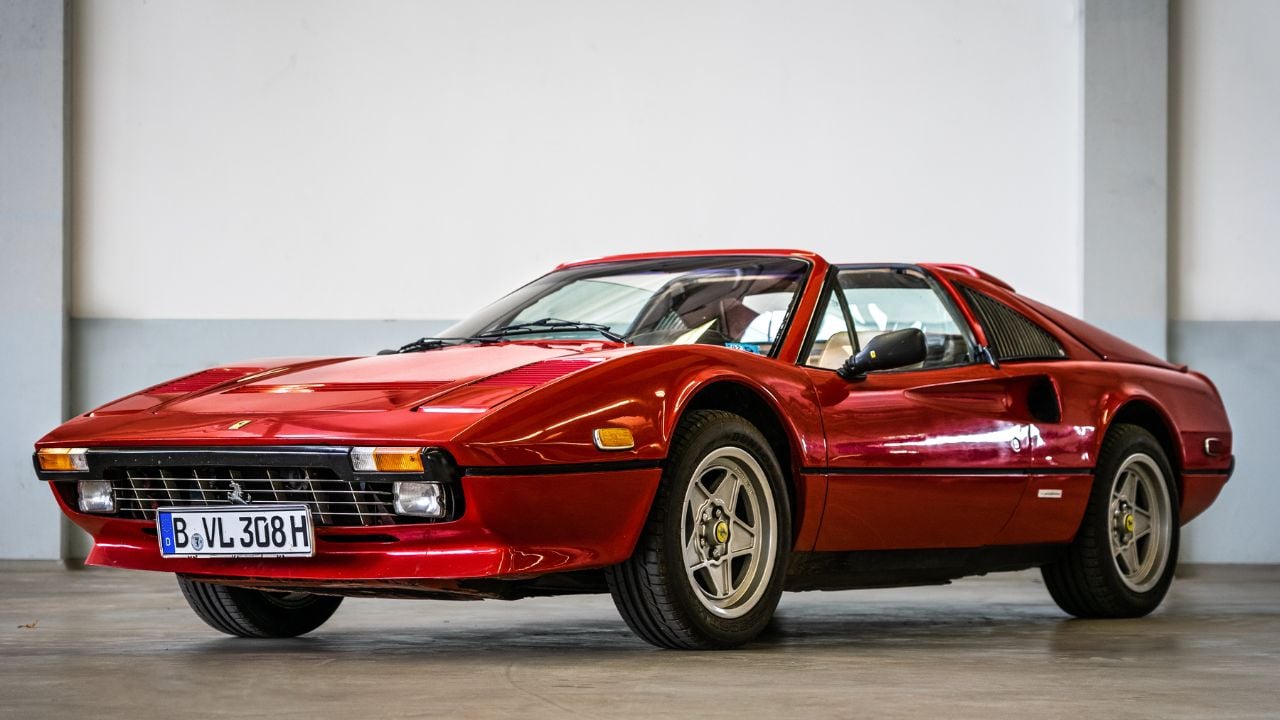
“Aerodynamics are for people who can’t build engines.”
A line widely attributed to Enzo Ferrari reflects the old-school thinking that prioritized raw power above all else.
The line is widely attributed to Enzo Ferrari and is often linked to a story involving Paul Frère and the Ferrari 250 TR at Le Mans, but the exact origin is difficult to verify. Either way, it reflects an old school emphasis on engine power as the primary path to speed.
Of course, modern Ferrari would probably disagree with the founder on this point, given how sophisticated their aerodynamic packages have become. Still, there’s something appealing about this confidence, this belief that mechanical might conquers all.
It represents an era when racing was more visceral and less computational, when engineering prowess was measured in displacement and cylinder count. While we now know that aerodynamics matter immensely, Ferrari’s quote reminds us of a time when the solution to any problem was simply more power.
Ferry Porsche

“In the beginning, I looked around and could not find quite the car I dreamed of. So I decided to build it myself.”
Ferry Porsche’s statement captures the essence of entrepreneurial spirit in the automotive world. Rather than settling for what existed, he helped create the first Porsche sports car and set the tone for the brand.
This quote is commonly used in Porsche history to describe Ferry Porsche and the creation of the first Porsche sports car, the 356, which first appeared in 1948 and entered series production in 1950. Rather than settling for what existed, he helped turn an engineering business into a sports car manufacturer.
For enthusiasts who tinker in their garages or dream of building their own project cars, Porsche’s words serve as validation. Sometimes the best solution to not finding what you want is creating it yourself, no matter how impossible the task might seem.
Soichiro Honda

“I think best when I have a wrench in my hands.”
Honda’s simple statement reflects a fundamental truth about hands-on engineering and problem-solving.
For him, the best ideas didn’t come from boardrooms or design studios but from actually working on machines, feeling how components fit together, understanding through touch and experience rather than pure theory. This approach kept Honda grounded even as his company grew into a global giant, he never lost that connection to the actual nuts and bolts of building things.
The quote resonates with anyone who’s spent time wrenching on their own vehicle, because there’s a unique kind of thinking that happens when you’re physically engaged with a mechanical problem. You notice things you’d miss on paper, you develop intuitions about how systems interact, you learn through doing. Honda’s success came partly from this willingness to get his hands dirty, to remain an engineer at heart even after becoming a business titan.
It’s a reminder that sometimes the best way to understand something is to take it apart and put it back together yourself.
Henry Ford

“I will build a car for the great multitude.”
Henry Ford’s declaration revolutionized not just the automotive industry but American society itself.
Where others saw cars as luxury items for the wealthy, Ford envisioned affordable transportation for everyone. This wasn’t just marketing talk, it was a fundamental business philosophy that led to the Model T and the assembly line production methods that made it possible.
Ford understood that creating something people could actually afford would open up entirely new markets and change how society functioned. His vision of democratizing the automobile transformed America, enabling unprecedented mobility and economic growth. The quote reflects a populist approach to engineering: building for the masses rather than the elite.
It’s a reminder that sometimes the greatest innovations come from asking who you’re leaving out rather than who you’re trying to impress.
Ferdinand Porsche

“The perfect racing car crosses the finish line first and subsequently falls into its component parts.”
This line is widely circulated and often attributed to Ferdinand Porsche, though published sourcing is thin and similar versions are also credited to other racing engineers. Either way, the idea is uncompromising: build only what is needed to win, not a gram more.
It’s an extreme philosophy that prioritizes performance above all else, pushing every component to its absolute limit. The idea is both terrifying and exhilarating: build everything to survive just long enough to win, not a moment longer.
While modern safety standards and regulations make this approach impractical (and potentially dangerous), it speaks to a purity of purpose that many enthusiasts appreciate. Porsche wasn’t interested in comfort, longevity, or practicality when it came to racing: only in crossing the finish line first.
For track day addicts and competitive racers, this mindset resonates: every ounce of excess weight, every safety margin beyond the minimum, is a compromise that costs you precious tenths of a second.
Henry Ford

“Any customer can have a car painted any color that he wants so long as it is black.”
Ford’s most famous quote is often misunderstood as stubbornness, but it actually represents brilliant manufacturing efficiency.
Ford standardized on black mainly to simplify production and because the coatings used were durable and economical. Faster drying is often cited, but it is not the only explanation and is debated in Model T histories. This wasn’t about limiting customer choice for its own sake, it was about making a car that working-class Americans could actually afford to buy. Ford recognized that most people would rather have an affordable black car than an expensive car in their preferred color.
The quote has become shorthand for the trade-offs between customization and efficiency, between what customers say they want and what they actually need. In today’s world of endless options and configurations, there’s something refreshing about Ford’s clarity of purpose.
He knew exactly what problem he was solving: making cars accessible to regular people, and he wasn’t going to let something like paint color get in the way of that mission.
Soichiro Honda

“Success is 99 percent failure.”
Honda’s perspective on failure is perhaps the most honest assessment of innovation you’ll find in the automotive world.
He didn’t see failure as something to avoid but as an essential ingredient in eventual success. For every breakthrough Honda Motor Company achieved, there were countless experiments that didn’t work, designs that flopped, and ideas that went nowhere. Honda understood this was simply the cost of doing business in a field that demands constant innovation.
His philosophy encouraged his engineers to take risks, knowing that most attempts would fail but that the occasional success would more than compensate for all the setbacks. This mindset helped Honda grow from a small motorcycle manufacturer to a global automotive powerhouse.
For anyone working on their own automotive projects, whether in their garage or a professional setting, Honda’s words offer comfort: failure isn’t the opposite of success, it’s the path to it.
Soichiro Honda

“If Honda does not race, there is no Honda.”
Honda’s statement reveals how deeply racing was embedded in the company’s DNA from the very beginning.
For Honda, motorsport wasn’t just marketing or an expensive hobby: it was fundamental to who they were as a company and how they developed technology. Racing provided the laboratory where new ideas could be tested under the most demanding conditions, where engineering theories met harsh reality at high speeds. This philosophy drove Honda to compete in everything from Grand Prix motorcycle racing to Formula 1, often against much more established competitors.
The lessons learned on track found their way into production vehicles, making regular Hondas better because of their racing heritage. It’s a philosophy that stands in stark contrast to companies that see racing as optional or primarily as a branding exercise.
For Honda, if you’re not pushing the limits in competition, you’re not really innovating at all.
Ferdinand Alexander Porsche

“Design must be functional and functionality must be translated into visual aesthetics, without any reliance on gimmicks that have to be explained.”
Porsche’s design philosophy cuts through decades of automotive styling debates with crystal clarity.
He believed that good design should be self-evident, that the form of a car should naturally follow its function without unnecessary ornamentation or trendy styling tricks. This principle guided Porsche’s work throughout his career and continues to influence the brand that bears his name today.
When you look at a classic Porsche 911, you’re seeing this philosophy in action: every curve serves a purpose, whether aerodynamic, structural, or ergonomic. There’s no excess, no decoration for decoration’s sake, just pure functional beauty. Porsche understood that when something is designed correctly for its purpose, it will naturally look right, you shouldn’t need an engineer to explain why a particular design element exists.
This quote articulates what makes certain vehicles age so gracefully while others quickly look dated: avoid trends.
Soichiro Honda
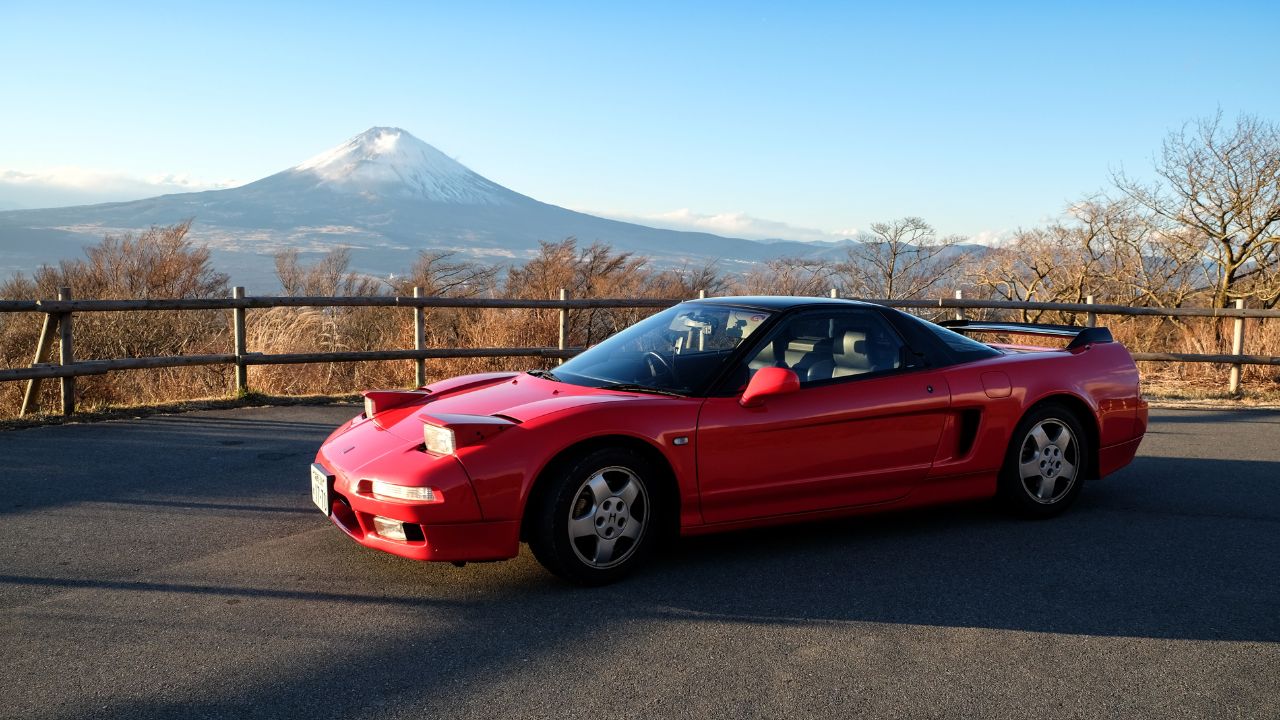
“The value of life can be measured by how many times your soul has been deeply stirred.”
Honda’s philosophical take on life applies perfectly to why enthusiasts love cars so deeply. It’s not about rational transportation or practical considerations, it’s about those moments when a car genuinely moves you.
Maybe it’s the first time you feel a high-revving engine sing at redline, or when a perfectly balanced chassis communicates every detail of the road through the steering wheel, or when you nail a difficult corner with complete precision. These are the moments Honda is talking about, the times when machinery transcends its mechanical nature and becomes something more.
For people who don’t understand car enthusiasm, this quote offers an explanation: we’re not just interested in transportation, we’re seeking experiences that stir the soul. Honda built his company on creating machines that could deliver those transcendent moments, whether through motorcycles or automobiles.
His words validate what enthusiasts have always known, that the best cars do more than get you from A to B, they make you feel alive.
Ferruccio Lamborghini

Ferruccio Lamborghini is often quoted as saying he never stopped thinking about the ideal road car and that building a factory was what it took to create it.
Lamborghini’s quote captures the audacity required to challenge established players like Ferrari.
After making his fortune in tractors, he could have simply bought expensive cars and been satisfied. Instead, he decided that if he wanted the perfect GT car, he’d have to build it himself, even if that meant creating an entirely new automotive brand from scratch.
The quote makes it sound almost casual, as if building a car company was just a minor detail to work out. That confidence, bordering on arrogance, was exactly what it took to compete with entrenched Italian marques. Lamborghini didn’t approach car manufacturing with reverence or hesitation; he applied the same practical engineering mindset he’d used in tractors and industrial equipment.
His cars proved that the emperor had no clothes, you didn’t need generations of racing heritage to build an exceptional supercar, you just needed excellent engineering and the determination to execute your vision. For anyone with seemingly impossible automotive dreams, Lamborghini’s words offer encouragement: the only thing standing between you and your ideal car is the willingness to build it.
Easy…
Conclusion
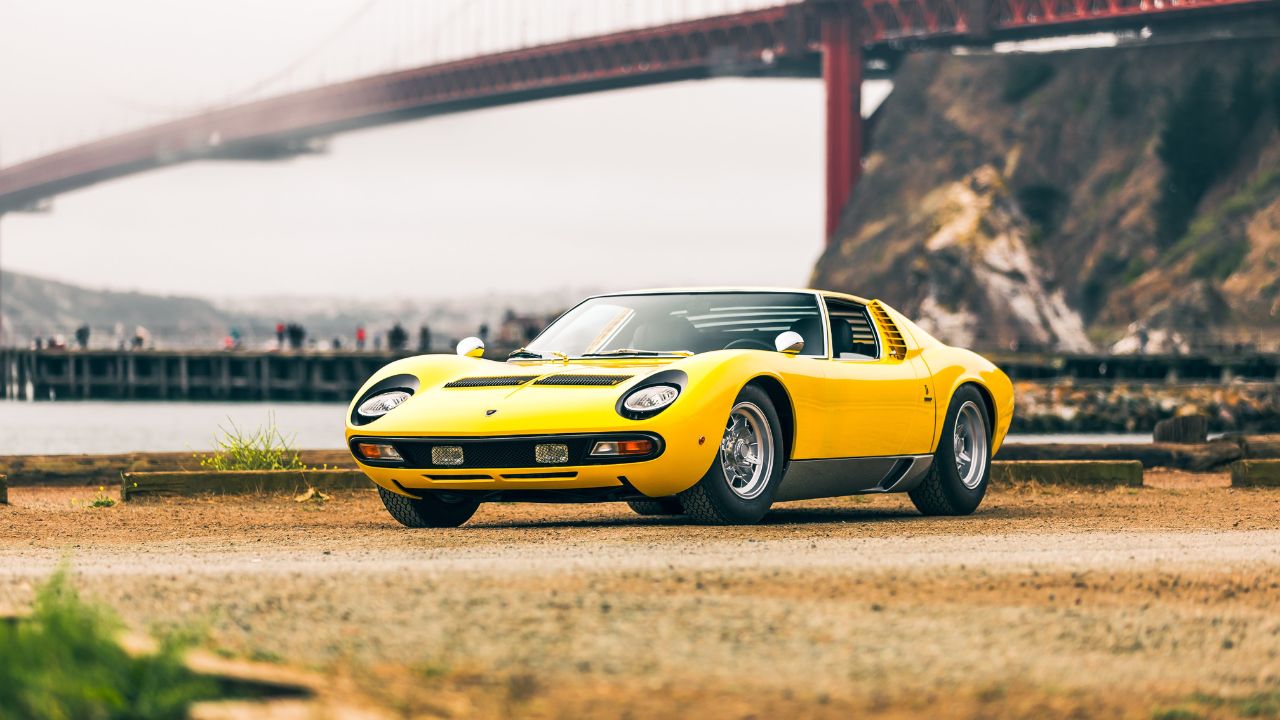
What strikes you most about these quotes is their honesty and directness — these weren’t people interested in corporate speak or careful messaging. Chapman spoke about removing weight with almost religious fervor, Ferrari dismissed entire fields of engineering with a wave of his hand, and Honda celebrated failure as the price of innovation.
Their words reveal personalities as distinctive as the cars they created, from Porsche’s functional elegance to Lamborghini’s confident disruption, from Ford’s democratic vision to Honda’s philosophical approach. These founders didn’t just build cars; they built entire philosophies around what cars should be and what they should mean to the people who drive them. Their insights remain relevant because they speak to timeless truths about engineering, business, and the pursuit of excellence.
The next time you’re behind the wheel, whether in a vintage classic or a modern machine, you’re experiencing the legacy of these visionaries and the principles they lived by.