
There was a glorious era when car companies actually had fun with their creations; when engineers were allowed to be engineers, designers could dream big, and marketing departments hadn’t yet sucked the soul out of everything. Dodge absolutely mastered this art form, creating machines that didn’t just turn heads; they gave people whiplash. These weren’t cars for people who wanted to blend in at the grocery store. These were for folks who wanted their neighbors to call the HOA.
While some manufacturers were playing it safe with beige sedans and forgettable crossovers, Dodge was out there asking the important questions: “What if we put a wing on it? What if we made it louder? What if we didn’t care about fuel economy and went full send?” The results were automotive poetry written in tire smoke and decibel levels.
Walking into a Dodge showroom during these peak years felt like entering a testosterone-fueled theme park where every ride promised to rearrange your internal organs. These weren’t just transportation: they were four-wheeled therapy sessions for anyone suffering from chronic responsibility syndrome. Each model on this list represents Dodge at its most wonderfully unhinged, when common sense was optional and “because we can” was a perfectly valid engineering philosophy.
How We Found the Loudest Dodge Legends in the Room
Finding the most gloriously over-the-top Dodge special editions wasn’t exactly rocket science: it was more like standing in a parking lot and seeing which cars made small children point and adults suddenly remember they needed to call their financial advisor. We looked for the holy trinity of automotive excess: jaw-dropping looks, tire-melting performance, and the kind of presence that could clear a Sunday car meet just by showing up.
Each candidate had to pass the “grocery store test” — would parking this thing at Whole Foods cause at least three conversations, two phone photos, and one person questioning their life choices? Performance numbers mattered, but so did that intangible quality that made insurance agents weep and HOA presidents draft strongly worded letters.
The final ranking balanced pure audacity with historical significance and that magical ability to make a 45-year-old accountant temporarily forget about his 401k contributions. These are the cars that didn’t just push envelopes: they set them on fire and did burnouts on the ashes.
This left us with 10 incredible Dodge vehicles that blend wild performance with audacious design. Here are the standouts that deserve your admiration (and fear).
1969 Dodge Charger Daytona

The Charger Daytona exists because Richard Petty jumped ship to Ford, and Chrysler’s engineers were basically told to “fix this or find new jobs.” Their solution was to take a perfectly good Charger and give it the aerodynamic properties of a Formula 1 car mixed with the visual subtlety of a UFO landing.
That iconic nose cone stretched 18 inches beyond the standard Charger front end, making the car look like it was perpetually trying to sniff out the competition. The rear wing — all two feet of it — stood proudly above the trunk like a billboard advertising “I take racing very seriously.” NASCAR regulators took one look at this thing and basically said, “Okay, that’s enough of that,” leading to rule changes that effectively banned it after just one season.
The Daytona made its NASCAR debut at Talladega and promptly won its first race, proving that sometimes the best way to solve a problem is to throw physics at it until physics gives up. Under that aggressive hood lived either a 440 Magnum V8 or the legendary 426 HEMI: because if you’re going to look like a spaceship, you might as well have the power to match.
Only 503 were built, making each one roughly as rare as finding a parking spot at a Barrett-Jackson auction. Today, these cars command prices that could fund a small country’s space program, which seems fitting given their otherworldly appearance.
1970 Dodge Challenger T/A
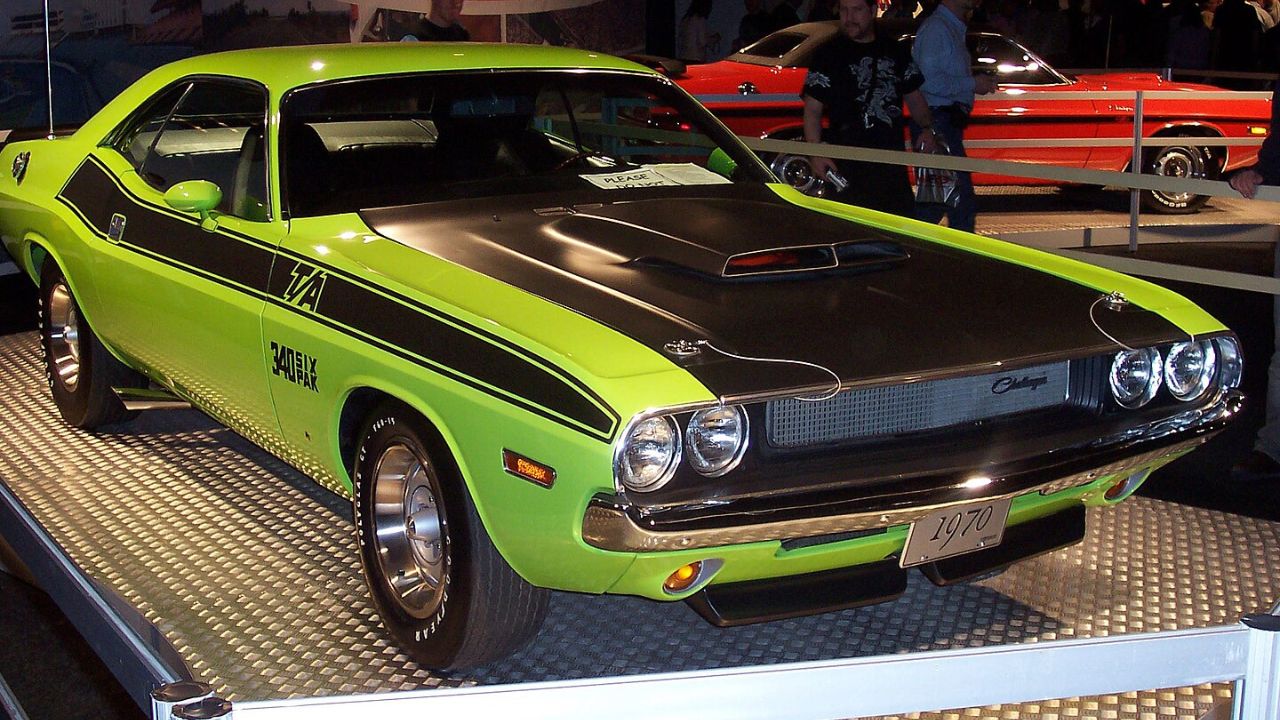
The Challenger T/A showed up in 1970 wearing side-exit exhaust pipes like a badge of honor, announcing its presence with the subtlety of a thunderstorm in a library. The side pipes weren’t just for show — they were strategically positioned to make sure everyone within a three-block radius knew exactly when you decided to get on it.
Under the blacked-out hood with its functional scoop sat a 340 Six-Pack engine: three two-barrel carburetors working in harmony like a mechanical rock band. This setup produced a healthy dose of horsepower and the kind of intake noise that made grown men weep with joy. The ducktail spoiler and bold stripes weren’t decorative touches; they were warnings to other drivers that they were about to get schooled.
The T/A (Trans-Am, for those keeping track) was built to homologate Dodge’s racing efforts, which explains why it felt like it was constantly ready to commit felonies. Raised white-letter tires and a stance that suggested barely contained violence completed the package. This was the car for drivers who thought regular Challengers were too subtle, which, in hindsight, seems like a reasonable position.
2018 Dodge Challenger SRT Demon

The Demon represents what happens when a major automaker decides to build a car specifically to terrorize drag strips and insurance companies alike. With 840 horsepower on race fuel and a 0-60 time of 2.3 seconds, this wasn’t just fast; it was “call your lawyer because the physics police are coming” fast.
The Demon came factory-certified to run 9.65-second quarter-miles at 140.9 mph, making it the first production car to break into the nines straight from the showroom. Dodge literally included drag radials as standard equipment and offered a “passenger seat delete” option, because nobody wants their friend or partner to come along for the races — that’s just added weight.
The Air Grabber hood scoop was the largest functional intake opening ever fitted to a production car: because when you’re making 840 horsepower, subtlety isn’t just dead, it’s been cremated and scattered to the winds. The TransBrake, Line Lock, and Torque Reserve systems came standard, turning every stoplight into a potential quarter-mile run.
FCA CEO Sergio Marchionne reportedly called the engineering team “crazy” when they first pitched the idea, which, coming from the automotive industry, might be the highest compliment possible. Only 3,300 were built, and each one came with tools and spare parts for dedicated drag racing, because Dodge knew exactly what kind of trouble their customers were planning to get into.
1971 Dodge Charger Super Bee

The 1971 Super Bee arrived with a cheerful bee mascot wearing a racing helmet: because nothing says “I’m about to embarrass your Camaro” like cartoon insects. Don’t let the playful branding fool you; this was serious business wrapped in whimsical packaging. The split grille design gave it an aggressive face that managed to look both friendly and intimidating, like a golden retriever that could bench press your Honda.
Engine options ranged from the respectable 383 all the way up to the mythical 426 HEMI, because Dodge believed in giving customers choices; mild humiliation or complete psychological destruction of the competition. The 440 Six-Pack option provided a nice middle ground for those who wanted to win races without completely emptying their wallet at gas stations.
The rear quarter stripes weren’t just decoration; they were racing stripes for your ego. The interior featured proper bucket seats and gauges that actually told you useful information, revolutionary concepts in an era when some cars treated instrument clusters as abstract art installations.
The Super Bee proved that performance cars didn’t have to take themselves too seriously to be taken seriously. It was the class clown that also happened to be valedictorian — fun-loving but academically gifted enough to make the honor roll at any drag strip.
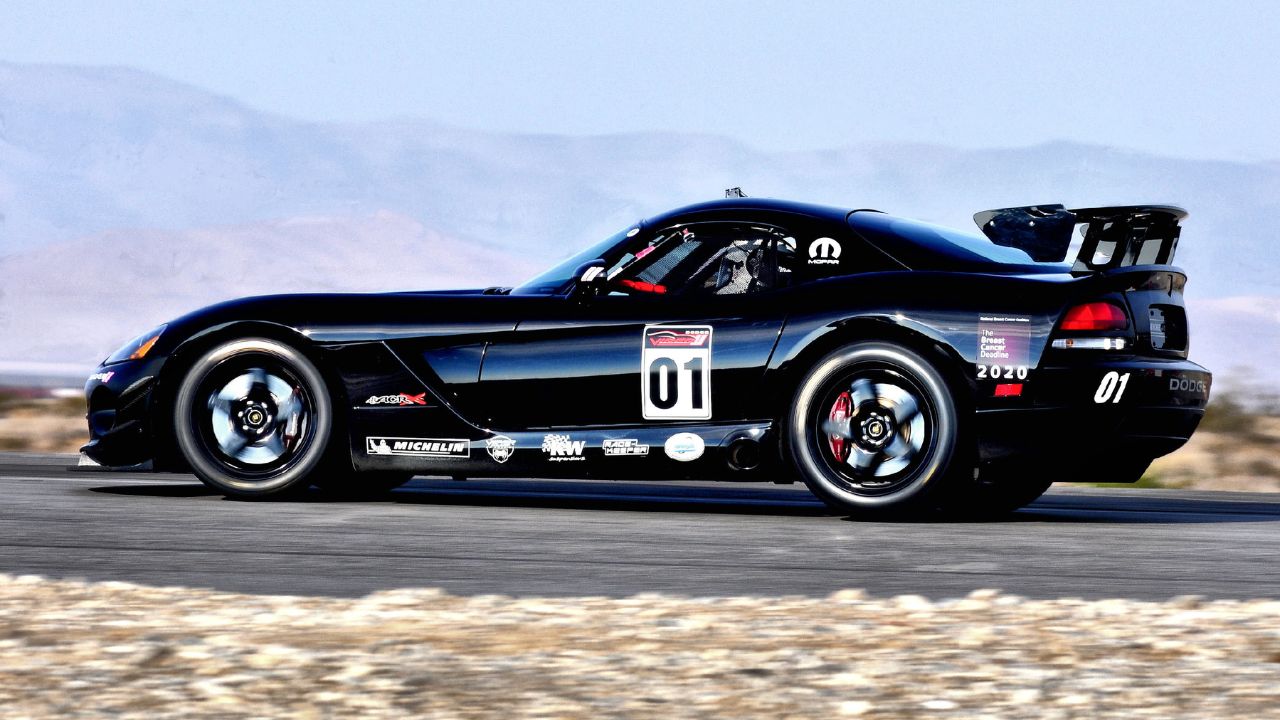
2008 Dodge Viper SRT10 ACR

The Viper ACR (American Club Racer) was Dodge’s answer to the question “What if we took our already insane snake car and made it completely unhinged?” The massive rear wing and aggressive front splitter were functional aerodynamic elements that generated enough downforce to plant this thing to the track like it was held down with industrial adhesive.
Under the impossibly long hood lived an 8.4-liter V10 that produced 600 naturally aspirated horsepower. In an era when everyone was going to forced induction, the Viper stayed true to the “there’s no replacement for displacement” philosophy. This engine didn’t just make power; it made a statement audible from the next county over.
The ACR version included lightweight wheels, high-grip tires, and suspension tuning that transformed every drive into a masterclass in physics. Track days became showcases for American engineering’s ability to embarrass European exotics at a fraction of the price. The low, wide stance created an aggressive silhouette that looked fast even when parked.
This was the car that proved American manufacturers could build proper track weapons: not just straight-line heroes, but legitimate corner-carving monsters that could hold their own against anything wearing Italian badges and European price tags.
1970 Dodge Coronet Super Bee Six Pack
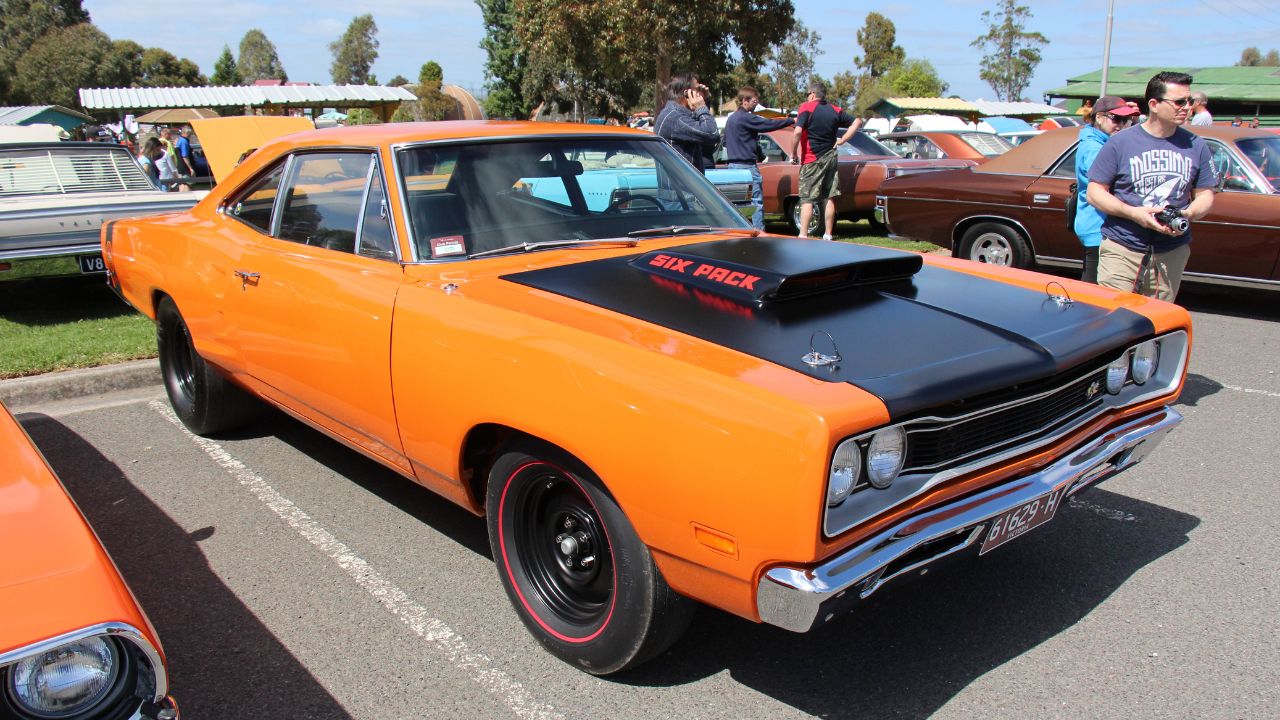
The Coronet Super Bee Six Pack was Dodge’s way of putting serious performance in a more understated package; which is like saying a nuclear weapon is a more understated way to end a conflict. The 440 Six-Pack engine with its trio of two-barrel carburetors provided serious motivation, while the twin-snorkel hood scoop made sure everyone knew this wasn’t your grandfather’s Coronet.
The Six-Pack setup was pure mechanical poetry: three carburetors working together to feed a hungry 440 cubic inches of American iron. Under normal driving, only the center carburetor worked, keeping things civilized. But when you got serious about the throttle, all three barrels opened up like the gates of automotive heaven.
Color options included wonderfully named choices like Plum Crazy and Top Banana: because in 1970, Dodge’s marketing department apparently consisted entirely of people who had never heard of focus groups or market research. The C-stripe graphics weren’t just decorative; they were warnings to other drivers that they were about to witness something special.
The Super Bee emblem on the grille greeted everyone with automotive charm, like a friendly wave before a thorough thrashing. This was the car for enthusiasts who wanted serious performance without the visual drama of the more extreme models; though “subtle” is a relative term when you’re talking about 440 cubic inches of rumbling V8.
2017 Dodge Challenger T/A 392
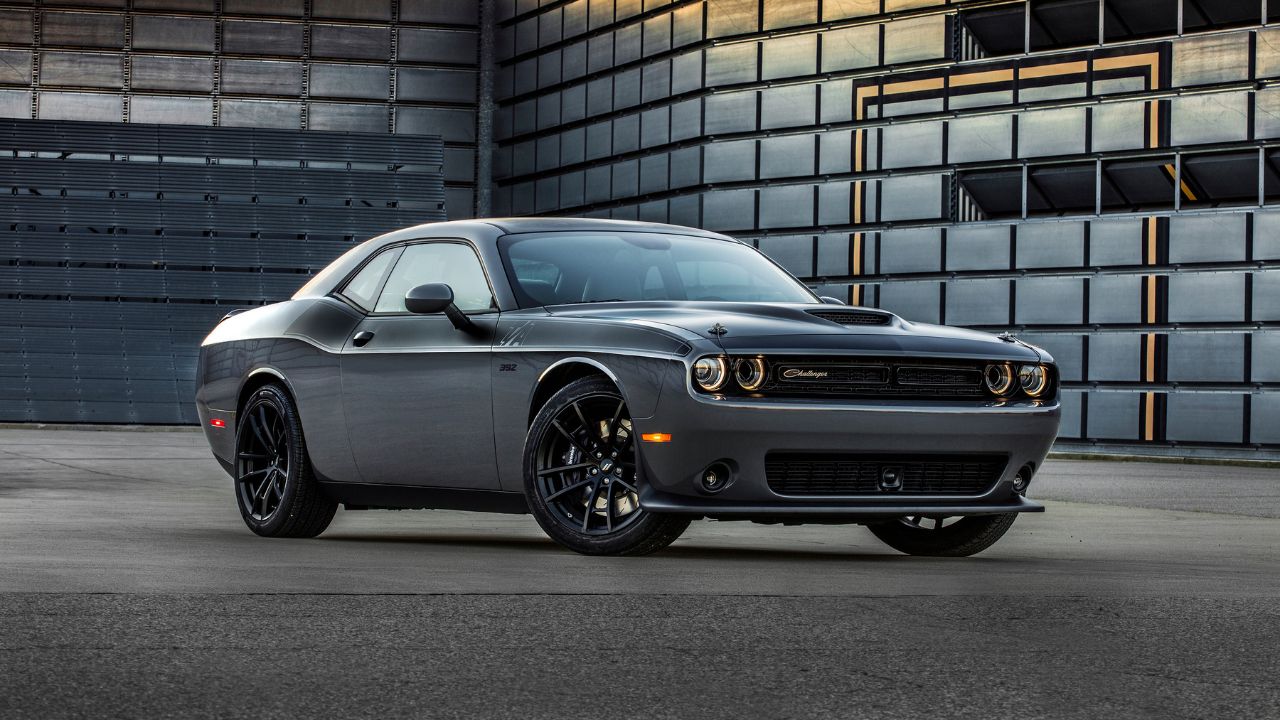
The 2017 Challenger T/A 392 proved that Dodge could honor its heritage without simply living in the past. This modern interpretation of the classic T/A formula combined retro styling cues with contemporary performance, creating something that looked like it belonged in both 1970 and 2017; no small feat in automotive design.
The 6.4-liter HEMI under the matte black hood produced 485 horsepower and a soundtrack that could make grown men weep with nostalgia. The functional hood and fender vents weren’t just for show; they actually improved airflow and cooling, proving that sometimes form and function can work together without compromising either.
Bold side stripes paid homage to the original T/A, while the modern suspension and braking systems ensured this wasn’t just a pretty face. The interior successfully blended retro-style gauges with modern infotainment, creating a cabin that felt both familiar and contemporary.
This was the car for enthusiasts who wanted the T/A experience without the 1970s reliability issues, emissions problems, and complete lack of modern safety features. It delivered heritage and performance in equal measure, proving that sometimes looking backward can help you move forward.
1978 Dodge Lil Red Express Truck

The Lil Red Express was Dodge’s response to increasingly restrictive emissions regulations: if we can’t make fast cars anymore, let’s make a fast truck and see if anyone notices. Those chrome exhaust stacks rising behind the cab weren’t just for show; they were like automotive middle fingers pointed at the EPA’s new regulations.
The police-spec 360 V8 provided serious acceleration that put many contemporary sports cars to shame. Not just a work truck, this was a performance vehicle that happened to have a bed for hauling your dignity after you’d been thoroughly embarrassed by a pickup truck at a stoplight.
Wood trim along the bed sides added a touch of craftsmanship that suggested this was something special, not just another contractor’s ride. The rich red paint gleamed with the kind of finish that made other truck owners question their beige and brown choices.
The slightly nose-high stance and gold pinstriping completed a package that was part hot rod, part work truck, and entirely awesome. This was transportation for people who needed to haul stuff but refused to sacrifice their street credibility in the process.
1986 Dodge Shelby Omni GLHS
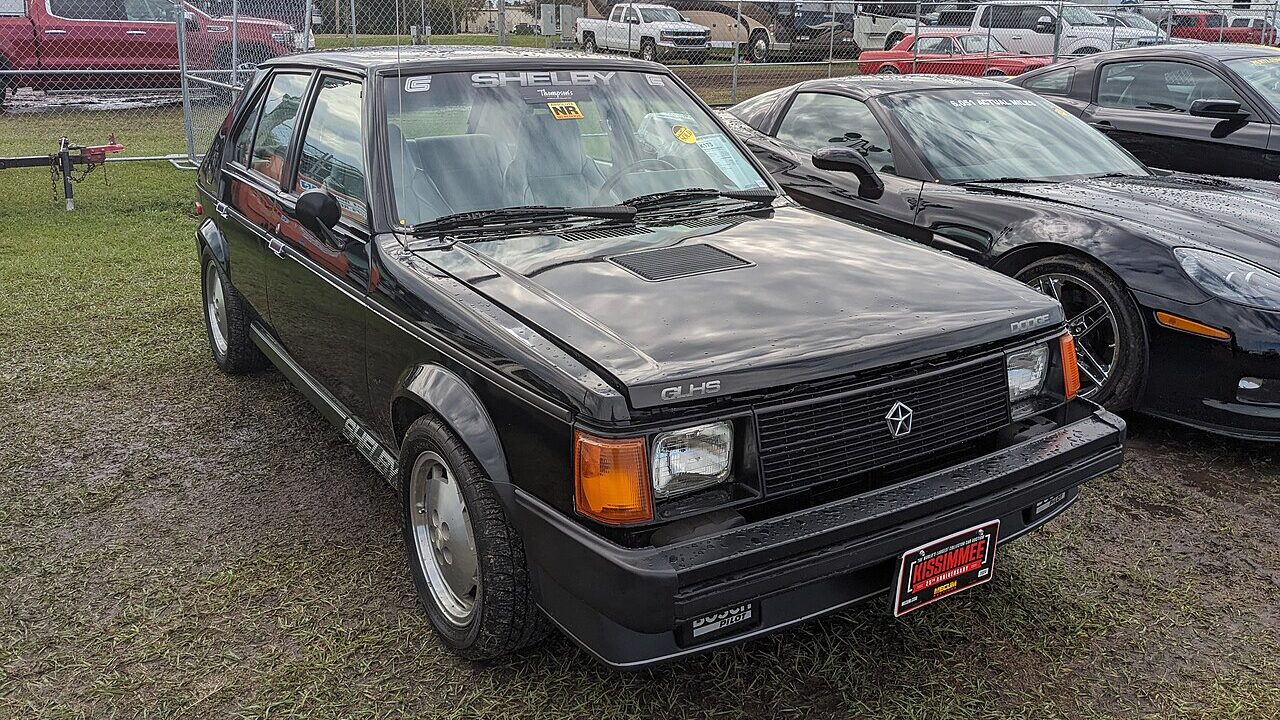
The GLHS (Goes Like Hell S’more — yes, really) proved that Dodge could make even the most mundane platform exciting with enough turbocharging and Carroll Shelby’s magic touch. This was the car that taught an entire generation that displacement wasn’t everything: sometimes forced induction and low weight could be even more fun.
The turbocharged 2.2-liter four-cylinder might not sound intimidating on paper, but in practice, it delivered the kind of surprising performance that had 1980s sports car owners scratching their heads at stoplights. The GLHS was proof that sometimes the best sleepers come in the smallest packages.
Black paint and subtle graphics created an image of purposeful menace, while the front air dam and fog lamps hinted at sporting intentions. Inside, supportive seats and a five-speed manual transmission encouraged the kind of spirited driving that made this little econobox feel like a proper sports car.
Turbo sounds mixed with exhaust notes created an engaging mechanical symphony that was completely different from the V8 rumble of its big brothers. This was the thinking person’s performance car: proof that brains could triumph over brawn, at least until the next gas station.
2019 Challenger R/T Scat Pack 1320

The 2019 Challenger R/T Scat Pack 1320 was Dodge’s love letter to drag racing, complete with factory-installed equipment that would make NHRA officials nod with approval. The name came from the length of a quarter-mile in feet — 1,320 — because subtlety has never been Dodge’s strong suit, and why start now?
The 392 HEMI produced 485 horsepower and a sound that could wake the dead, while borrowing technology from the mighty Demon made this a serious quarter-mile weapon. TransBrake, Torque Reserve, and Line Lock systems came standard, turning every traffic light into a potential staging area.
Street-legal drag radials on 20-inch forged wheels provided the grip needed to put all that power to the pavement, while adaptive suspension in Drag Mode helped transfer weight to the rear tires for maximum traction. The Angry Bee emblem on the fender served as both decoration and warning to anyone foolish enough to accept the challenge.
Inside, the stripped-down layout with optional passenger and rear seats (available for one dollar each) showed that Dodge’s sense of humor was intact. This was drag racing equipment masquerading as daily transportation: the kind of car that could commute to work all week and dominate the local dragstrip on weekends.
When the Taillights Fade but the Memory Stays Bright
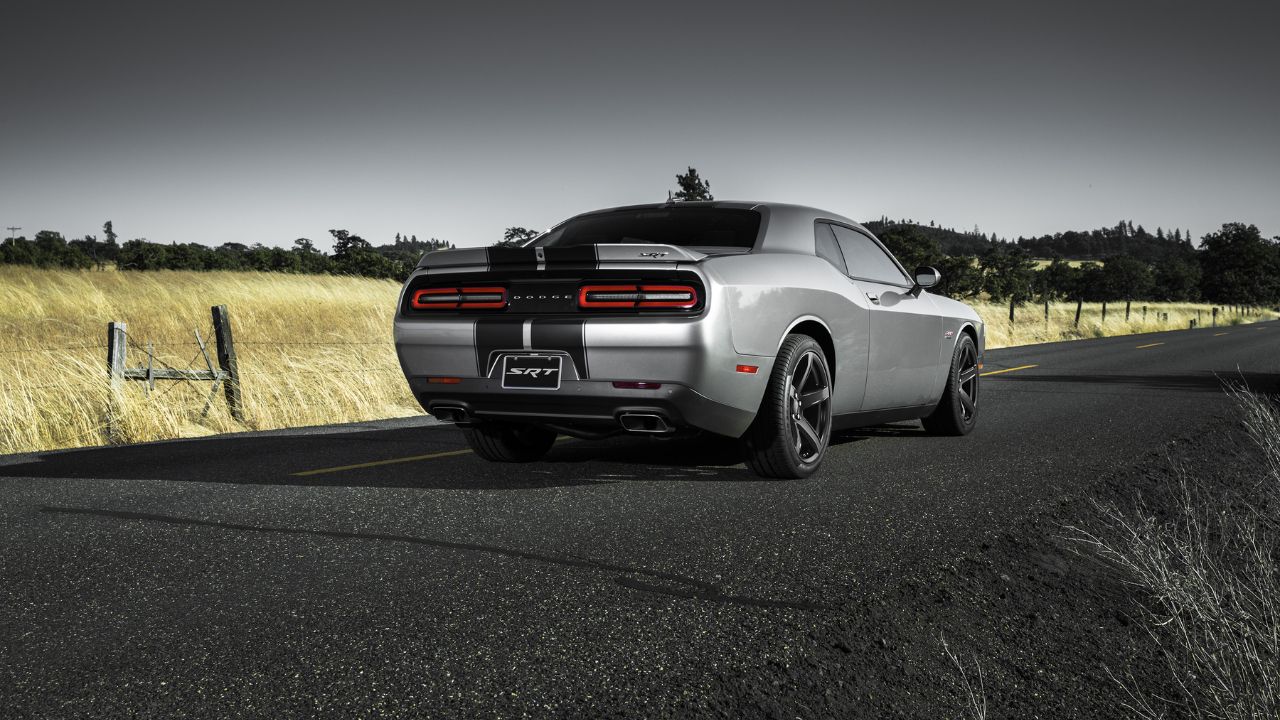
Every car on this list represents a moment when Dodge’s engineers and designers looked at conventional wisdom, laughed, and decided to do something completely different. They weren’t worried about focus groups or market research; they were building cars for people who understood that sometimes the most practical thing you can do is be completely impractical.
These special editions prove that when automakers stop playing it safe and start taking risks, the results can be genuinely spectacular. They’re reminders of an era when car companies were willing to build machines that made no sense on paper but perfect sense in your soul.
Years may pass and regulations may tighten, but the spirit captured in these Dodge legends continues to inspire anyone who believes that cars should be more than mere transportation. They were built with enough imagination and audacity to live forever in automotive history: proof that sometimes the best way to be remembered is to be completely unforgettable.
The taillights may disappear into the distance, but the memories they create last a lifetime. And in a world increasingly filled with sensible crossovers and efficient hybrids, maybe that’s exactly the kind of automotive therapy we all need.