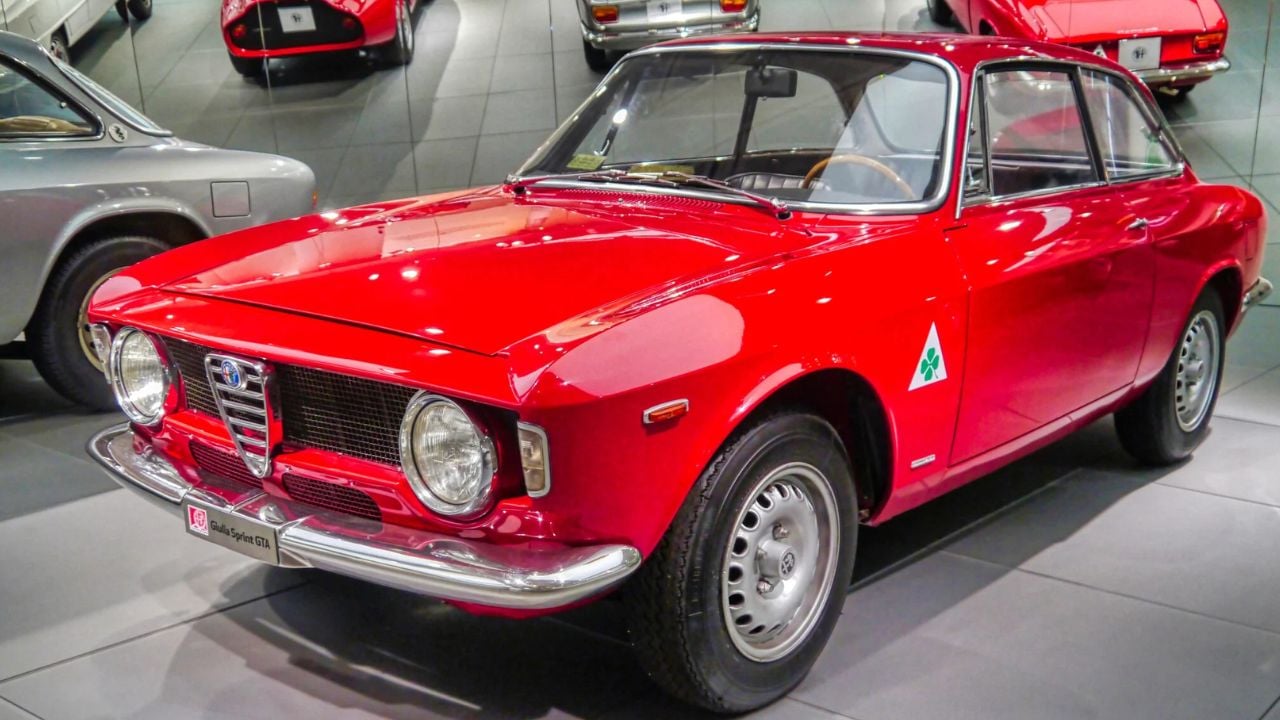
Italy has always done something to sheet metal that no other country has fully replicated. The shapes that came out of studios like Pininfarina, Bertone, and Ghia were not just attractive. They were so precisely right that people stopped moving when they saw them.
The lines had a kind of logic to them. Everything curved exactly where it should and stayed straight everywhere else. That standard held from the early 1960s through the decades that followed, and the best Italian production cars proved that beauty did not have to come at the expense of engineering seriousness.
That is what ties this group together. Every car here was manufactured, sold, and driven on real roads. Some were built in tiny numbers for racing eligibility, others in more comfortable grand-touring volumes, but all of them were genuine production automobiles available to the public.
Some are priceless now. Others have become so familiar that it is easy to forget how shocking they once looked. Either way, these are the Italian silhouettes that never needed an explanation.
Ferrari 250 GTO
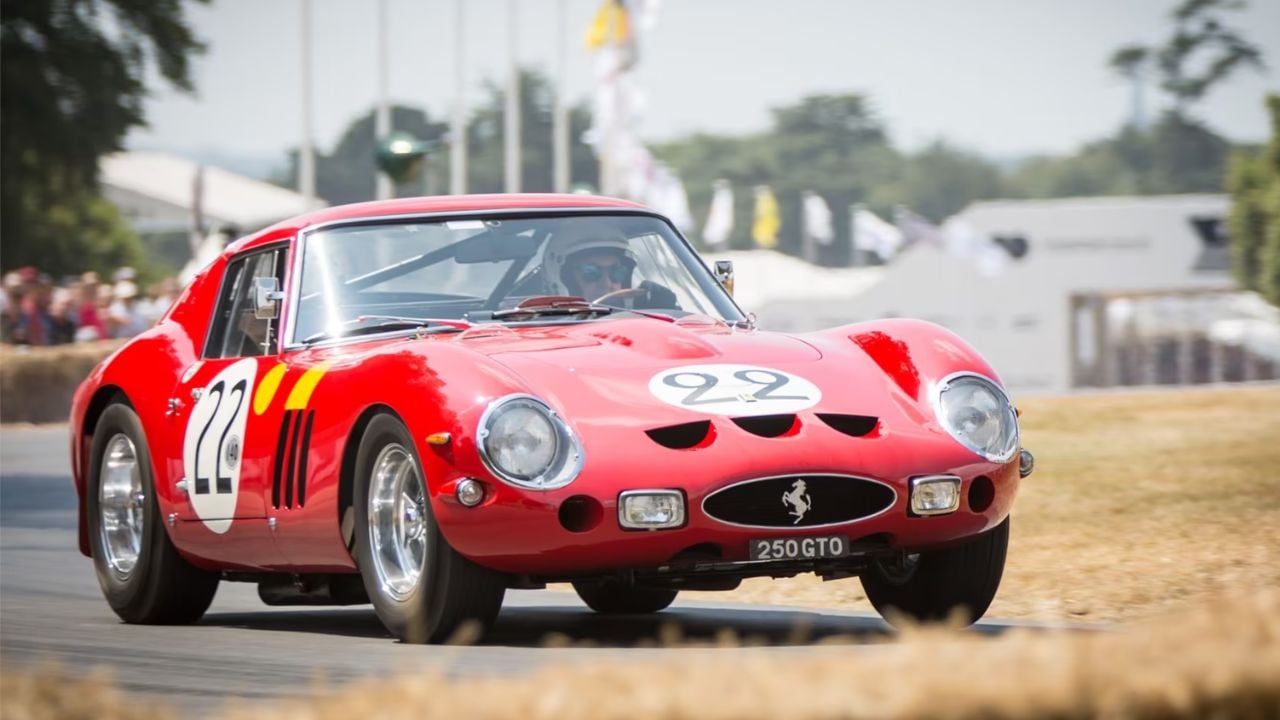
The Ferrari 250 GTO was revealed in 1962 and still feels like the car every beautiful Italian road car eventually has to answer to. It was created for FIA Grand Touring competition, but it never looked like a tool first and a work of art second.
Its body, shaped by Sergio Scaglietti from lines developed under Giotto Bizzarrini, has just enough aggression to keep the car from becoming delicate. The nose drops low, the rear arches carry real muscle, and the whole coupe looks fast even when it is doing absolutely nothing.
Only 36 examples were built between 1962 and 1964. That rarity, combined with the model’s competition history and extraordinary proportions, is why the 250 GTO still sits near the very top of automotive beauty, not just Ferrari beauty.
Lamborghini Miura
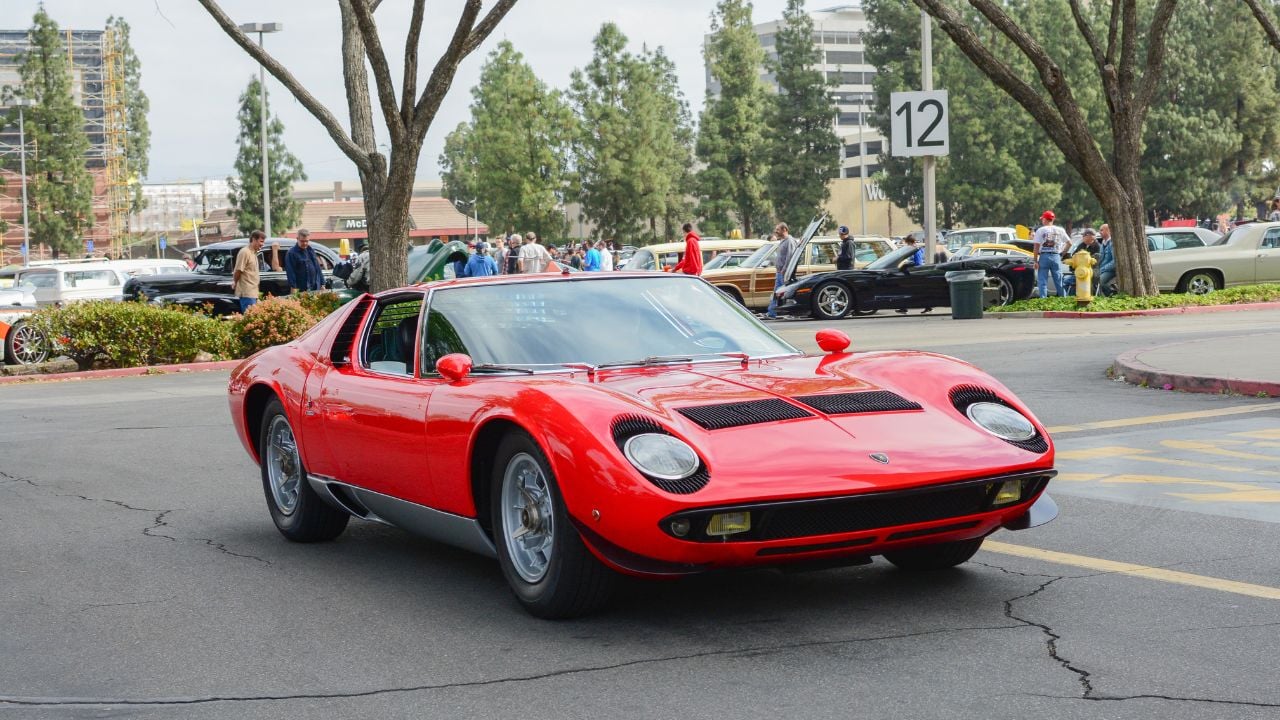
The Lamborghini Miura arrived at Geneva in 1966 and changed the visual rules for production supercars almost instantly. Designed by Marcello Gandini at Bertone, it looked low, exotic, and impossibly modern in a way that many later cars still have not fully matched.
The eyelashes around the headlights could have made it precious. Instead, they only made it more unforgettable. The body sits incredibly low, the roofline feels almost accidental in its lightness, and the rear haunches do just enough to remind you there is a V12 mounted behind the seats.
Between 1966 and 1973, Lamborghini officially built 763 Miuras. That is enough for the car to have real historical weight, but not enough to make it feel ordinary. It still looks like the moment the modern supercar learned how to pose.
Alfa Romeo Giulia Sprint GTA
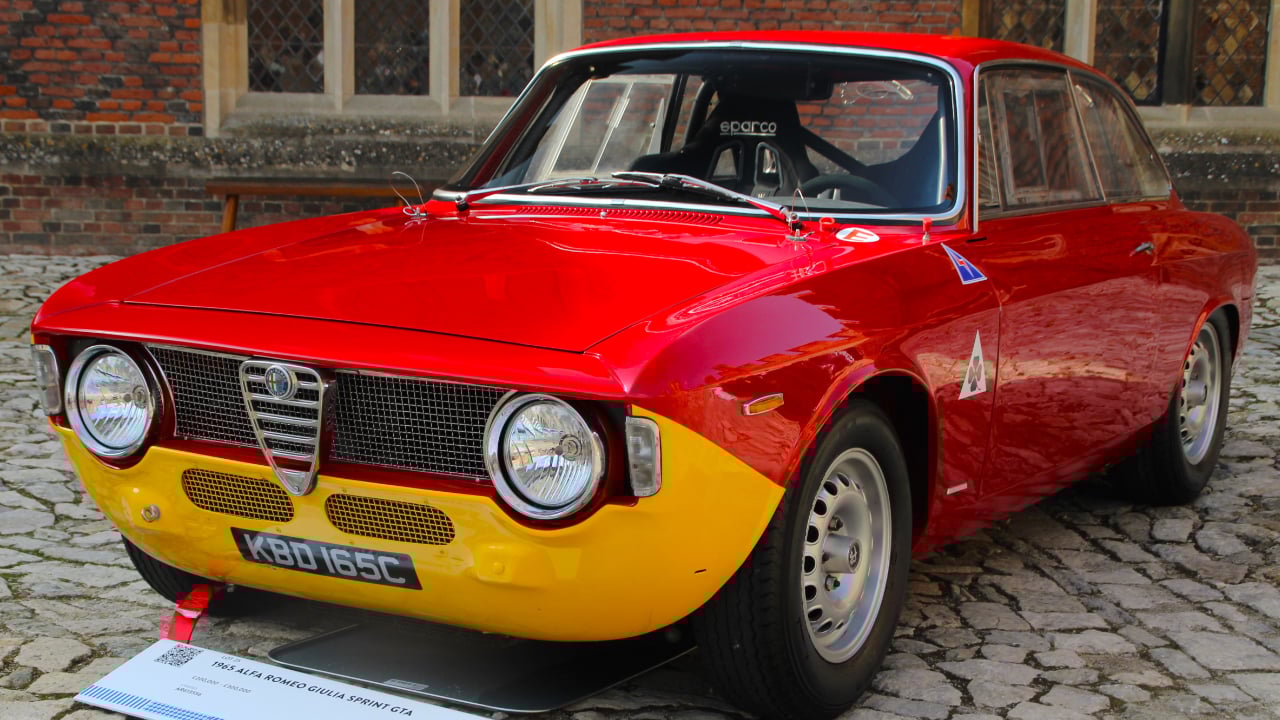
The Giulia Sprint GTA is proof that elegance does not need excess. Alfa Romeo and Autodelta turned the Giulia Sprint GT into a homologation-minded lightweight, but the result never lost the clarity that made the original coupe so appealing.
The proportions are the whole trick. It is compact, upright, and clean, with just enough delicacy in the greenhouse and just enough tension in the fenders. Nothing is exaggerated, which is exactly why it has aged so beautifully.
Roadgoing GTAs weighed about 745 kilograms and made 115 horsepower from their 1.6-liter twin-cam four. That racing seriousness only makes the shape feel better. It looks like a modest Italian coupe until you spend a second longer with it, and then it starts to look almost perfect.
Maserati Ghibli
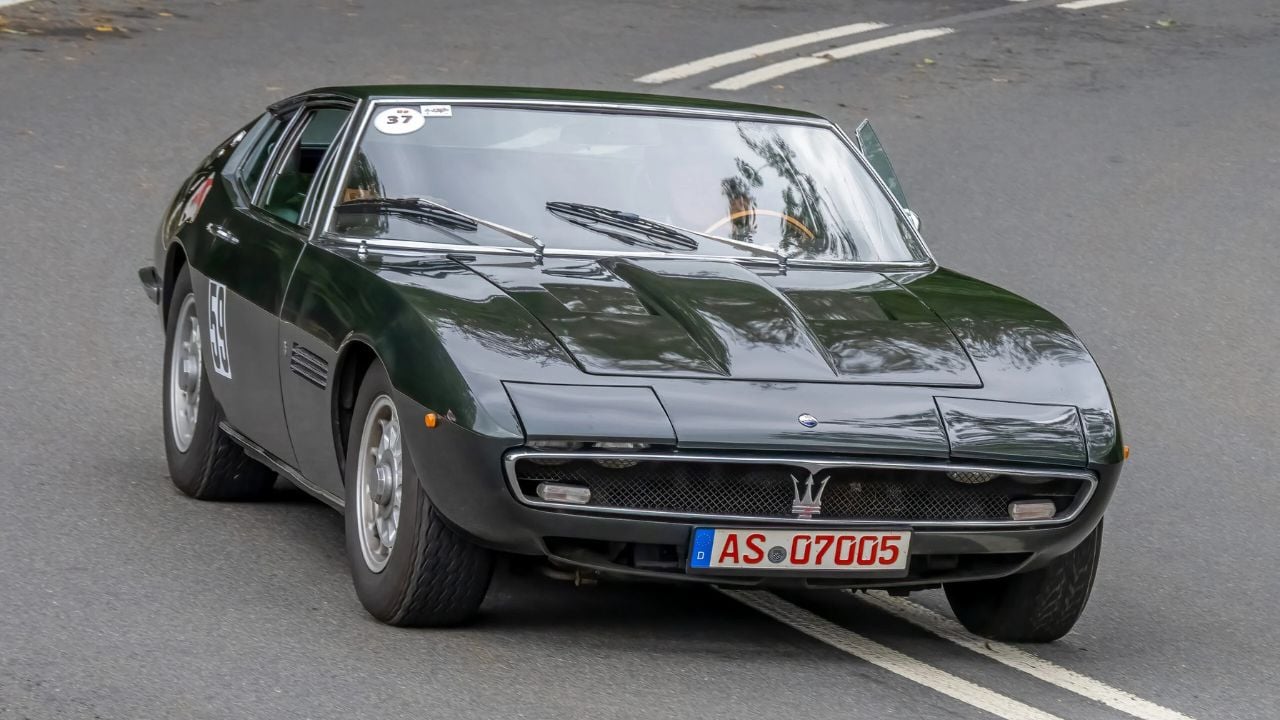
The Maserati Ghibli remains one of the most perfectly proportioned grand tourers Italy ever produced. Giugiaro drew it at Ghia, and the body still feels almost impossibly disciplined: long hood, low roof, sharp nose, and just enough cabin to keep the whole car from drifting into caricature.
The brilliance of the Ghibli is that it looks dramatic without looking busy. It has real visual force, but it never begs for attention. Even the name suits it. It looks like a desert wind turned into sheet metal.
Production versions were sold as 2+2 coupes, using a dry-sump V8 fitted under that famously low hood. Maserati built 1,170 coupes and 125 Spyders through 1973. It was never the loudest Italian design of the era, but it may have been the most controlled.
Lancia Stratos HF Stradale
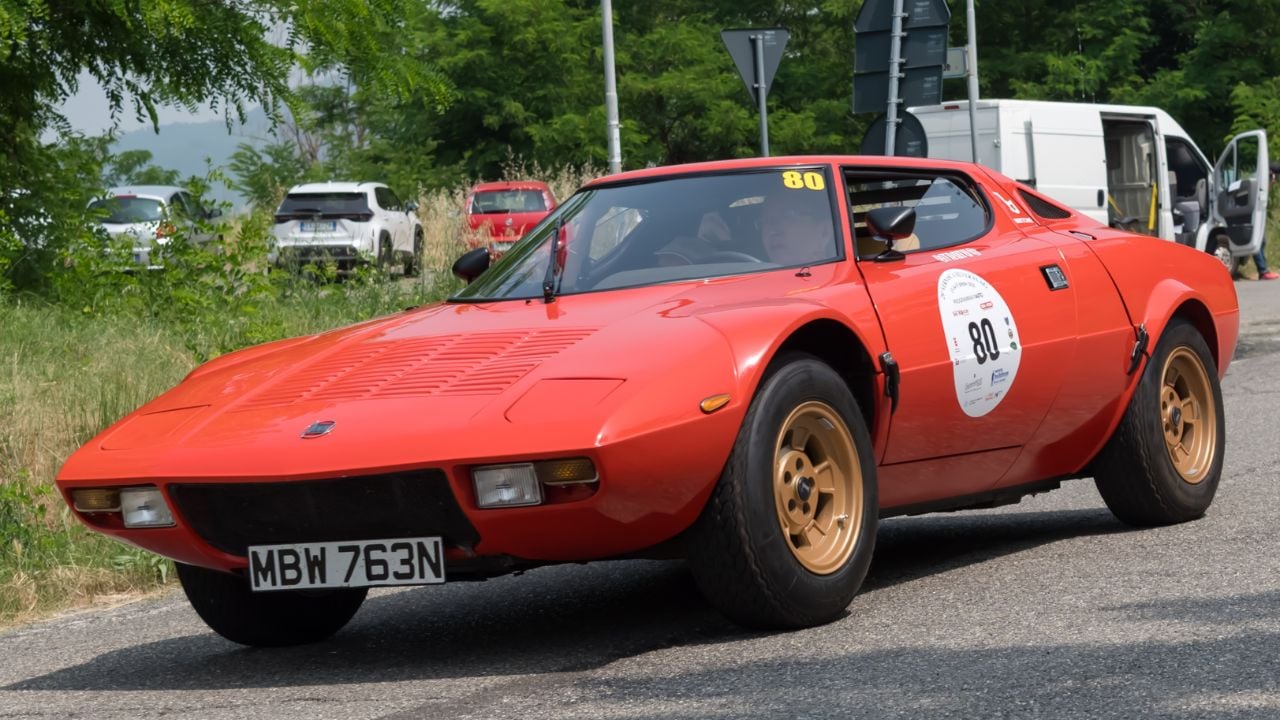
The Lancia Stratos HF Stradale is one of the rare cases where a car built almost entirely for purpose ended up beautiful anyway. Bertone and Gandini gave it a short, wedge-like body with a panoramic windshield and proportions so unusual that it still looks like it belongs to no category but its own.
That strangeness is the reason it works. The Stratos does not flirt with conventional elegance. It commits fully to the idea that a rally car for the road should look compact, focused, and slightly unreal.
The road car used Ferrari Dino V6 power in a softer state of tune, while the whole homologation program is generally associated with roughly 500 roadgoing examples. However you count them, the Stratos earned its place the hard way, by becoming one of rallying’s defining shapes and then somehow never losing its visual shock on the road.
Ferrari Testarossa
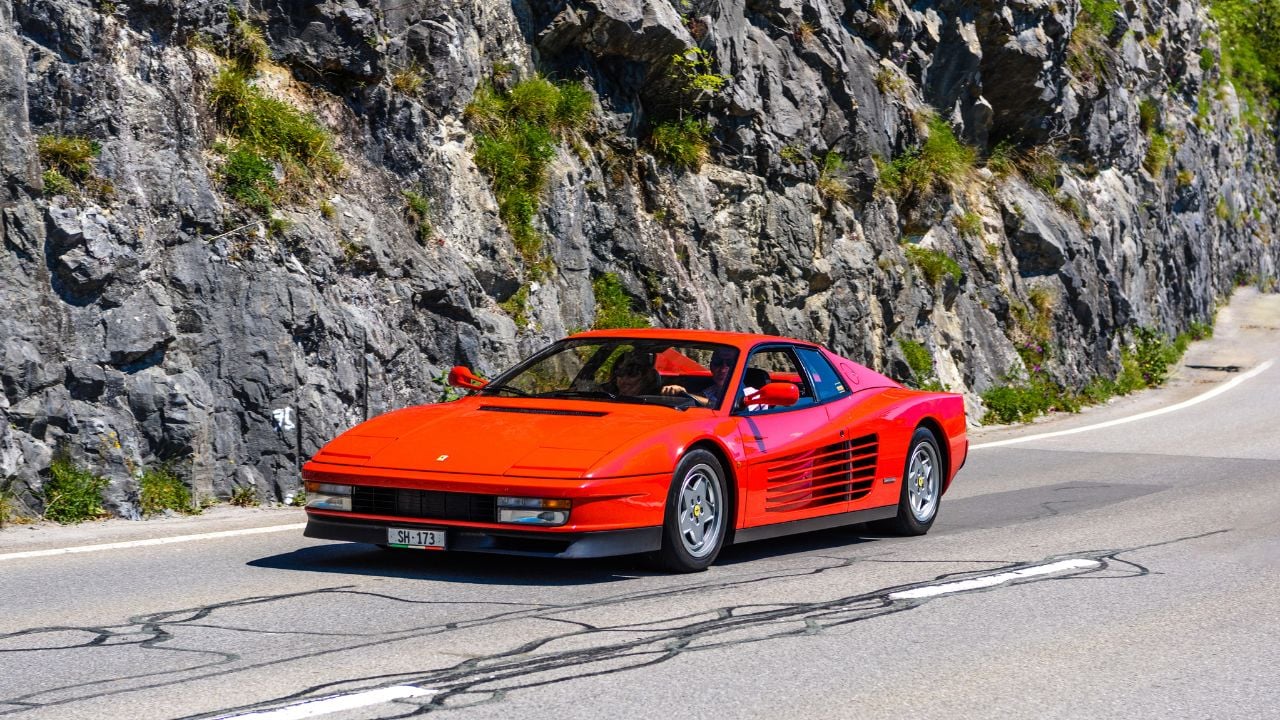
The Ferrari Testarossa made its public debut in 1984 and became one of the defining silhouettes of the decade immediately. Pininfarina’s answer to mid-engined excess was not subtle, but it was unforgettable.
The side strakes did real work, feeding air to the radiators, but they also became the visual signature everyone remembers first. Add the huge rear track, the low nose, and the impossibly broad tail, and the Testarossa becomes a car that looks fast from every angle, even when parked.
Ferrari built 7,177 original Testarossas from 1984 to 1991. The car is often remembered as an icon of the 1980s, which is true, but that can undersell how well the shape still works. It is theatrical, yes, but it is also far more coherent than many of its imitators ever were.
Ferrari F40

The Ferrari F40 stripped away almost everything that was not essential and somehow became one of the most beautiful Ferraris ever made in the process. Unveiled in 1987 to mark Ferrari’s 40th anniversary, it looked like a racing car that had only just barely agreed to become road legal.
The magic of the F40 is that every aggressive feature still feels visually honest. The NACA ducts, the rear wing, the vented engine cover, and the composite body all belong there. Nothing reads like costume. Everything reads like function turned into style by people who knew exactly when to stop.
Its twin-turbocharged 2.9-liter V8 made around 478 horsepower, but the greater achievement may be the silhouette itself. The F40 still looks raw, relevant, and perfectly uncompromising, which is why time has done almost nothing to soften its impact.
Why Italian Design Has Never Needed an Explanation

Every car on this list came from a culture that treated the coachbuilder as seriously as the engineer. Italy understood early that the way a car looks is not decoration. It is part of what the car is.
That is why the best Italian production silhouettes do not feel arbitrary. They feel inevitable, as if the car could not possibly have been drawn any other way. Some are delicate. Some are theatrical. Some are almost brutal in their honesty.
All of them prove the same point. When Italy got a production car exactly right, it did not just make something pretty. It made something permanent.