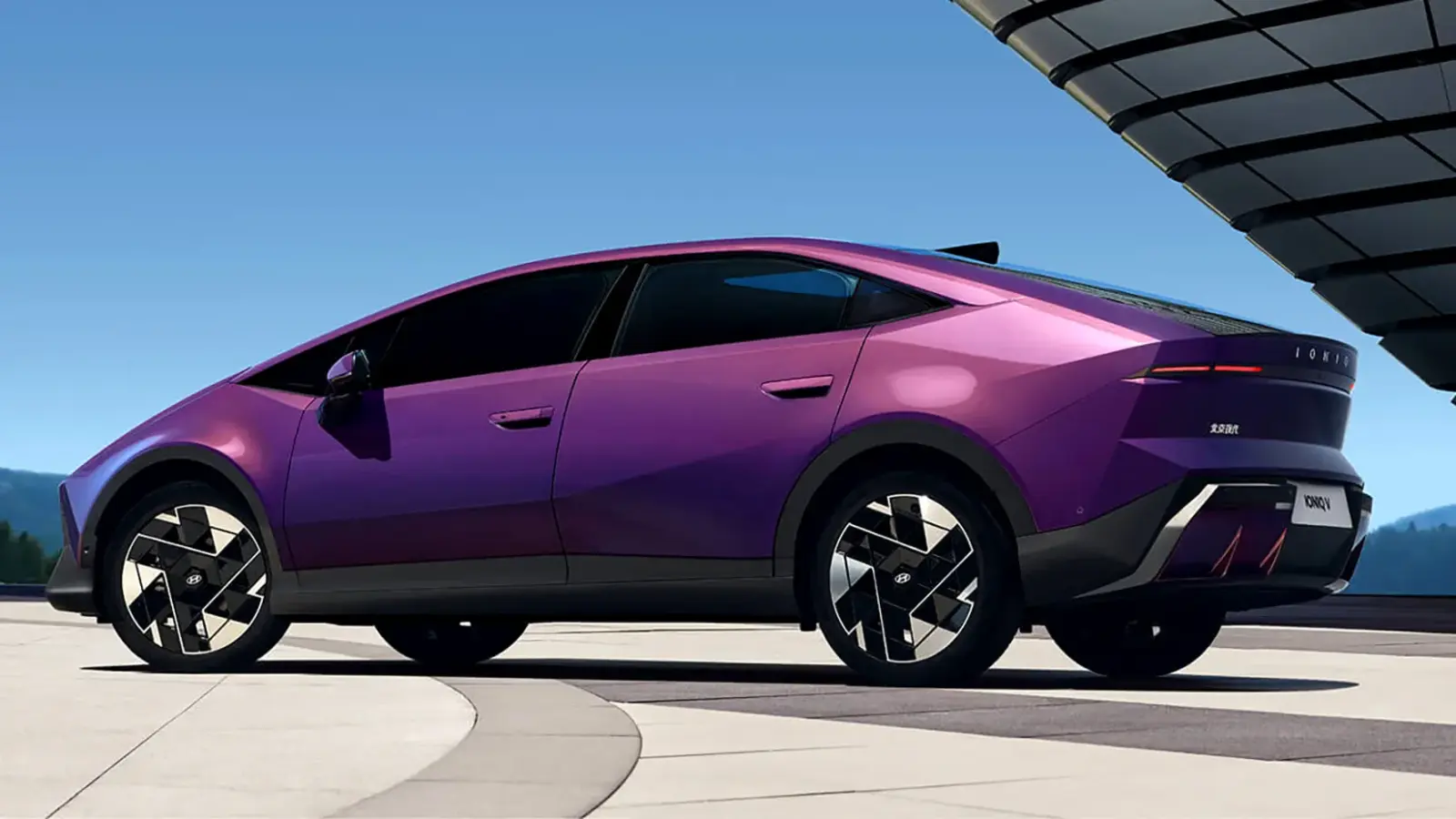
Hyundai has built the sort of affordable electric car Western buyers keep asking automakers to make. It looks dramatic, has the footprint of a midsize sedan, offers genuinely useful range, and starts at the equivalent of less than $18,000.
There is one rather important catch, however. The new Ioniq V is launching in China, and Hyundai has not announced plans to sell it in the United States or Europe, leaving everyone outside its home market to admire the specification sheet from afar.
That is particularly frustrating because this is no tiny bargain-bin commuter built solely around a low sticker price. The Ioniq V looks like something Lamborghini designed, stretches almost 193 inches long, packs a massive 27-inch display inside, and offers up to 225 horsepower with a claimed 404 miles of range.
CarNewsChina reports that pre-sales have now opened at 119,900 yuan, equivalent to roughly $17,800 at the time of writing. For perspective, that makes this Camry-sized electric sedan cheaper than the least expensive new car currently offered in the United States.
It Looks Far More Expensive Than It Is
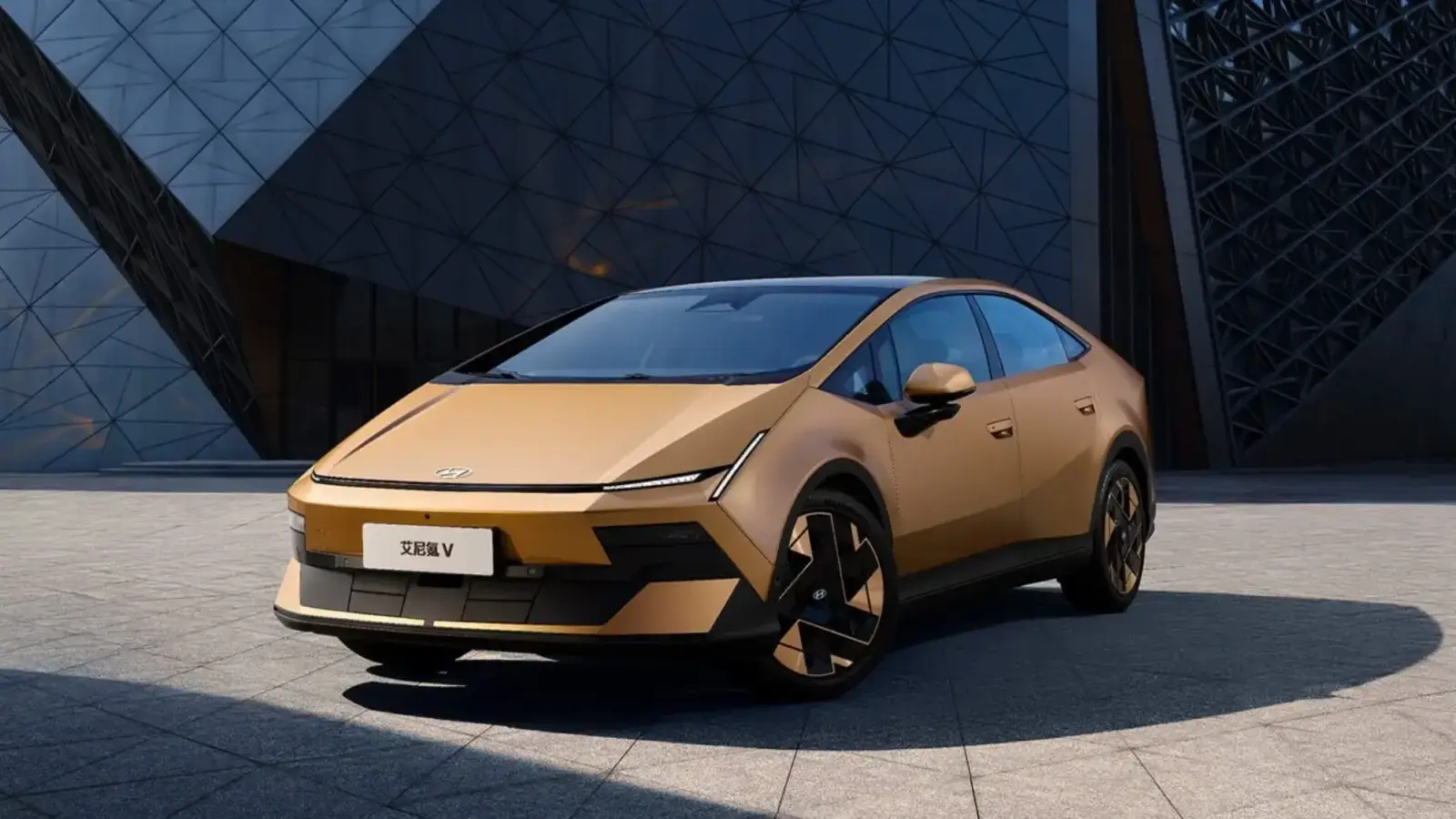
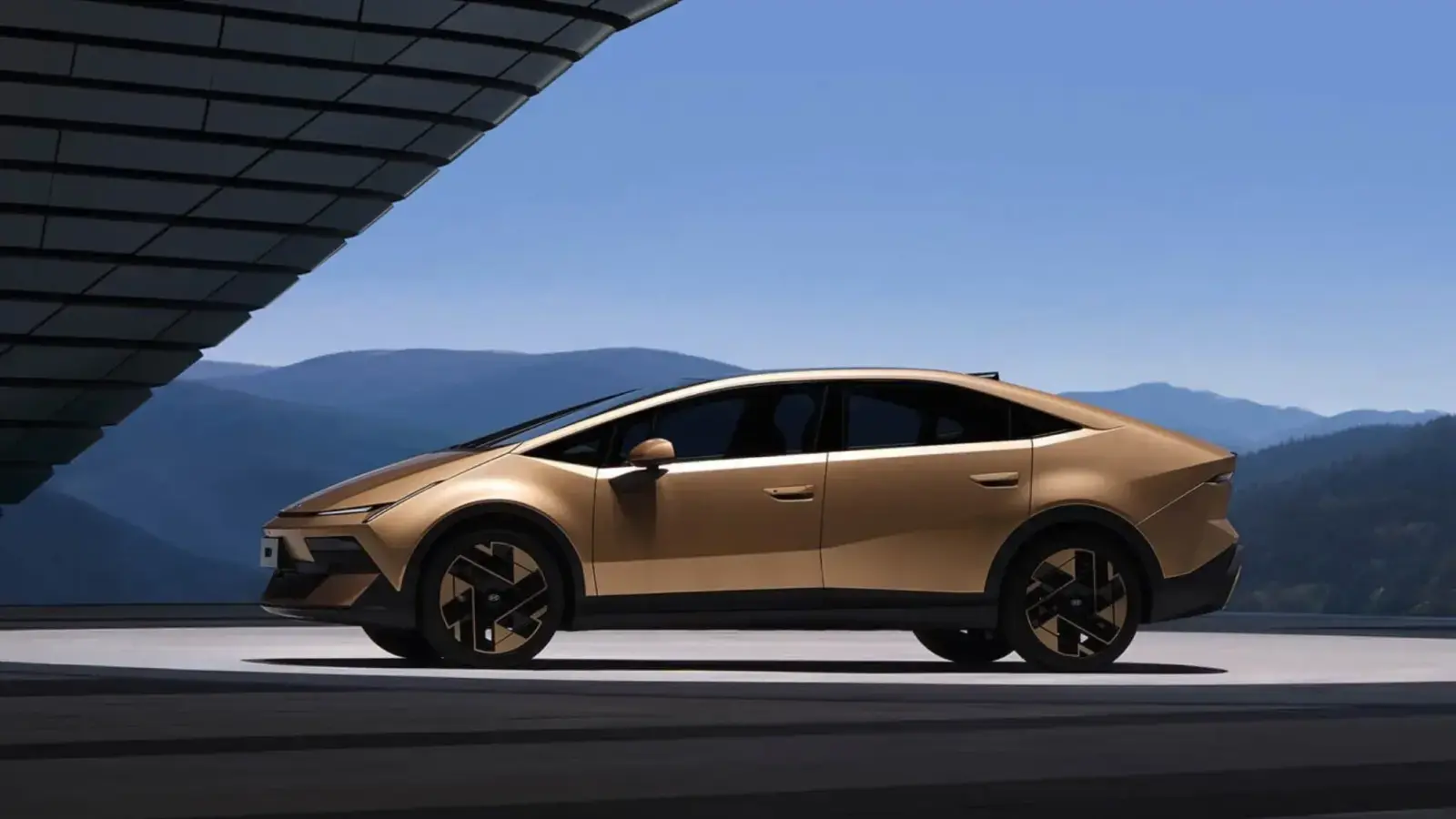
The Ioniq V was developed specifically for China through Beijing Hyundai, and its design makes it difficult to mistake for one of the brand’s conservative fleet sedans. Its low nose, sharply sculpted body, frameless doors, fastback roofline, and angular lighting give it an almost concept-car appearance.
There are even hints of Lamborghini-style wedge design in its proportions, although the overall execution remains distinctly Hyundai. Buyers can also escape the usual sea of gray, black, and silver with colors including Cyber Gold, Gamma Green, and Dimensional Purple.
Size is another surprise, as the Ioniq V measures 4,900 mm, or 192.9 inches, from nose to tail and rides on a 2,900-mm, or 114.2-inch, wheelbase.
That puts it squarely into familiar midsize-sedan territory. A current Hyundai Sonata is roughly 193.3 inches long, while a Toyota Camry measures about 193.5 inches.
The Interior Doesn’t Look Like A $17,800 Car Either
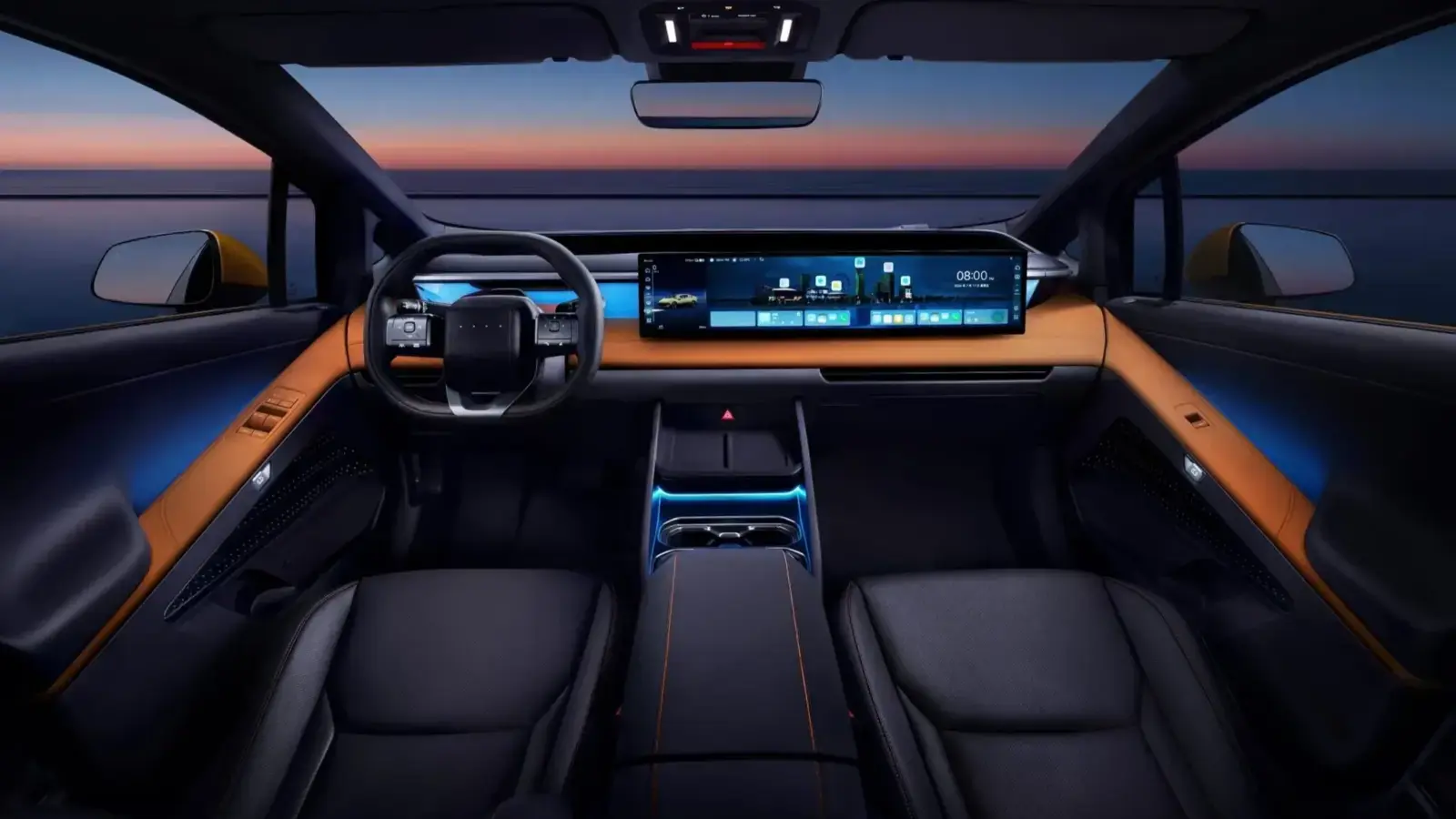
Things get equally ambitious once you open the door. Dominating the dashboard is a 27-inch display backed by Qualcomm’s Snapdragon 8295 processor, supplemented by a head-up display Hyundai calls Cyber Eye.
The infotainment system incorporates artificial-intelligence technology from Chinese companies Baidu and ByteDance. Driver-assistance technology comes from Momenta, while Hyundai also lists nine airbags and an extensive collection of active safety systems.
That combination shows how fiercely competitive China’s EV market has become. A low price alone is no longer enough when domestic brands regularly offer enormous screens, advanced software, sophisticated driver assistance, and surprisingly premium interiors at mainstream prices.
Up To 404 Miles Of Claimed Range
Three versions are initially available. The Standard Edition starts at 119,900 yuan, or around $17,800, while the Smart Driving Edition rises to roughly $19,300 and the Long Range version costs approximately $20,800.
Power comes from a single electric motor driving the rear wheels, producing either 188 horsepower or 225 horsepower depending on configuration. CATL supplies lithium-iron-phosphate battery packs with capacities of 53.5 kWh and 66.8 kWh.
Claimed range stretches from approximately 323 miles to 404 miles, depending on specification. Those figures use China’s CLTC testing procedure, which is considerably more optimistic than the EPA cycle, so the American-rated range would be noticeably lower.
Even allowing for that difference, the numbers remain impressive considering the price. The larger-battery version costs barely $3,000 more than the entry model while delivering substantially greater range and additional power.
The Ioniq V uses Hyundai’s E-GMP architecture and an 800-volt electrical system, but Hyundai has not yet disclosed its maximum charging rate, although the company’s existing 800-volt EVs have established a strong reputation for rapid DC charging.
China Gets The Bargain
The Ioniq V illustrates an increasingly uncomfortable reality for buyers watching China’s EV market from elsewhere. Chinese consumers now have access to large, technologically sophisticated electric cars at prices that would barely buy an entry-level gasoline-powered vehicle in the United States.
Hyundai clearly needs aggressive pricing to compete there. China’s EV sector includes a huge collection of domestic manufacturers fighting over customers, forcing established international companies to deliver better specifications for less money.
Hyundai has indicated that lessons learned from its Chinese EV program could eventually influence vehicles sold globally, and the company reportedly intends to expand the design philosophy across a much larger local lineup. That still doesn’t give Western buyers a date for the Ioniq V itself.
Perhaps it will eventually reach markets such as Australia, Europe, or Canada. For now, though, the Ioniq V is exactly the kind of affordable, stylish electric sedan many buyers say they want — unfortunately, it’s parked on the wrong side of the world.