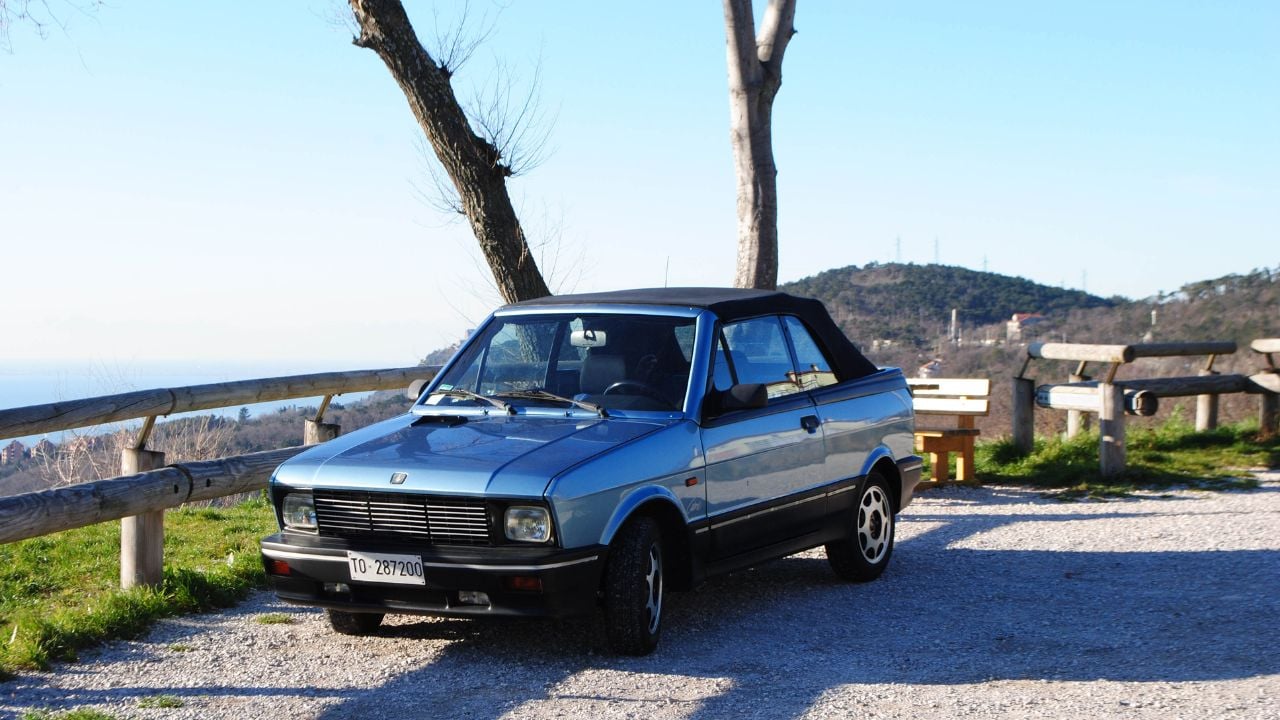
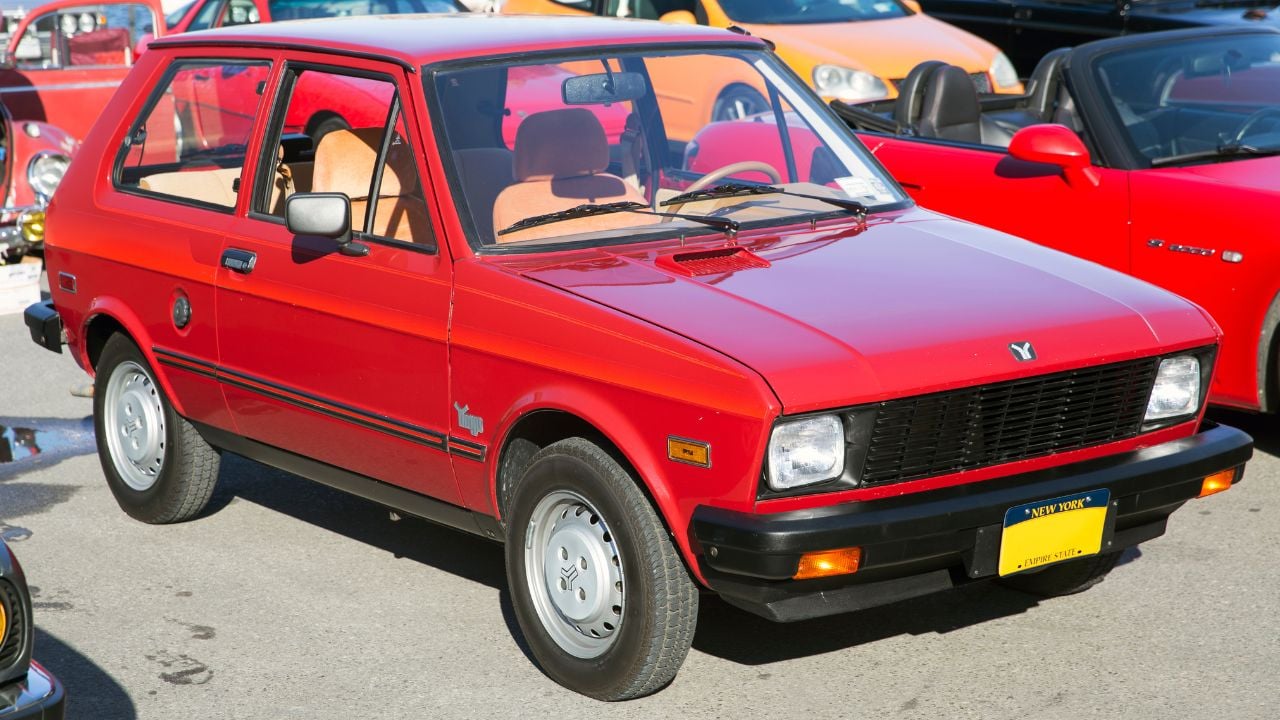
Picture this: you walk into a dealership in late 1985, and there’s a brand-new car… with a $3,990 sticker (before destination). Not used, not damaged: factory fresh with a full warranty. That’s tough to picture now in this economy; it was honestly even shocking back then.
But that was the Yugo GV, and it turned the American car market upside down in ways nobody saw coming.
The Yugoslav Connection: More Than Just Eastern Bloc Engineering
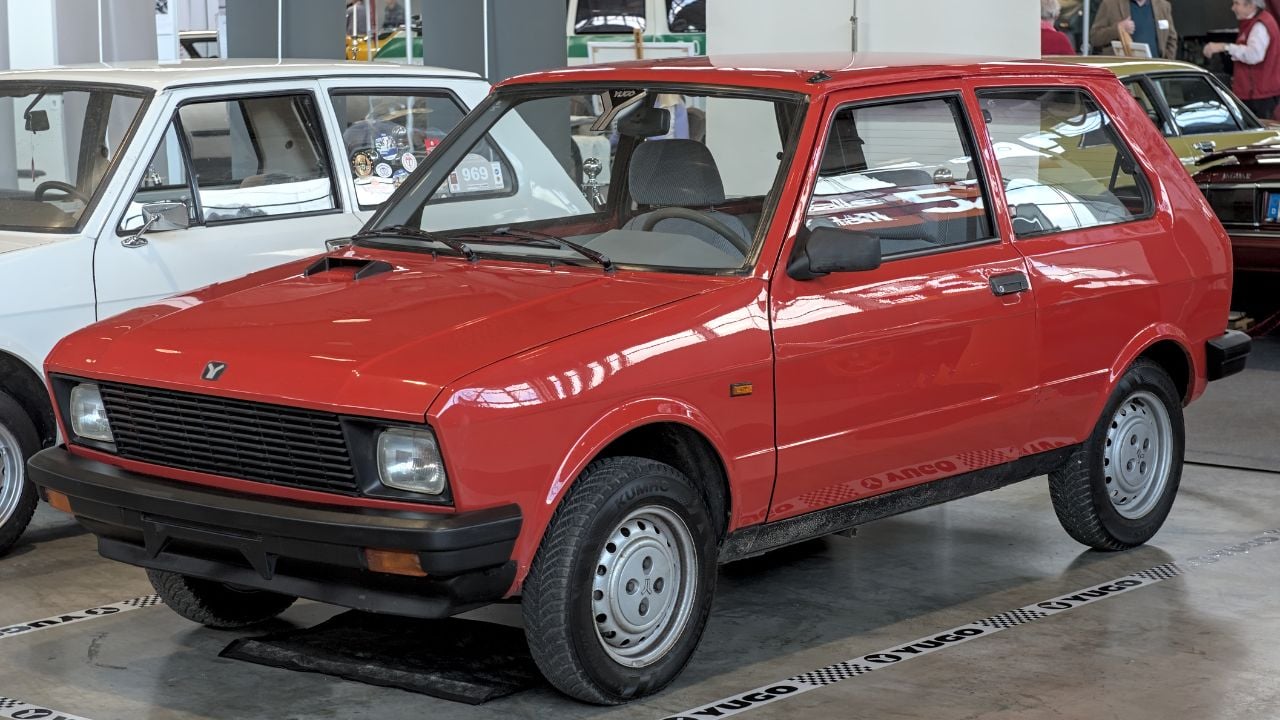
What made the Yugo fascinating wasn’t just its price tag. This little hatchback came from Zastava, Yugoslavia’s state-owned automaker based in Kragujevac, Serbia. Founded in 1953, Zastava had been building cars under license from Fiat since the late 1950s, starting with the Fiat 600. By the 1980s, they were producing the Zastava Koral (which became our Yugo), derived from Fiat’s small-car mechanicals, most commonly described as a shortened Fiat 127-based layout—proven European small-car architecture that had been refined over decades.
The genius of Yugoslavia’s position was its unique geopolitical stance. While other Eastern Bloc countries were locked behind the Iron Curtain, Tito’s Yugoslavia maintained diplomatic and trade relationships with both East and West. This gave Zastava access to Western technology and markets that other communist manufacturers could only dream about. They weren’t just building cars for domestic consumption: they were exporting to Western Europe, where small, affordable cars were perfectly normal.
The Bricklin Factor: A Serial Automotive Entrepreneur’s Latest Gamble
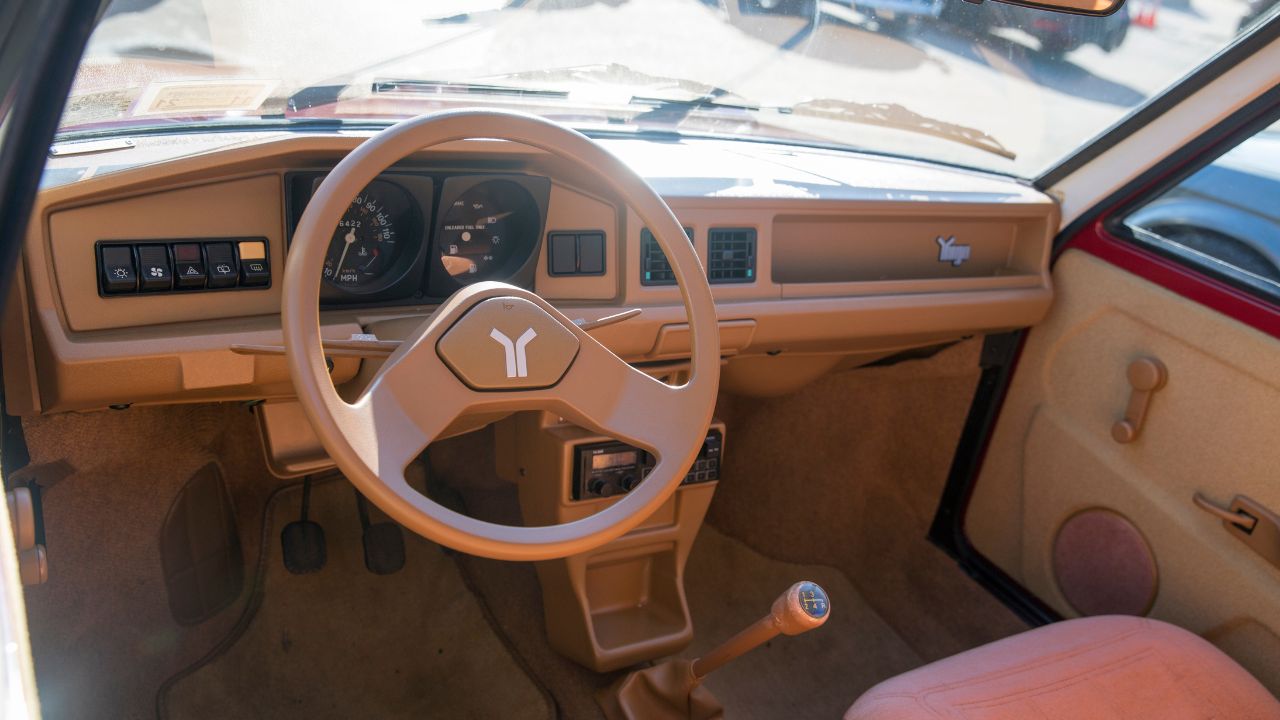
Enter Malcolm Bricklin, the man who had already brought us Subaru in America and created the gull-winged Bricklin SV-1 sports car. Bricklin had an eye for spotting automotive opportunities others missed. When he discovered the Zastava Koral in Europe, he saw something the American market had never experienced: a genuinely new car at used-car prices.
Bricklin’s marketing strategy was brilliant in its simplicity. He renamed it the Yugo GV—”Great Value”—and positioned it not as a cheap car but as smart transportation. The messaging was clear: why pay $7,000 for a basic Escort when you could get factory-fresh wheels for $3,990? It was automotive disruption decades before Tesla made that concept fashionable.
Technical Deep Dive: What You Actually Got for $3,990
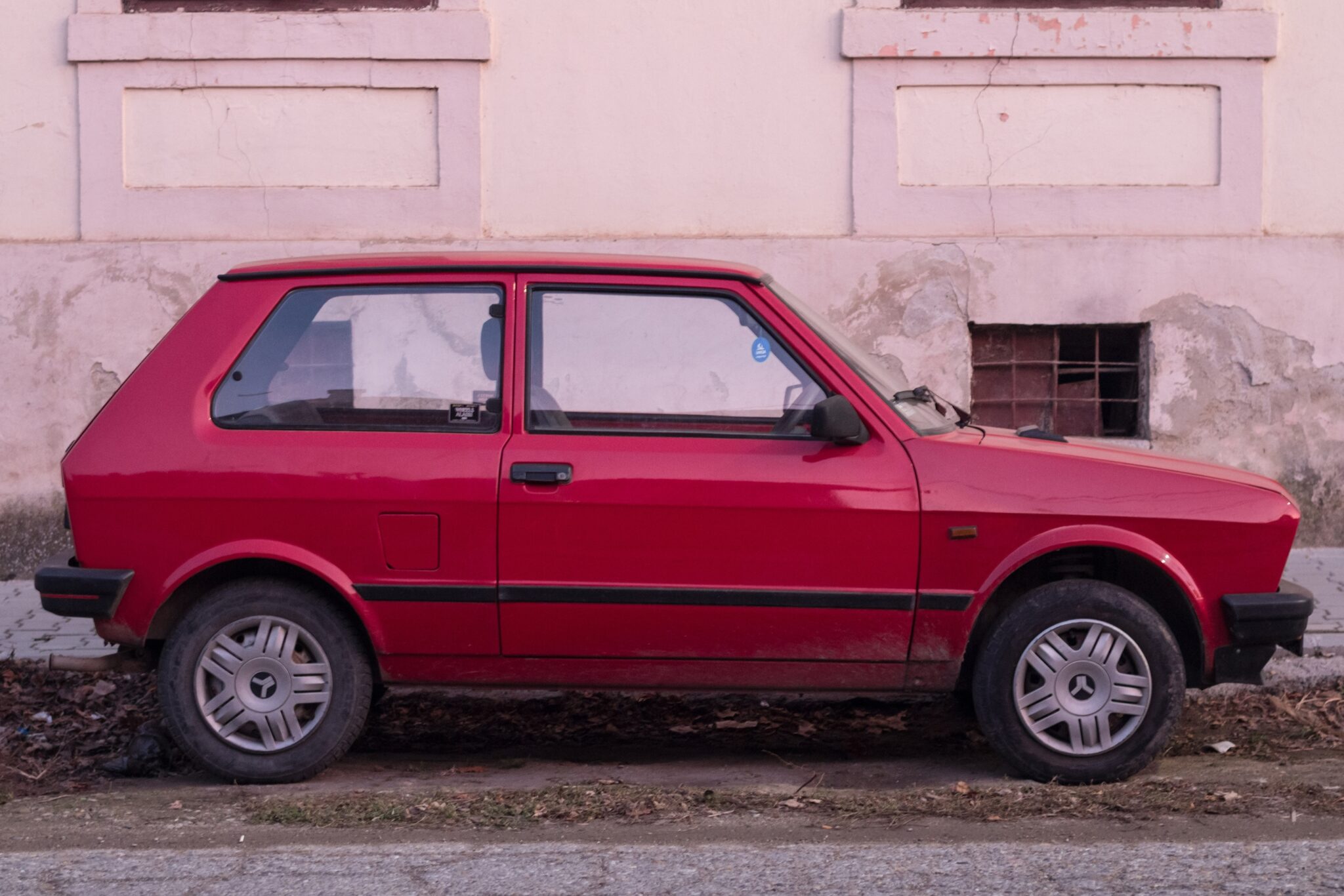
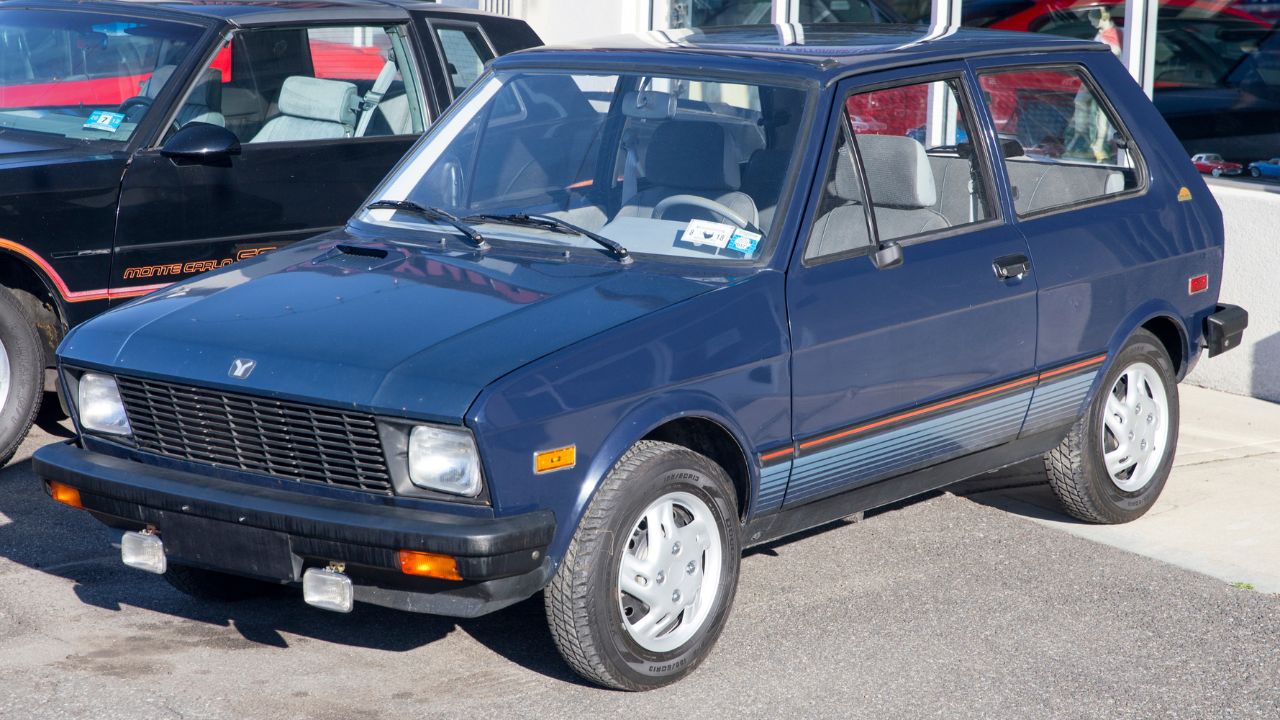
Let’s talk specs, because the Yugo was more substantial than its reputation suggests. The base GV used a 1.1-liter SOHC four (about 55 hp), while the 1.3-liter engine, typically paired with the sportier GVX, was commonly rated around 65 hp.
Early cars typically used a four-speed manual, with five-speeds appearing on higher trims/years, and the car featured front-wheel drive with MacPherson struts up front and a torsion beam rear axle. The curb weight hovered roughly around 1,860-1,900 pounds. Fuel economy was genuinely impressive: EPA ratings were in the mid-20s (for example, a 1989 GV/GVX is listed at 24 city / 29 highway mpg).
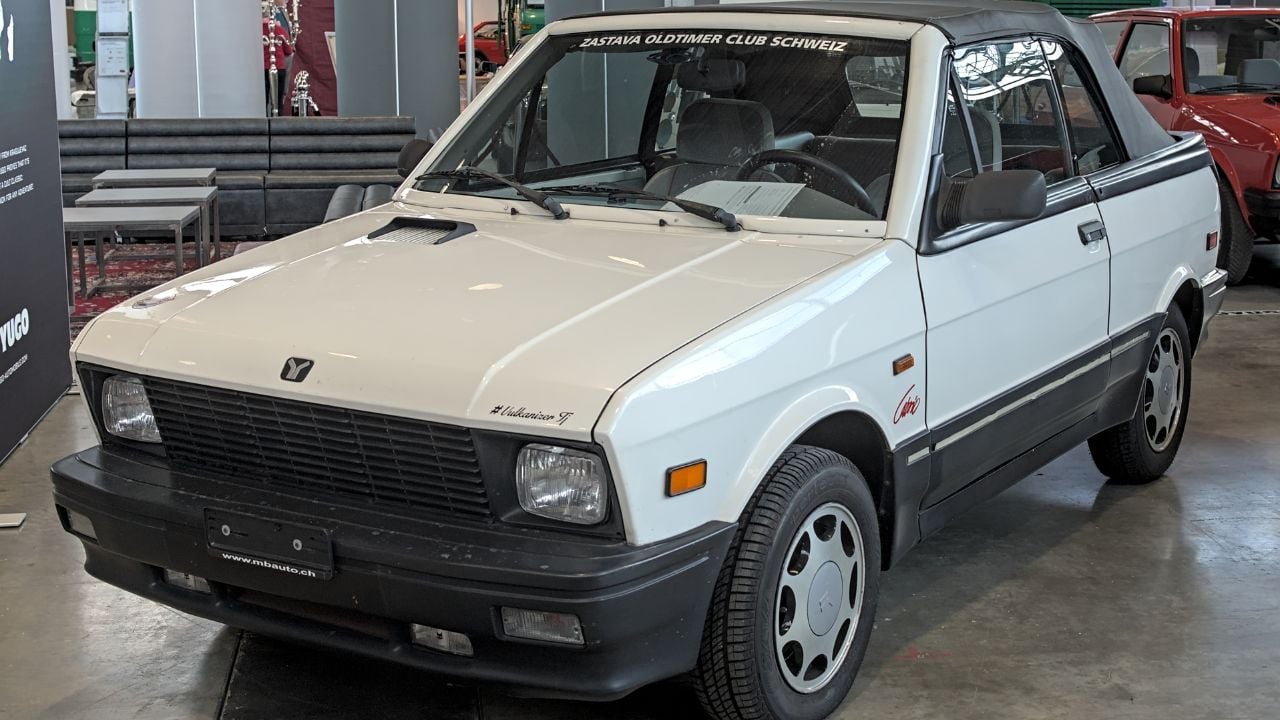
The body was a conventional three-door hatchback design with decent cargo space when the rear seats were folded down. Later, Bricklin added the GVX with upgraded interior trim and the surprisingly popular GVC convertible—yes, a sub-$6,000 convertible that actually looked pretty sharp with the top down.
Sales Success: The Numbers Tell an Interesting Story
The market response was immediate and dramatic. In 1985 (a partial year), Yugo sold 3,895 units; in 1986 (the first full year), it sold 35,959 – remarkable for a completely unknown brand. Sales peaked in 1987 at 48,812 units, making it one of the fastest-growing import brands in America. Total U.S. sales from 1985 to 1992 reached 141,651 units, which put Yugo ahead of several established European brands during its run.
The dealer network grew to hundreds of locations (often cited in the ~340–400 range at peak), and many reported waiting lists for the cars. This wasn’t just impulse buying – people were genuinely excited about affordable new-car ownership. College students, first-time buyers, and families needing basic transportation finally had an option that didn’t require a massive loan.
Engineering Reality: Understanding What Made It Tick

Here’s where things get interesting for the car community. The Yugo used Fiat’s proven small-car platform, which meant parts availability wasn’t terrible (at least initially) and home mechanics could work on them with basic tools. The engine was a development of Fiat’s long-running SOHC four-cylinder family, with a cast-iron block and aluminum head.
The electrical system was 12-volt with a standard alternator and starter setup. Suspension components were straightforward—no exotic bearings or hard-to-find bushings. The braking system used front discs and rear drums, perfectly appropriate for a car this size and weight. In many ways, it was refreshingly simple engineering at a time when cars were becoming increasingly complex.
Quality control was the real challenge. Zastava’s manufacturing processes weren’t quite up to Japanese or German standards, and the long shipping journey from Yugoslavia didn’t help. Paint quality varied, interior trim pieces sometimes didn’t fit perfectly, and electrical connections could be inconsistent. But for mechanically inclined owners, these were solvable problems rather than fatal flaws.
The Cultural Phenomenon: More Than Just Transportation

By 1988, the Yugo had become a cultural touchstone. It appeared in movies like Drowning Mona and countless TV shows as shorthand for unpretentious transportation. But here’s what’s honestly interesting: it wasn’t always portrayed negatively. Often, it was the scrappy underdog car, the choice of characters who were resourceful and down-to-earth.
Yugo ownership developed its own subculture. Owners created clubs, shared maintenance tips, and took pride in keeping their cars running. There were Yugo rallies, Yugo racing events, and even Yugo art cars. The community aspect was surprisingly strong – when you owned a Yugo, you were part of something unique.
Global Perspective: The Yugo Beyond America

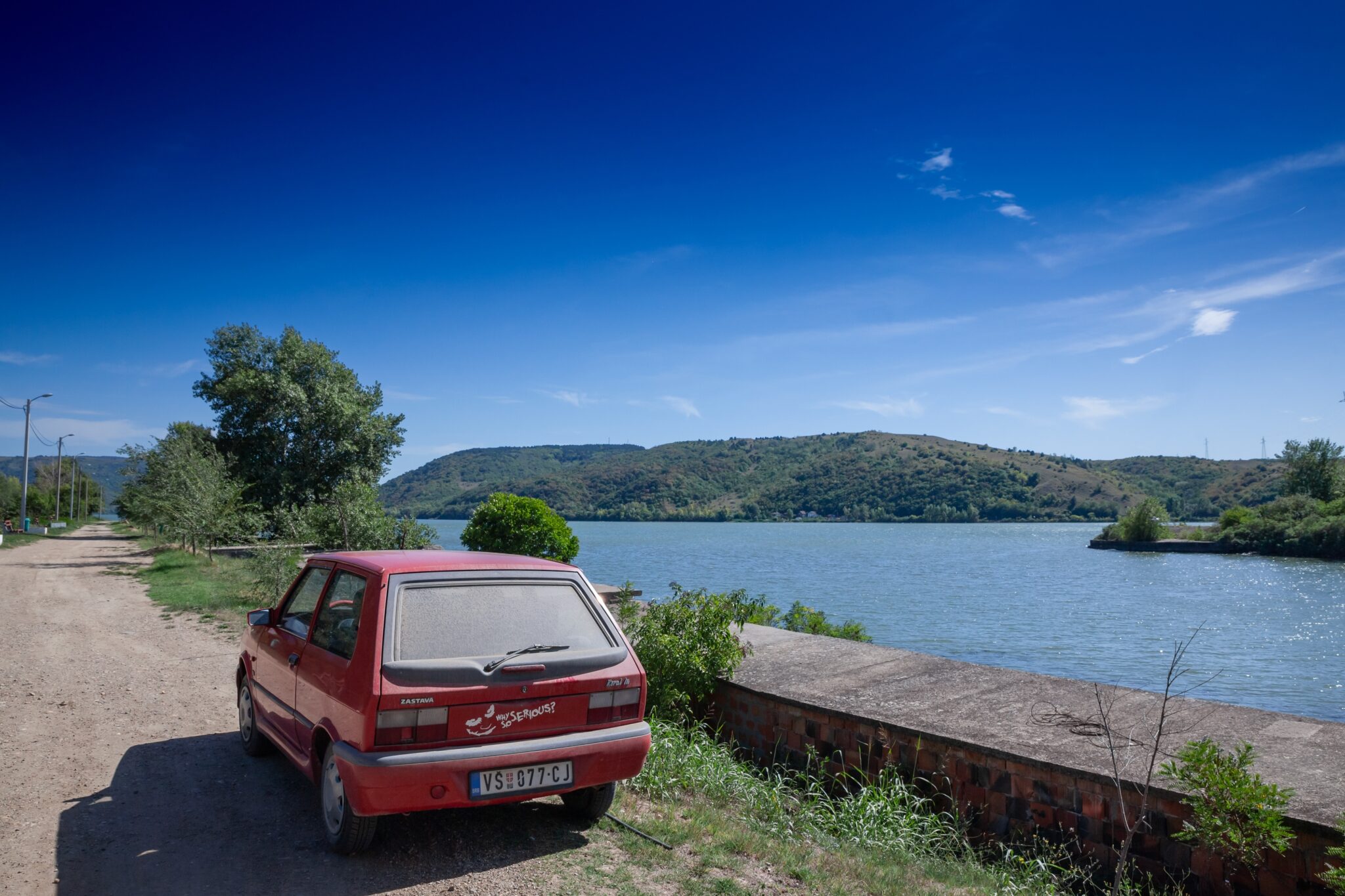
While Americans were discovering the Yugo, Europeans had been living with small, affordable cars like this for decades. The Zastava Koral was a common sight across Europe, where it competed successfully with the VW Polo, Renault 5, and Peugeot 104. In Yugoslavia, it was considered a solid family car that offered good value and easy maintenance.
Zastava also exported to other markets, including Australia, where Yugos were sold in limited numbers via importers. Different markets received different specifications and trim levels, showing that the basic platform was more adaptable than American buyers realized. The company even developed more powerful engines and sporting versions for European consumption.
The Endgame: Political Reality Meets Automotive Dreams
The Yugo’s American story ended not because of market rejection but due to forces beyond anyone’s control. The breakup of Yugoslavia in 1991 disrupted production at the Kragujevac plant. Simultaneously, new U.S. safety regulations (particularly the requirement for driver-side airbags) would have necessitated costly redesign work, which the political situation rendered impossible.
The last Yugos reached American shores in 1992, ending a remarkable seven-year run. Dealers gradually closed, parts became harder to find, and the cars faded from daily driver duty. But something interesting happened – instead of disappearing entirely, the Yugo began its transformation into a cult classic.
The Collector Market: Yesterday’s Budget Car, Tomorrow’s Classic
Today’s Yugo market tells a fascinating story. Clean, original examples command surprising money at collector car auctions. The convertibles are particularly sought after, with good examples selling for more than their original sticker price. Even hardtop models in excellent condition have found devoted collectors who appreciate their historical significance and quirky character.
Restoration parts are available through dedicated specialists, and there’s an active online community sharing technical knowledge and restoration tips. Some enthusiasts have even swapped in more powerful engines, creating surprisingly quick little hot hatches that honor the original concept while addressing its performance limitations.
What We Can Learn Today
The Yugo story offers lessons that resonate in today’s automotive landscape. It showed that there was genuine demand for affordable new cars in America – something the industry seems to have forgotten as average transaction prices have climbed toward $50,000. It demonstrated that unconventional sources could successfully enter the American market if they offered compelling value.
Most importantly, it proved that cars don’t have to be perfect to be meaningful. The Yugo gave thousands of Americans their first taste of new-car ownership, reliable transportation to work and school, and mobility they couldn’t have afforded otherwise. That’s not a small accomplishment.
Looking back, the Yugo deserves recognition as more than just an automotive curiosity. It was a bold experiment in democratizing car ownership, a successful (if brief) business venture, and proof that the American market was more open to unconventional solutions than anyone expected.
For those of us who appreciate automotive history, the Yugo represents a unique moment when geopolitics, economics, and engineering converged to create something genuinely unprecedented. It may not have been the best car America ever imported, but it was certainly one of the most interesting. And in the grand story of American automotive enthusiasm, that counts for something special.