For a lot of people, the first truly unforgettable car was not one they passed on the street. It was one they saw on a television, in a movie theater, in a racing game, or in race footage that made the machine feel larger than life before they ever stood next to one in person.
That kind of obsession forms differently from ordinary car enthusiasm. It starts with repetition, with a menu screen you kept returning to, a chase scene you replayed in your head for weeks, or a machine that looked so impossible on screen that it stopped feeling like transportation and started feeling like mythology.
Some of these cars were already important in the real world before screens amplified them. Others became truly permanent in car culture only after a movie, a game, or a televised race turned them into objects of obsession for people who might never have seen one up close.
That is what ties this list together. These are the cars that lived vividly in people’s heads long before they lived anywhere near them in real life.
Toyota Supra MK4
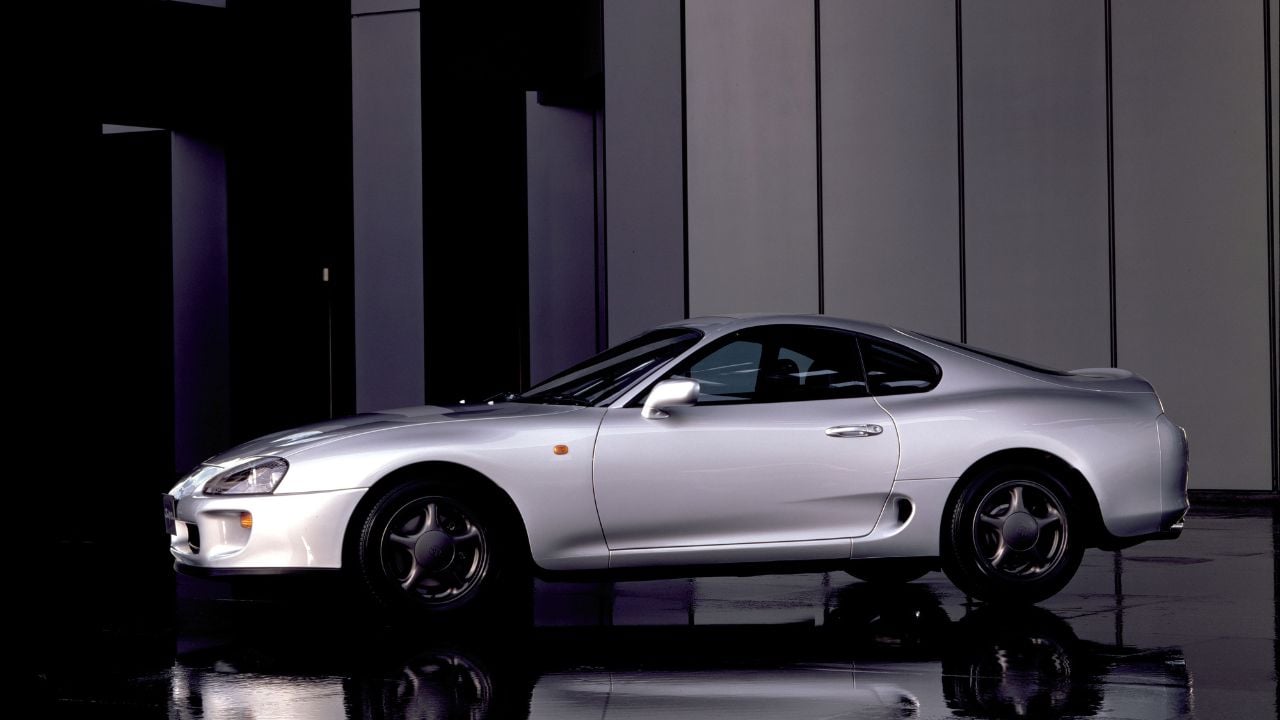
The fourth-generation Toyota Supra became one of the defining Japanese performance cars of the screen era. Gran Turismo put it in front of millions of players in the late 1990s as a machine worth saving for, tuning, and chasing through long evenings on the original PlayStation.
That digital reputation was backed by a real car that could deliver. In U.S.-market twin-turbo form, the Supra’s 3.0-liter inline-six was rated at about 320 horsepower, which gave the fantasy genuine substance once the specs entered the conversation beyond the game itself.
Then The Fast and the Furious arrived in 2001 and pushed the Supra into another level of visibility. The bright orange movie car became so famous that it now feels inseparable from the model’s identity, even though the Supra already had deep credibility with gamers before Hollywood got to it.
That combination is why the MK4 remains so powerful in the imagination. A lot of people knew exactly what a Supra was long before they ever saw one in traffic, and for many of them the screen version was the beginning of the whole obsession.
Nissan Skyline GT-R R34
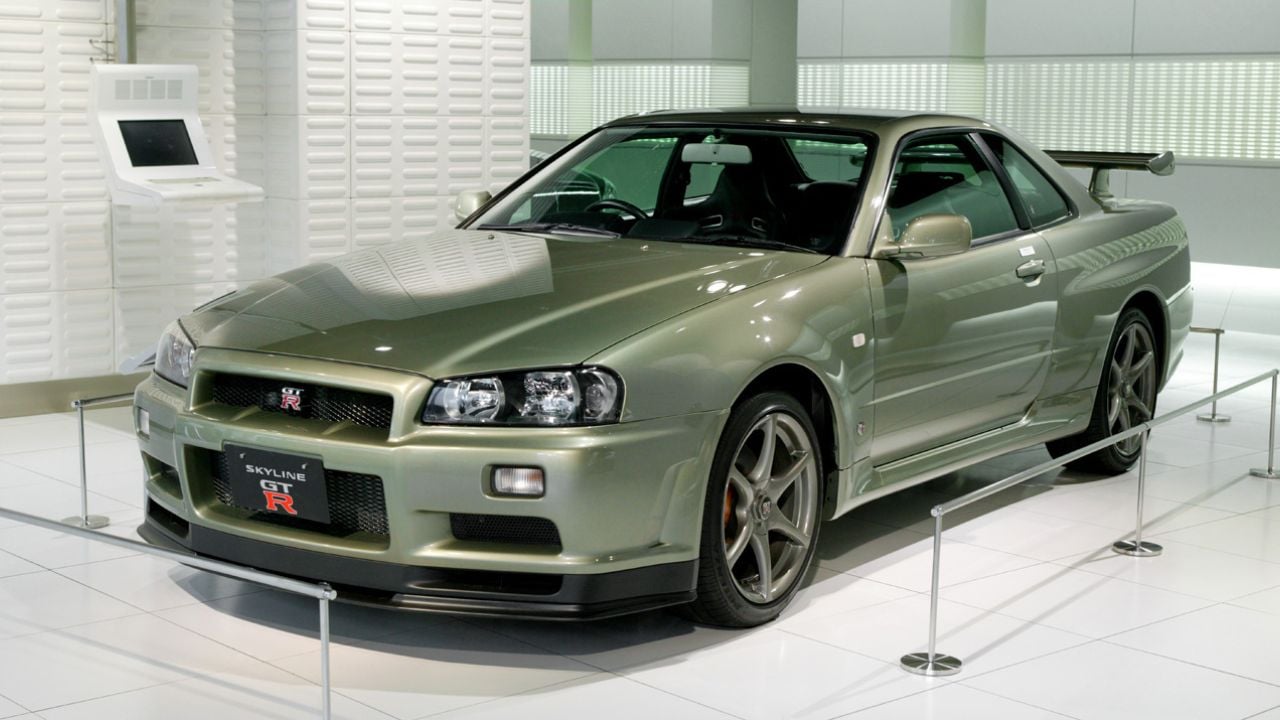
Few cars became more tightly linked to the Gran Turismo generation than the Nissan Skyline GT-R. The R32, R33, and R34 all benefited from that exposure, but the R34 is the one that hardened into legend for a huge number of players.
It looked futuristic, it carried the GT-R name with unmistakable weight, and in the games it was always among the most desirable machines on the roster. The real car backed that up with a twin-turbocharged inline-six, advanced all-wheel drive, and the kind of capability that made the hype feel deserved rather than inflated.
For American fans, the effect was even stronger because the R34 was never officially sold new in the United States. That distance turned it into a kind of forbidden object, something you knew intimately from screens while barely seeing it in person at all.
2 Fast 2 Furious reinforced that mythology in 2003, and import eligibility has only made the desire more tangible with time. The R34 is one of the clearest examples of a car that became emotionally real to people years before it became legally or physically accessible to them.
Ferrari F40

The Ferrari F40 was already famous before many younger enthusiasts ever understood why. That is part of what made it so effective on screen. It arrived in games, magazines, and television as a car that already carried an aura of importance, which meant the first encounter often felt like being introduced to something sacred.
Unlike some cars whose media fame outran their real-world ability, the F40 had the hardware to justify the reverence. Its twin-turbocharged 2.9-liter V8 made around 478 horsepower, and the rest of the experience was as raw as the shape suggested: no ABS, no traction control, and almost none of the softness people later came to expect from supercars.
That is why the F40 worked so well for people who first met it through a screen. It felt impossible, aggressive, and a little frightening even in simplified digital form, and the real thing rarely collapsed that illusion once people finally saw one at a show or heard one fire up in person.
For many enthusiasts, the F40 became the ultimate proof that some fantasy cars are not diminished by reality. They become stronger when reality confirms the myth.
Lamborghini Countach
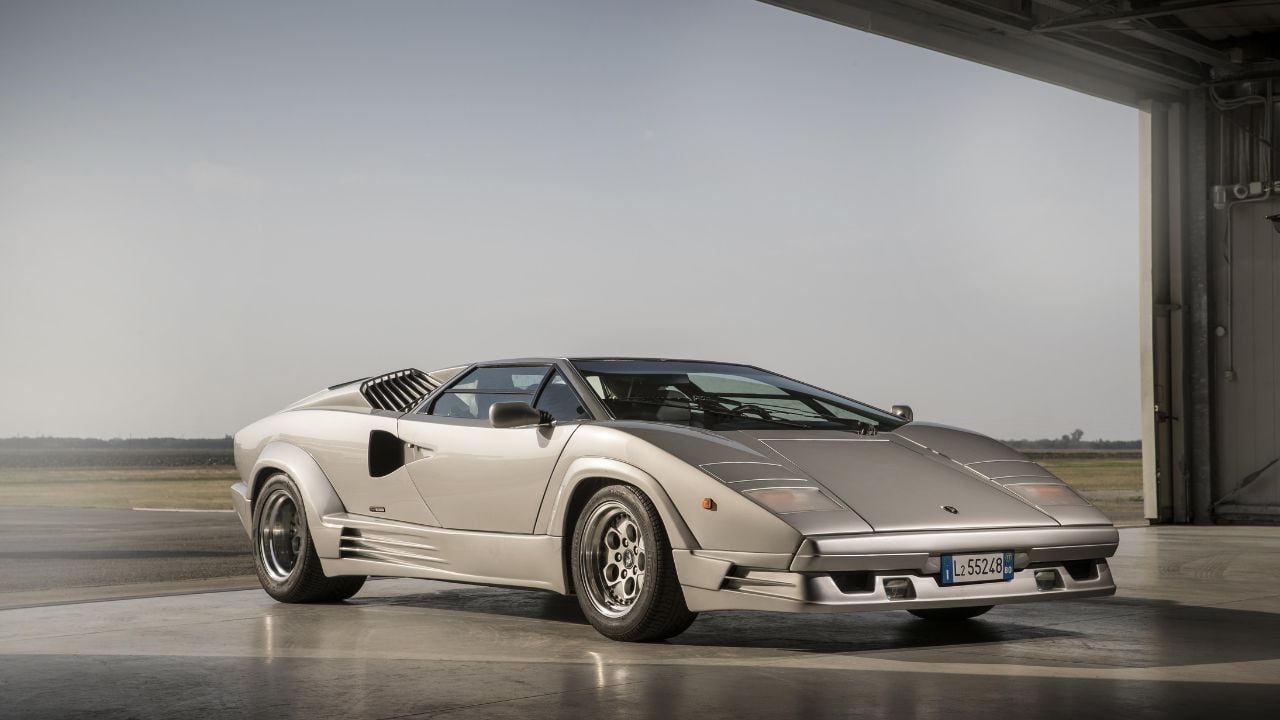
The Lamborghini Countach was a screen car before it was almost anything else. Posters, television appearances, films, magazine covers, and early games all used it as visual shorthand for excess, speed, and impossible glamour.
Its wedge silhouette and scissor doors did most of the work. Even people who knew nothing about horsepower or engine layout understood immediately that the Countach belonged to a different universe from ordinary cars.
That visual extremity translated perfectly to screens. When racing games began using it, players already carried a mental image of what the Countach represented, which made every appearance feel like a reward. Later 5.2-liter versions made well over 400 horsepower depending on the exact specification and market, which only strengthened the sense that the styling was backed by real force.
The Countach remains one of the best examples of a car whose media life amplified its real-world one until the two became almost impossible to separate. For a generation of enthusiasts, it was not just a Lamborghini. It was the Lamborghini.
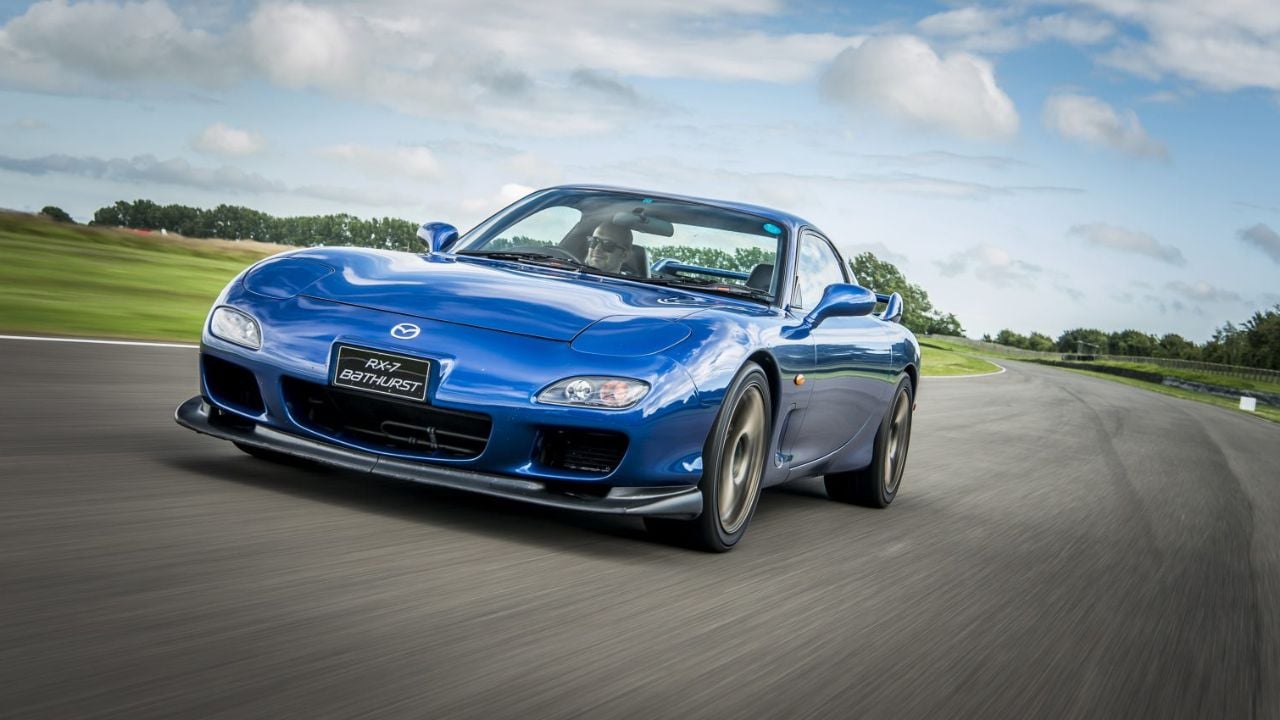
Mazda RX-7 FD

The third-generation Mazda RX-7 was one of the cars Gran Turismo seemed to understand instinctively. It treated the FD like something special, and in doing so it introduced a huge audience to the idea that a rotary-powered Japanese coupe could belong in the same emotional space as far more expensive European machinery.
The real car had the ingredients to make that believable. In early Japanese-market form, the twin-turbo 1.3-liter rotary was rated at roughly 255 horsepower, and the car’s low weight and sharp balance gave it the kind of precision the games hinted at so well.
Then came The Fast and the Furious, which permanently linked the RX-7 and Supra in the minds of a lot of viewers. The FD became one of those rare movie-and-game cars that felt just as unusual and charismatic in real life as the screen had promised.
It was never the simplest car to own, and rotary maintenance made sure of that. But that difficulty only added to its mystique, because the RX-7 always seemed like a car for people who wanted something stranger and more memorable than the obvious choice.
DeLorean DMC-12

No car on this list owes more of its identity to a single movie than the DeLorean DMC-12 owes to Back to the Future. The stainless body and gull-wing doors were already unusual, but the film turned the car into something far larger than its modest real-world footprint ever would have allowed on its own.
That transformation happened fast and completely. For many people, especially younger viewers, the movie was not just their first exposure to the DeLorean. It was the reason they knew the car existed at all.
The real DMC-12 was much less heroic on paper. Built from 1981 to 1982, it used a rear-mounted 2.85-liter V6 with roughly 130 horsepower, which made it more distinctive than truly quick. But that gap between cinematic greatness and real-world modesty became part of the charm instead of a disappointment.
The DeLorean is unique because the screen version did not merely popularize the car. It effectively rewrote what the car meant forever.
Ford GT40
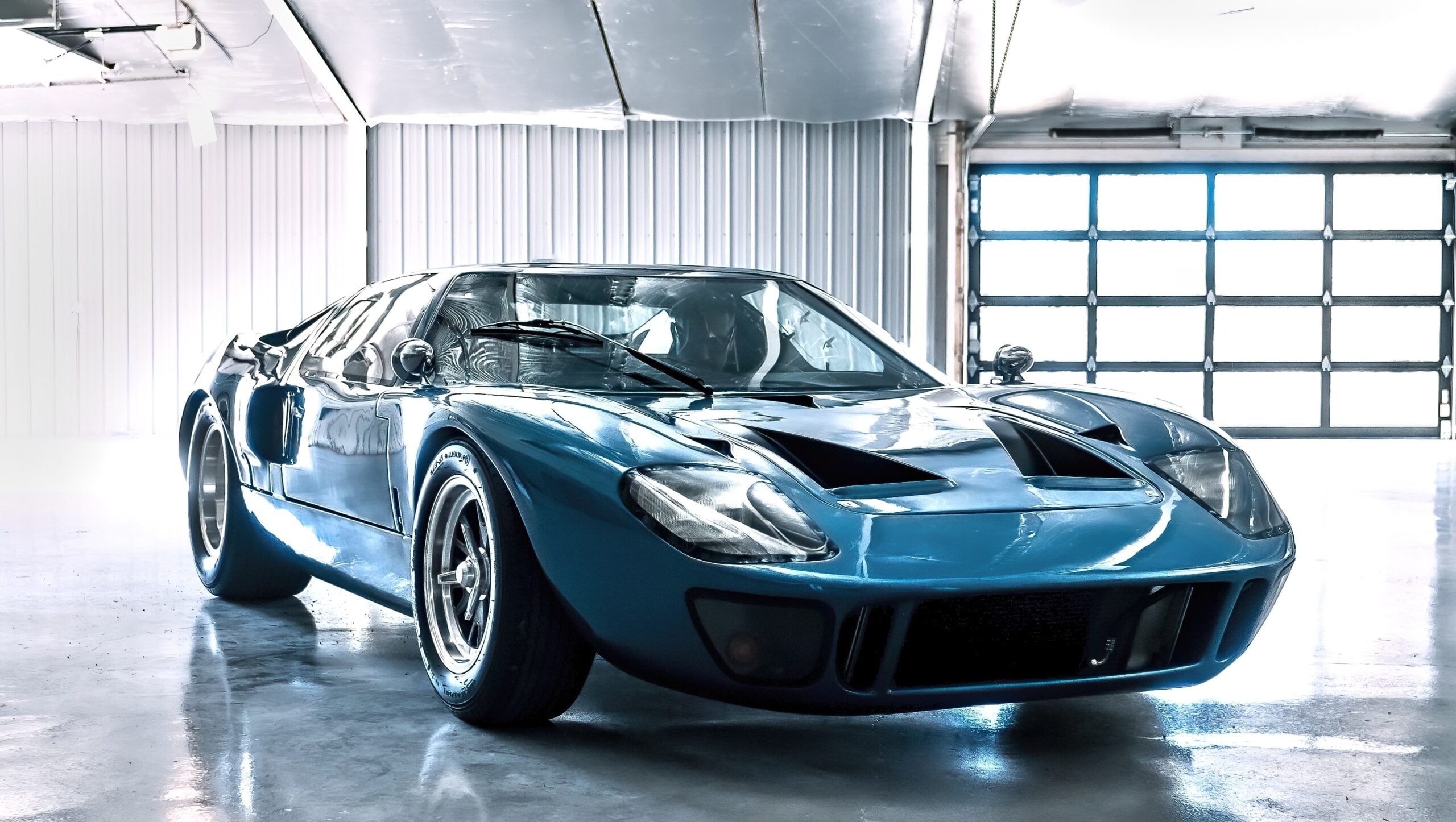
The Ford GT40 fits this theme a little differently from the others, but it still belongs here. For many people, the first encounter did not come through a fictional film or a game menu. It came through the screen of motorsport itself, with Le Mans footage turning the GT40 into an American racing legend.
Ford’s wins at Le Mans from 1966 through 1969 made the car famous in a way few race machines ever become famous. Later games and the 2019 film Ford v Ferrari carried that image forward for audiences who had never seen the original broadcasts.
The GT40’s emotional weight comes from what it represented as much as what it was. Depending on specification, the race cars used different V8s with outputs well over 400 horsepower, but the numbers are not really why the car lingers so strongly in memory.
What people remember is the image of it winning, the idea of it beating Ferrari, and the sense that they knew the GT40 before they ever stood in front of one in a museum or private collection. In that way, it still belongs to the screen-first dream space these cars occupy.
Porsche 959

The Porsche 959 was the kind of car that screens were almost perfectly built for. It was technologically dense, visually understated in a very Porsche way, and so advanced that games could present it as a near-unbeatable engineering weapon long before most people had any hope of seeing one on the road.
That reputation was grounded in reality. The 959’s twin-turbo flat-six made about 450 horsepower, and its all-wheel-drive system was so sophisticated for the time that it felt like a glimpse of a future most manufacturers were still years away from understanding.
For American fans, the mystique was even stronger because the car was not federally approved for normal U.S. road use during its original era. That meant many enthusiasts knew it first as an idea: a near-mythical Porsche seen in magazines, games, and screen-based car culture rather than in daily life.
Porsche built fewer than 300 roadgoing examples, which only made the distance between fantasy and reality feel greater. The 959 became the kind of car you could know deeply without ever expecting to see one in person, which is exactly the sort of machine this list is really about.
When the Screen Was Enough

For a lot of enthusiasts, cars like these were the beginning of the whole story. They appeared at the right age, in the right medium, and with exactly the right amount of distance between fantasy and reality to make obsession feel inevitable.
That is why they linger. The real cars and the screen cars were not always identical, but the difference was rarely large enough to break the spell. If anything, finally seeing them in person often made the old screen memory feel even stronger.