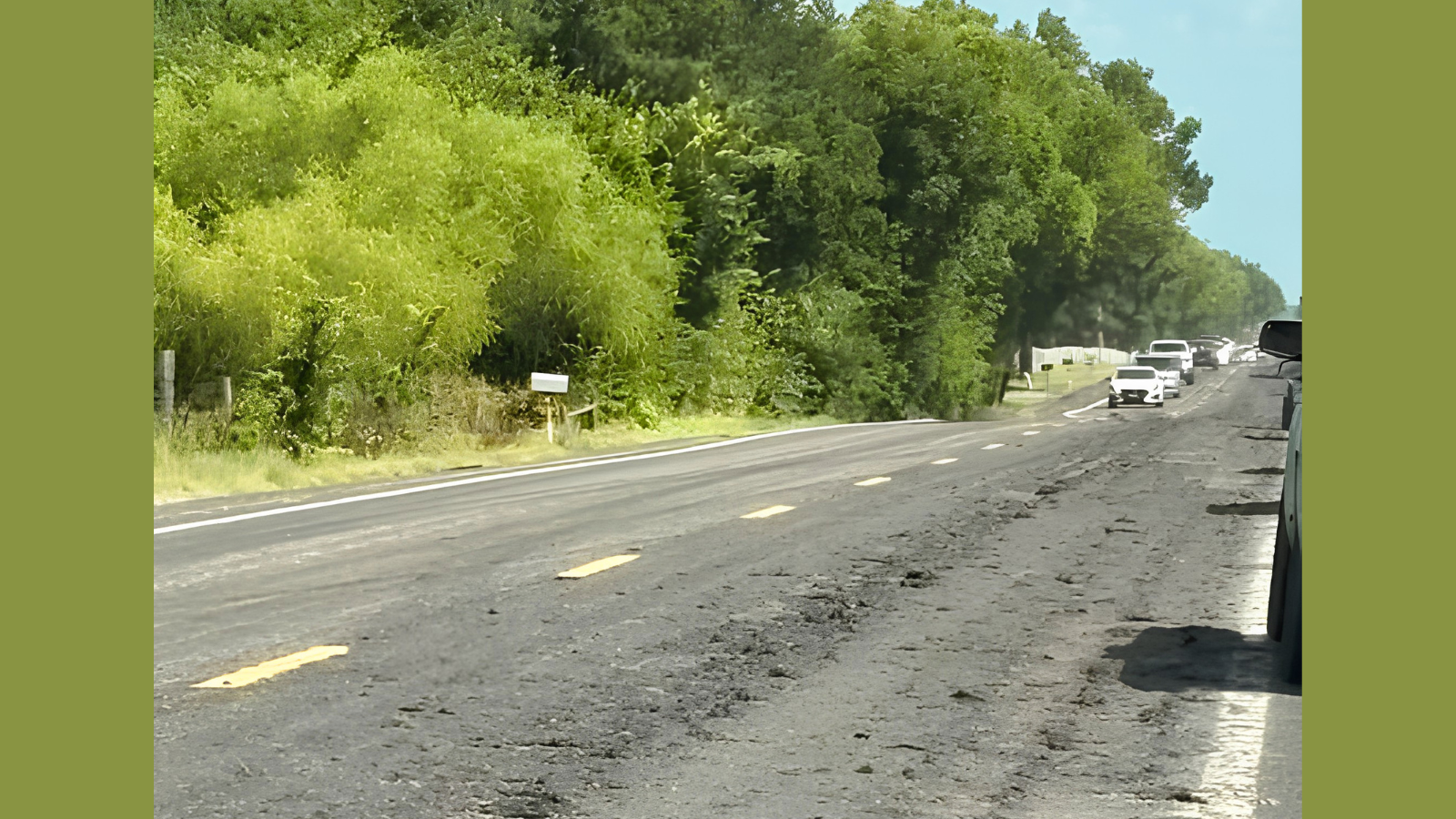
A stretch of highway in North Texas recently became a dramatic example of what can happen when extreme heat pushes road materials beyond their limits. Instead of encountering ordinary potholes or cracks, drivers on U.S. Highway 69 found sticky pavement clinging to their tires, coating trailers, and reportedly damaging several vehicles.
The unusual scene unfolded between Celeste and Greenville in Hunt County after days of triple-digit temperatures. Drivers compared the softened surface to chewing gum, while photos and videos shared online showed thick black material covering tires and being pulled away from portions of the roadway.
Although the Highway 69 failure was unusual, heat-related road damage is becoming a broader concern. NPR recently reported that prolonged heat waves are placing greater stress on roads across the country, with asphalt softening, concrete buckling, and pavement materials being pushed beyond the temperature ranges they were designed to withstand.
For motorists, the incident is a reminder that extreme summer weather threatens engines, batteries, and tires. It can also affect the roads beneath them, creating hazards that may be difficult to spot until traffic suddenly begins to slow or change lanes ahead.
Extreme Heat Causes U.S. Highway 69 Surface to Release
In updates publicly shared by Daren “Peanut” Money, Hunt County Commissioner, Precinct 1, the Texas Department of Transportation said it began responding to reports of hazardous conditions on U.S. Highway 69 between Celeste and Greenville at approximately 2:30 p.m. on July 9.
After inspecting the roadway, TxDOT determined that an emergency repair was necessary because hot temperatures had damaged the pavement surface. Maintenance crews smoothed the roadway, removed loose material from the travel lanes, and placed electronic message boards in both directions to warn motorists.
Money said TxDOT crews also worked to cool the roadway while officials investigated the failure. His early update indicated that a sealcoat applied to the highway appeared to be releasing under the extreme heat.
The Houston Chronicle later reported that TxDOT attributed the failure to a protective sealcoat applied about a year earlier. TxDOT spokesperson Jeffrey Williford told the outlet that the material began to “activate” as temperatures climbed.
Traffic had also been forced to idle following a crash in the area. Heat radiating from stopped vehicles reportedly raised the pavement temperature even further, while drivers making U-turns placed additional stress on the softened surface and pulled material away from the roadway.
The Chronicle reported that approximately one mile of the northbound lane and five miles of the southbound lane required repairs. Work was expected to take between one and two weeks, weather permitting, although rain delayed the initial repair schedule.
The Pavement Surface Reportedly Reached 200 Degrees
Air temperatures near 100 degrees can make conditions miserable, but the pavement beneath a vehicle can become substantially hotter because dark surfaces absorb solar radiation throughout the day.
The Dallas Morning News reported that TxDOT measured the affected pavement on Highway 69 at approximately 200 degrees Fahrenheit.
Asphalt is made from stone, sand, and a petroleum-based binder known as bitumen. Depending on the mixture, that binder can begin softening at temperatures between approximately 104 and 150 degrees, according to the newspaper.
In this case, it was the oil-based sealcoat covering the roadway that reportedly softened and adhered to passing tires. Once the material began sticking to vehicles, the tires pulled portions of the surface treatment away from the road.
TxDOT spokesperson Tony Hartzel also told the newspaper that stopped traffic can add to the problem because heat from idling engines raises temperatures around an already superheated roadway.
Heat-Related Road Damage Is Not Limited to Highway 69
Texas has dealt with similar pavement problems before. In June 2022, a roadway in Crockett experienced what officials described as “bleeding asphalt” as temperatures climbed to around 100 degrees.
Click2Houston reported that asphalt-binding agents rose to the surface of Loop 304, creating a shiny, potentially slippery film. TxDOT crews slowed traffic and applied lime water to cool the roadway without completely closing it.
Bleeding, sometimes called flushing, occurs when asphalt binder moves toward the road surface during hot weather. The pavement may appear wet or oily even though no liquid was spilled. In addition to becoming sticky, the reflective surface can reduce traction and make the road more difficult to see at night.
Concrete roads respond differently. Rather than becoming sticky, concrete slabs expand in extreme heat. If there is not enough room at the joints for that expansion, sections of pavement can rise and create sudden bumps or buckles.
NPR reported that heat-related pavement failures recently affected Interstate 97 near Baltimore and a street in Chicago. Engineers interviewed by the outlet said roads are typically designed for a range of expected temperatures, but prolonged extreme events can expose the limits of those original assumptions.
Asphalt is generally less expensive and easier to repair, while concrete typically costs more initially but can have a longer service life. More heat-resistant asphalt mixtures and stronger concrete designs are possible, but those options may also increase construction costs.
Protecting Your Vehicle Is Usually Easier Than Recovering Repair Costs
Drivers can generally submit claims when they believe a pothole, broken pavement, loose construction material, or another roadway hazard damaged their vehicle. Receiving compensation, however, is rarely quick or guaranteed.
Cities, counties, states, and transportation agencies often have legal protections under sovereign or governmental immunity laws. Although the rules vary by jurisdiction, a successful claim typically requires proof that the responsible agency knew or reasonably should have known about the dangerous condition, had sufficient time to repair it or warn drivers, and failed to take reasonable action.
The motorist must also show that the roadway hazard directly caused the claimed damage. Existing tire, suspension, alignment, or paint problems can complicate that process, and claims may be denied even when a driver believes the road was clearly responsible.
Government claims also tend to involve special forms, strict notice requirements, and short filing deadlines. Reviews can take weeks or months, and submitting a claim does not guarantee reimbursement.
Because recovering money can be difficult, preventing damage to the extent possible remains the better option.
- Slow down whenever pavement appears rough, shiny, sticky, freshly sealed, or covered with loose material.
- Watch traffic several vehicles ahead. Sudden braking or repeated lane changes may provide an early warning that something is wrong with the road.
- Avoid distractions, especially in work zones and during periods of extreme weather.
- Leave additional following distance so loose asphalt, gravel, or sealcoat is less likely to be thrown onto your vehicle.
- Avoid sharp turns, sudden acceleration, and hard braking when driving over visibly soft or freshly treated pavement.
- Keep your vehicle protected with a quality wax, paint sealant, or ceramic coating.
- Consider paint protection film on lower doors, rocker panels, wheel arches, and other areas that frequently collect road tar and debris.
- A dash camera can help document roadway conditions, traffic warnings, and the moment damage occurred if a claim becomes necessary later.
Remove Asphalt Residue Before It Damages the Paint
Sticky asphalt and sealcoat should be removed from a vehicle as soon as reasonably possible. The longer petroleum-based material remains on a painted surface, particularly in direct sunlight, the more difficult it may become to remove safely.
An automotive care guide published by Mercury Insurance warned that solvents in road tar can migrate into automotive paint, causing swelling, staining, or brown discoloration. The damage can begin appearing in as little as a week.
Fresh residue may come off with automotive soap and water. If ordinary washing is not enough, drivers should use a tar remover specifically labeled as safe for automotive paint.
Avoid metal scrapers, household solvents, and abrasive cleaners that could scratch or chemically damage the finish. After using a tar-removal product, reapply wax or paint sealant because the cleaner may remove the protective layer along with the residue.
Drivers should photograph any contamination or damage before cleaning if they plan to file an insurance or government claim. Repair estimates, detailing bills, towing receipts, and photographs of the roadway may also become important documentation.
Driver’s Question What Really Caused the Damage
The unusual failure generated plenty of debate after photographs and videos began circulating online.
Some commenters accepted TxDOT’s explanation that heat softened the roadway’s sealcoat. Others questioned why the failure appeared more severe in certain lanes and argued that ordinary Texas summer temperatures should not have caused such extensive damage.
Competing theories included a leaking asphalt truck, spilled diesel fuel, improper road construction, and damage caused by a tow truck moving a disabled commercial vehicle. Several people who said they drove through the area disputed the idea that the tow truck alone caused the problem, claiming the roadway was already damaged ahead of it.
Other reactions focused less on the cause and more on the aftermath. One motorist said a show car needed repairs after the sticky material coated its tires and damaged the paint. Another person described seeing an 18-wheeler pulled over with so much material on its tires that the driver was attempting to scrape it away with a metal pipe.
Several commenters also asked whether TxDOT would compensate drivers for damaged tires, paint, suspension components, or trailer wiring. Others wanted to know whether the temporary repairs had made the highway safe enough to use without risking additional damage.
Despite the online speculation, TxDOT’s reported conclusion remained that extreme heat, stopped traffic, and a softened sealcoat combined to create the hazardous roadway conditions. The agency urged drivers traveling through the area to reduce their speed, watch for warning signs, and avoid distractions as repairs continued.