
The electric vehicle race has two clear frontrunners, but they couldn’t be more different. Tesla’s the Silicon Valley disruptor everyone knows, while BYD is the Chinese manufacturing giant that’s been dominating global plug-in sales (battery EVs plus plug-in hybrids), and as of 2025, it also leads BEV-only sales, overtaking Tesla.
As car enthusiasts on MSN and beyond have started arguing over which EV carmaker is on top, let’s see how they actually stack up.
Price Point

In the U.S., Tesla lists the Model 3 starting at $38,630 (price shown includes destination and order fees), while the Model S starts around $96,630 (also shown with destination/order fees). Their vehicles sit firmly in the premium segment, targeting buyers who want cutting-edge tech and status. You’re paying for the brand as much as the car.
BYD’s pricing depends heavily on the market, but in China its cheapest EVs (like the Seagull) have been priced at 69,800 yuan and even lower during price-war cuts. Outside China, entry trims in some markets can still land under the local equivalent of $30,000. They’ve mastered the art of making EVs affordable without feeling cheap. Their range spans from budget-friendly compacts to luxury sedans that undercut Tesla by thousands.
Winner: BYD – They’re making EVs accessible to more people, which is kind of the whole point.
Technology & Innovation

Tesla basically wrote the playbook on EV tech. Their over-the-air updates, Autopilot system, and proprietary battery technology keep them ahead in the innovation game. The cars genuinely feel like they’re from the future, for better or worse.
BYD’s Blade Battery uses lithium iron phosphate (LFP) chemistry, and BYD highlights safety testing like the nail penetration test, where it claims the pack avoids smoke/fire and stays relatively cool. They’re not flashy about it, but they’ve been making batteries longer than Tesla’s been making cars. Their tech is more evolutionary than revolutionary.
Winner: Tesla – They’re still the benchmark everyone else is chasing.
Performance

Tesla delivers instant acceleration that pins you to your seat, with Tesla claiming the Model S Plaid does 0–60 mph in 1.99 seconds (with rollout subtracted). Even their “slowest” models are quick by any standard. Performance has always been their calling card.
BYD focuses on smooth, comfortable driving rather than launch control theatrics. Their Han sedan is peppy enough, but they’re not trying to win drag races. They’ve prioritized efficiency and comfort over raw speed. However, Top Gear and other outlets reported that the Yangwang U9 Xtreme hit about 308 mph (496 km/h) at ATP Papenburg and described it as a production-car record, though ‘production car’ record claims can be disputed depending on verification standards.
Winner: Tesla – If you want thrills in your commuter car, there’s no contest here.
Manufacturing Scale
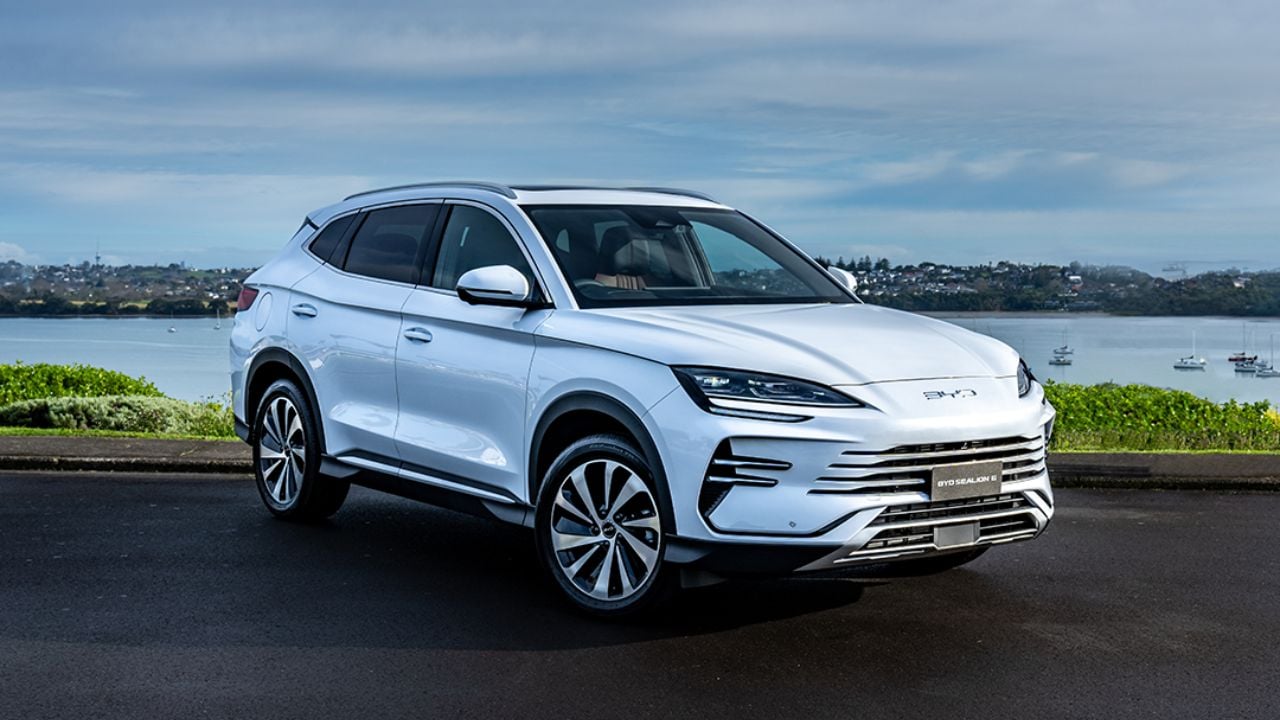
Tesla produced around 1.8 million vehicles in 2023 across their global factories. They’ve got Gigafactories humming, but production hiccups and quality control issues still pop up. Scaling has been messy but effective.
BYD sold just over 3.0 million ‘new energy vehicles’ (NEVs) in 2023, a category that includes battery EVs and plug-in hybrids, giving it massive scale in electrified vehicles. They own their entire supply chain, from batteries to semiconductors. That vertical integration is their superpower.
Winner: BYD – They’re building EVs at a scale Tesla’s still working toward.
Market Availability

Tesla sells in most major markets worldwide, with a strong presence in North America, Europe, and China. Their Supercharger network gives them a huge advantage in places where charging infrastructure matters. You can actually buy and service a Tesla pretty much anywhere that matters.
BYD dominates China and is expanding rapidly in Southeast Asia, Europe, and Latin America. But BYD’s passenger cars aren’t currently sold in the U.S., which limits their global brand recognition. Political and trade tensions aren’t helping their expansion plans. I’m crossing my fingers, however.
Winner: Tesla – They’re everywhere, and that infrastructure matters.
Build Quality & Reliability

Tesla has a reputation for panel gaps, interior rattles, and inconsistent quality control. Consumer Reports’ latest brand reliability rankings show Tesla made a big jump, landing 9th overall, though build-quality complaints still come up in owner reports, though they’ve been improving. The cars are impressive until you look closely at the details.
BYD benefits from decades of manufacturing experience, and their build quality reflects it. Reports from international markets suggest solid construction and fewer initial quality issues. They’re not exciting, but they’re well-made.
Winner: BYD – Sometimes boring reliability beats exciting quirks.
The Verdict

This isn’t really a fair fight because these companies are playing different games. Tesla’s building a premium brand with cutting-edge tech and performance, while BYD is focused on affordable, practical EVs for the masses. Tesla wins if you want the most advanced, fastest EV money can buy. BYD wins if you care about value, scale, and making electric vehicles mainstream.
The real answer depends on what you need from an EV and where you live. But I personally think BYD is just getting started.