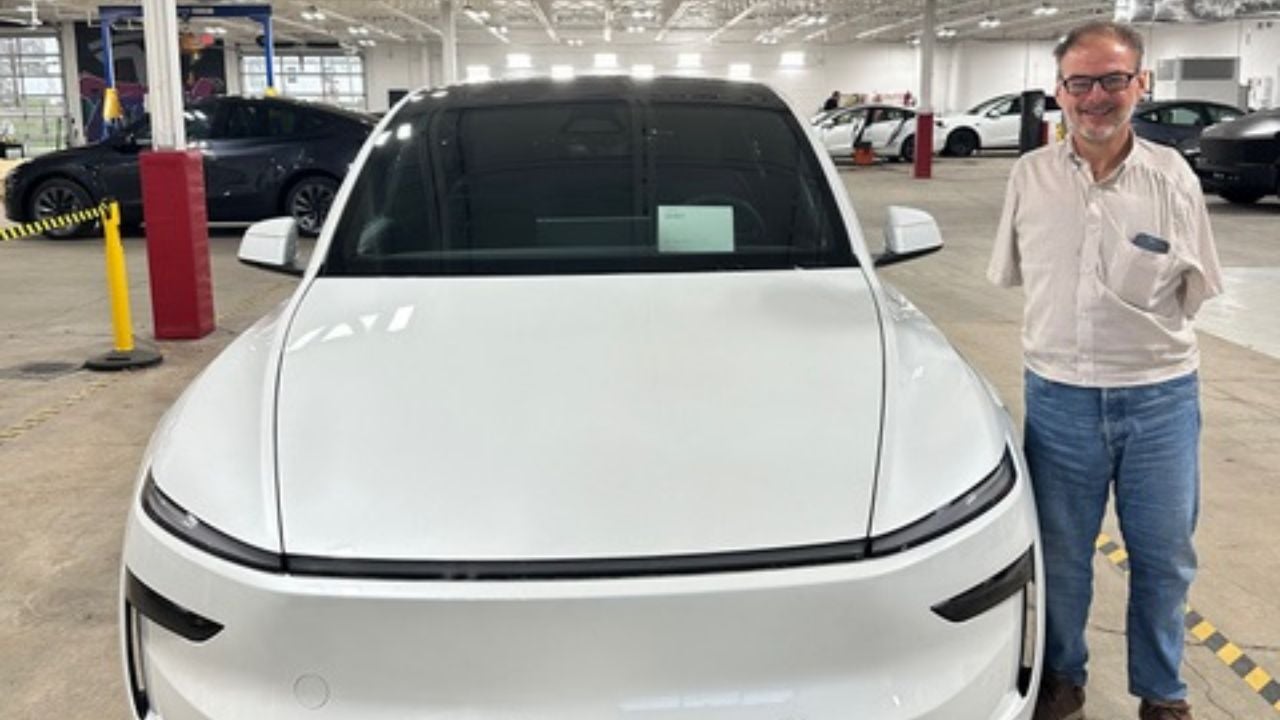

Tesla’s latest Full Self-Driving testimonial has sparked a fierce online debate after the company featured a driver born without arms who relies on the technology to maintain his independence. The story gained traction after an X user reposted Tesla’s video with a blunt question: “Is this even legal?”
The man featured in the testimonial, identified only as John F., explained that he has driven using his feet for his entire life. In the clip shared by Tesla, he describes steering with his left foot while using his right foot for acceleration and braking.
John says years of driving this way eventually caused severe arthritis in his hips due to the constant physical strain. According to his account, Tesla’s Full Self-Driving Supervised system in his Model Y has reduced the amount of physical effort required during long drives, allowing him to remain mobile with far less discomfort.
The testimonial was intended to showcase FSD as an accessibility tool, though the legality of the situation became the real story online. Many questioned whether a driver without arms could legally satisfy Tesla’s requirement that users remain attentive and ready to intervene while FSD is engaged.
Tesla’s Accessibility Argument
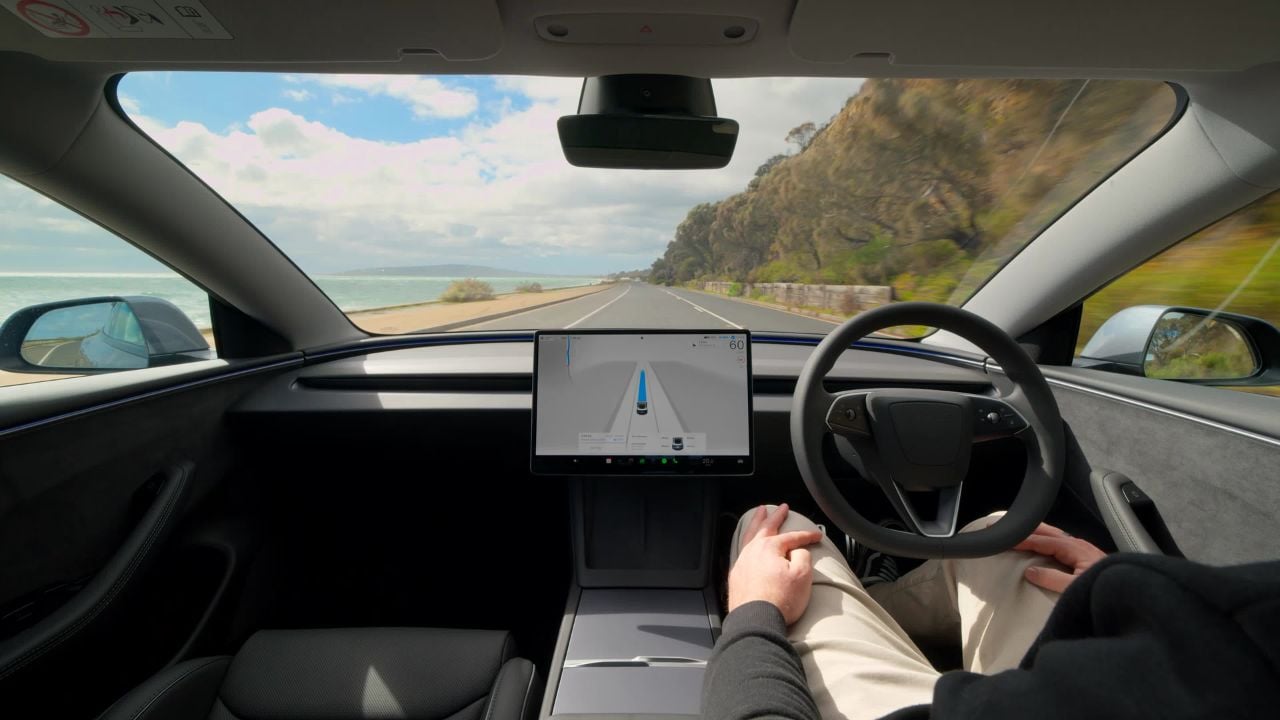
Tesla framed John’s experience as an example of technology expanding mobility for people with disabilities. The company has increasingly highlighted stories involving elderly drivers, visually impaired passengers, and individuals with physical limitations who benefit from advanced driver assistance systems.
John explained that he previously drove a Tesla Model 3 for seven years before transitioning to a Model Y equipped with newer FSD capabilities. He stated that the technology significantly reduces fatigue because he no longer has to maintain constant steering pressure with his foot.
It’s a critical distinction because Tesla’s FSD Supervised is not marketed as a fully autonomous system. Drivers are still legally responsible for the vehicle’s operation, even when the software handles steering, lane changes, acceleration, braking, and navigation.
Tesla’s own documentation requires users to remain prepared to take over immediately if necessary. The company also monitors driver attentiveness through in-cabin systems designed to ensure the operator remains engaged.
Is Driving Without Arms Legal?
Surprisingly to many online commenters, the answer is generally yes. In many US states, individuals with physical disabilities can obtain restricted driver’s licenses after demonstrating they can safely operate a vehicle using adaptive methods.
These restrictions often specify conditions such as automatic transmission requirements, special equipment, or limitations on certain vehicle types. John stated that his license restrictions require only automatic transmission and power steering.
Since he operates the vehicle entirely with his feet, he appears to have satisfied whatever competency evaluations were required by his state licensing authority. Adaptive driving is not uncommon in the United States.
Drivers with paralysis, amputations, or congenital limb differences often use hand controls, pedal modifications, steering aids, or customized systems approved during medical and road evaluations. The unusual aspect of John’s case is not merely that he drives with his feet. It is the interaction between his adaptive driving method and Tesla’s partially autonomous software.
The FSD Legal Gray Area
The controversy largely stems from Tesla’s “Supervised” label. Federal regulators in the United States currently classify Tesla FSD as an advanced driver assistance system rather than a self-driving platform capable of operating independently without human oversight. Legally, the driver must still remain capable of intervening at all times.
That creates a nuanced question. If a driver without arms relies heavily on FSD for steering input reduction, does that still satisfy the legal expectation of immediate intervention capability?
There is no publicly known indication that John violated any law or licensing restriction. Tesla also would likely not have promoted the story publicly if there were known compliance concerns tied to his operation of the vehicle.
Still, disability law experts and transportation regulators may view situations like this as a preview of larger policy debates approaching the auto industry. Semi-autonomous systems are beginning to blur the line between adaptive driving assistance and genuine automated transportation.
Why This Story Resonated Online
The reaction online reflected two competing views of autonomous technology. Supporters saw John’s story as evidence that driver assistance systems can meaningfully improve quality of life for people with disabilities.
Is this even legal? https://t.co/mULtSxNtMj
— Cars&Horsepower (@Horsepower37559) May 15, 2026
For them, FSD represents more than convenience or luxury. It becomes an accessibility tool capable of extending independence for individuals who might otherwise struggle to remain mobile.
Skeptics focused on the risks tied to Tesla’s system still requiring active human supervision. Some questioned whether someone steering primarily with their feet could realistically respond during an emergency scenario requiring split-second corrective action.
That tension explains why the clip spread so widely across Tesla and EV communities. The story touches disability rights, transportation law, evolving automation standards, and the unresolved question of how regulators should treat drivers who rely heavily on semi-autonomous systems for mobility assistance.