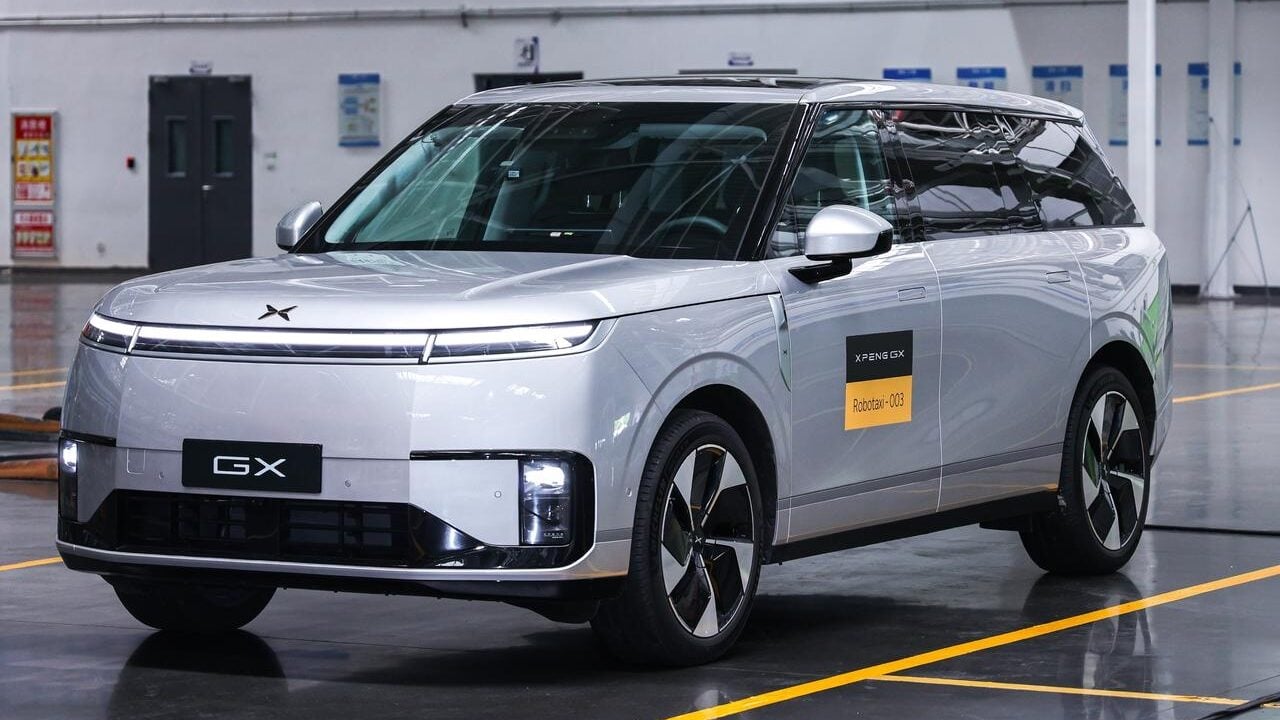
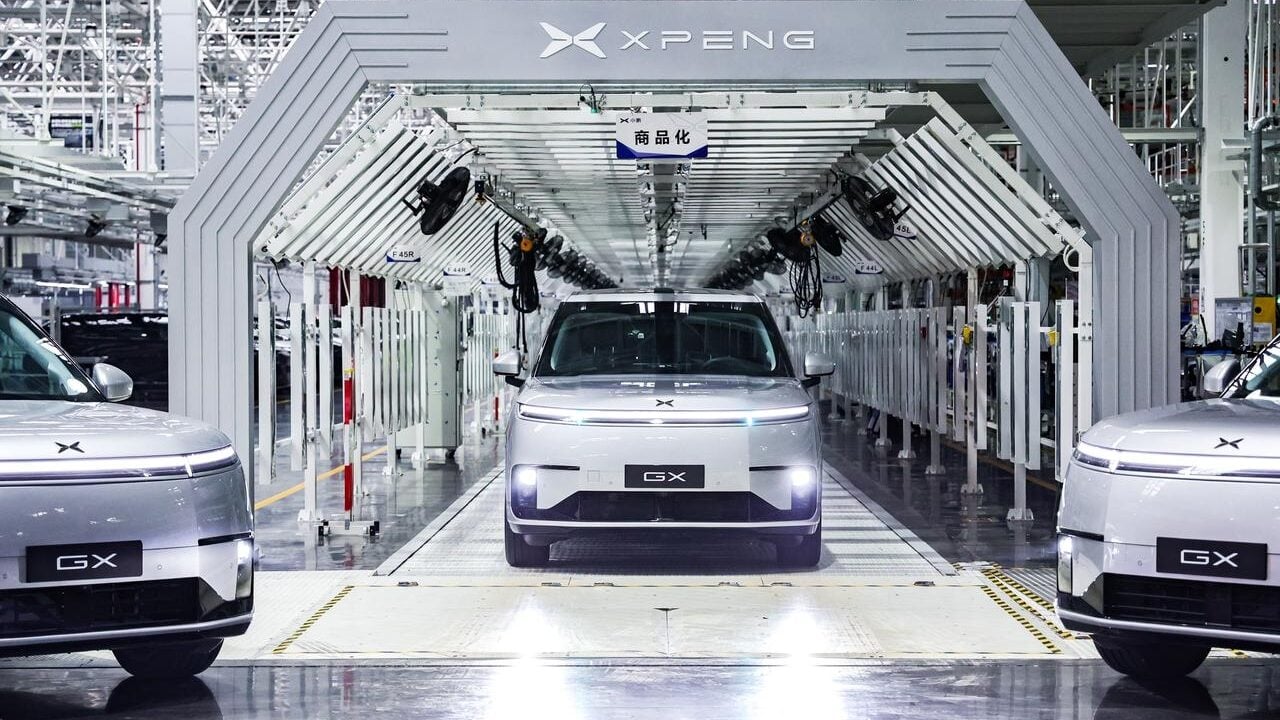
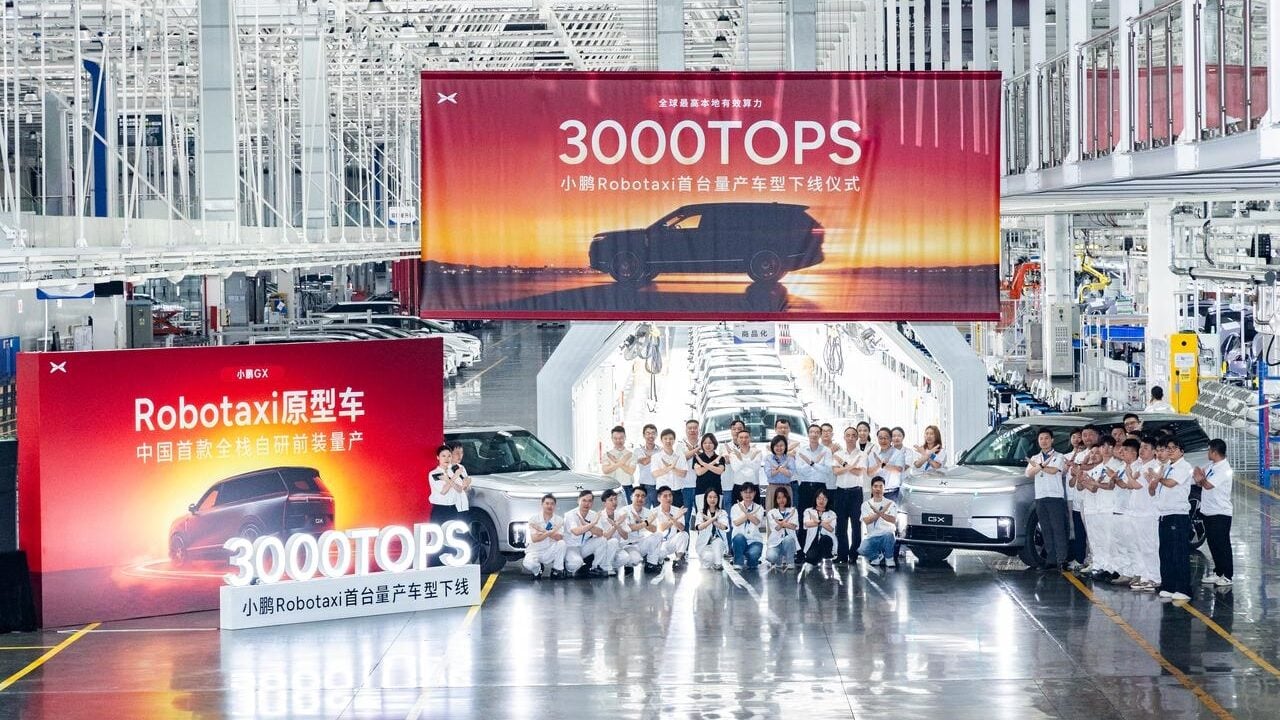
Elon Musk and Tesla have spent years talking about a fully autonomous robotaxi future, but one Chinese automaker just reached a milestone Musk’s company still hasn’t achieved. XPeng says it has officially rolled its first mass-produced robotaxi off the production line in Guangzhou, becoming the first automaker in China to build a production-ready autonomous taxi entirely through in-house development.
The announcement marks a major step in the rapidly escalating self-driving race between Chinese and American automakers. While Tesla continues testing its Cybercab concept and Full Self-Driving software in limited deployments, XPeng claims its robotaxi is already engineered to Level 4 autonomous driving standards and is preparing for pilot operations later this year.
What makes the development especially significant is XPeng’s approach to the technology itself. Unlike many autonomous vehicle companies that rely heavily on expensive LiDAR systems and detailed high-definition maps, XPeng says its robotaxi uses a pure vision setup powered by cameras, artificial intelligence, and its own proprietary AI chips.
That strategy sounds extremely familiar because it mirrors Tesla’s long-standing vision-first philosophy. The difference is that XPeng is already mass-producing hardware for real-world deployment while Tesla is still promising that a large-scale robotaxi network is just around the corner.
XPeng’s Robotaxi Is Built Like A Real Production Vehicle
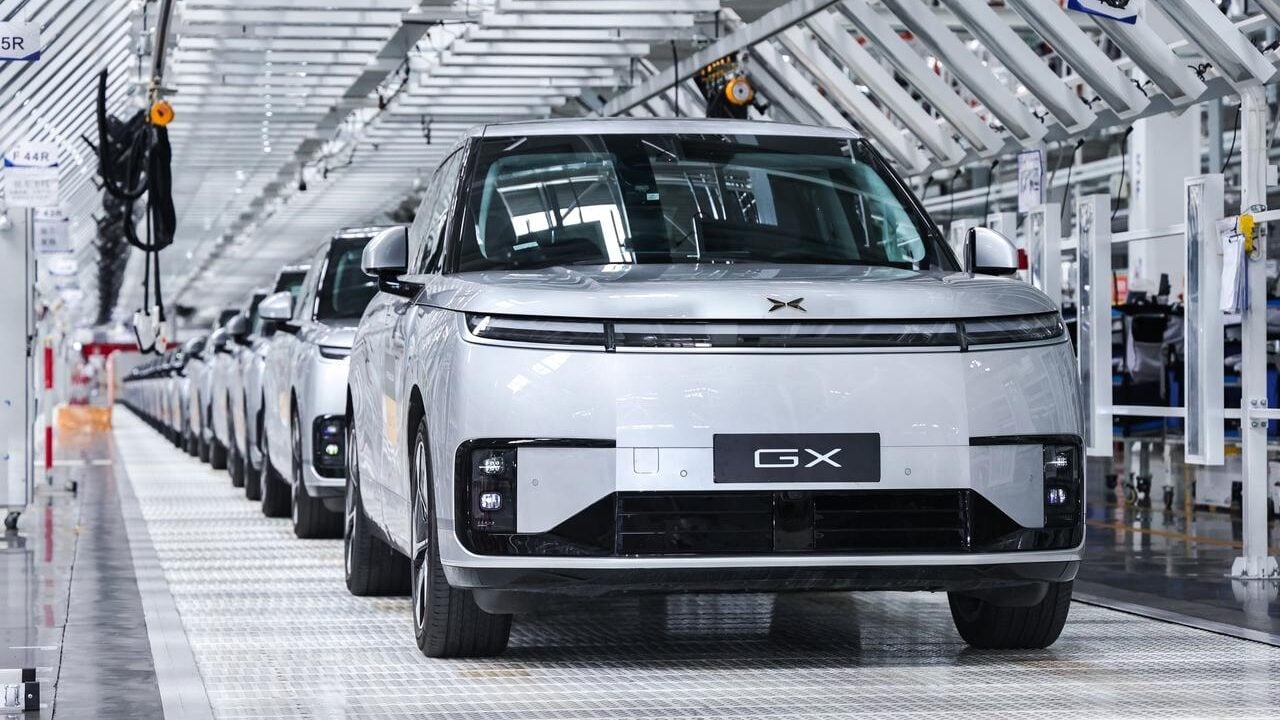
Rather than designing a futuristic pod with no steering wheel or pedals, XPeng based its robotaxi on its existing GX platform. The architecture already underpins one of the company’s consumer SUVs, helping reduce development costs while speeding up production readiness.
Inside, however, the robotaxi has been redesigned specifically for ride-hailing duty. XPeng says passengers will get features like privacy glass, gravity-style reclining seats, rear entertainment displays, and voice-controlled cabin settings.
The vehicle itself is powered by four self-developed Turing AI chips producing a claimed 3,000 TOPS of computing power. XPeng says the setup allows the robotaxi to process data with less than 80 milliseconds of latency, improving reaction times and urban driving capability.
The company’s VLA 2.0 AI model handles the decision-making process. XPeng says this system removes traditional “Vision-Language-Action” processing layers to speed up vehicle responses and improve adaptability across different cities and road conditions.
No LiDAR, No HD Maps, No Safety Driver… Eventually
Perhaps the biggest talking point is XPeng’s refusal to use LiDAR sensors. Most major robotaxi operators, including Waymo and Cruise before its shutdown, relied heavily on expensive sensor suites and pre-mapped urban environments to make autonomous driving work reliably.
XPeng believes cameras and AI alone can handle the job. That puts the company philosophically much closer to Tesla, which has repeatedly argued that vision-based systems are ultimately the only scalable path toward widespread autonomy.
XPeng says its robotaxi platform is already capable of cross-city deployment without requiring detailed high-definition mapping. The automaker claims the system can adapt to new environments far more efficiently than traditional autonomous driving stacks.
The company plans to begin pilot robotaxi operations during the second half of 2026. Those trials will focus on testing user acceptance, validating the business model, and refining edge-case handling in real-world traffic situations.
XPeng’s ultimate goal is even more ambitious. The company says it wants fully autonomous operations without onboard safety drivers by early 2027.
China’s Autonomous Push Is Accelerating Fast
XPeng’s announcement highlights how aggressively Chinese automakers are moving into autonomous mobility. Several companies in China are now blending EV manufacturing scale with advanced AI development in ways Western automakers are still struggling to match.
Because XPeng develops its own chips, software, vehicle platforms, and manufacturing operations internally, the company believes it can commercialize robotaxis much faster and at lower cost than rivals relying on outside suppliers.
That level of vertical integration is becoming increasingly important as autonomous driving goes from experimental technology to a business built around scalability and operating costs. Robotaxis only become financially viable if companies can deploy huge fleets cheaply and maintain them efficiently.
Tesla has long argued that its manufacturing scale gives it a similar advantage, but XPeng’s rollout shows China may not be waiting for Silicon Valley to lead the autonomous future anymore.
Whether XPeng can actually deliver safe, reliable Level 4 autonomy at scale remains an open question. Autonomous driving timelines have a long history of slipping across the entire industry. Still, the fact that a Chinese automaker is already mass-producing robotaxis while much of the Western market is still testing prototypes shows how quickly the competitive landscape is changing.