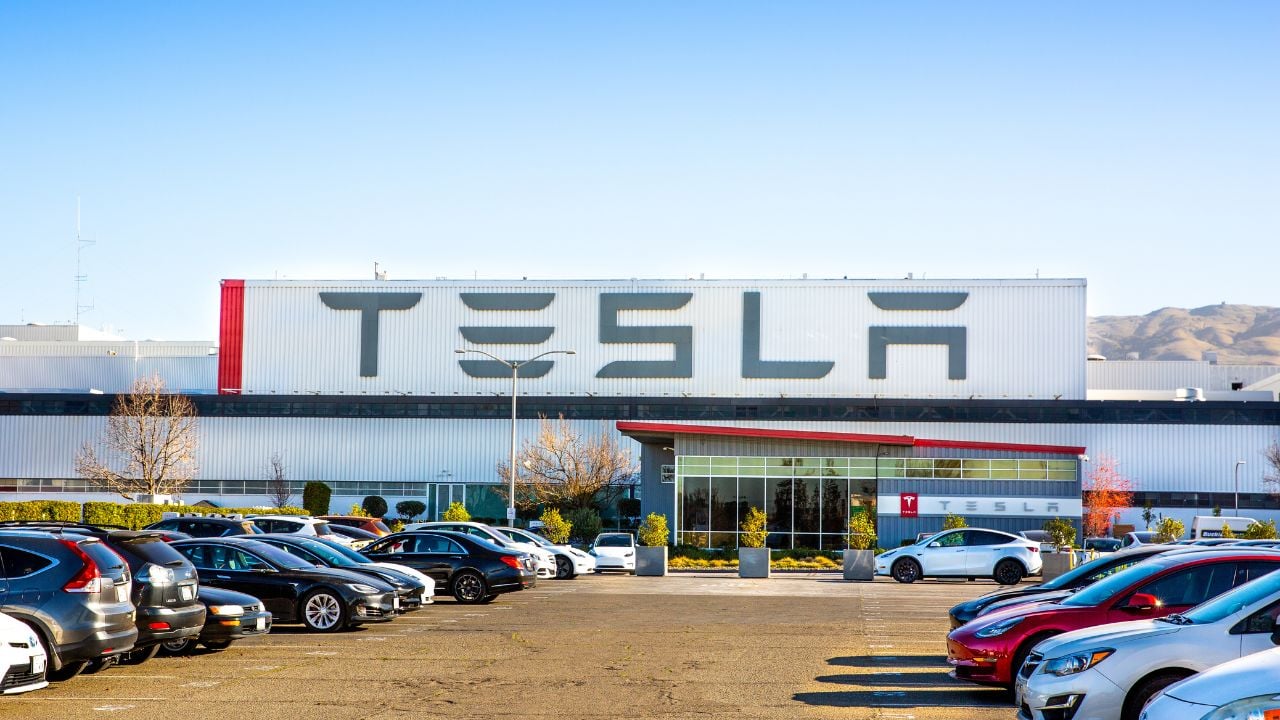

Tesla has begun an unusual recruitment drive that signals both the promise and the limitations of its much-publicized robotaxi initiative. According to Business Insider, recent internal postings at Tesla facilities in California have asked for factory workers and sales staff to step in as “AI operators” for the company’s autonomous ride-hailing service. These staff members are being offered extra hours and compensation to help run the Robotaxi fleet while Tesla continues its push to deliver fully autonomous transportation.
These positions are not traditional driving jobs. Instead, they are supervisory roles where employees monitor the company’s self-driving software—known inside Tesla as Full Self-Driving (FSD)—while the vehicle is in motion and take corrective action when necessary. Posters at Tesla’s California factories detailed that operators would sit in the driver’s seat, observe FSD performance, and intervene as needed. They also note referral bonuses and pay in the range of $25 to $30 per hour.

The campaign is already broadening beyond the factory floor. According to LinkedIn reviews, some sales team members in Nevada and Arizona have transitioned into similar roles in markets including Las Vegas and Phoenix. Tesla’s goal appears to be reducing wait times and expanding access to the service in high-demand urban areas, particularly around the Bay Area of California where passengers have sometimes reported waits of 10 to 40 minutes for robotaxi rides.
What This Says About Autonomy Today
Tesla’s strategy lays bare the transitionary state of autonomous vehicle technology. The company has long touted robotaxis as a future cornerstone of its business model, promising services that could undercut traditional ride-hailing by eliminating the driver entirely. The concept is that electric vehicles equipped with advanced AI would operate around the clock, generate revenue for their owners, and rival networks like Uber and Lyft.
Yet in practice, the current iteration still relies heavily on human oversight. “AI operator” roles are effectively supervised positions where the human is ready to intervene in real time. This reflects a broader truth across the industry. Many robotaxi services today, even those that describe their systems as autonomous, still depend on humans in some capacity to ensure safety or handle edge-case scenarios that the AI has not mastered.
Critics and analysts see this as a sign that full autonomy remains further away than Tesla’s leadership often suggests. If human supervision continues to be a necessity, the economic case for driverless taxis could weaken significantly. Part of the appeal of true robotaxi fleets is that removing the human operator lowers costs dramatically, making it a key driver of profitability in this emerging transportation category.
Regulatory and Operational Hurdles

Complicating matters are the patchwork of regulatory environments in which Tesla is trying to scale robotaxis. In California, for example, the company operates a ride-hailing service under permits that still require a human driver in the vehicle. The California Public Utilities Commission (CPUC) shows Tesla has registered thousands of vehicles and hundreds of drivers, but no autonomous taxis can yet carry the general public without supervision because state regulations remain strict.
In Arizona and Nevada, Tesla has secured permits or completed self-certification processes, but in many cases has not yet applied for full commercial licensing. That means paid robotaxi operations without human drivers are still pending. Meanwhile, Tesla CEO Elon Musk continues to assert that fully autonomous services could go live by year-end, highlighting the tension between bold strategic timelines and the slow grind of regulatory approval and technical validation.
On the demand side, usage remains limited and uneven. Reports from users and tracking enthusiasts suggest that fleet availability in some cities is still sparse, with only a small fraction of vehicles operating at any given time and service availability dipping well below levels needed for dependable urban transport. In other words, the robotaxi network exists more as a proof-of-concept than a fully deployed public utility.
At the same time, Tesla’s approach has sparked debate. Supporters see the recruitment of existing staff as a strategic appropriation of internal talent to jump-start a crucial new service. Detractors argue it reveals that the robotaxi offering is not yet as autonomous or scalable as public statements suggest.
Now What?
Tesla’s robotaxi initiative is one of the most closely watched developments in autonomous mobility. It has implications for urban transport, for competition with technology rivals like Waymo and Cruise, and for the future of work in a sector where machines are expected to replace human labor. What is already clear is that the path to a truly driverless future remains complex, involving technological hurdles, regulatory negotiations, and creative staffing solutions as Tesla and others iterate on their systems.
In the coming months, close attention will fall on whether Tesla can fulfill its timelines, how efficiently these AI operator programs perform, and whether the public will embrace a service that still blends human oversight with artificial intelligence at scale.