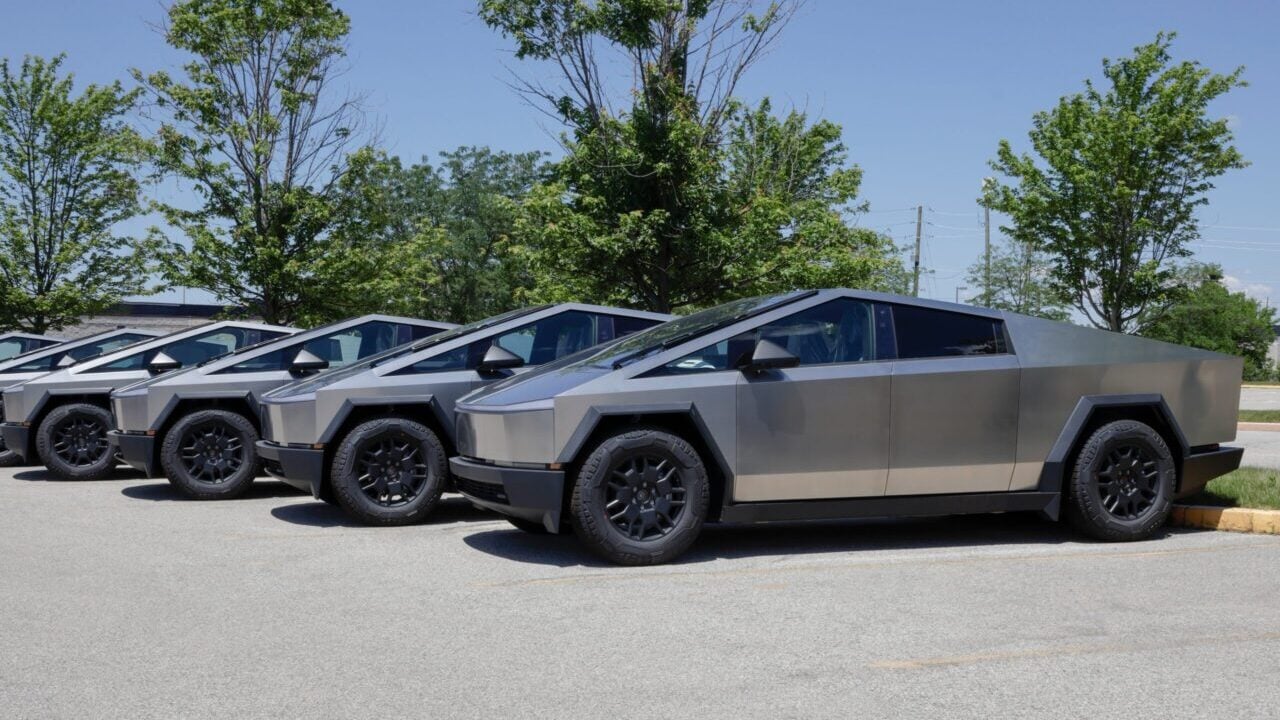
A Cybertruck crash in Texas is now at the center of a lawsuit that could bring additional scrutiny to Tesla’s driver-assistance technology. A Houston-area woman claims her truck failed to follow a highway ramp while using the system and crashed into a concrete barrier on an overpass.
A Texas driver is suing Tesla for more than $1 million after her Cybertruck allegedly crashed into a concrete barrier while Tesla’s Autopilot driver-assistance system was engaged.
According to a report from the Houston Chronicle, Houston resident Justine Saint Amour filed the lawsuit in Harris County District Court, claiming she suffered injuries when the vehicle failed to follow a curve on a Houston overpass.
The case adds to a growing number of legal challenges surrounding Tesla’s Autopilot and Full Self-Driving driver-assistance technology.
Lawsuit Says Cybertruck Failed To Follow Curve
@austin_statesmanThe Houston driver was in a Cybertruck in August 2025 when the Autopilot-controlled vehicle drove straight into a concrete barrier on a Y-shaped overpass on 69 Eastex Freeway. The vehicle was expected to follow a curve to the right, but when it failed to do so, she disengaged the driver-assistance feature. Still, “it was too late” once she took control of the wheel and the vehicle crashed into the barrier, the lawsuit claims.♬ original sound – Austin American-Statesman
According to the lawsuit described in the Houston Chronicle report, the crash happened on August 18, 2025, on Interstate 69’s Eastex Freeway in Houston. The complaint alleges Saint Amour was driving a Cybertruck equipped with Tesla’s driver-assistance technology when the vehicle approached a Y-shaped overpass split near the Eastex Park-and-Ride.
According to the filing, the vehicle should have followed a curve to the right but instead continued straight toward a concrete barrier at the edge of the overpass.
Saint Amour claims she attempted to disengage the driver-assist system and take control of the steering wheel, but the crash occurred before the vehicle could be redirected. Dashcam footage referenced in coverage of the incident reportedly shows the vehicle approaching the ramp and failing to complete the turn, according to reporting from Jalopnik.
Driver Says Crash Caused Serious Injuries
According to the lawsuit cited in the Jalopnik report, Saint Amour later sought medical treatment for injuries related to the crash. The complaint states she was diagnosed with two herniated discs in her lower back, another herniated disc in her neck, sprained wrist tendons, and nerve-related symptoms causing numbness and weakness in her right hand.
The lawsuit seeks damages exceeding $1 million for injuries and other losses tied to the crash, according to the Houston Chronicle.
Lawsuit Accuses Tesla of Misrepresenting Autopilot Technology
The complaint accuses Tesla of negligence and alleges the company misrepresented the safety elements of its Autopilot technology and failed to adequately warn drivers of potential risks, according to the Houston Chronicle’s reporting on the lawsuit.
The lawsuit also alleges Tesla did not include additional sensing technologies such as LiDAR, a laser-based sensor system used by some autonomous-vehicle developers. Saint Amour’s attorney, Bob Hilliard, said the crash was a predictable result of Tesla’s design decisions.
“What happened to my client was not an accident, but a foreseeable result of choices Tesla made knowingly, repeatedly, and without regard for the people on the road,” Hilliard said in a statement reported by the Houston Chronicle. Tesla did not respond to requests for comment from outlets covering the lawsuit.
Complaint Also References Elon Musk
The lawsuit also directly references Tesla CEO Elon Musk. According to Electrek’s report, the complaint alleges Tesla engineers recommended incorporating radar and LiDAR sensors into the company’s autonomous driving systems. The filing claims Musk rejected those recommendations and instead chose to rely primarily on camera-based systems.
The lawsuit also alleges Tesla was negligent in allowing Musk to participate in product design decisions. Those allegations come from the plaintiff’s legal complaint and have not been proven in court. Tesla has long defended its camera-based approach to automated driving technology.
Tesla’s Driver-Assistance Technology Has Faced Scrutiny
Tesla’s Autopilot and Full Self-Driving systems are classified as SAE Level 2 driver-assistance technology, meaning drivers are expected to remain attentive and ready to take control of the vehicle at all times. Incidents involving vehicles operating with driver-assistance systems engaged have led to regulatory investigations and lawsuits in recent years.
Tesla has said the systems are designed to improve safety and convenience, but still require active driver supervision.
Reddit Discussion Followed Video of the Crash
Video of the crash circulated widely online and sparked a lengthy discussion on Reddit, where users debated both Tesla’s driver-assistance technology and the degree of responsibility that should fall on drivers. Some commenters focused on the fact that Tesla’s Autopilot system still requires active driver supervision.
“Aren’t you meant to be ready to take control?” one user wrote in the discussion thread. Others questioned whether drivers may rely too heavily on automation in situations where quick human judgment is still necessary.
“Driving off an overpass is one of my recurring nightmares. I wouldn’t entrust a computer to drive; there are too many variables,” another commenter wrote. Several users also discussed Tesla’s decision to rely primarily on cameras rather than additional sensor technologies. “Definitely not without lidar,” one commenter wrote while discussing automated driving systems.
Tesla’s pricing for its Full Self-Driving features also came up in the discussion. The system currently costs about $99 per month in the United States, on top of the already high price of a Cybertruck. Some commenters said that given the cost of the vehicle and the subscription service, they expected more advanced sensing systems or additional safeguards.
“That was honestly the most shocking part of the whole video. $99 a month for a subscription to a service that should be included,” one Reddit user wrote.
Case Remains Pending
The lawsuit remains in its early stages, and the allegations outlined in the complaint have not yet been tested in court. If the case proceeds, it could add to the ongoing legal debate surrounding how driver-assistance technologies are designed, marketed, and used on public roads.