
A supercar is supposed to be, well, super. But not every high-performance machine delivers on that promise. Some fall flat, failing to impress before quietly disappearing into the depths of automotive history.
With most supercars carrying six-figure price tags, there’s a lot at stake. That kind of investment means the car community holds them to a higher standard, and they don’t hesitate to call out the ones that miss the mark. Poor design, shoddy build quality, bad timing, and market miscalculations are hard to overlook.
We’ve scoured the internet in search of supercars that were destined to fail, and thanks to sources such as Top Gear, AutoEvolution, and others, we’ve inventoried our favorite fails and included the mistakes that sealed their fate.
How These Supercars Made the Cut
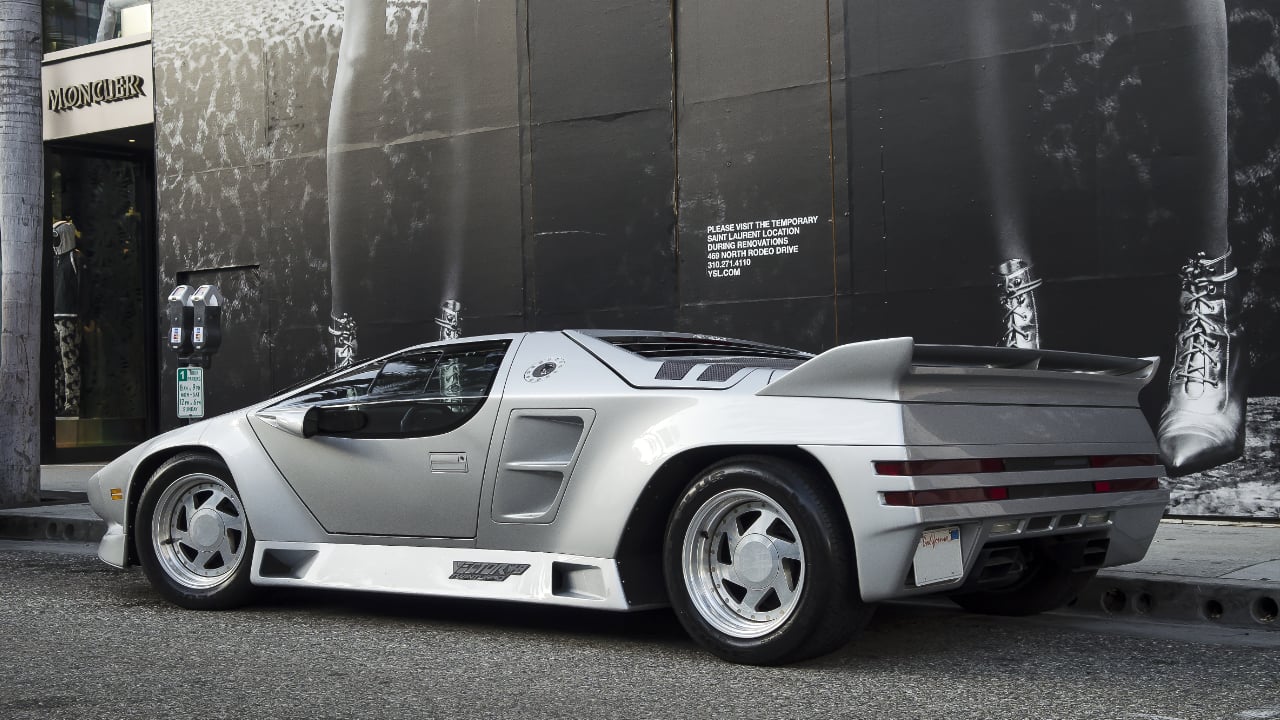
We weren’t looking for the fastest or the rarest; we were looking for the ones that fizzled. These are the supercars that should have made a splash but belly-flopped instead. Each vehicle on this list:
- Promised something bold: groundbreaking tech, shocking design, or headline-worthy performance.
- Was actually produced (even in tiny numbers), not just teased in concept form.
- Faced real-world issues: mechanical failures, pricing blunders, unmet expectations, or bad press.
- Was documented through reliable sources like Top Gear, AutoEvolution, Motor1, Goodwood, and enthusiast databases.
Some were one-hit wonders. Others never even got that far. But every car here proves just how easy it is to get the supercar formula wrong — even when you’ve got big horsepower and even bigger ambition.
HTT Pléthore

Have you ever heard of a Canadian sports car? No, eh? Well, I’d like to introduce you to the HTT Pléthore. According to Autoevolution, it actually appeared on CBC’s Dragon’s Den in 2011, and it did have a lot going for it. It was powered by a supercharged 6.2-liter V8 LS9 with 750 hp and 655 lb-ft of torque, and there was even a 1,100 hp option. Design-wise, it also looked like a proper supercar.
On the show, W. Brett Wilson and Robert Herjavec offered to become partners by purchasing 20% of the company for $1 million. However, during a test drive, the transmission failed, and they backed out of the deal. An unidentified investor stepped in with the necessary funding to build a revised prototype, but due to a lack of funding, it never made it past that stage. As Kevin O’Leary would say: “I’m out.”
Vector W8
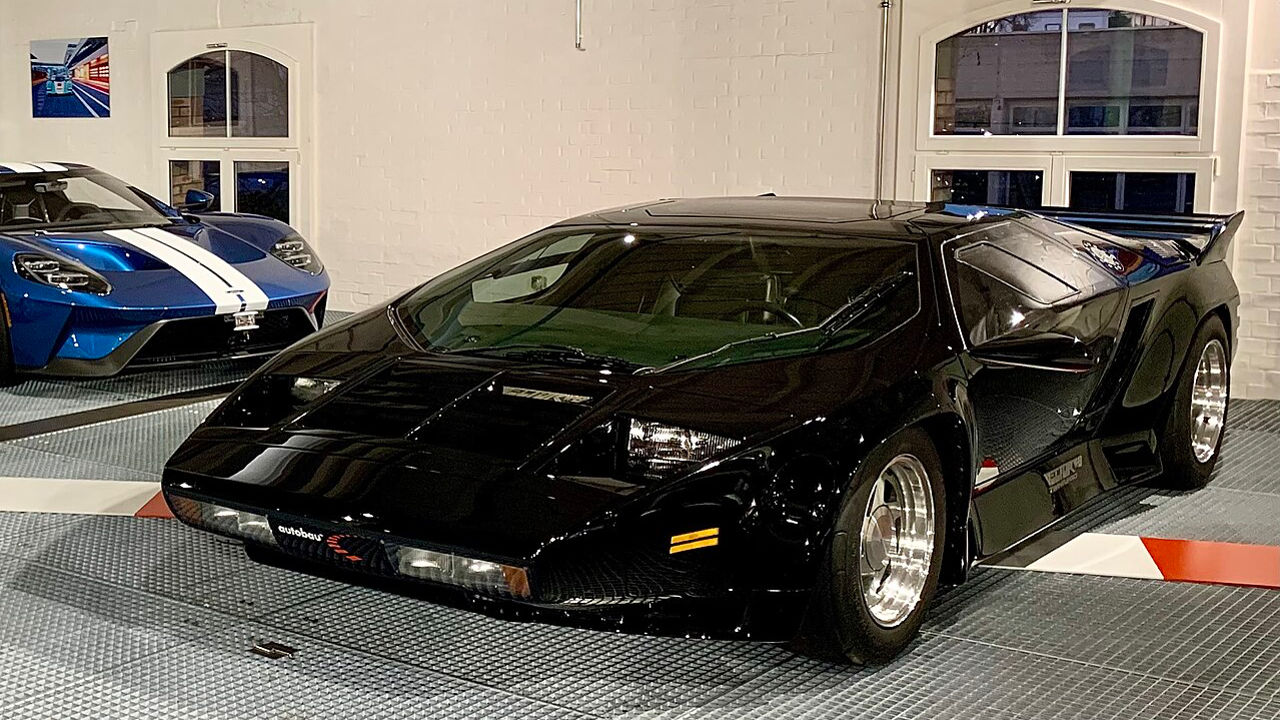
Top Gear states that only 17 Vector W8 production cars were made, making it one of the rarest supercars ever produced. While it certainly was flawed, the biggest problem was probably the price. Vector spent over a decade building hype for the W8, but by the time the first car was ready, its price had skyrocketed from an initial $225,000 to a staggering $450,000, which is well over a million in today’s dollars.
The outrageous performance claims turned out to be rather optimistic. The Vector W8 was said to reach 242 mph (making every mile worth $1,859 — a steal). However, automotive journalists at the time couldn’t reach that speed when they tested the ill-fated car. All the bad press was the final nail in its coffin.
Weber Faster One

The Weber Faster One certainly wasn’t a looker. It resembles something a slightly talented 10-year-old would draw, with questionable styling and an awkwardly curved grille. Looks aside, it did pack a serious punch, thanks to the turbocharged GM LS7 V8 with 900 hp.
According to Below the Radar, a website dedicated to rare and obscure cars, the founder made some impressive performance claims in 2008, but the car faded into obscurity, only to reemerge in 2013 with less offensive styling. After that, nothing has been mentioned, but failing to secure funds is most likely the culprit. Imagine being so ugly that even a makeover doesn’t get you your crush at the end of the 2000s rom-com. Ouch.
Hofstetter Turbo

Rare Cars Only, a website dedicated to, you guessed it, rare cars, says the Hofstetter Turbo was the brainchild of Brazilian Mario Richard Hofstetter. He began designing the car when he was just 16 years old, inspired by Italian prototypes from the 1970s — which explains its wedge-shaped design.
While it looked as dramatic as any Lamborghini, it’s fair to say it didn’t perform like one. Jalopnik reports that early cars were powered by a turbocharged 1.8-liter Volkswagen engine with 140 anemic horses, and later models received a 210-hp 2.0-liter. When production ended, Hofstetter had built an estimated 18 cars. What was the point of creating a Lambo dupe just to nerf it with poor performance? Hofstetter was likely trying to make a cool car under tight government restrictions, but at what cost? Nobody would buy a car looking like this just to chug along to 60 mph in nine seconds.
Cizeta-Moroder V16T

Looking at the Cizeta-Moroder V16T, you may think it looks like a weird Lamborghini Diablo, and that’s because it sort of is. According to Goodwood, Marcello Gandini designed it as a replacement for the Countach, but Chrysler-owned Lamborghini decided to soften the design and turned it into the Diablo.
Gandini wasn’t pleased, so he sold the design to Claudio Zampolli, who hired six former Lamborghini employees to build the Cizeta-Moroder V16T. Goodwood tells us that, unlike the Lambo and its puny V12, the Cizeta had a 6-liter V16 engine that produced 540 hp and 400 lb-ft of torque. Still, it didn’t pique gearheads’ interest due to a hefty price tag, and Car Throttle claims only 10 cars exist, including a prototype. That prototype sold for $1,363,500 at a Sotheby’s auction, a bit ironic since the original $300,000 price had people scoffing.
Caparo T1

Motoristo tells us that Caparo Vehicle Technologies built the Caparo T1 as a “road-going Formula One car.” While it’s certainly not pretty, there’s no denying that the Caparo T1 has a purposeful design. F1 cars have certain features, and road cars must adhere to certain regulations — this is just a combination of the two.
Unfortunately, the design isn’t even the worst part about it. Like an F1 car, the T1 desperately struggled for grip at slow speeds, so using it in traffic or on cold, wet days is not recommended. Honestly, I’d recommend never driving it — this blocky LEGO copycat is a huge eyesore. It was powerful, though. Fitted with a slightly detuned 3.5-liter IndyCar V8 engine, it made 575hp at 10,500 rpm.
Covini C6W
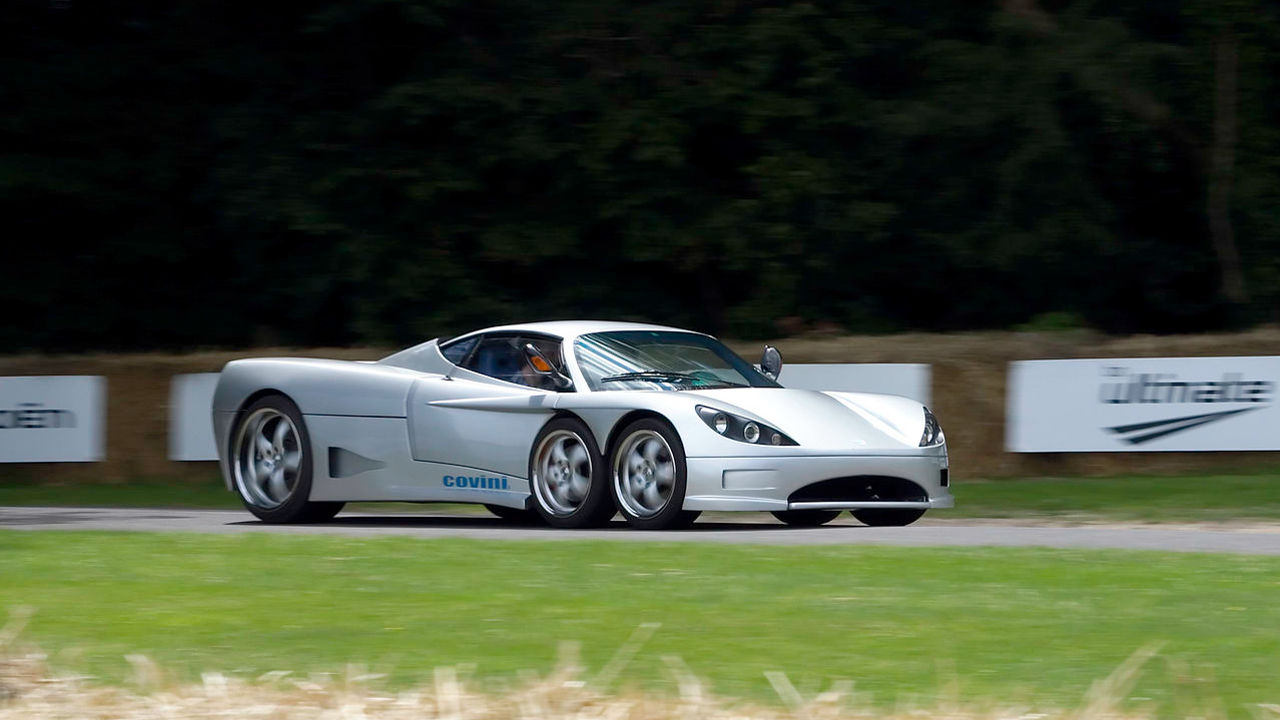
Covini clearly believed that more is always better, so they added another axle at the front, giving the C6W a total of six wheels. Motor1 claims Covini probably did this to make the car safer to drive, but surely there must’ve been simpler ways to increase safety?!
At least Covini did something right when they opted for Audi’s 4.2-liter V8 with over 430 hp to power it. However, that wasn’t enough to convince many wealthy people to buy one, but they did manage to sell a handful of cars before calling it a day. Most people had too much common sense to bother, however, it doesn’t seem like Lamborghini, Ferrari, and all the other supercar brands needed six wheels.
Tatra MTX
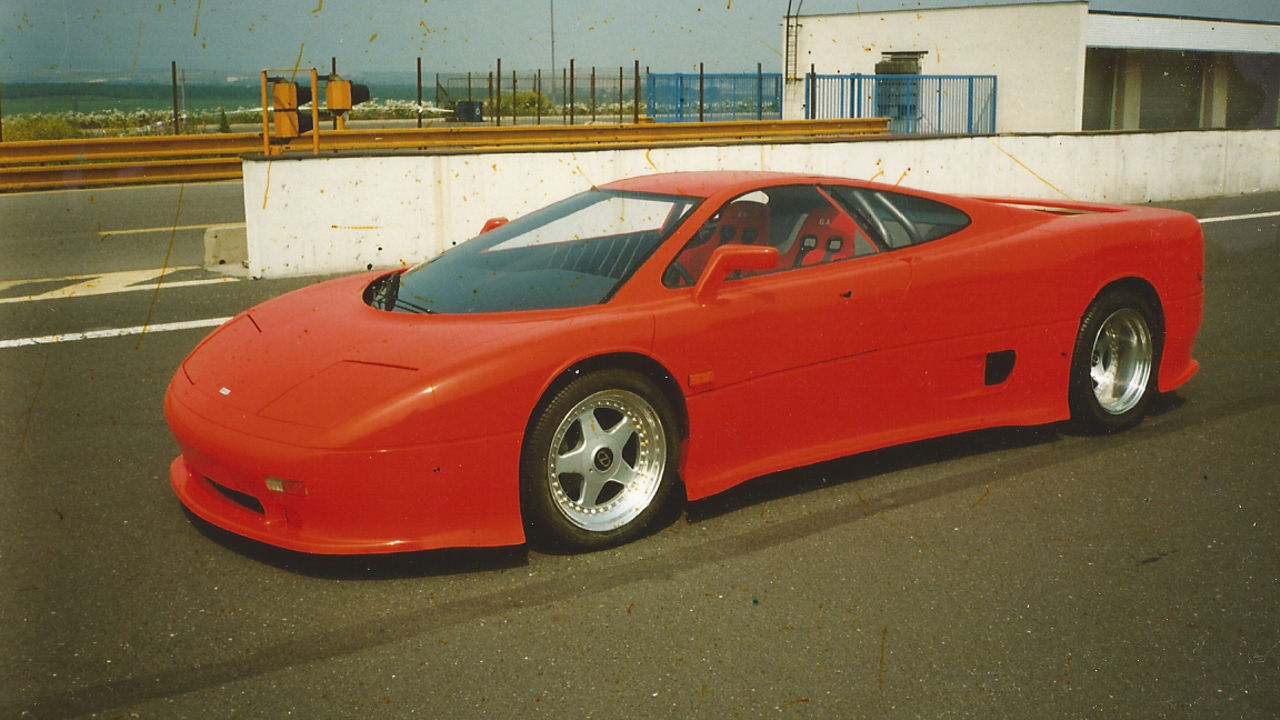
The Czech Republic’s most famous export certainly isn’t supercars! However, Tatra is a Czech company and one of the oldest car manufacturers still in business today. In the early days, the company was known for using the latest technology available and built some ground-breaking cars as a result. That came to a grinding halt when the Communist Party took over after WWII.
However, in the early 1990s, Tatra dipped its toes in the performance car pool, and the result was surprisingly impressive. Driven To Write, an international collective of writers, tells us the MTX V8 had a 3.9-liter V8 producing 302 horsepower, enough to send it to 60 mph in 5.5 seconds. It even had scissor doors and pop-up headlights. 200 orders were placed, but only four cars are known to have been built — production was slowed due to a factory fire and a lack of funding.
Jaguar XJ220

According to Petrolheads, a British car enthusiast site, Jaguar wanted a piece of Ferrari and Lamborghini’s market — but it didn’t go as planned. In 1988, they showed off a V12-powered AWD supercar, and wealthy people immediately waved their checkbooks. Jaguar took 1,500 orders – each with a £50,000 deposit.
Soon after, the yuppie era was over, and everyone had money problems. Jaguar had to cut some corners when building the XJ220, and the promised V12 and AWD were gone. Instead, it had a turbocharged V6 and RWD. It didn’t matter if it was the world’s fastest production car, the buyers pulled out. But they weren’t going to just let it go — Jaguar was actually sued over the changes, since many buyers didn’t want to pay the price to rip up the contract. Jaguar only built 271 XJ220s, and they sold for $400,000 each.
Ferrari F50

When the Ferrari F50 debuted, it didn’t get the love you’d expect. Following in the footsteps of the legendary F40 was never going to be easy, and for some, it just didn’t measure up. Granted, it wasn’t as pretty, nor was it as brutal, and it was slightly slower — so it essentially became the Ferrari equivalent of a red-headed stepchild. Only recently have Ferrari enthusiasts recognized the flagship supercar’s hidden charm.
Goodwood informs us that the F50 has a 512-hp 4.7-liter naturally aspirated V12, and it was no ordinary V12 either. It’s derived from the unit Ferrari used in its 1990 Formula One race car, but connected to a manual transmission. It now costs $3.5 million to $5.5 million to get yourself an F50, so maybe you shouldn’t have swiped left on the red head when you had the chance.
What These Cars Still Teach Us

Building a supercar is one of the boldest moves an automaker — or a dreamer — can make. Get it right, and you’ve got a legend. Get it wrong, and you’ve got a footnote in automotive trivia.
The cars on this list all shot for greatness and landed somewhere else: in lawsuits, bankruptcy filings, or the pages of car blog,s wondering what went wrong. But that’s exactly what makes them fascinating.
Because in a world filled with polished perfection, sometimes the flawed ones are the most interesting of all.