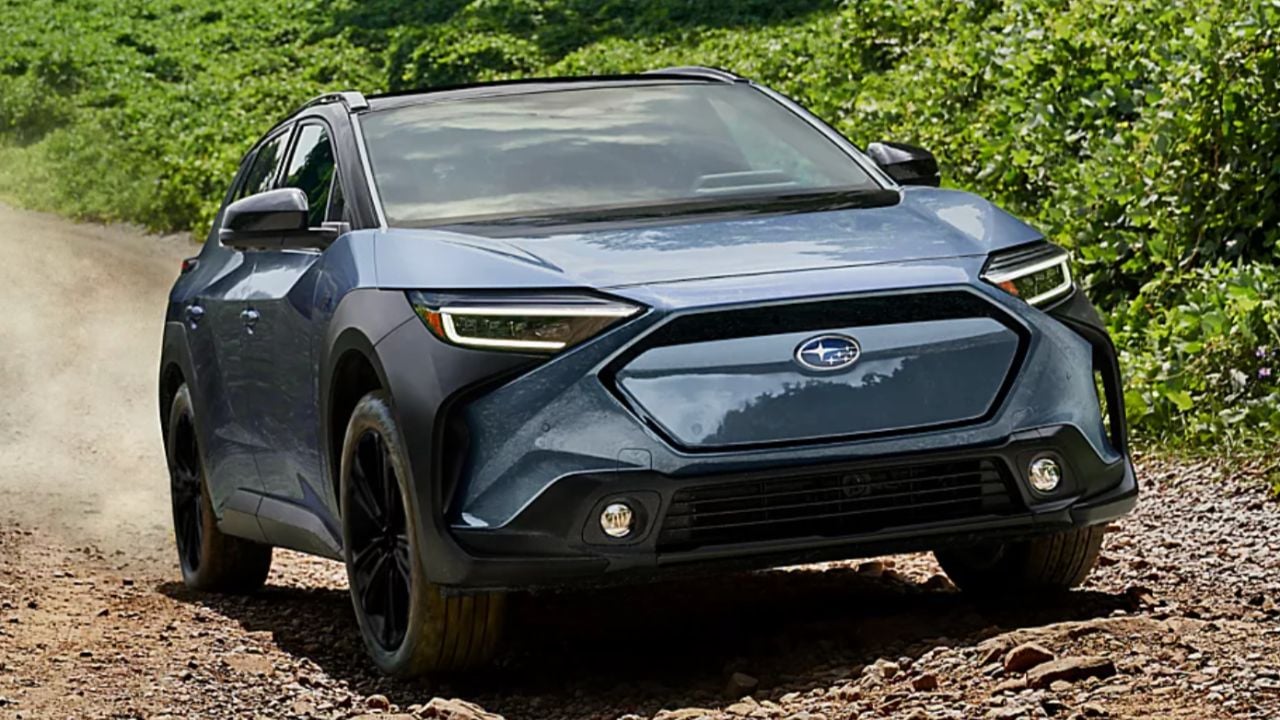
Subaru is hitting the brakes on parts of its electric vehicle strategy after absorbing a massive financial blow tied to U.S. tariffs, forcing the automaker to lean even more heavily on its long-running partnership with Toyota for future EV development.
The company recently expanded its American electric vehicle lineup with models such as the Subaru Trailseeker and Subaru Uncharted, but behind the scenes, Subaru is slowly but surely resetting its electrification plans. According to reports from Automotive News, Subaru has delayed development of its first independently engineered EV platform and will instead continue relying on Toyota-derived electric vehicles longer than originally expected.
The decision comes after Subaru reported a staggering ¥226.9 billion hit — roughly $1.42 billion — tied to tariffs, alongside another ¥57.8 billion, or approximately $362 million, in EV-related write-downs and impairments.
Those financial pressures are now reshaping the company’s long-term product roadmap at a time when many automakers are reevaluating how aggressively they should pursue fully electric vehicles.
Subaru’s Independent EV Has Been Pushed Back
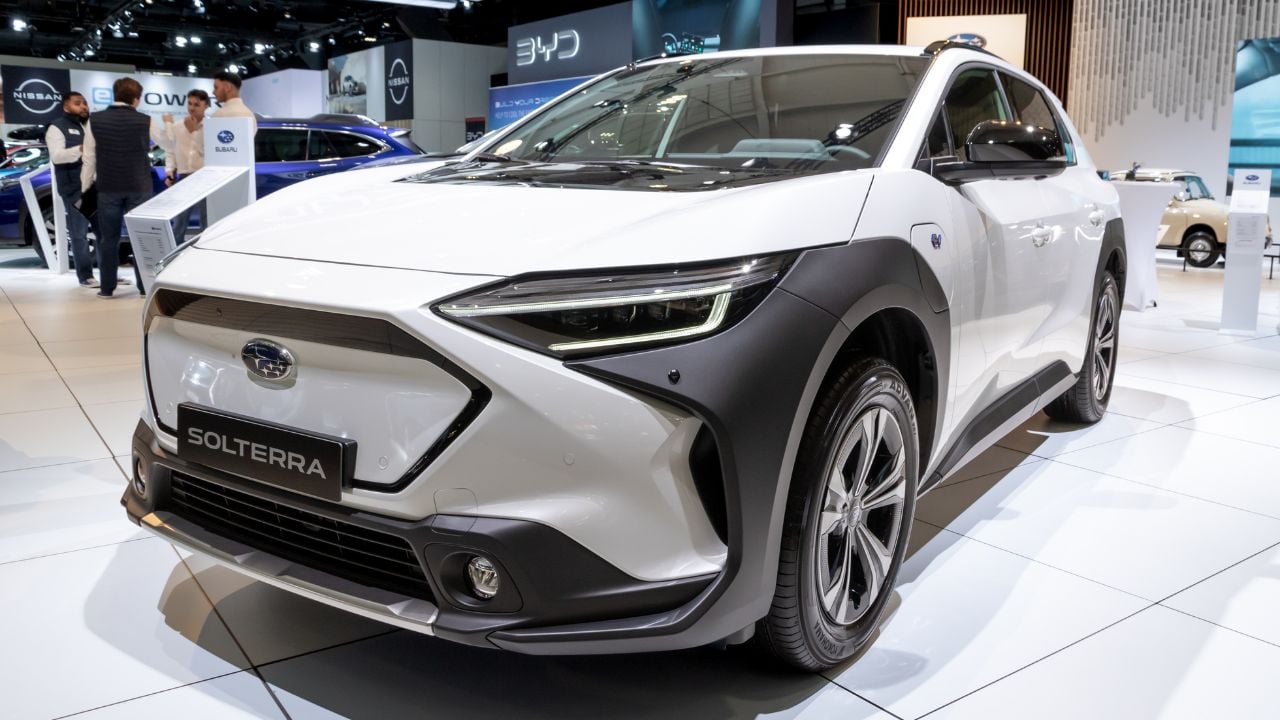
Subaru had originally planned to launch its own in-house EV platform from a dedicated production facility at its Oizumi plant in Japan around 2028. That project was expected to give the company greater engineering independence and allow Subaru to move beyond rebadged or jointly developed EVs. Now, those plans are being delayed.
Instead of prioritizing full battery-electric production at the new facility, Subaru will initially focus more heavily on hybrid and internal combustion vehicles while continuing to monitor market conditions, especially in the United States, which remains the company’s most important market by far.
That means Subaru’s current EV lineup, much of which is closely tied to Toyota architectures, will likely remain central to the company’s electric strategy for several more years.
The Subaru Solterra, for example, is essentially Subaru’s version of the Toyota bZ, while the Trailseeker shares close links with Toyota’s bZ Woodland project. Subaru’s upcoming Uncharted crossover is also reportedly related to the Toyota C-HR+.
Subaru is additionally preparing a three-row EV called the Subaru Getaway, which is expected to share significant engineering ties with a future electric version of the Toyota Highlander.
Toyota’s Partnership Is Becoming More Important
For Subaru, the partnership with Toyota has become increasingly valuable as EV development costs continue rising across the industry. Building a dedicated EV platform independently requires enormous investment in software, batteries, manufacturing, and supply chains — areas where Toyota’s scale offers Subaru major advantages.
Collaborating with Toyota also allows Subaru to spread development costs across multiple brands while reducing the financial risk associated with slower-than-expected EV demand growth.
That flexibility is becoming especially important as automakers face growing pressure from tariffs and shifting consumer behavior in North America.
Subaru executives reportedly still intend to pursue independent EV development eventually, but the timeline now appears far less certain. The company says it will continue evaluating market conditions before committing larger resources toward standalone battery-electric programs. For now, Toyota’s platforms may effectively serve as Subaru’s EV lifeline.
Hybrids Are Starting To Look Like The Safer Bet

Subaru’s strategic adjustment also reflects a trend emerging throughout the auto industry. While EV sales continue growing overall, several manufacturers are increasingly turning back toward hybrids as a more stable and profitable middle ground.
The United States remains Subaru’s largest market, accounting for roughly 72% of the company’s global sales during fiscal year 2025. In America, hybrids and traditional gasoline-powered vehicles continue significantly outperforming fully electric vehicles in overall demand and profitability.
Subaru did experience a sharp increase in U.S. EV registrations earlier this year, with registrations reportedly climbing 50% during March 2026. However, that growth came at a substantial cost. Average incentives on Subaru EVs reportedly reached roughly $8,651 per vehicle, nearly $6,000 above the company’s broader average incentive spending.
Those numbers highlight one of the central problems facing many automakers: EV demand often still requires aggressive discounting to maintain momentum. As a result, Subaru appears increasingly focused on protecting profitability rather than rushing deeper into expensive EV expansion.
The Entire Industry Is Reassessing EV Timelines
Subaru is far from alone in slowing or recalibrating portions of its electrification strategy. Multiple manufacturers are adjusting timelines, delaying products, and directing more investment toward hybrids and extended-range technologies.
Toyota continues to aggressively expand hybrid production, while Hyundai has also leaned heavily into hybrid growth as EV demand softens in parts of the market. Nissan is preparing to bring its e-Power hybrid system to American buyers as well.
Tariffs are further complicating the situation for import-heavy automakers like Subaru and Audi, both of which rely heavily on overseas production for the U.S. market.
Subaru still expects operating profit to improve significantly during the current fiscal year, with the company targeting approximately ¥150 billion in operating profit. Reaching that goal may depend largely on maintaining strong hybrid and combustion vehicle sales while controlling EV spending until market conditions stabilize.
For now, Subaru’s electric future remains alive, it’s just increasingly tied to Toyota and moving at a far more cautious pace than originally planned.