Rivian built much of its reputation on premium adventure-focused EVs like the Rivian R1T and Rivian R1S, but the company’s long-term future may depend far more on the smaller and supposedly more affordable Rivian R2. The problem is that “affordable” starts becoming a relative term once buyers begin exploring the option list.
The R2 was introduced as Rivian’s attempt to reach a broader audience with a smaller, lower-priced SUV designed to compete more directly with mainstream premium EVs. It arrives at an important moment for the company after Rivian experienced an 18% decline in sales during 2025, partly due to production adjustments and preparation for the R2 launch.
At first glance, Rivian’s pricing strategy appears promising. The upcoming Standard and Premium trims are expected to arrive below the $55,000 mark, giving the company a more accessible entry point than its larger R1 models ever offered.
However, the first version available to configure is not the affordable base model. Instead, Rivian launched the top-spec Performance variant first, and once buyers begin adding paint, wheels, accessories, and other extras, the compact SUV can quickly approach $65,000.
Rivian Launched The Most Expensive Version First
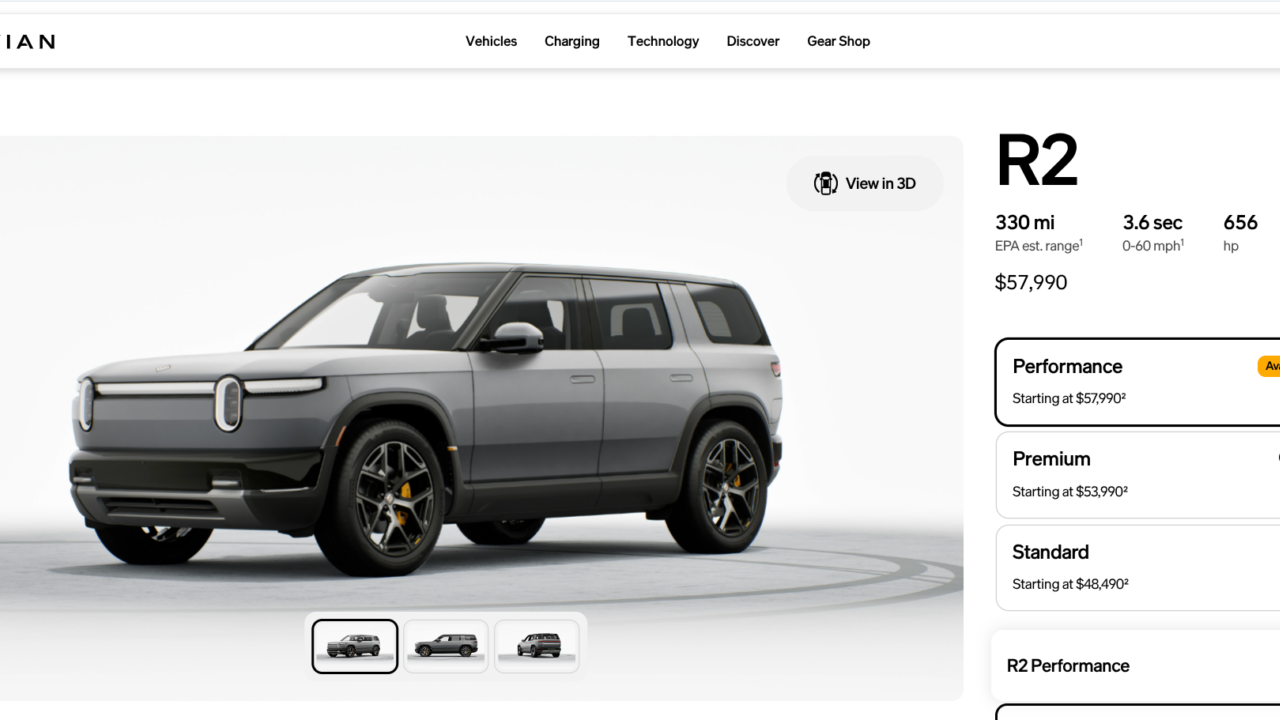
Rather than opening orders with the cheapest trim, Rivian decided to debut the R2 lineup with the highest-performance configuration available. The current Performance model starts at $57,990 before options and fees.
That version includes dual-motor all-wheel drive, a claimed 0-60 mph time of 3.6 seconds, and approximately 330 miles of estimated driving range. Output is listed at a substantial 656 horsepower, placing the R2 firmly into high-performance EV territory despite its positioning as the brand’s “entry-level” product.
More affordable versions are planned later. Rivian says the Premium trim, expected sometime in late 2026, will start around $53,990, while the Standard model arriving in 2027 is projected to begin at approximately $48,490.
The launch strategy highlights an increasingly common approach among EV manufacturers. By releasing higher-margin versions first, automakers can maximize early revenue and profitability before introducing lower-cost trims later in the production cycle.
The Options Add Up Quickly
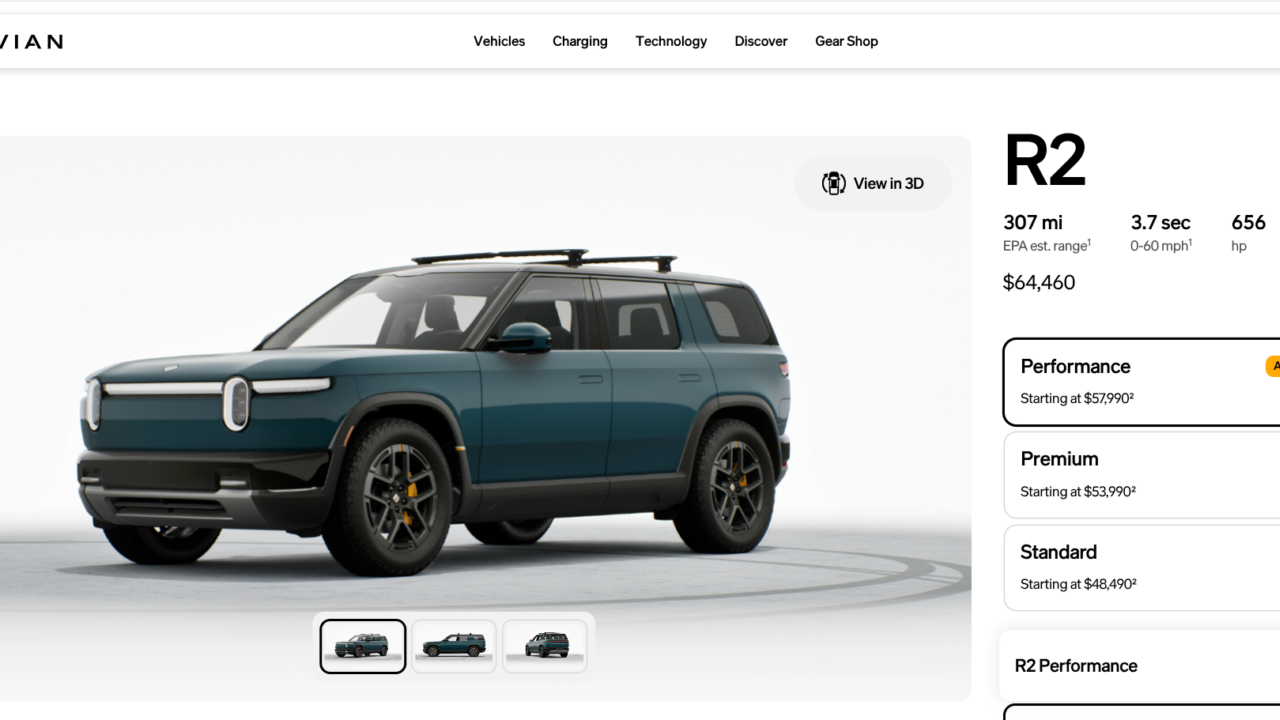
Rivian’s configurator itself is relatively straightforward compared to some luxury brands. Unlike certain German automakers, where buyers can spend hours navigating complex menus and overlapping packages, Rivian’s system remains refreshingly simple and easy to use.
That simplicity does not necessarily stop the price from climbing. The standard Launch Package currently includes several premium features at no additional cost, including the Tow Package, Autonomy+ driver assistance system, a special key fob, and exclusive access to Launch Green paint.
Once buyers move beyond the included features, however, costs begin rising quickly. Some exterior colors alone add $2,000. Opting for 20-inch all-terrain wheels and tires adds another $1,000.
Additional upgrades continue pushing the price upward. Buyers can add a Coastal Cloud interior package later this year for another $1,000, while accessories such as a spare tire and home wall charger tack on hundreds more.
By the time a reasonably equipped R2 is fully configured with accessories and upgrades, the total can land around $64,500 before taxes and destination fees.
Affordable Compared To What?
The R2’s pricing becomes more complicated when viewed against the overall EV market. On paper, Rivian is positioning the SUV as a more accessible alternative to the larger R1S and premium luxury EVs.
However, the current Performance trim still sits well above many mainstream electric SUVs when comparing entry-level pricing. Buyers shopping purely by sticker price may notice that several competitors offer larger incentives, lower monthly payments, or cheaper starting configurations.
Where the R2 begins making more sense is at the higher end of the market. Fully loaded versions of competing premium EVs can quickly approach or exceed similar pricing territory, especially once performance upgrades and luxury packages are added.
Rivian is also banking heavily on brand identity. The company has successfully built an image around rugged outdoor capability, adventure-focused design, and lifestyle appeal that differentiates it from more conventional electric SUVs. That identity could help justify higher pricing for buyers who see the R2 as something more unique than a typical crossover.
Rivian Needs The R2 To Succeed
The importance of the R2 goes well beyond one vehicle launch. Rivian’s future growth strategy depends heavily on expanding beyond niche premium EVs into products capable of attracting larger sales volumes.
The R2 is expected to become the company’s first truly mass-market model, opening Rivian to buyers who may have admired the brand but could not justify the cost of an R1T or R1S.
At the same time, Rivian still needs healthy profit margins to survive in an increasingly competitive EV market where price wars and slowing demand have already created financial pressure across the industry.
That balancing act may explain why the company launched the highest-priced version first and carefully structured its options strategy to increase transaction prices without overwhelming buyers with excessive complexity.
Whether customers ultimately view the R2 as affordable may depend entirely on how much self-control they have once they start clicking through the configurator.