
Modern cars are safer than ever before, with advancements in airbags, crumple zones, driver-assistance systems, and structural engineering dramatically reducing fatalities over the past several decades. A new study from Graz University of Technology, however, suggests those safety improvements have not protected all occupants equally.
Researchers analyzing crash data from Austria between 2012 and 2024 found that women face a 60% higher risk of injury in vehicle accidents compared to men. The findings become even more concerning in lower-speed crashes, where women were reportedly more than twice as likely to suffer serious injuries or fatalities.
The study highlights a longstanding issue within automotive safety development: most crash testing standards and occupant models were historically designed around the average male body rather than realistic female anatomy.
According to researchers, those differences matter far more than many people realize. Variations in body structure, seating position, and biomechanics can significantly change how crash forces affect occupants during a collision.
Women Experience Different Injury Patterns

Researchers at TU Graz reconstructed and simulated real-world crashes using virtual human models representing both male and female occupants. Their findings showed that women consistently suffered injuries more frequently and often more severely than men under comparable crash conditions.
The study identified increased injury risks involving the chest, spine, arms, and legs among female occupants. Older women faced particularly high vulnerability in crashes.
Researchers say biological and anatomical differences play a major role in those outcomes. Female body structures differ substantially from male bodies in areas including pelvic width, chest geometry, shoulder positioning, and spinal motion.
Those differences directly affect how seatbelts, airbags, and restraint systems interact with the body during an impact. Despite this, many modern safety systems were originally developed and validated primarily around male crash-test standards.
The study also found that seating position significantly influences injury severity. Women are reportedly more likely to sit in the passenger seat and recline farther backward, positions that can reduce the effectiveness of standard restraint systems.
Crash Testing Historically Focused On Male Bodies
One of the study’s strongest criticisms involves the history of crash-test dummy development. For decades, automotive safety standards largely relied on the “50th percentile male” as the default reference for vehicle testing.
Even so-called female crash-test dummies were often little more than scaled-down versions of male models rather than anatomically accurate female representations. Researchers noted that the traditional female dummy represented an extremely small woman, smaller than roughly 95% of actual women.
That meant many critical anatomical differences were never properly represented during safety validation testing.
Researchers argue that this created a major blind spot in automotive safety development. While vehicles became increasingly safe overall, engineers lacked accurate data showing how crashes affected female occupants specifically.
Corina Klug, project coordinator at TU Graz’s Institute of Vehicle Safety, summarized the issue bluntly by stating: “Women are not little men.”
Automakers And Regulators Are Starting To Respond
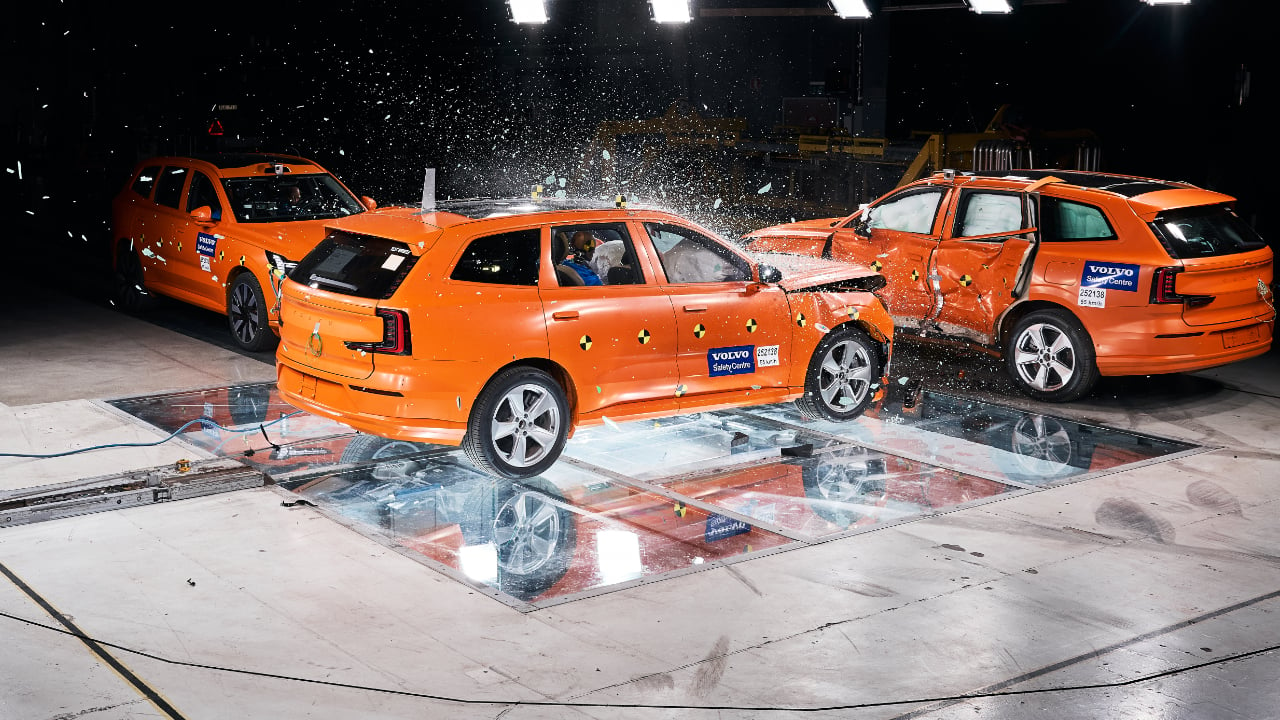
The good news is that the industry has slowly begun addressing the problem. Organizations such as Euro NCAP have started incorporating more varied seating positions and improved occupant modeling into modern crash evaluations.
The United States has also introduced the THOR 05F crash-test dummy, designed specifically around more realistic female anatomy instead of relying on scaled male proportions.
Automakers are simultaneously developing smarter restraint technologies capable of adapting to different body types and seating positions in real time. Systems such as adaptive seatbelt load limiters can automatically adjust restraint forces based on occupant size, posture, and crash severity.
Volvo recently introduced a multi-adaptive safety belt system capable of monitoring passenger positioning and dynamically changing how forces are distributed during an accident.
Researchers believe virtual biomechanical human models will also become increasingly important because they allow engineers to simulate a much wider range of body types and seating scenarios without relying entirely on physical crash dummies.
Proper Seating Position Is Important
The study also emphasized that occupant behavior can significantly influence injury outcomes regardless of vehicle design. Researchers warned that heavily reclined seating positions, improperly adjusted seatbelts, and bulky winter clothing can reduce the effectiveness of restraint systems.
One major concern is a phenomenon called “submarining,” where the body slides underneath the lap belt during a crash. This can cause severe internal injuries because the belt no longer loads against the pelvis properly.
Researchers recommend keeping seatbacks relatively upright and ensuring lap belts rest securely across the pelvic bones while shoulder belts cross the collarbone correctly.
The message from the study is not that modern cars are unsafe. Instead, researchers argue that automotive safety engineering still has important gaps to address, particularly regarding how different bodies respond during collisions.
For an industry capable of solving enormously complex engineering problems, many researchers believe fully accounting for female occupant safety should have become a priority much sooner.