
The automotive industry has always been a playground for wild ideas, but some concept cars take “thinking outside the box” to an entirely different dimension. These imaginative experiments represent moments when designers apparently asked themselves, “What if we just… didn’t worry about reality for a minute?”
Over the decades, automakers have unveiled concepts that range from brilliantly eccentric to genuinely bewildering, pushing the boundaries of what we consider a car. Some predicted the future with eerie accuracy, while others seemed to arrive from an alternate timeline where physics worked differently.
These eleven vehicles represent some of the most head-scratching, jaw-dropping moments in automotive design history. They remind us that innovation requires a willingness to look absolutely ridiculous before you look brilliant.
BMW GINA (2008)

BMW’s GINA, short for “Geometry and Functions In ‘N’ Adaptations”, featured a fabric skin stretched over a movable frame, essentially turning a car into something resembling a very expensive tent.
The body could change shape, with panels moving aside to reveal headlights and the hood splitting down the middle to access the engine. Watching panels ripple and flex like something alive was both mesmerizing and slightly unsettling, as if the car might suddenly decide to stretch and yawn.
The concept explored how materials could be reimagined beyond traditional metal and plastic, though it’s probably for the best that we’re not all driving around in washable vehicles. BMW used a polyurethane-coated Spandex fabric that was apparently resistant to temperature extremes, though one can’t help but wonder about the first stone chip.
The GINA never made production, but it did make everyone reconsider what “body panels” actually needed to be.
General Motors Firebird III (1958)

The Firebird III looked less like a car and more like a jet fighter that got lost on its way to the runway and decided to try life on four wheels instead.
This gas turbine-powered concept featured a single joystick control instead of a steering wheel, tail fins that would make any aircraft jealous, and a fiberglass body that reflected GM’s space-age optimism. The nose cone housed radar and guidance systems for what GM called “automated highway driving,” which was remarkably forward-thinking for 1958, even if the execution looked like science fiction directed by someone who’d never actually seen the future.
With its bubble canopy and winglet stabilizers, the Firebird III could hit 100 mph, though getting in and out probably required the flexibility of an astronaut. The entire thing was relatively light for such an extreme jet-age concept despite being about 20,7 feet long, and it remains one of the most gloriously impractical visions of personal transportation ever conceived.
The Firebird III is preserved in the GM Heritage Collection, with scale models displayed at the Henry Ford Museum, where it continues to confuse and delight visitors in equal measure.
Peugeot Onyx (2012)
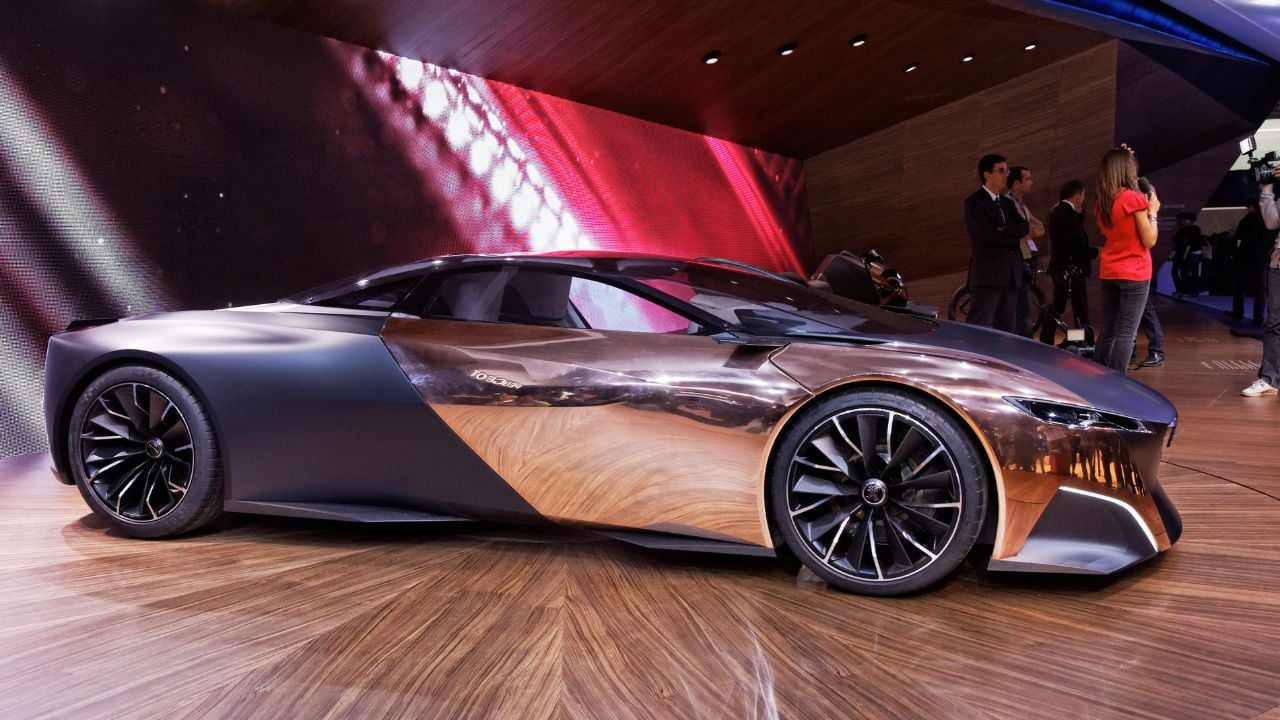
Peugeot decided that copper was the perfect material for a supercar body, presumably because they wanted something that would develop a gorgeous patina while sitting in traffic.
The Onyx featured exposed carbon fiber alongside sheets of hot-rolled copper that were left untreated, meaning the car’s appearance would constantly evolve as the metal oxidized. Inside, you’d find recycled newspapers compressed into door panels and a cabin wrapped in felt, materials more commonly associated with arts and crafts projects than exotic automobiles.
The powertrain was serious business though: a diesel-electric hybrid system inspired by Peugeot’s Le Mans racing technology, producing around 680 horsepower combined, proving this wasn’t just an art installation on wheels. The contrast between industrial materials and cutting-edge performance created something that looked simultaneously ancient and futuristic.
Peugeot made just one example, which is probably for the best since explaining to your insurance company that your car is supposed to turn green would be an interesting conversation.
Mercedes-Benz F 015 Luxury in Motion (2015)
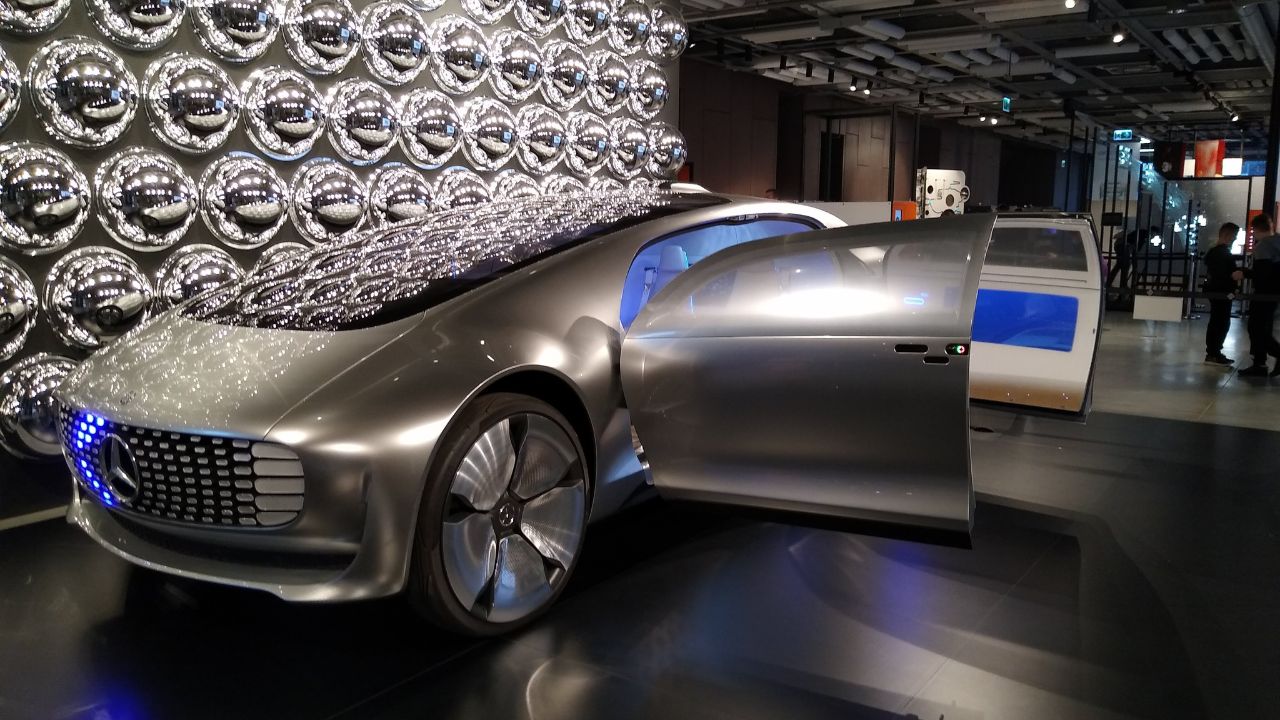
Mercedes-Benz envisioned a future where cars become “private retreating spaces” with the F 015, which looked like someone hollowed out a luxury lounge and installed it inside a sleek pod.
The concept featured lounge-style seating where all four occupants faced each other, since presumably in the autonomous future, nobody needs to actually watch the road. Six display screens were integrated into the doors and dashboard, turning the interior into a rolling conference room or entertainment center depending on your mood. The exterior featured LED light strips that communicated with pedestrians through messages and color changes, because apparently in the future, cars need to be more chatty.
At 17 feet long but just 5 feet tall, the F 015 had the proportions of a stretched luxury yacht somehow compressed into automotive form. Mercedes powered it with a hydrogen fuel cell and electric motors producing approximately 270 horsepower (200 kW), ensuring this lounge could scoot along at highway speeds while everyone inside ignored the outside world completely.
Rinspeed sQuba (2008)
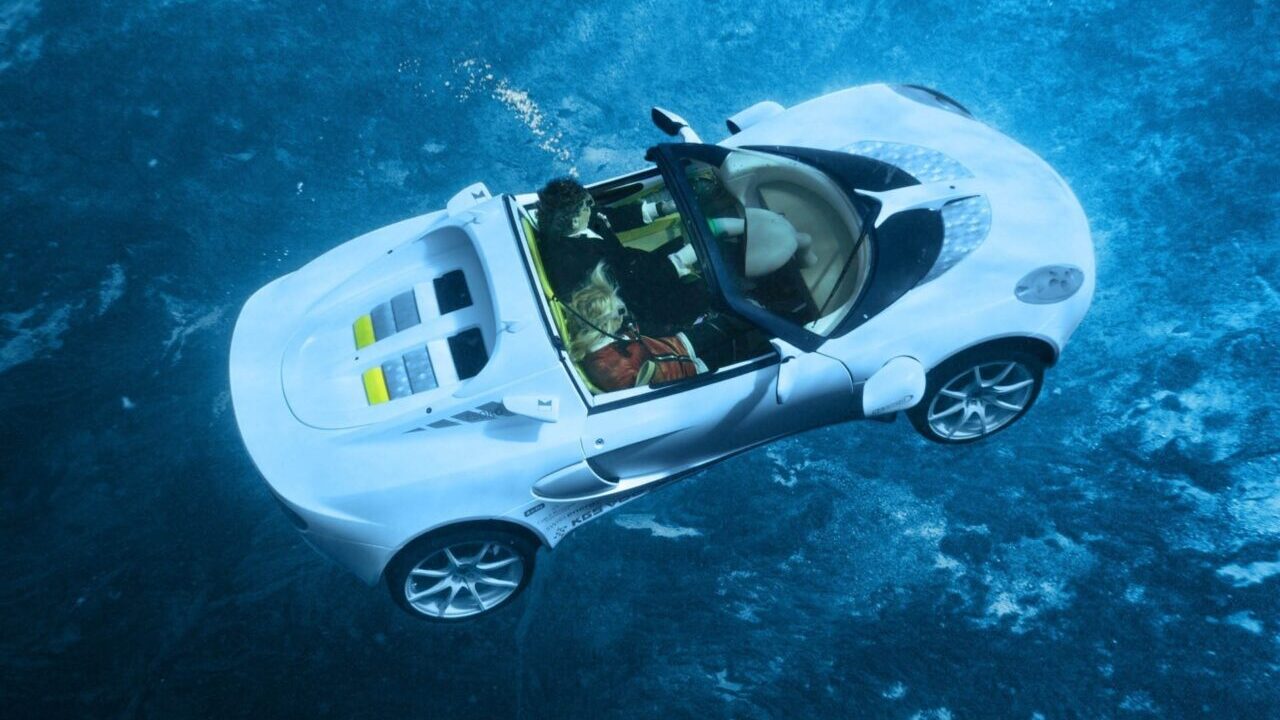
The Swiss company Rinspeed looked at James Bond’s Lotus submarine car and said, “Yes, but what if we actually made it work?”, resulting in the sQuba, one of the first fully functional, publicly demonstrated submersible cars.
This modified Lotus Elise could drive on roads normally, float on water like a boat, and then submerge up to 33 feet below the surface while occupants breathed through diving equipment. Two electric motors powered the rear wheels on land, while separate propellers handled underwater propulsion at a leisurely 1.8 mph beneath the waves.
The completely open cockpit meant you needed to be comfortable with scuba gear for the underwater portions, which somewhat limited the “everyday usability” factor. Rinspeed chose an all-electric powertrain partly for environmental reasons and partly because internal combustion engines tend to be fussy about working underwater.
The sQuba proved the concept was technically feasible, even if the practical applications remained as murky as the waters it could explore.
Nissan Pivo 2 (2007)

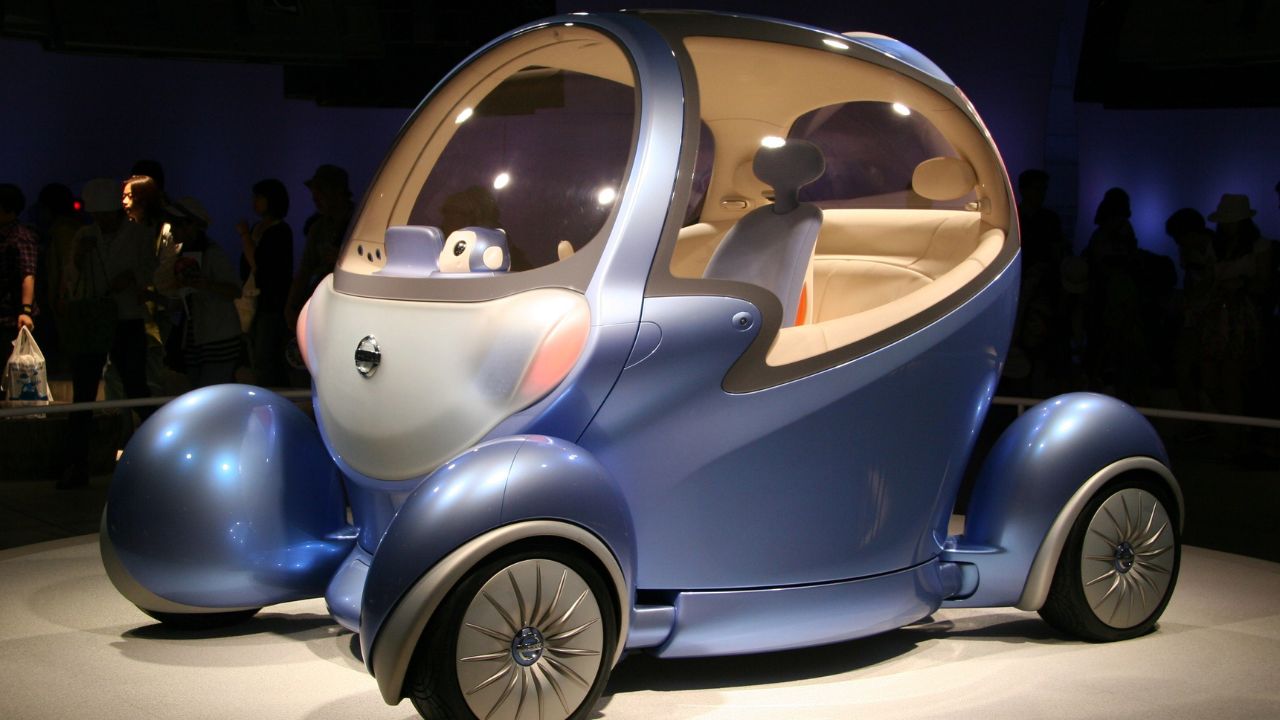
Nissan’s Pivo 2 featured a cabin that could rotate 360 degrees independent of the wheels, eliminating the need for reverse gear by simply spinning the entire passenger compartment around.
The car also included a robotic agent named “Nissan’s Robotic Agent” displayed on the dashboard, which could apparently read the driver’s facial expressions and offer encouragement or warnings. With its bubble-like greenhouse and compact dimensions designed for crowded Japanese cities, the Pivo 2 looked like a friendly cartoon character brought to three-dimensional life.
The rotating cabin meant parallel parking involved less awkward backing up and more casual spinning, which would certainly make for interesting insurance claim descriptions. Nissan powered it with a compact lithium-ion battery pack and four in-wheel motors, showcasing technology that was genuinely innovative even if the overall package looked like a toy.
The concept never reached production, though elements of its cheerful design philosophy and compact thinking influenced later Nissan EVs.
Toyota Pod (2001)
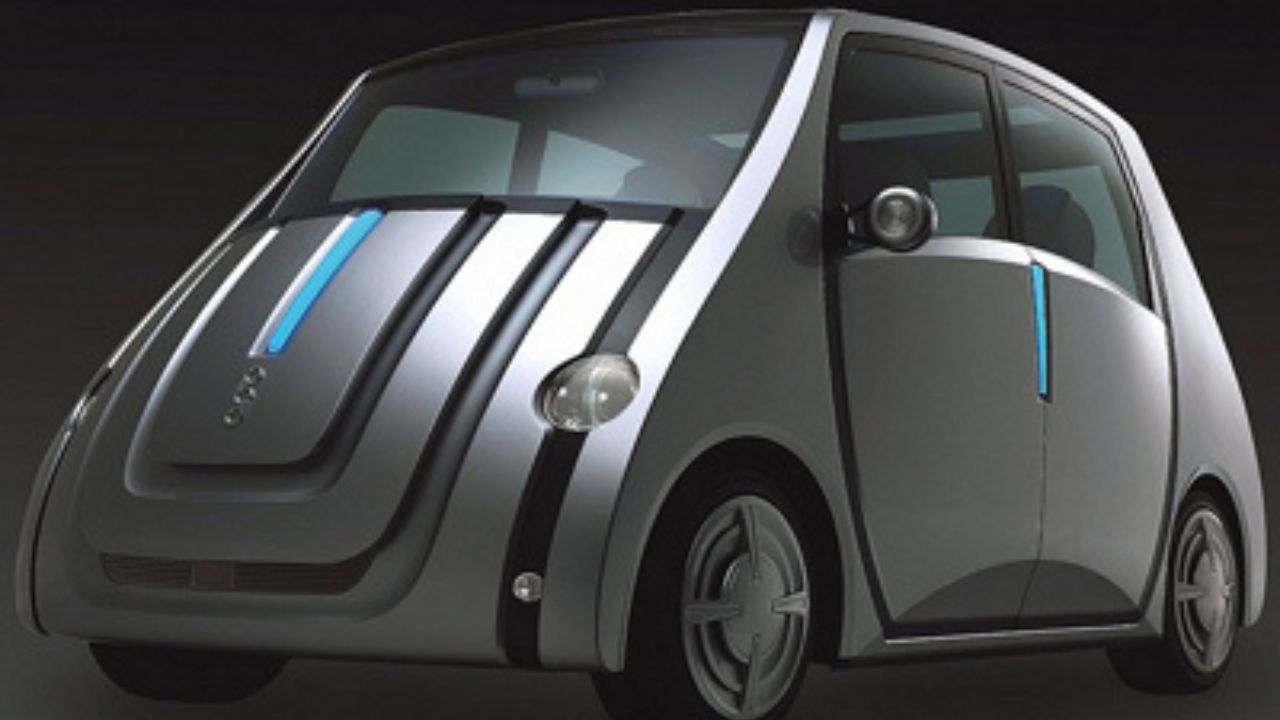
Toyota’s Pod concept was designed to have “emotions” through a color-changing exterior, tail that wagged when happy, and antennae that moved based on driving conditions, basically a golden retriever in automotive form.
The car was designed to conceptually respond to the driver’s mood through interactive inputs and would change its own emotional state accordingly, displaying feelings through its lighting and movements. The single-seat bubble car featured an aircraft-style joystick for steering and a completely open wheel design that made the tiny vehicle look even more alien.
Toyota claimed the Pod would communicate with other Pods on the road, creating a network of emotionally aware vehicles that could share information. Designed as an ultra-compact city vehicle, the Pod was designed for ultra-urban environments where parking spaces are measured in inches rather than feet.
The concept explored human-machine interaction in ways that seemed either charmingly optimistic or deeply concerning depending on your perspective about cars with feelings.
Cadillac Cyclone (1959)

Cadillac’s Cyclone featured a twin radar-equipped nose cones that could supposedly detect large obstacles ahead and provide driver warnings, and a level of chrome excess that could only come from 1950s America.
The concept embodied the jet-age aesthetic taken to its logical, or perhaps illogical, extreme, with bodywork that flowed like liquid metal around mechanicals that seemed almost secondary to the styling. Those radar nose cones were genuinely innovative, predicting modern collision avoidance systems by about fifty years, even if the execution looked like something from a science fiction pulp magazine.
The interior featured aircraft-inspired instruments and a steering wheel that would fold away for easier entry, assuming you could actually fit through that canopy opening. Cadillac claimed the Cyclone could reach 100 mph, though at that speed the aerodynamics of those protruding nose cones probably became very interesting very quickly.
The car survives today in the GM Heritage Collection, where it serves as a glorious reminder that sometimes more is absolutely more.
Lamborghini Marzal (1967)

Lamborghini decided a two-seat sports car wasn’t enough and created the Marzal, a four-seater with gullwing doors so vast they incorporated sections of the roof, creating openings large enough to swallow small buildings.
The car featured an enormous glass canopy and extensively glazed bodywork, with the windshield flowing seamlessly into the side glass and rear window, creating a greenhouse that would turn the interior into a mobile sauna on sunny days. Instead of Lamborghini’s traditional V12, the Marzal used half of one, a straight-six mounted transversely behind the seats, which must have seemed like sacrilege at Sant’Agata.
The interior featured silver leather and hexagonal patterns everywhere, because if you’re already being weird, you might as well commit fully. Those enormous doors meant you needed roughly the space of a small parking lot just to get in and out, limiting the Marzal’s practicality to approximately zero.
While it never reached production, elements of its dramatic glass-heavy design influenced the later Espada, proving that even the strangest concepts can leave useful legacies.
Citroën Karin (1980)
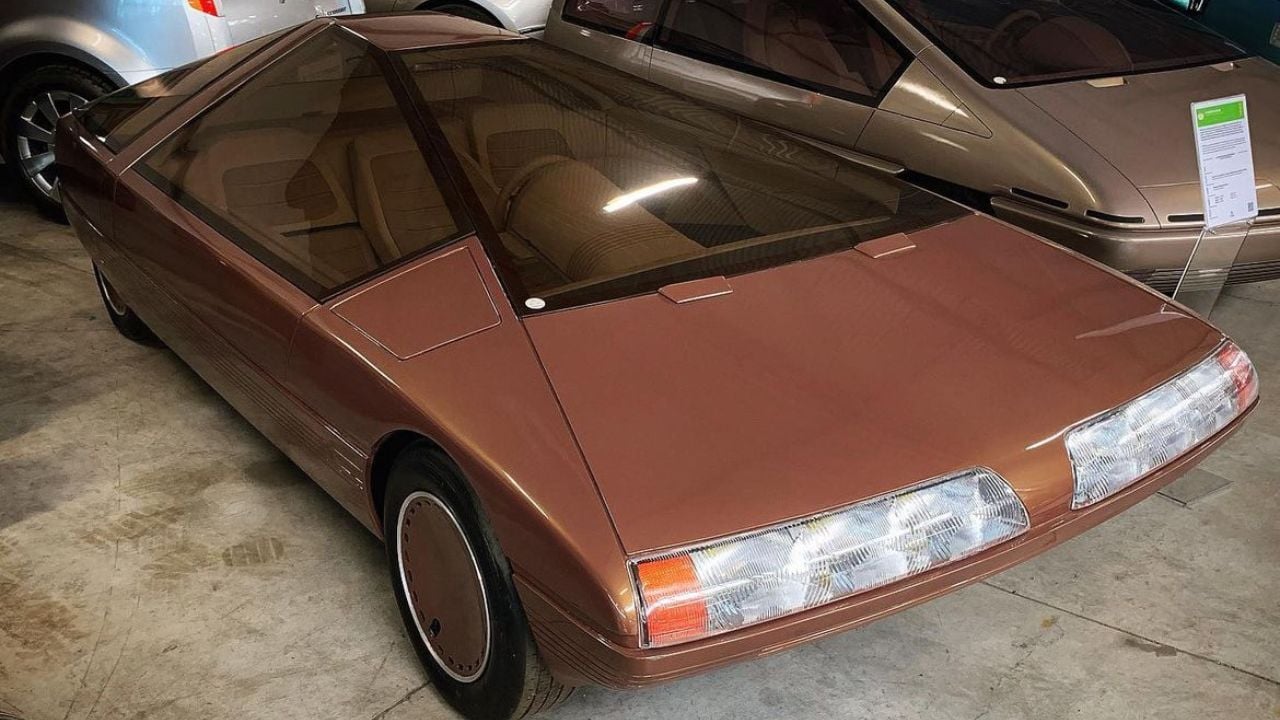
The Citroën Karin took pyramid power literally, featuring a perfectly pyramidal side profile with the driver seated in the center point ahead of two passengers.
This three-seater configuration meant the driver sat in lonely splendor in the nose while passengers flanked them further back, creating social dynamics that would make for interesting road trip conversations. The angular design used flat glass panels throughout, presumably because curved glass was for companies that didn’t embrace pure geometry.
Designers suggested the pyramid shape could offer aerodynamic benefits, though one suspects the design was chosen more for its visual impact than its coefficient of drag. The interior featured a digital dashboard that must have seemed impossibly futuristic in 1980, with angular switches and controls that matched the exterior’s uncompromising aesthetic.
The Karin influenced exactly nothing in Citroën’s production lineup, but it remains an unforgettable example of design bravery that bordered on audacity.
Nissan Jikoo (2003)
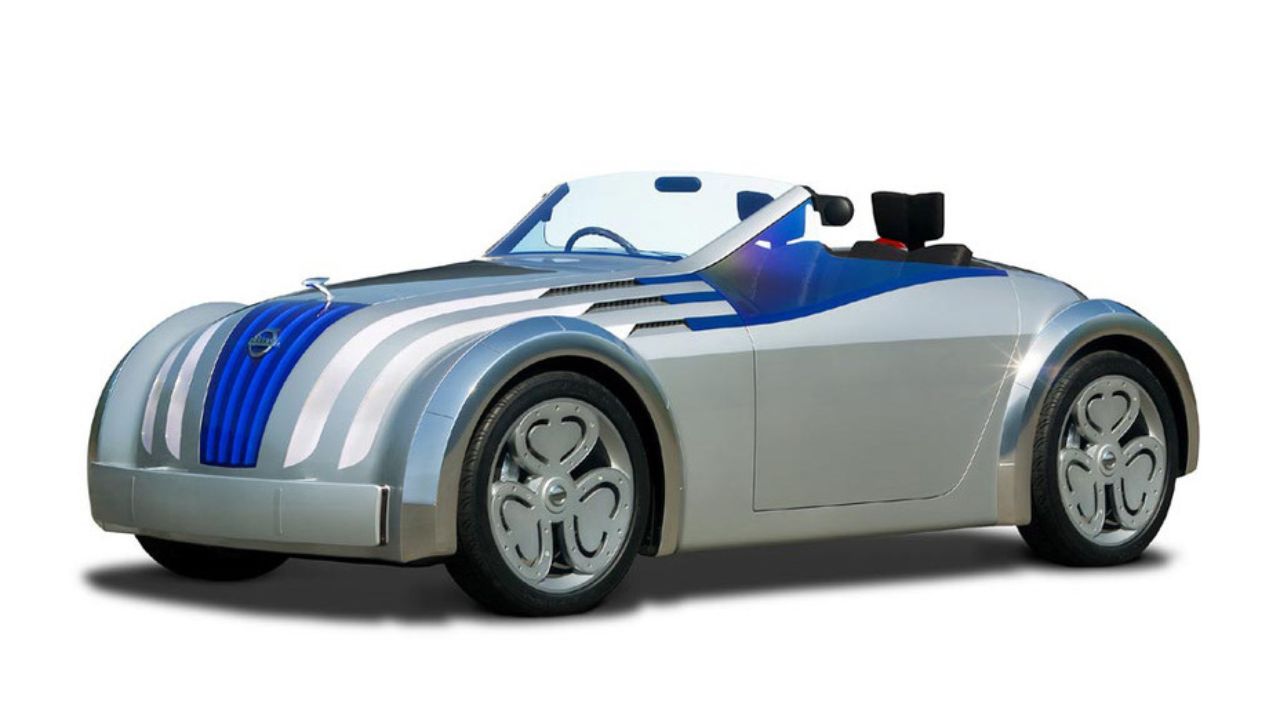
Nissan’s Jikoo concept debuted at the 2003 Tokyo Motor Show as a playful mash-up of retro cruiser vibes and modern, city-sized mobility. Instead of trying to fit neatly into the “car” or “motorcycle” box, it leaned into a low, open-top silhouette with flowing bodywork that wrapped around the occupants like a stylized cocoon, if cocoons came with chrome accents and leather-trim flair.
Nissan described the design as drawing from traditional Japanese aesthetics as well as American chopper culture, an unusual pairing that gave the Jikoo its unmistakable attitude. The concept was presented as a highly customizable idea, with body sections intended to be removable or swappable so owners could change the look without a full repaint. It also fit Nissan’s heritage-themed show storytelling, using bold nostalgia to explore what alternative urban runabouts could look like.
With its proportions and minimalist packaging, it was aimed at short hops and spectacle rather than long-distance comfort, but it succeeded at grabbing attention.
Conclusion
These eleven concepts prove that the automotive industry’s wildest ideas often come from moments of complete creative freedom unburdened by practicality, budgets, or physics. While none of these vehicles made it to showroom floors in their original forms, many introduced technologies and design philosophies that eventually found their way into production cars we drive today.
The beauty of concept cars lies not in their immediate viability but in their willingness to ask “what if” without worrying about the answer making complete sense. They serve as time capsules capturing the optimism, anxieties, and aesthetic sensibilities of their respective eras, whether that’s 1950s jet-age enthusiasm or 2000s dot-com futurism. Some of these designs now look charmingly dated while others remain startlingly modern, but all of them represent genuine attempts to reimagine personal transportation.
The next time you see a concept car that makes you scratch your head, remember that today’s absurdity sometimes becomes tomorrow’s innovation, or at the very least, tomorrow’s entertaining story.