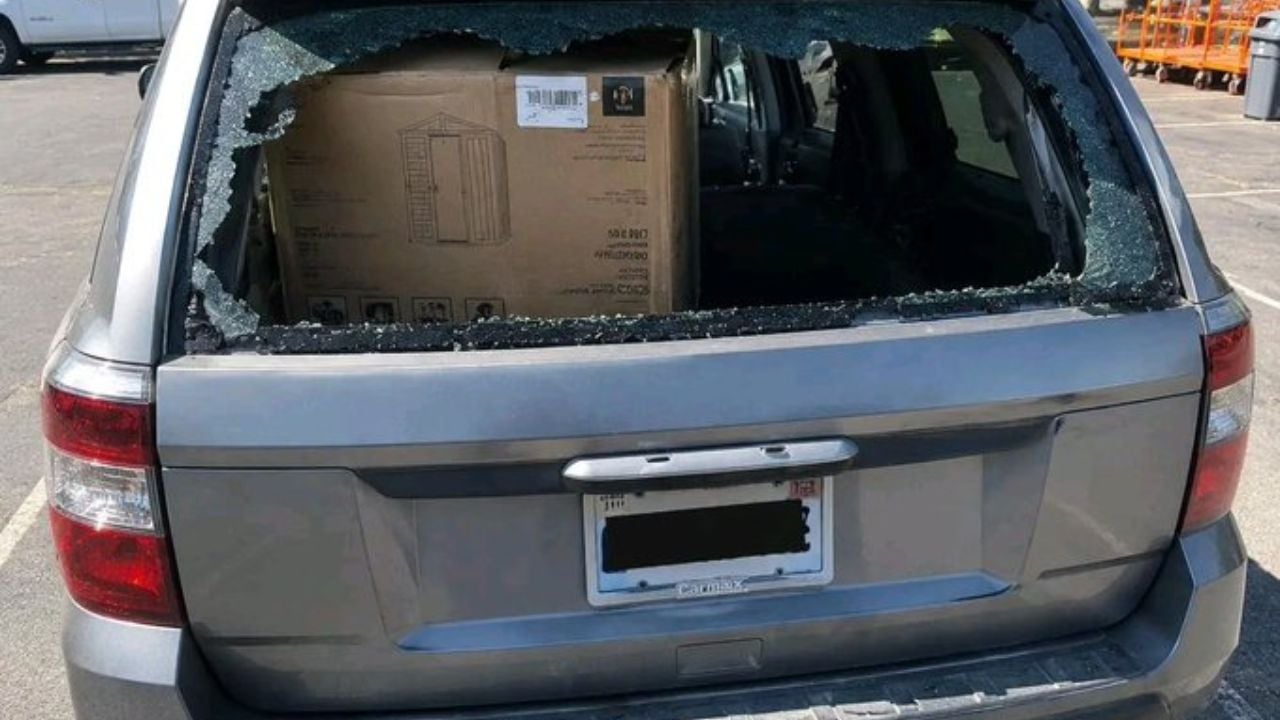

A post from X user Emma, known on the platform as @Avabelly__, turned into a debate about cargo safety after she shared photos of a shattered rear SUV window caused by a boxed shed that shifted during transport home from a store. The post was published on Monday, June 1, 2026.
It drew attention after viewers saw the extent of the damage. The large cardboard package had pushed through the rear glass of her silver SUV and ended up lodged inside the vehicle.
Emma said a store employee helped place the boxed structure into the SUV before she drove away. The item appeared to be a packaged outdoor storage shed or storage building sold in flat-packed form through home improvement retailers.
Photos attached to the post showed broken glass scattered across the cargo area while the cardboard package leaned through the opening where the rear window once sat. Orange loading carts visible in the background suggested the item may have been purchased from a home improvement chain.
Cargo Shift Ends Drive Home
According to Emma’s description, the damage happened during the drive home after the load shifted inside the SUV. No straps, tie-downs, cargo nets, or blocking materials appeared to have been used to hold the package in place.
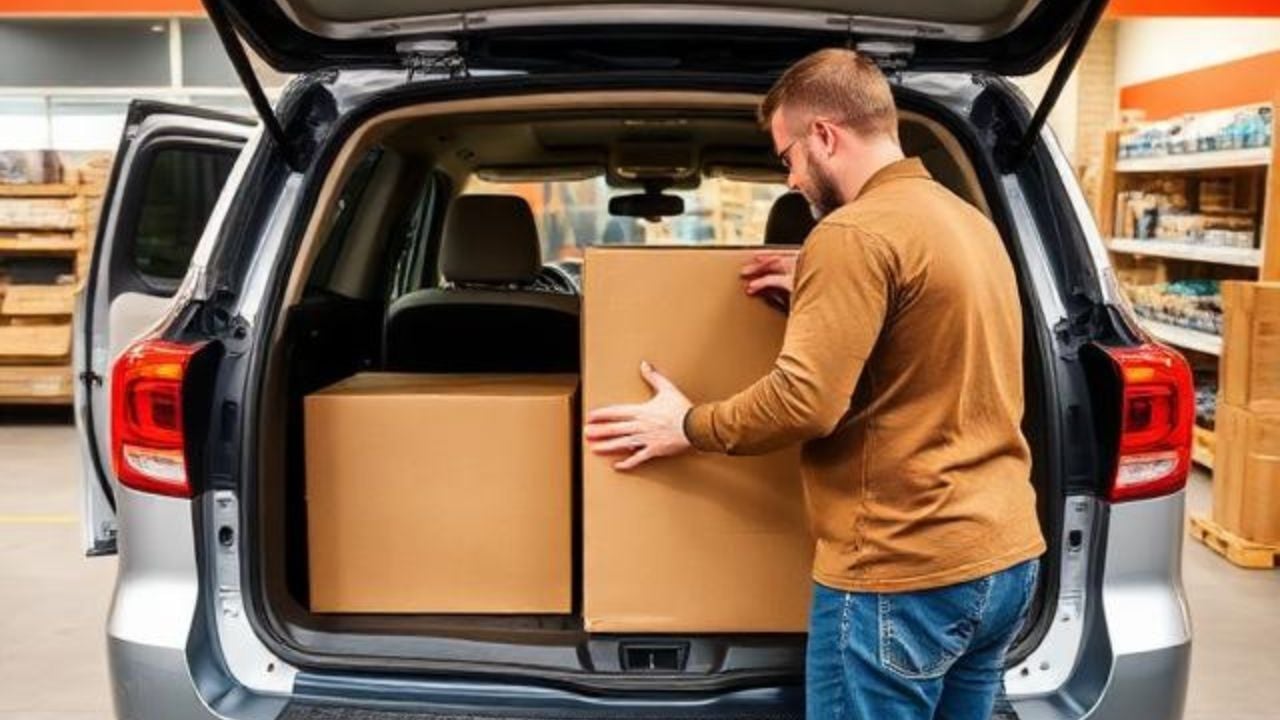
Transportation experts and insurance agencies have warned for decades that unsecured cargo can become a hazard during braking, turning, lane changes, or uneven pavement. Even items that appear stable while parked can move with force once a vehicle reaches road speed.
Large, boxed products sold at hardware and home improvement stores create particular challenges because of their size and weight distribution. Flat-packed sheds, cabinets, and furniture kits often contain metal panels, wooden supports, brackets, and dense hardware packed into long rectangular boxes.
Those products may fit into the rear cargo area of SUVs and crossovers, but vehicle safety specialists often advise customers to secure them using ratchet straps attached to anchor points inside the vehicle or to use pickup trucks and trailers designed for hauling cargo.
In the United States, cargo laws generally place responsibility on the vehicle operator rather than the store employee assisting with loading. Courtesy loading services exist at many retailers, but legal responsibility usually transfers once the vehicle leaves store property.
Social Media Reaction Focuses on Responsibility
The post spread across X as users debated fault and liability. Many commenters argued that the responsibility belonged to the driver because she chose to transport the item without securing it.
Others questioned whether a cardboard box alone could generate enough force to shatter tempered rear glass. The photos, however, showed the package extending through the broken window opening from inside the vehicle.
Auto glass specialists note that tempered rear windows are designed to break into fragments rather than sharp shards. While tempered glass can withstand many impacts, concentrated force from a heavy object moving inside a vehicle can still cause failure.
Commenters also discussed insurance claims and whether the store could be held responsible. Many advised Emma to file through her own auto insurance policy under comprehensive coverage rather than pursue action against the retailer.
That advice reflected common insurance practice involving cargo damage. If the driver accepted the load and operated the vehicle, insurers often classify the incident as driver responsibility unless negligence during loading can be proven.
A Familiar Problem in Retail Parking Lots
Incidents involving unsecured cargo have appeared for years across highways, parking lots, and suburban roads throughout the United States. State transportation departments regularly issue warnings about improperly secured items ranging from furniture and mattresses to lumber and appliances.
Store employee loaded a large item into my SUV. It shifted on the drive home and shattered my rear window 😭
Now I’m dealing with repairs and wondering if the store could be held responsible since they loaded it.
Has anyone successfully filed a claim for something like this? pic.twitter.com/Hnhn3AWtSG
— Emma (@Avabelly__) June 1, 2026
The rise of SUVs and crossovers has also increased the number of consumers attempting to transport oversized retail purchases without trucks or trailers. Retail workers often assist customers in fitting large items into vehicles even when cargo dimensions leave little margin for safe movement.
Safety organizations recommend checking weight limits, securing all cargo with straps, and keeping heavy items low and forward in the vehicle. The advice avoiding transport if the load blocks visibility or cannot be restrained.
Emma’s post became one more example of how a single unsecured item can turn into vehicle damage within moments of leaving a parking lot. The broken rear window transformed an ordinary retail pickup into a social media discussion about liability, vehicle safety, and the risks tied to transporting oversized cargo without restraints.