
There’s a difference between buying a sports car and buying the right sports car. Anyone can be dazzled by horsepower figures, exotic badges, or YouTube exhaust clips, but true satisfaction comes from a car that still feels worth it long after the new-car smell fades.
The best sports cars don’t just look good in the driveway or dominate on paper. They make you look forward to your morning commute, take the long way home, and remind you that driving can still be a personal experience. They’re the ones that start every time, don’t punish your wallet, and somehow feel just as special at 40 mph as they do at 100.
These are the machines that enthusiasts talk about with genuine affection, not buyer’s remorse, the ones that make you look back and smile even after years of ownership.
Mazda MX-5 Miata

The Miata remains the answer to a question nobody asked but everyone needed. It’s proof that you don’t need 500 horsepower to have a great time, just perfect weight distribution and a transmission that feels like it was assembled by people who actually enjoy driving.
With a starting price around $29,830 and bulletproof reliability, it’s the rare sports car that won’t punish you for actually using it.
Porsche 911

Yes, it’s expensive, but the 911 has spent decades earning its reputation as the sports car you can actually live with. The rear-engine layout that should be a disaster somehow works brilliantly, and these things hold their value better than most stocks.
You’re looking at roughly the mid-$130,000s and up for a new Carrera, but talk to anyone who’s owned one, and they’ll tell you about driving it through winter, taking it to the track, and racking up 100,000 miles without major drama.
Chevrolet Corvette C8

Moving the engine behind the driver was the best decision Chevy ever made with the Corvette. Starting around $68,300, you get genuine supercar performance without the European maintenance costs that make you wince every time a warning light appears.
The visibility is actually decent, there’s real storage space, and it doesn’t feel like you’re sitting on the floor.
Toyota GR86 / Subaru BRZ
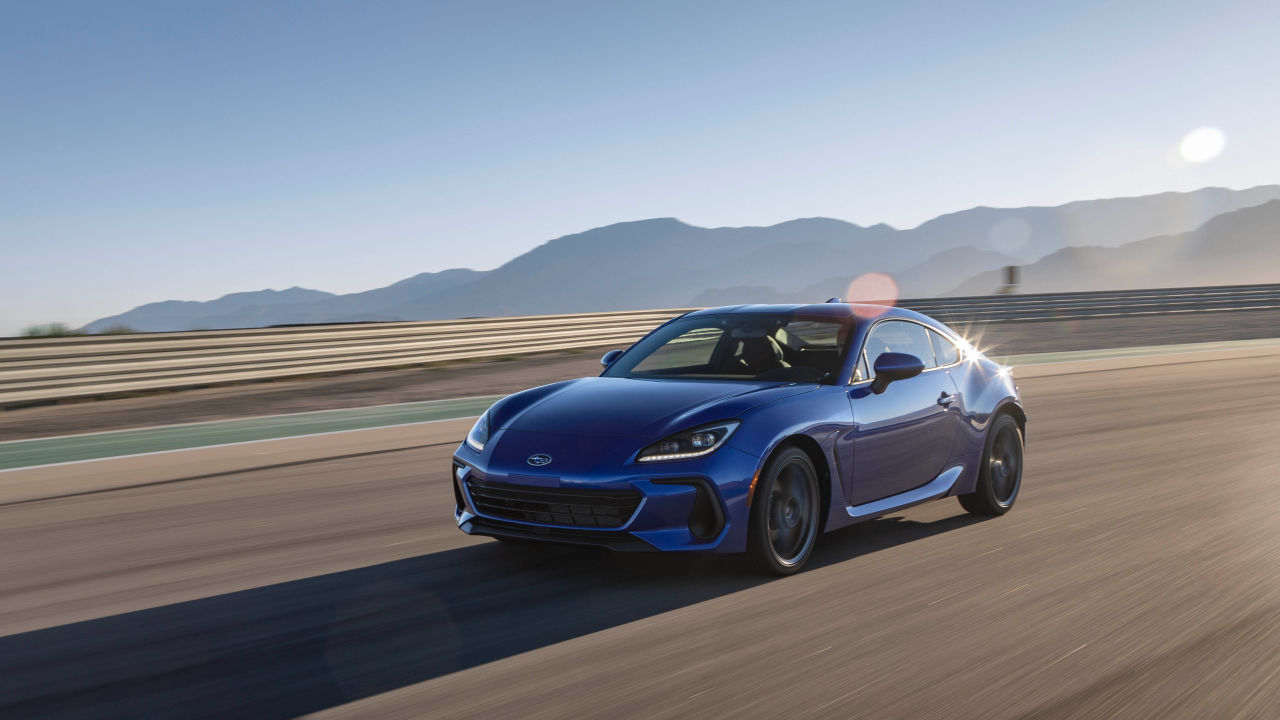
These twins prove that chassis balance matters more than spec sheet bragging rights. They’re genuinely fun at 45 mph, which is where most of your driving actually happens, and they start around $30,000.
The naturally aspirated engine won’t blow your mind with power, but the way these cars communicate through the steering wheel and seat makes up for it.
Honda Civic Type R

It looks like a teenager’s video game creation, but once you get past the styling, the Type R is an absolutely brilliant front-wheel-drive sports car. Starting around $45,895, it’s shockingly practical with real back seats and a huge hatchback, yet it can embarrass cars costing twice as much on a twisty road.
The limited-slip differential actually makes front-wheel drive feel engaging rather than like a compromise.
BMW M2

The M2 is what happens when BMW remembers that smaller and lighter used to be part of their formula. At around $66,000 to start, it’s the most affordable M car and arguably the most fun because you can actually use the performance without immediately losing your license.
It’s compact enough for city parking but has a proper inline-six that sounds like BMW engines used to sound.
Porsche Cayman

If the 911 didn’t have its history and prestige, everyone would admit the mid-engine Cayman is the better-balanced car. Starting around $77,000, it offers that precise Porsche steering and build quality in a package that feels more agile and easier to place on the road.
The engine is right behind your head, which is either a feature or a bug depending on how much you like mechanical symphony during your drive.
Ford Mustang (GT or Dark Horse)

The Mustang GT remains an absurd performance bargain at around $46,560, delivering a rumbling V8 and straight-line thrills that never get old. The Dark Horse model bumps things up to $62,000 and adds track-focused hardware that makes it legitimately capable on a road course.
Modern Mustangs have finally figured out how to go around corners, not just in straight lines.
Lotus Emira

The Emira represents Lotus entering the modern era with actual build quality and livable ergonomics while keeping the lightweight philosophy intact. At around $102,250 to start, it’s not cheap, but you’re getting a car that weighs about as much as a well-fed Miata with either a Toyota four-cylinder or an AMG four-cylinder doing the pushing.
The manual gearbox feels mechanical and alive in a way that’s becoming rare.
Nissan Z

The new Z brings back the affordable Japanese sports car with genuine style and a twin-turbo V6 making 400 horsepower for around $43,000. It’s not trying to reinvent anything, just deliver a good-looking coupe with power and a manual transmission option at a price that won’t require explaining to your spouse.
The retro-modern styling works better than it should, especially in person.
Audi RS3

Fitting a five-cylinder engine in a compact sedan shouldn’t work as well as it does, but the RS3 is ridiculously fast and sounds like nothing else on the road. Starting around $62,000, it offers all-wheel-drive security with performance that embarrasses many dedicated sports cars.
It’s the sleeper that looks like a normal compact car until you’re already past whoever tried to race you.
Conclusion

The best sports car isn’t the one with the most impressive specs or the flashiest badge. It’s the one you’ll actually want to drive years from now without regretting the purchase every time you see the insurance bill or schedule maintenance. These 11 offer that rare combination of driving enjoyment, reasonable running costs, and the kind of ownership experience that creates enthusiasts rather than destroying them.
Choose based on what actually matters to you, not what looks good on paper. You’ll never be disappointed.