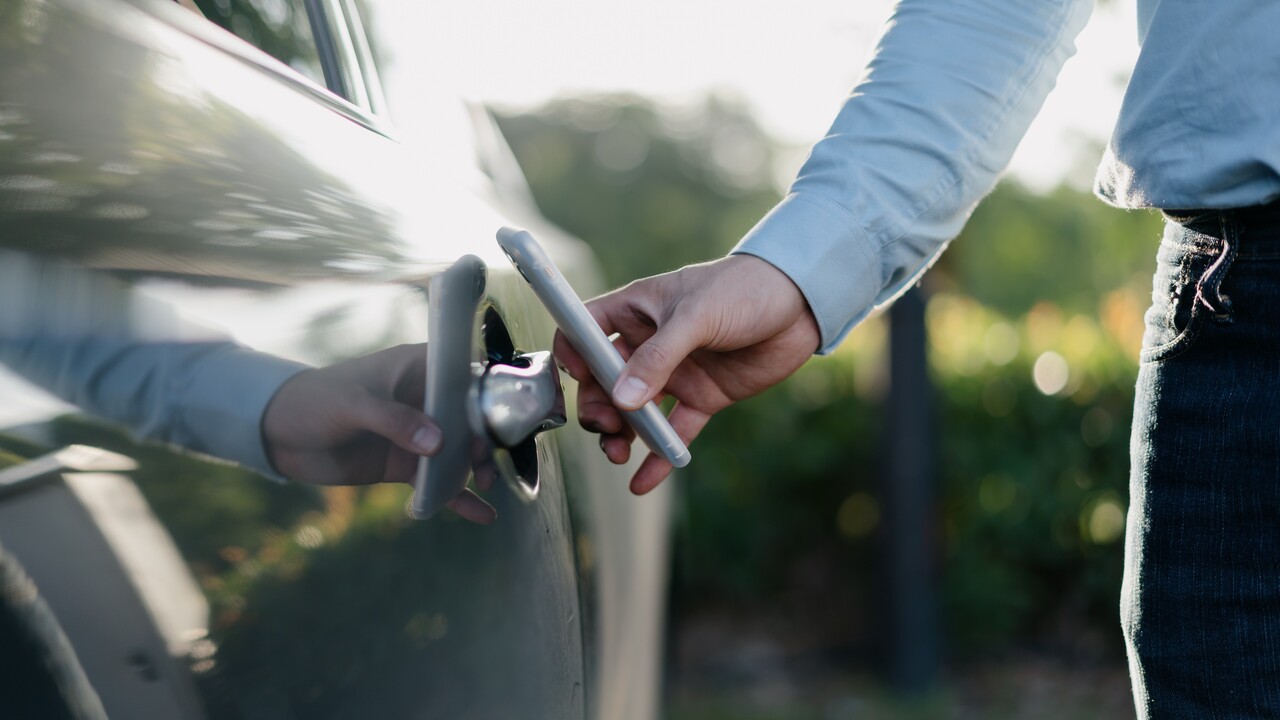
It might be time to say goodbye to the old-fashioned car key.
From smart cards to smartphones and even smartwatches, the way we unlock and start our cars is changing fast. Now, it’s about connectivity, security, and what’s coming next.
A new industry report from ResearchAndMarkets.com reveals that digital car keys are set to become the norm, with new tech like Ultra-Wideband (UWB), Bluetooth 6.0, and NearLink leading the next wave of keyless entry innovation.
What Exactly Is a Digital Car Key?
If you’ve ever used your phone to unlock your car or start the engine remotely, you’re already familiar with digital keys. These systems utilize wireless communication, typically via Bluetooth, NFC (Near Field Communication), or newer standards like UWB, allowing you to ditch the fob and turn your smartphone (or smartwatch) into a full-fledged car key.
Digital keys also open the door (pun intended) to new features, such as remote car sharing, geo-fencing, and even hands-free entry, where your car unlocks as you approach it, eliminating the need for taps or clicks.
The Future: UWB, NearLink, and Bluetooth 6.0
So what’s new in this space? According to the report, Ultra-Wideband is emerging as a major player thanks to its ability to pinpoint a user’s exact location within inches. That level of precision adds an extra layer of anti-theft security, ensuring the car only opens when you’re truly right next to your car.
Meanwhile, Bluetooth 6.0 promises more stable, faster connections with lower power usage, which could be game-changing for smart devices like wearables. NearLink, a rising star from China, could soon give NFC and Bluetooth a run for their money with lightning-fast speeds and a wider range of applications, extending beyond just automotive.
Together, these technologies are forming the backbone of what automakers and smartphone makers are betting will be the future of mobility.
Apple, Samsung, and Automakers Are Already on Board
Major automakers, including BMW, Hyundai, and Kia, are already integrating digital key systems into select models. Apple and Samsung have also developed smartphone-based keys that work across certain car brands, and Android and iOS continue to expand support.
The Car Connectivity Consortium, which includes many of these big players, is working on universal standards that will make digital keys work across different platforms and vehicles, making the tech more accessible and future-proof.
So, When Will We All Be Using Digital Keys?
The report projects rapid growth, with the global digital key market expected to reach nearly $8 billion by 2032, driven by rising smartphone adoption, increasing consumer demand for convenience, and advancements in connected car systems. In other words, if your current car still uses a physical key, chances are your next one won’t.
That doesn’t mean key fobs are disappearing tomorrow, but the shift is clearly underway. Expect to see more models offering smartphone integration as standard and fewer drivers fumbling for physical keys in the dark.
So go ahead and lose your keys… just maybe don’t lose your phone.