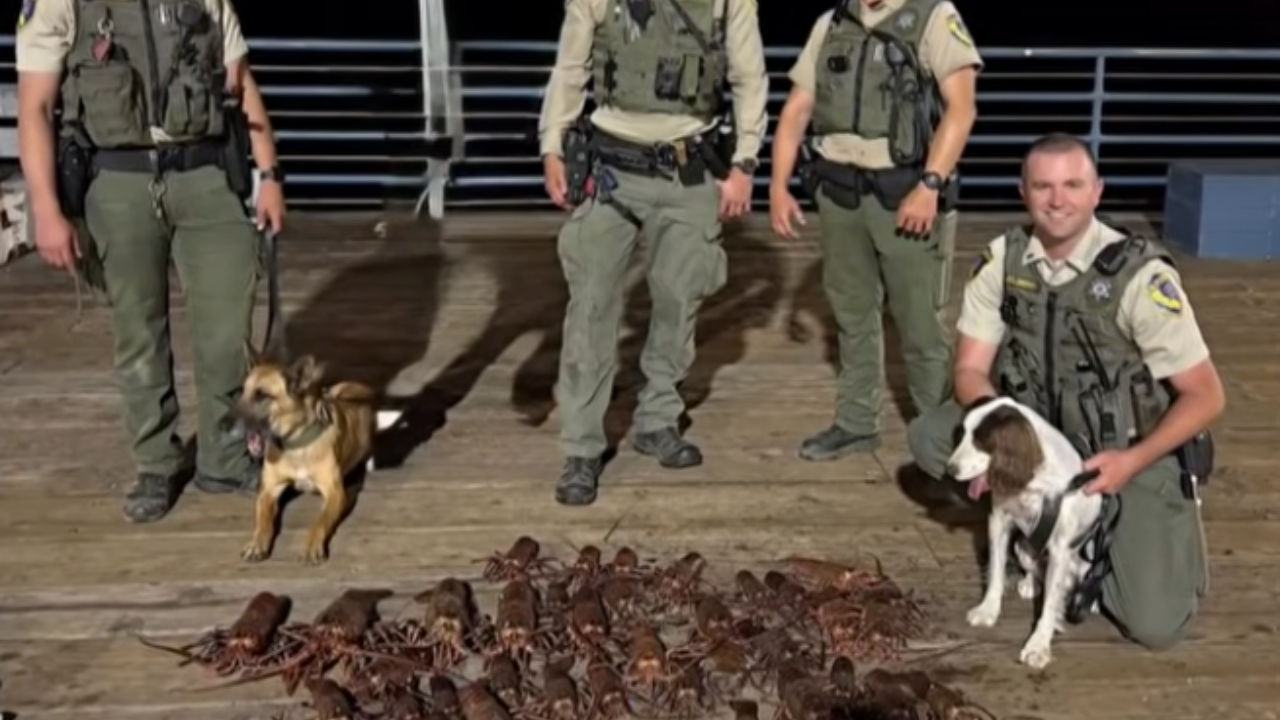
If you’ve ever wondered how far someone will go for a lobster dinner, California Department of Fish and Wildlife officers just found out. Six people were caught allegedly trying to walk away from Santa Monica Pier with 34 lobsters they weren’t supposed to have, and the methods they used to move that much seafood were, to put it mildly, creative.
We’re talking backpacks, gym bags, and reportedly even a baby stroller. Whether that stroller belonged to an actual baby who got bumped for crustacean cargo is unclear, but it’s safe to say that’s not the intended use case listed in the owner’s manual.
Wildlife officers didn’t crack the case alone. They had help from lobster sniffing dogs, which might be the most specialized canine job title we’ve heard in a while. Somewhere out there is a very good boy who trained for years to sniff out spiny lobster instead of drugs or explosives, and honestly, we respect the range.
The lobsters were eventually returned to the ocean alive, reported KTLA 5, which is the best possible outcome for everyone involved except the six people now facing citations. And once you look into just how many rules govern lobster season in California, it starts to make sense why this turned into a full operation.
The Rules Are No Joke
California’s lobster regulations are genuinely extensive, covering everything from size limits to how you’re allowed to catch them. One rule that stands out: you can’t use a “tickle stick” to coax a lobster out of hiding.
We didn’t know that was a technique people used, but apparently it’s common enough to require its own regulation.
Why Pregnant Lobsters Matter
Part of what makes this case notable is that some of the lobsters taken were reportedly carrying eggs, and a pregnant lobster isn’t just one lobster. A single female can carry anywhere from 20,000 to 50,000 eggs at a time.
Pull enough egg-bearing lobsters out of the water and you’re not just taking dinner, you’re taking a big chunk of next year’s population with it. That’s likely part of why officers take poaching this seriously, even when it looks almost comical on paper.
The Black Market Angle
It turns out there’s real demand for California spiny lobster tail meat outside legal channels, which is what allegedly drove this whole pier operation in the first place.
Lobster season here runs through the winter and wraps up in March, so timing matters too.
What Happens Next
The suspected poachers are facing penalties of up to $1,000 per violation, and with 34 lobsters involved, that math adds up fast. They could also be looking at up to a year in jail, depending on how things shake out.
Either way, next time you’re at the pier and see someone wheeling around a stroller a little too carefully, maybe don’t ask what’s inside.