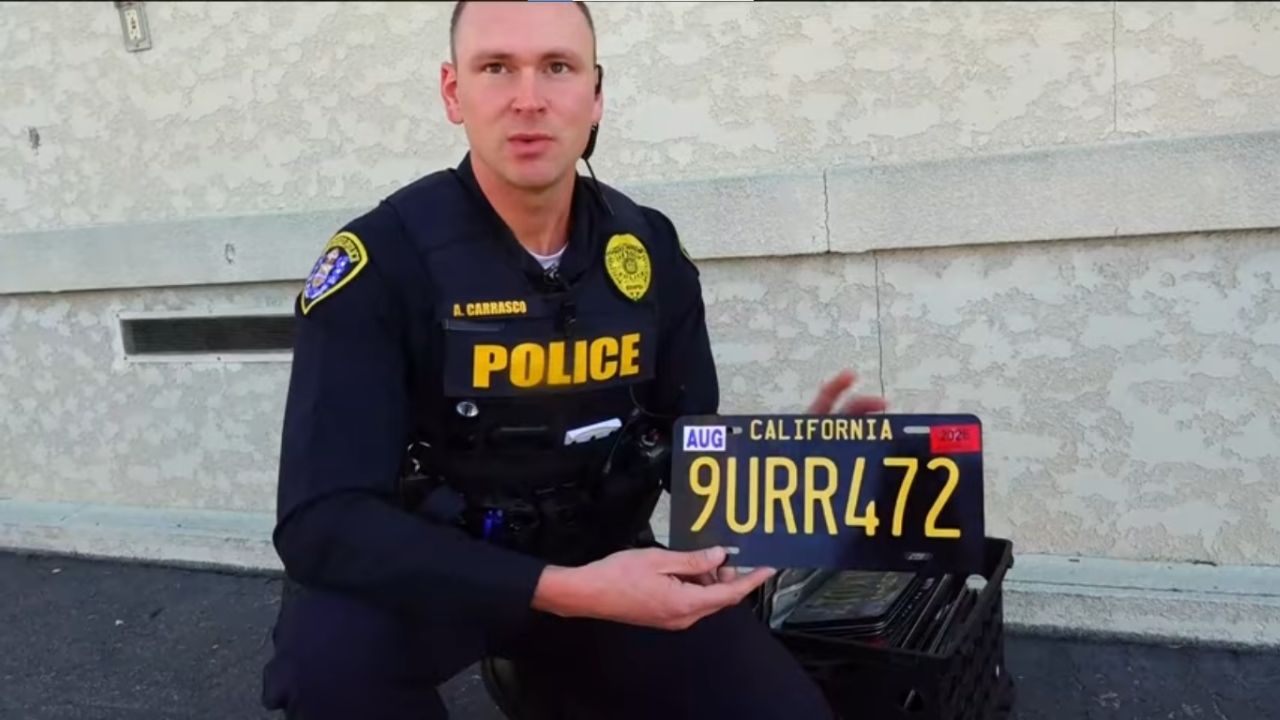

In recent weeks, San Diego drivers have been learning an expensive lesson about something most people barely think about once a car leaves the dealership. License plates. What looks like a harmless style upgrade is now putting dozens of vehicles on tow trucks, and many of the people affected say they had absolutely no clue they were breaking the law.
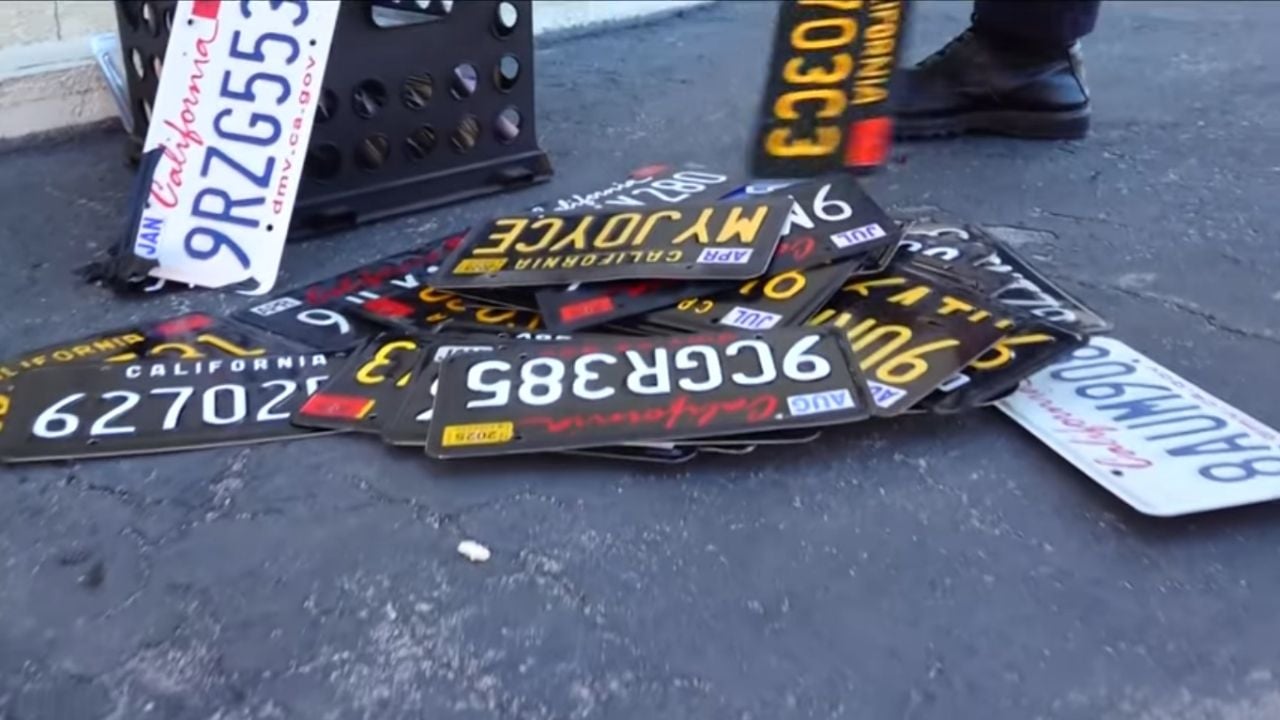
San Diego Police say they have seized dozens of illegally modified license plates in just over a month. At traffic headquarters, the evidence sits in a simple basket. One after another, Officer Anthony Carrasco pulls out plates that look modern, glossy, even premium. Carbon fiber backgrounds. Retro California scripts. Darkened finishes that look custom and cool. But as he peels back the surface, the truth appears underneath. The original white license plate, exactly how the DMV issued it.
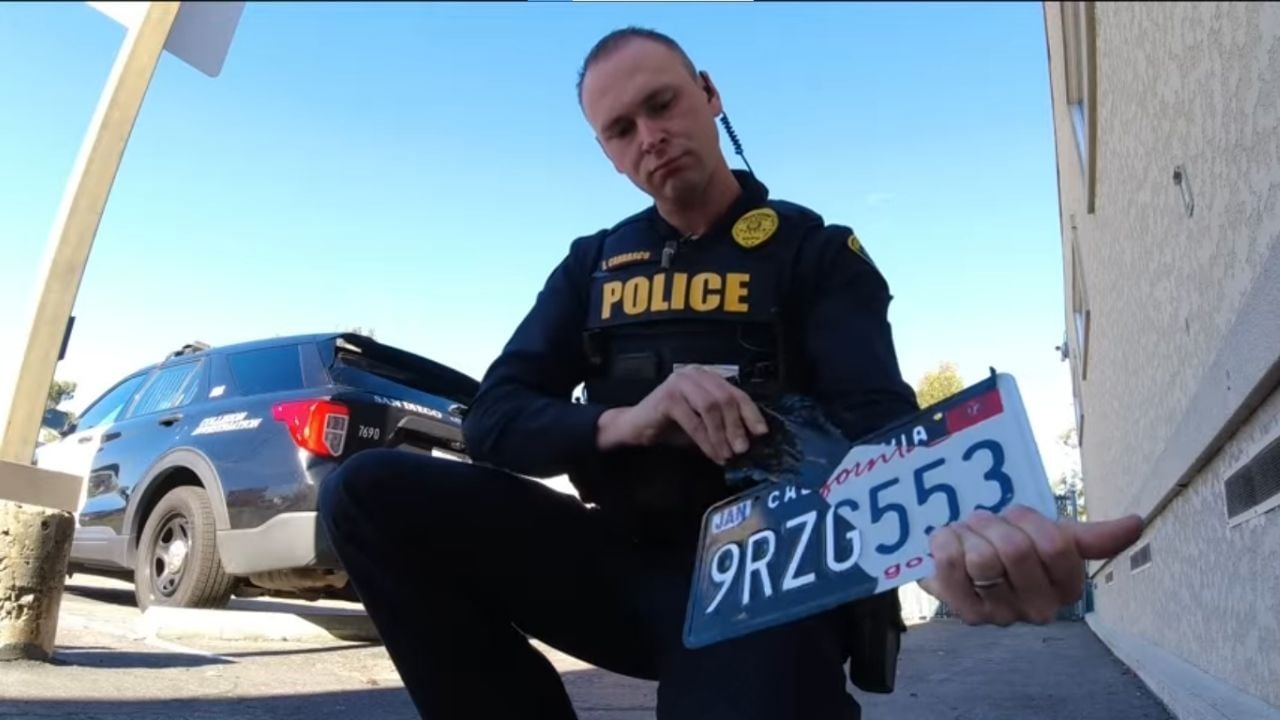
“These are all of the license plates that we’ve confiscated that are modified,” Carrasco explains. What looks like a plate is often just a vinyl wrap or plastic cover applied over a real one. Drivers buy these wrap kits online or through body shops for as little as ten dollars. Some are advertised as cosmetic upgrades. Others promise privacy from cameras. None of that matters under California law.
No Plate Left Unturned
The trend has quietly spread across all types of vehicles. Police say they are stopping everything from Lamborghinis to Jeeps and pickup trucks, from soccer mom minivans to Toyota Corollas. In other words, the trend isn’t limited to car enthusiasts or luxury owners. It is showing up in everyday traffic, which is part of why so many drivers are shocked when red and blue lights appear behind them.
Under California Vehicle Code, a license plate may not be altered in any way. Not with wraps. Not with decals. Not even with decorative paint or flowers. Two laws are now being used aggressively. Assembly Bill 2111 bans altering plates altogether. Assembly Bill 10085 goes further, prohibiting the manufacture and sale of devices designed to hide plates from cameras. Violations can carry fines of up to one thousand dollars.
We have previously reported that California kicked off a crackdown on license plate flippers starting this January.
California police argue that the campaign against plate mods isn’t just about appearances or technicalities but about accountability and safety. Modified plates are often difficult to read, especially at a distance or at night. That makes it harder for officers to identify vehicles involved in crimes or traffic incidents. It can delay the recovery of stolen vehicles. Even if the numbers are not changed, the added layer creates a lip, a glare, or a distortion that interferes with visibility.
The Domino Effect of a Simple Sticker
Most drivers stopped by officers say this is the first they have heard of the rule. Many believed that as long as the numbers and letters matched their registration, they were fine. Others assumed that if a product was being sold openly online, it must be legal. Police say that assumption is costing people hundreds of dollars and far more inconvenience than they ever expected.
In many cases, the consequences go beyond a ticket. Vehicles with illegal plates can be towed and impounded. That means towing fees, storage fees, and time off work to recover the car. As officers point out, a car getting impounded can affect an entire family. Getting kids to school. Getting to work. Running daily errands. All disrupted by a sticker that seemed harmless.
The message from San Diego Police is to leave your plates alone. If you want something different, go through the DMV and apply for an approved vanity plate or official sticker. Anything else, no matter how subtle or stylish, is not allowed.
So, that sleek plate wrap may look real and cool, but it is illegal. And in San Diego right now, it could cost you far more than the ten dollars you paid to stand out.