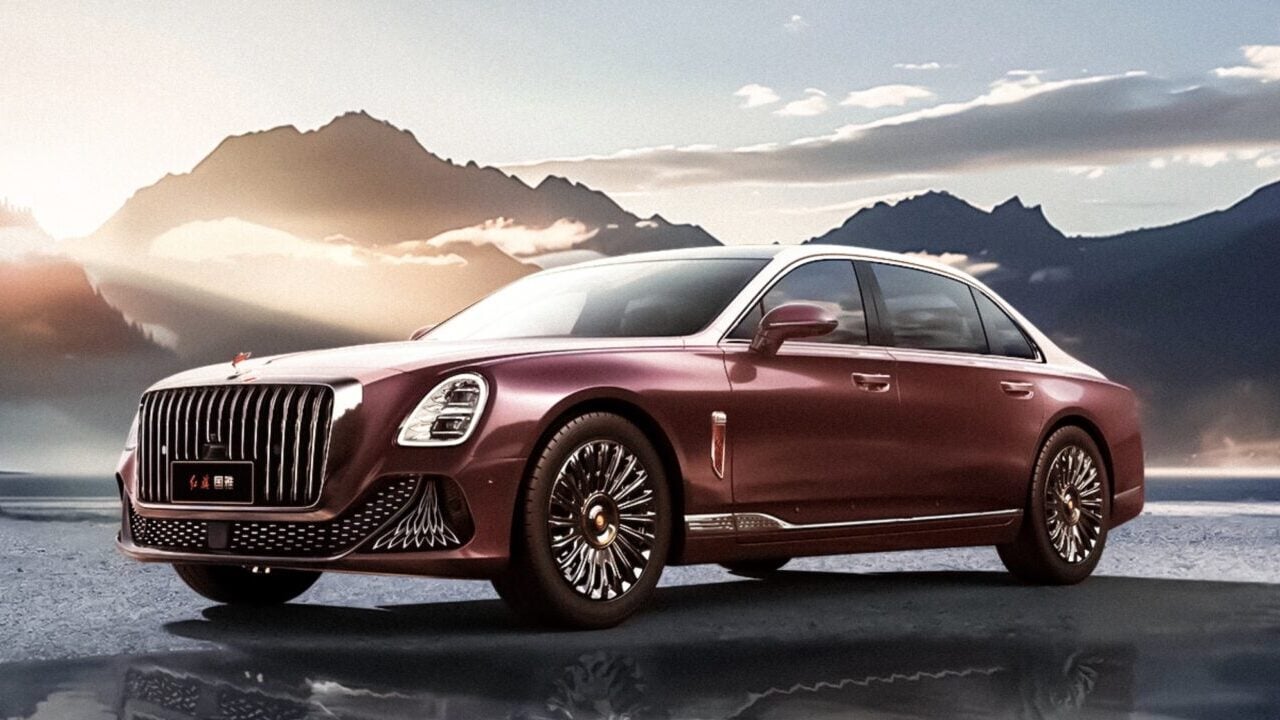
Chinese luxury cars are entering territory that once seemed completely unimaginable. A new flagship sedan from Hongqi is preparing to launch in Russia with a price tag that pushes beyond even some Rolls-Royce models.
The car in question is the Hongqi Golden Sunflower Guoya, an enormous hybrid luxury sedan designed to compete with ultra-premium European brands. In Russia, the top version is expected to cost roughly $445,000 after import duties and taxes.
That price places the Chinese-built limousine directly against vehicles like the Rolls-Royce Ghost, Bentley Flying Spur, and Mercedes-Maybach S-Class. Under normal circumstances, that might sound absurd, but Russia’s current automotive market is anything but normal.
European sanctions and the collapse of official luxury-car imports have created a major vacuum at the top end of the Russian market. Wealthy buyers who once flocked to German and British brands are increasingly turning toward Chinese alternatives instead.
Hongqi Sees An Opportunity
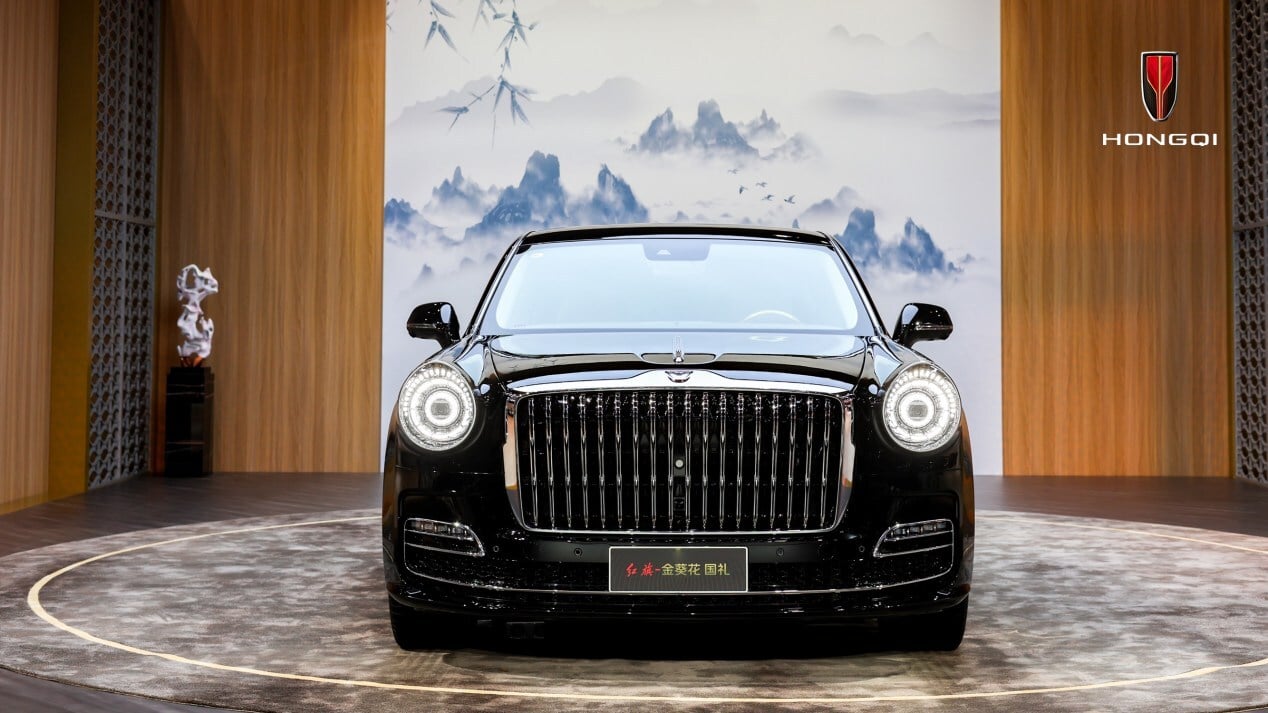
Hongqi, which translates to “Red Flag,” is China’s oldest luxury automotive brand and operates under state-owned FAW Group. The marque has long served Chinese government officials and political elites, though it has recently expanded into private luxury markets.
Russia has become an increasingly important target for Chinese automakers following the departure of many Western brands. Companies like Hongqi now have access to a market where wealthy customers still want status symbols but have fewer legitimate options available.
According to reports from Autohome, the Golden Sunflower Guoya could become the most expensive Chinese car ever officially sold in Russia. Pricing is expected to start around $389,000 for the V6 hybrid and climb to roughly $445,000 for the V8-powered flagship.
Much of that massive price increase comes from Russia’s elevated import tariffs that took effect in 2025. The same car reportedly costs about half as much in China.
Even so, Hongqi appears confident there is demand among wealthy Russian buyers looking for something exclusive. With official Mercedes-Benz, BMW, and Audi dealerships heavily affected by sanctions, Chinese luxury brands suddenly have room to move upscale.
Massive Dimensions And Traditional Luxury
The Guoya certainly looks the part of an ultra-luxury flagship. The sedan stretches more than 210 inches long and rides on a huge 128.3-inch wheelbase designed to maximize rear-seat comfort.
A giant vertical waterfall grille dominates the front fascia, surrounded by extensive chrome trim and intricate lighting details. The rear styling incorporates taillights inspired by traditional Chinese palace lanterns, while decorative elements reference historic architecture.
Inside, the cabin mixes modern technology with classic luxury touches. The dashboard combines large digital displays with wood trim, physical detailing, and even a traditional quartz clock.
Rear-seat passengers receive the full executive-car treatment. The available four-seat configuration includes large reclining rear thrones with heating, ventilation, massage functions, memory settings, and individual control screens.
Hongqi also equipped the sedan with advanced lighting technology. Its megapixel DLP headlights can project warnings, road information, and pedestrian alerts directly onto the pavement ahead.
Hybrid Power And Serious Performance
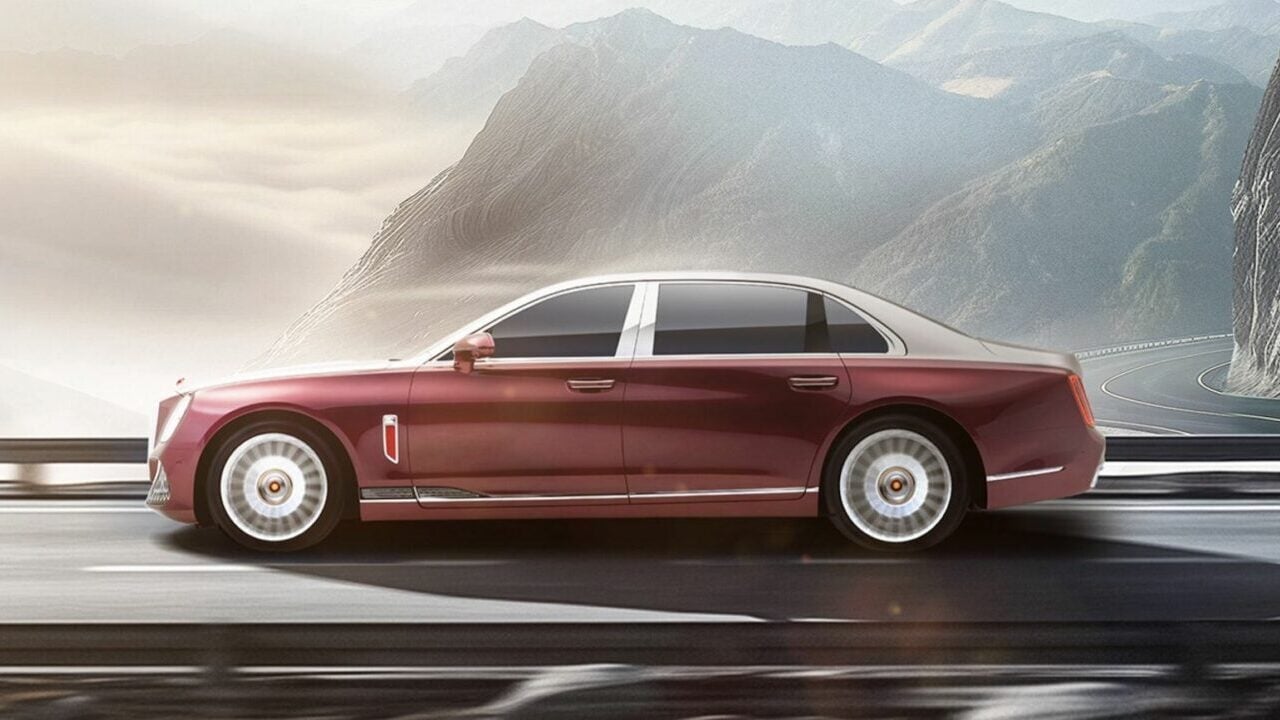
Despite its limousine proportions, the Guoya delivers serious performance figures. Buyers can choose between two hybrid powertrains paired with an eight-speed automatic transmission and standard all-wheel drive.
The entry-level setup combines a turbocharged 3.0-liter V6 with an electric motor for a total of 381 horsepower and 420 pound-feet of torque. The flagship version upgrades to a 4.0-liter twin-turbo V8 hybrid producing 476 horsepower and 501 pound-feet.
Hongqi claims the V8-powered model can sprint from 0-62 mph in just 4.3 seconds. That is remarkably quick for a luxury sedan of this size and weight.
There are still questions about how the complex hybrid systems will handle Russia’s brutal winters and harsh operating conditions. However, Chinese automakers have rapidly improved both technology and refinement in recent years.
A Luxury Car America Will Probably Never See
The Guoya’s arrival also highlights how quickly Chinese automakers are moving into segments once dominated entirely by European brands. A decade ago, the idea of a Chinese sedan competing with Rolls-Royce would have sounded laughable to most luxury buyers.
Still, the chances of seeing the Golden Sunflower Guoya in the United States are effectively zero. American tariffs and political barriers currently make importing Chinese vehicles commercially unrealistic.
Brand recognition is another major obstacle. Buyers willing to spend nearly half a million dollars on a car typically care deeply about heritage, prestige, and exclusivity.
Rolls-Royce, Bentley, and Maybach have spent generations building that reputation. Hongqi may dominate headlines in Russia and China, but convincing American luxury buyers to spend Rolls-Royce money on a Chinese sedan would be an entirely different challenge.
For now, though, Russia may provide the perfect testing ground for China’s ultra-luxury ambitions. And for wealthy buyers suddenly cut off from traditional European status symbols, the massive Hongqi might be exactly what they are looking for.