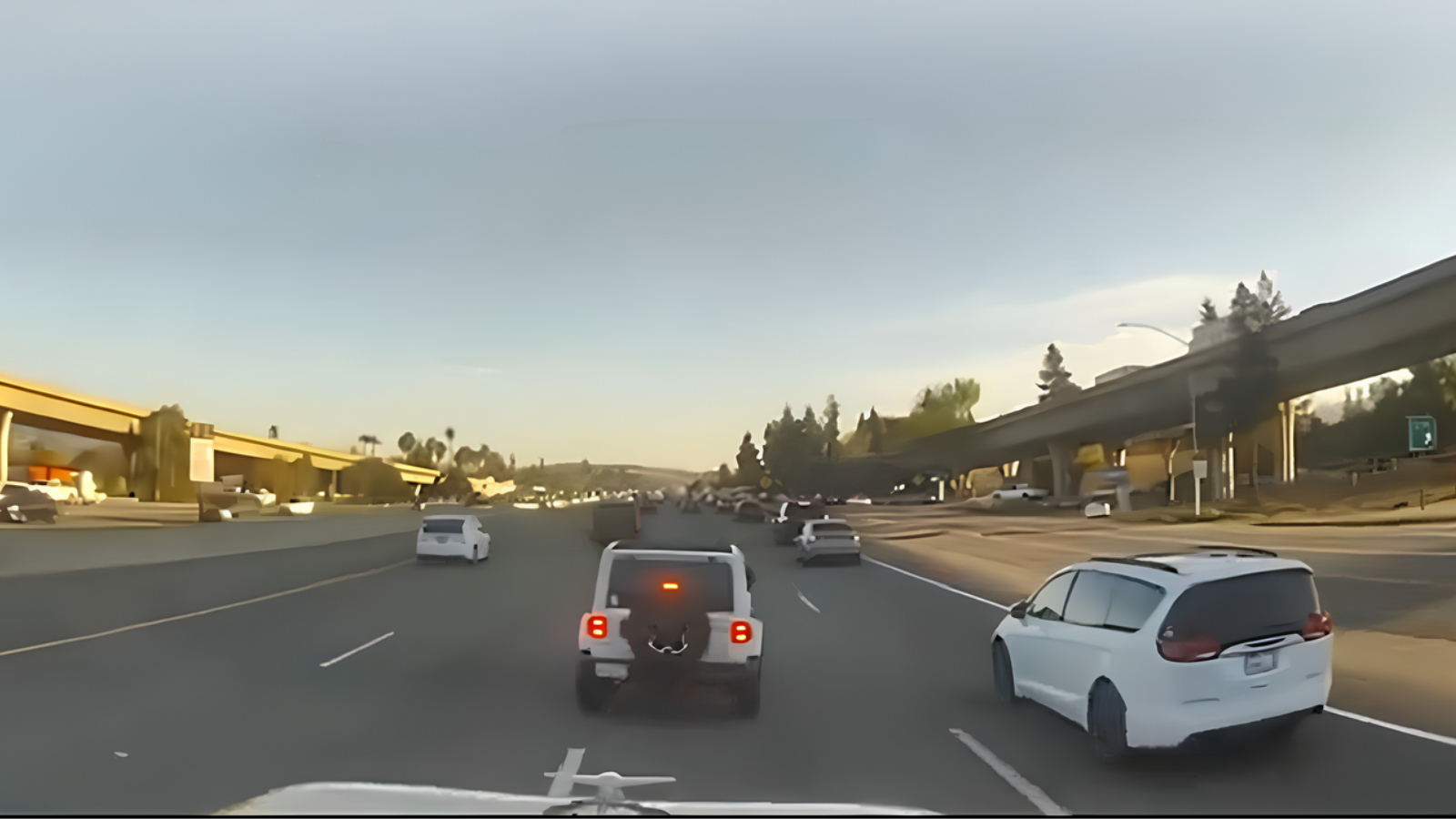
A California man has been sentenced to 60 days in county jail after deliberately brake-checking a semi-truck during a road rage incident before attempting to profit from the crash through a fraudulent insurance claim.
The case also serves as a reminder of why dashcams have become such valuable tools for professional drivers and everyday motorists alike. What initially could have appeared to be an ordinary rear-end collision instead became an insurance fraud investigation after video captured what prosecutors say actually happened.
Road rage remains a growing concern on American roadways. A Pew Research Center analysis found that nearly half of Americans (49%) believe drivers in their area have become more dangerous since before the COVID-19 pandemic, underscoring the risks aggressive driving can create.
According to the Santa Clara County District Attorney’s Office, Ken Pham Tran, 53, of San Jose, was convicted of felony insurance fraud, felony vandalism, and reckless driving after prosecutors said he intentionally caused the Highway 101 crash before lying to police and his insurance company about how it happened.
Dashcam Footage Captured the Road Rage Incident
Video courtesy of the California Department of Insurance. Please allow the video a moment to load.
According to prosecutors, Tran caught up with the semi-truck in his Jeep Wrangler and repeatedly pulled in front of it before slamming on his brakes. The dashcam footage released by the California Department of Insurance shows the truck driver attempted to change lanes to avoid a collision, but Tran moved back in front of the truck and brake-checked it for a third time.
With traffic slowing ahead, the truck driver was unable to stop in time and collided with the rear of Tran’s vehicle. The entire incident was captured on the truck’s dashboard camera, and another motorist also called 911 to report the Jeep’s dangerous driving before the crash, fearing a collision was imminent.
False Claims Uncovered During Investigation
After the collision, prosecutors said Tran called emergency services and falsely claimed he had been the victim of a hit-and-run. He also told police he had simply been stopped in traffic when the truck struck his vehicle.
Authorities said Tran repeated that version of events when submitting a claim to Progressive Insurance, failing to disclose that his own aggressive driving had caused the collision. The dashcam footage and witness statements contradicted his account, ultimately leading to criminal charges and a jury conviction.
Judge Orders Jail Term and Restitution
In addition to serving 60 days in county jail, Tran was ordered to pay $1,200 in restitution to Progressive Insurance and just over $3,000 to Bill Jacobsen Trucking.
Santa Clara County District Attorney Jeff Rosen said the case highlighted the dangers of aggressive driving and insurance fraud, describing the defendant’s actions as a series of poor decisions.
“Road rage. Reckless driving. Insurance fraud. This person made a lot of bad decisions,” Rosen said. “Count to 10 before you commit fraud in Santa Clara County.”
California Insurance Commissioner Ricardo Lara also warned that fraudulent claims not only endanger public safety but can increase insurance costs for motorists and businesses alike.
“Road rage doesn’t pay,” Lara said. “Crimes like these jeopardize public safety and increase insurance costs for consumers and businesses.”
Dashcams Continue to Prove Their Value
The case serves as another reminder that rear-end crashes do not always tell the whole story. Dashcams and independent witnesses can provide investigators with an objective record of what happened, helping distinguish between an ordinary collision and one caused by aggressive driving or insurance fraud.
Safety experts recommend avoiding confrontation with aggressive drivers, maintaining a safe following distance, and contacting law enforcement if another driver’s behavior appears likely to cause a crash. In this case, prosecutors said the combination of dashcam footage and an independent witness proved critical in documenting exactly how the collision unfolded.