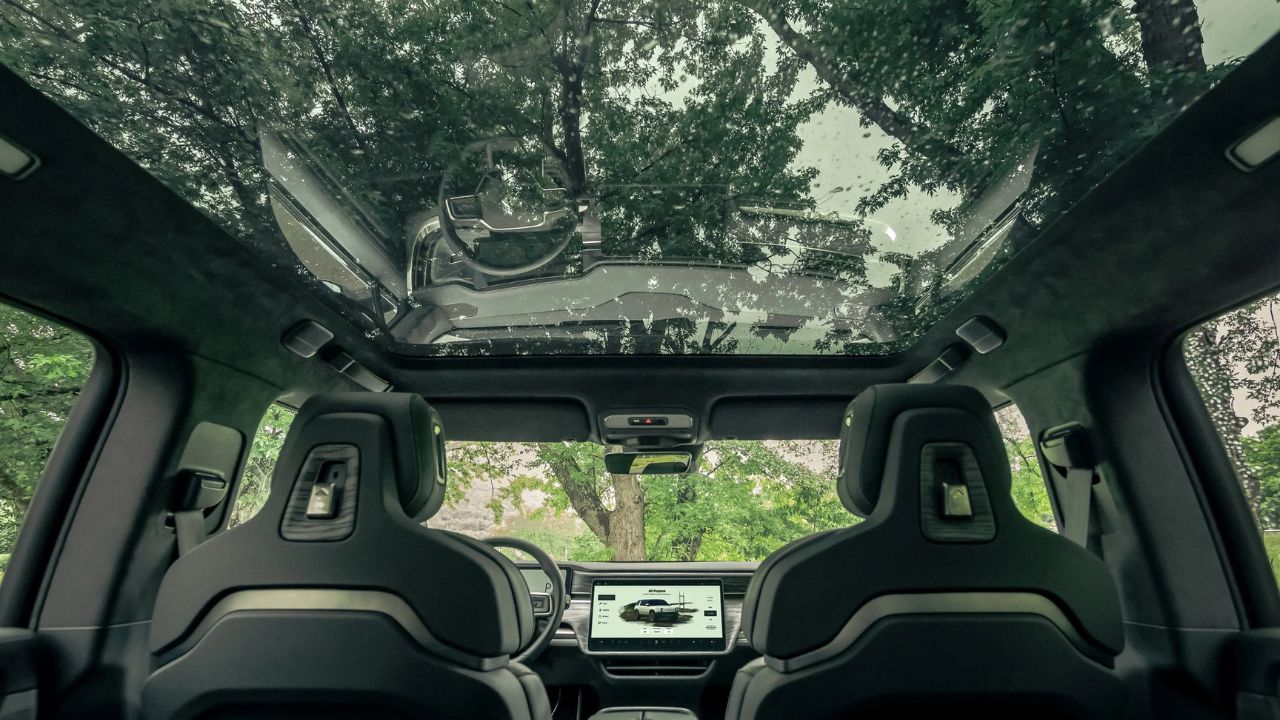

Rivian has always made headlines by blending rugged offroad capability with sophisticated EV (electric vehicle) technology. The brand’s minimalistic interiors have been a talking point in the EV world because they lean heavily on touchscreen controls and software for almost everything.
Now Rivian’s latest patent filings (US-12522055-B2) suggest the company may be preparing to bring back tactile controls and rethink how the R1S SUV interacts with daily life and adventure.
Credit for surfacing this development belongs to The Drive, which first drew attention to Rivian’s newly published patent filings and highlighted what they could mean for future R1S updates. Similarly, Car and Driver independently spotted the same documents, reinforcing that this was more than a one-off curiosity and adding weight to the idea that Rivian is seriously exploring physical dash controls again.
Patent Illustrations Show Knobs, New Tailgate, and Practical Features
In a newly revealed patent application published by the United States Patent and Trademark Office, Rivian shows conceptual illustrations that include a row of physical buttons or knobs positioned below the central display in an R1S interior.
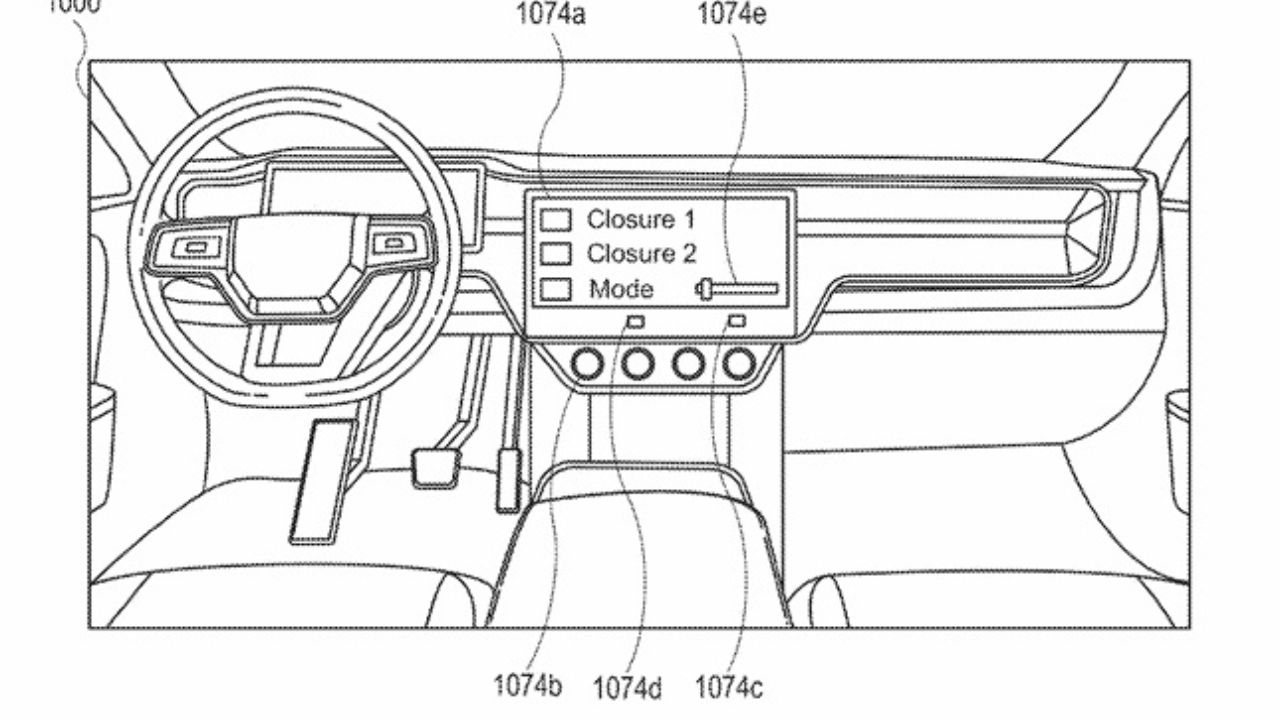
That might sound simple, but in a world where many EV makers have chased a full glass-and-screen cockpit, it is a notable hint that designers could be dialing up physical interaction for real world use.
According to the filing, they could be used for core functions like climate settings or audio adjustments. Drivers and reviewers have often debated touchscreen dominance while driving. The tactile feel of a knob or button lets your eyes stay on the road while performing common tasks.
Rivian enthusiasts have suggested this is a welcome move. Reports from other outlets show that Rivian’s patent drawings include physical knobs and switches that break up the all-screen design language that has defined the brand’s current interiors.
Not a Blueprint, But a Broader Trend Toward Practicality
Of course, patent filings are not production blueprints. Companies frequently patent technologies they may never build. Rivian itself, according to The Drive, responded to media enquiries with the usual noncommittal language, saying that its design and engineering teams are always looking for improvements and that patents help protect ideas but do not guarantee products.
That caveat aside, the presence of specific hardware elements in these drawings feels intentional enough that industry watchers are taking notice.
More than buttons, the patent also outlines a clever rethink of the R1S’s rear hatch. Rivian’s current design uses a horizontally split tailgate setup that can function like a seat with its lower portion and an awning with the upper window.
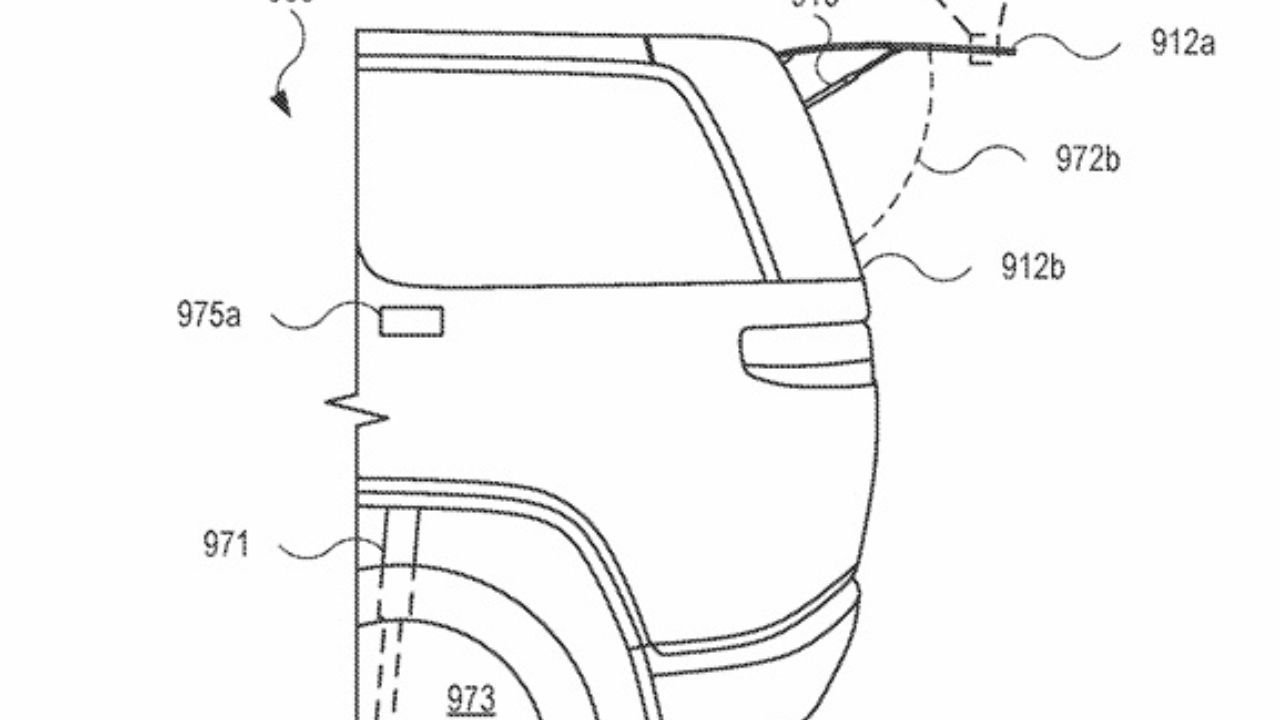
The new filing shows a more traditional liftgate where the glass itself could open independently of the rest of the tailgate. Imagine opening just the top window while keeping the main hatch closed. That ability would be useful for quick access to cargo without exposing the whole rear opening to weather or obstacles.
Patent illustrations also include additional ideas that might excite owners who enjoy details that go beyond screens. A flip-up shelf inside the tailgate could act as a small outdoor workstation or picnic surface. Heating elements in cup holders could keep a morning coffee warm.

Rivian even showed a deployable rear diffuser intended to improve aerodynamic performance on highways. Combined, these concepts point toward an R1S that feels more thoughtful, more practical, and more connected to real world tasks.
Aligning with Industry Feedback and Future Momentum
Industry trends support the notion that automakers are revisiting some analog roots. Hyundai has publicly stated that physical interior controls are returning, and Volkswagen has embraced tactile buttons on recent models as well.
The shift signals recognition that while touchscreens can look sleek, they often fall short in usability during dynamic situations like driving off road or navigating daily traffic. Rivian appears to be listening.

It also helps to put this patent filing in the context of Rivian’s broader product momentum. The company is pushing forward with new models like the Rivian R2, scheduled to enter production in Normal, Illinois later this year. As Rivian’s lineup expands, updates to the R1S and R1T product family are expected to keep those flagship models competitive and appealing.
That could involve refreshing the interface and control layout on par with user preference and market feedback.
What remains uncertain is timing. Even if Rivian moves forward with these concepts, they may not appear until a mid-cycle update or next generation redesign. Three years ago, a patent was just a drawing. Today it might be the first hint of a tangible improvement that owners can feel, touch, and enjoy.
That possibility alone makes this filing a compelling story for anyone following Rivian, EV design trends, and the ongoing debate about how much physical control should live in modern cars.
Sources: The Drive