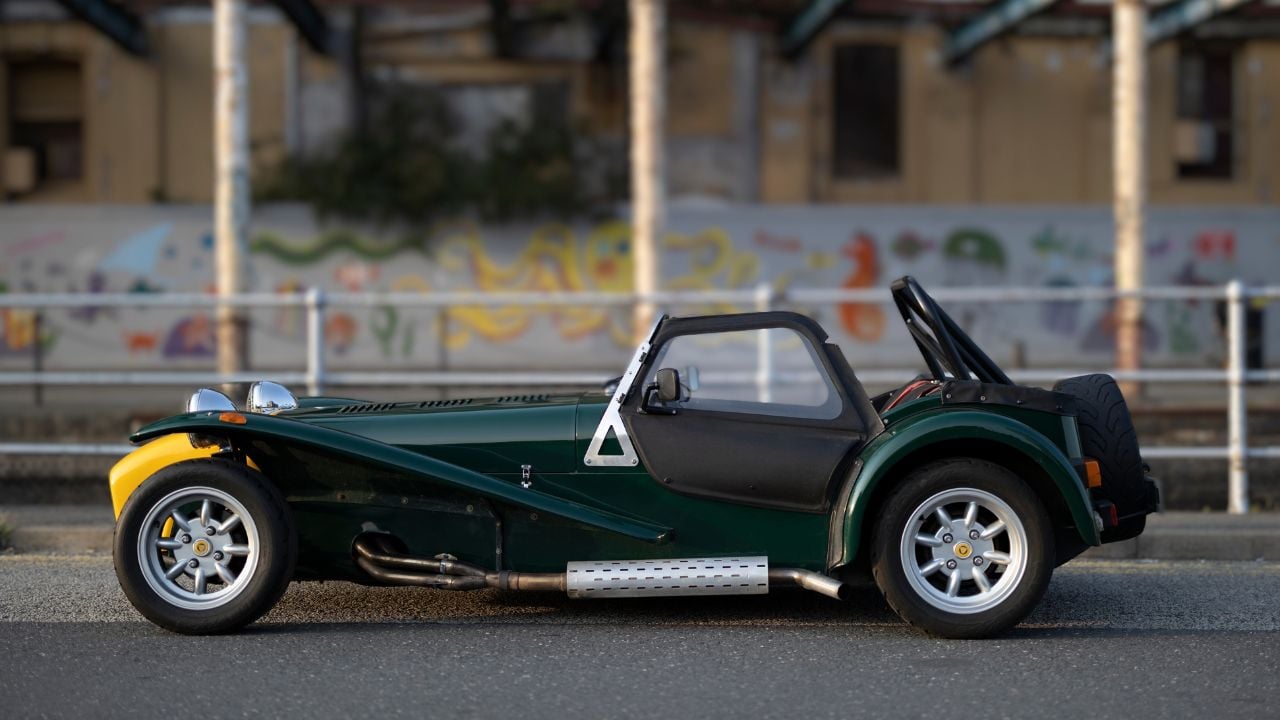
There’s no replacement for displacement, a sentiment that is often shared among car enthusiasts. This stems from a disdain for smaller, more efficient powertrains that trade more cylinders and bigger capacities for turbocharging and hybrid assistance.
Don’t get us wrong, a massive, naturally aspirated engine is awesome. Linear power delivery, a fantastic noise that isn’t muffled by the presence of a turbocharger, and a good old-fashioned grunt.
However, the cars offering a replacement for displacement actually have their own merits, proving that, sometimes, big engines and not much else simply don’t cut it. There might be a replacement for displacement after all.
Featherweight Cars
One of the key aspects that can make or break the experience behind the wheel of any car is the weight. It doesn’t matter how much power you have and how much the engineers messed around with the chassis to mask the weight; a heavy car is a heavy car.
The new BMW M5 is a great example of this. Yes, it has 717 hp, but thanks to its heft, it’ll probably sink into your garage floor.
Some cars opt for the exact opposite approach: slightly less power combined with a lot less weight. The most notable examples of this are all the excellent featherweight cars that we’ve seen over the years.
Models such as the Lotus Elise, despite using a small four-cylinder engine from Rover or Toyota, depending on the generation, can boogie with much more powerful performance cars on the track. Top Gear showed us that the Exige does it even better.
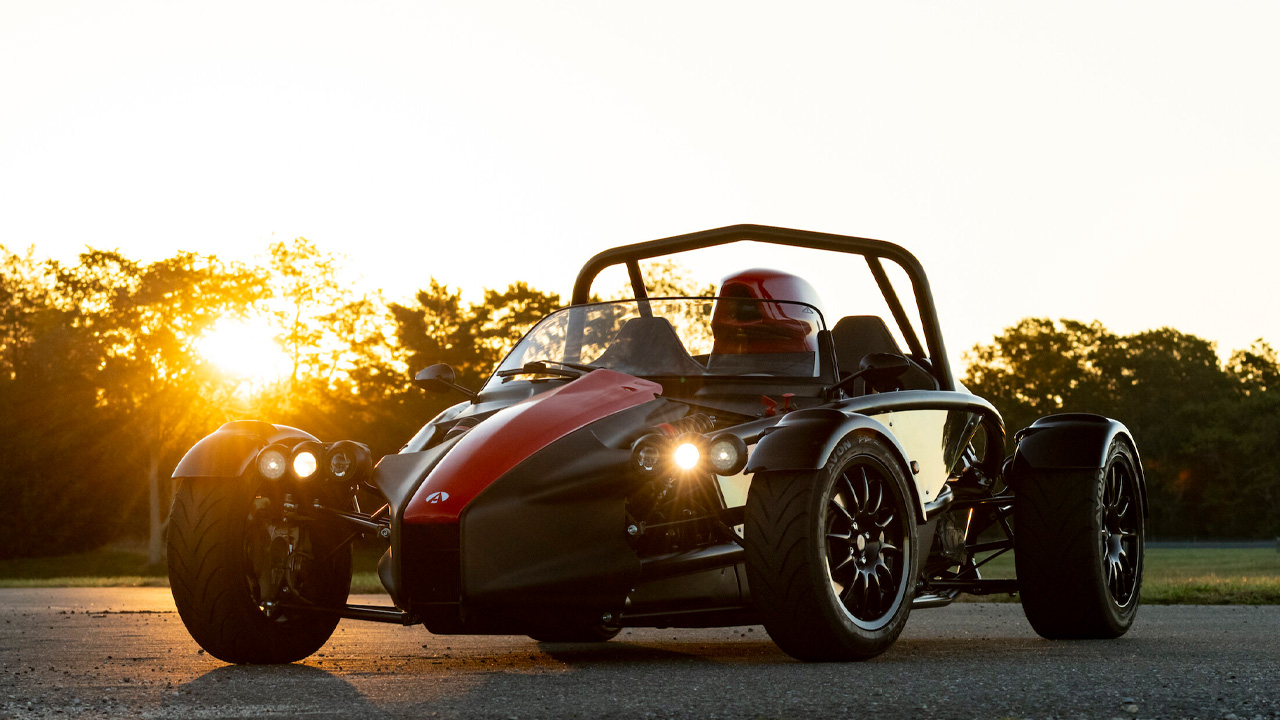
Moving along the food chain, we have stuff like the Caterham Seven, the KTM X-Bow, and the Ariel Atom. Small, usually naturally aspirated four-cylinder engines, but also impossibly lightweight. These cars’ weight loss methods would make bodybuilders tremble.
Track day cars are known for having very little in the way of… well, anything. No creature comforts, of course, but also no roof or windshield. In the case of the Ariel Atom, you barely get any body panels.
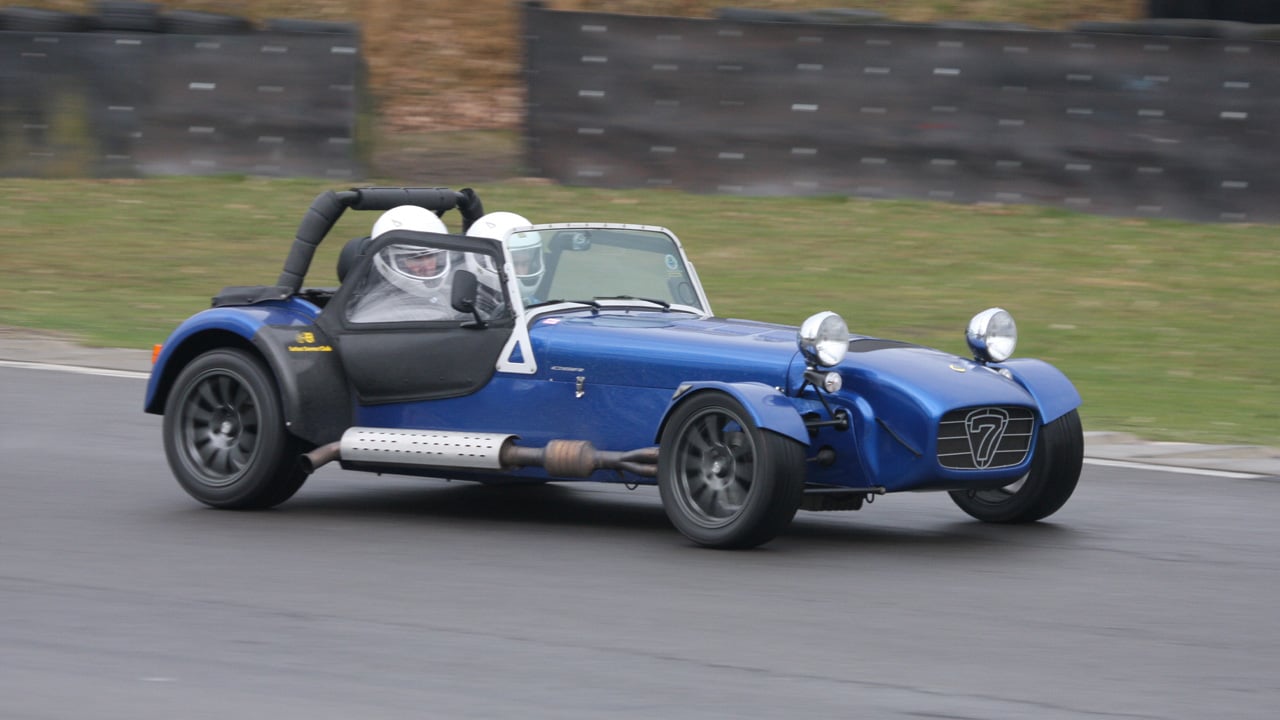
This means that these cars can get away with small powertrains with more conservative horsepower figures, but thanks to them barely tipping the scales at all, they are incredibly fast.
Plus, when they have even less power than usual, as is the case with the Caterham Seven 170, they’re much more approachable and infinitely more fun, but even the normal Caterhams do this right.
A four-cylinder engine from Ford is more than enough for many Caterham Sevens, while the Seven 170 uses a turbocharged 660cc Suzuki three-cylinder. The KTM X-Bow uses an Audi-sourced turbocharged 2.0 TFSI inline four, and Ariel Atom variants have used supercharged Honda K20 engines in earlier versions and the turbocharged Honda Type R K20C in the Atom 4.
We’ve seen many other examples, like the motorcycle-engined Radical, the Zenos E10, the Factory Five 818, and so much more. However, this is not the only way you can replace displacement.
Turbos and More Turbos
Downsized powertrains have gotten a lot of flak because they have fewer cylinders and because the turbochargers stifle the engine sound, making them sound a bit, well, off to some gearheads. While this is true, it’s nothing that a good exhaust system can’t fix.
That’s not the main focus, however. Downsized turbocharged engines have proven, quite consistently, that they’re simply objectively better than the bigger, naturally aspirated units that they replace. There are too many examples of this to count, so let’s focus on a handful.
Ram introduced its new Hurricane twin turbo inline six in the 1500 lineup for 2025, and while it replaced the Hemi at the time, the 5.7-liter Hemi returned for 2026 alongside the Hurricane options. As Car and Driver has proven, the Hurricane is more than up to pickup truck tasks.
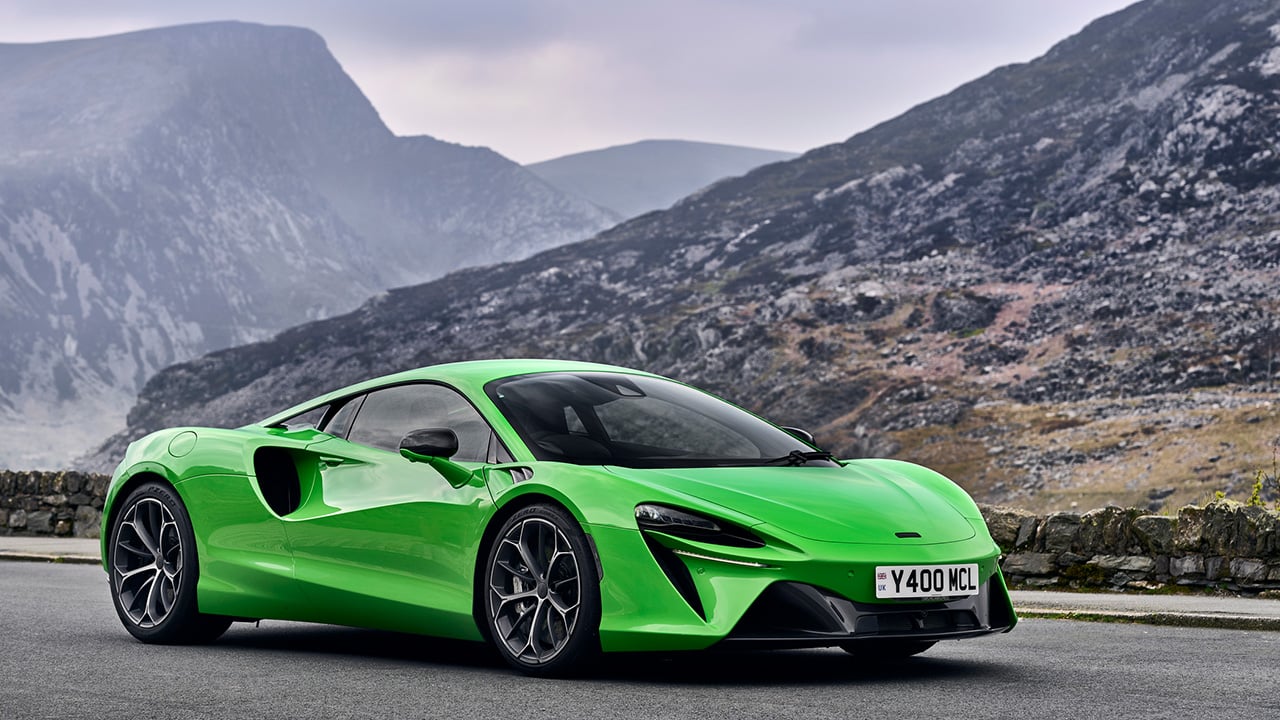
The Hurricane makes more power than the 5.7-liter Hemi, and Ram also positions it as more efficient, but maximum towing depends on configuration. For example, Ram rates the 3.0 Hurricane standard output at up to 11,550 pounds, while the returning 5.7-liter Hemi eTorque is rated up to 11,320 pounds for 2026. Ferrari moved to a turbo V6 in the 296GTB, though it makes well over 800 hp thanks to the hybrid component. The McLaren Artura, also a plug-in hybrid with a V6 instead of a V8, produces 671 hp (680 PS) combined.
For reference, the Lamborghini Aventador LP700-4 used a 6.5-liter V12 to make about 690 hp in 2011, and yet here is the Artura using a V6 and an electric motor to reach a similar headline number.
It’s been more than a decade since the BMW M3 abandoned the V8, and yet each version that came after, all of them being powered by six-cylinder engines, all had more power.
In fact, the M3 Competition makes 503 hp in rear-drive form and 523 hp with xDrive, which essentially matches or exceeds the E60 M5’s 500 hp rating. It’s not just performance cars that are enjoying these benefits. The Lexus RX500h F Sport Performance (quite the mouthful) has a turbocharged 2.4-liter four-cylinder hybrid setup producing 366 hp, which is 71 more than the previous generation RX 350’s 295 hp V6, and there are hundreds of other examples.
Is There Really a Replacement for Displacement?
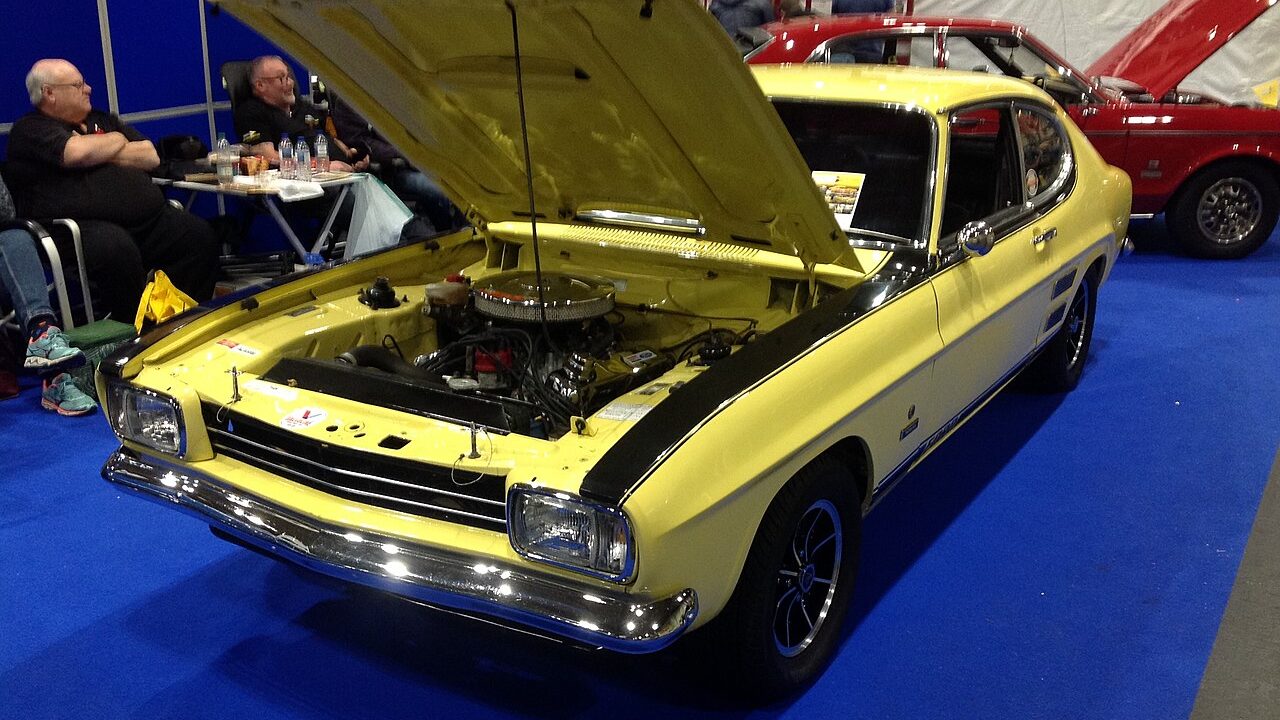
Yes and no. Automakers have found new and genius ways to use smaller engines to make cars more powerful than ever, something that would have been seen as blasphemy just 20 years ago.
While, as gearheads, we’ll never really stop enjoying big, powerful, naturally aspirated engines, we must admit that featherweight cars and turbochargers have completely transformed the world of automotive engines, showing that there might just be a replacement for displacement after all.