There’s something magical about classic cars that makes them more than just transportation, with character you just can’t replicate these days. But let’s be honest… Not every vintage ride is worth the headache.
If you’re looking for a classic that won’t leave you stranded or drain your wallet with constant repairs, these bulletproof machines from our favorite decades prove that old-school engineering can actually mean dependable daily driving.
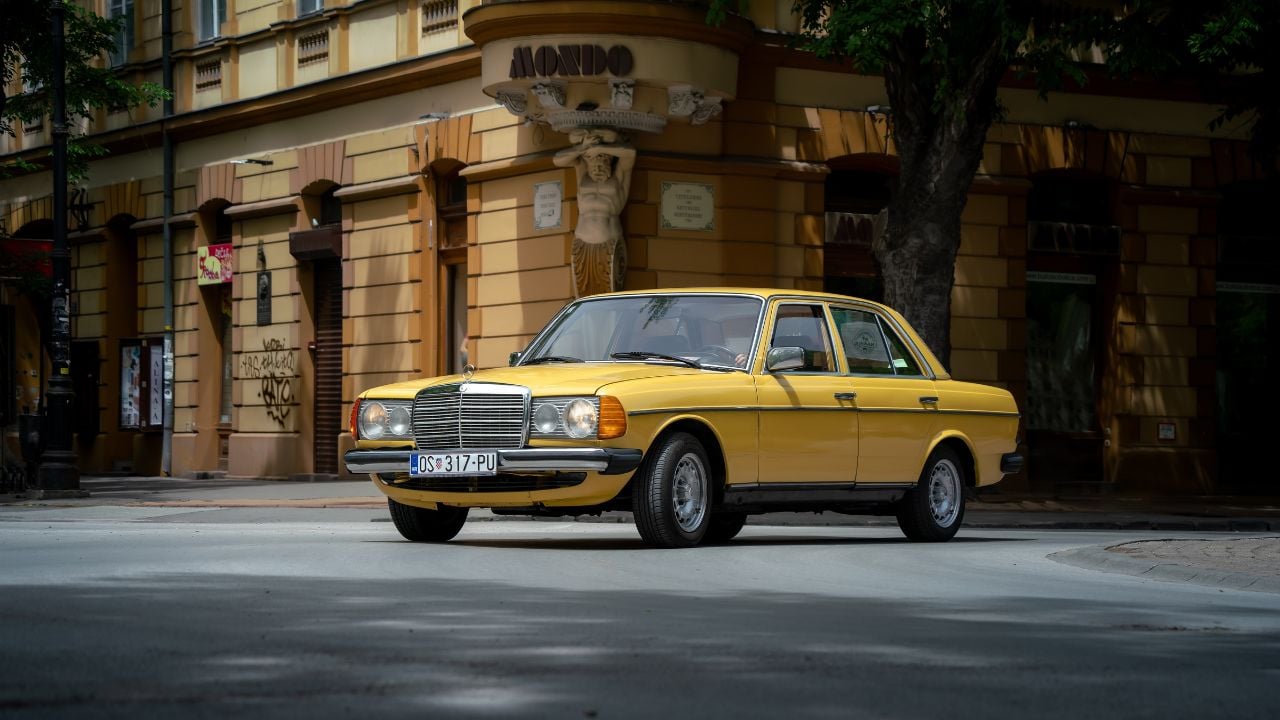
Mercedes-Benz W123 (1976-1986)

The W123 series is the automotive equivalent of a Swiss watch: overengineered in the best possible way. These sedans and wagons regularly rack up 300,000 miles or more, and in some European countries, they’re still working as taxis.
The diesel versions are particularly unstoppable, with their OM617 engines famous for running practically forever with basic maintenance.
Volvo 240 Series (1974-1993)

Volvo built the 240 like a tank, and it drives with about the same level of excitement, but that’s entirely the point. The redblock four-cylinder engine is nearly indestructible, and parts are still plentiful and affordable.
These boxy Swedes have a cult following among people who value getting where they’re going over making a flashy entrance.
Toyota Land Cruiser FJ40 (1960-1984)

The FJ40 was designed to work in some of the harshest environments on Earth, from Australian outback stations to African safari operations. Toyota’s inline-six F-engine is famously tough and ready for adventure, and the simple mechanical systems mean there’s less to go wrong.
Today, these trucks command serious money because people finally realized that simple and durable beats complicated and temperamental.
Chevrolet C10/K10 Pickup (1967-1972)

These second-generation Chevy trucks represent American simplicity at its finest, with small-block V8s that mechanics can rebuild blindfolded. The body-on-frame construction means rust is your main enemy, but the drivetrain components are bulletproof and dirt cheap to maintain.
Unlike modern trucks loaded with electronics, these are genuinely fixable in your driveway with basic tools.
Datsun 240Z/260Z/280Z (S30, 1969–1978; 1970–1978 U.S. model years)

The 240Z, 260Z, and 280Z proved that Japanese sports cars could be both fun and reliable, which was revolutionary at the time. The inline-six engines are robust, and the cars are simple enough that most repairs don’t require a computer science degree.
Just watch for rust in the floors and hatch area, which is really the only serious weakness these cars have.
Jeep CJ-5 (1955–1983) and CJ-7 (1976–1986)

Jeeps from this era are basically adult Lego sets, straightforward, rugged, and endlessly rebuildable with readily available parts. The AMC inline-six engine that appeared in later models is particularly durable and still powers plenty of these Jeeps today.
Sure, they’re noisy, drafty, and ride like a buckboard wagon, but they’ll crawl over anything and keep running when more sophisticated vehicles quit.
Ford Bronco (1966-1977)

The early Broncos are incredibly simple machines built on Ford’s proven truck platform with engines borrowed from the Mustang and F-Series. The 302 V8 is a workhorse that’s easy to maintain, and the manual transmission models are even more reliable.
These first-generation Broncos have skyrocketed in value recently, but they’ve always been known for taking abuse and asking for more.
Honda Civic (1972-1979)

The first-generation Civic arrived just before the oil crisis and showed Americans that small cars didn’t have to be unreliable penalty boxes. These econoboxes got incredible fuel economy, according to The Drive, and required minimal maintenance beyond oil changes and the occasional tune-up.
The simplicity of the design means they’re still fixable today, though finding rust-free examples is increasingly challenging.
Mercedes-Benz SL (R107, 1971-1989)

This is the classic car you buy when you want something beautiful that won’t punish you for actually driving it. The R107 SL was built during Mercedes’ “overengineered everything” era, resulting in a convertible that’s genuinely usable as regular transportation.
The V8 models are especially durable, and the cars’ rust protection was excellent for the era.
Porsche 911 (1974-1989)
![Porsche 911 (G Series) [1974 - 1989]](https://guessingheadlights.com/wp-content/uploads/2025/08/Untitled-design-2025-08-14T233241.194.jpg)
They’re expensive to buy now, but the reliability is genuine, plenty of enthusiasts use these as year-round daily drivers.
Toyota Corolla (1974-1979)

The third-generation Corolla set the template for Toyota’s reputation as the company that builds cars that simply refuse to die. These little sedans and coupes featured robust four-cylinder engines and dead-simple mechanicals that made them favorites among budget-conscious drivers.
The biggest challenge today is finding one that hasn’t rusted into oblivion, because mechanically, they just keep going.
The Bottom Line

The classics on this list share a common thread: they were built during an era when manufacturers focused on mechanical durability rather than planned obsolescence. These aren’t the flashiest or fastest cars from their era, but they’re the ones that kept running when their more glamorous competitors were headed to the junkyard. If you’re serious about owning a classic car you can actually drive and enjoy without keeping a mechanic on speed dial, any of these proven survivors deserves a spot in your garage.
The best part? You’re not just buying a reliable car: you’re preserving a piece of automotive history that was genuinely built to last.