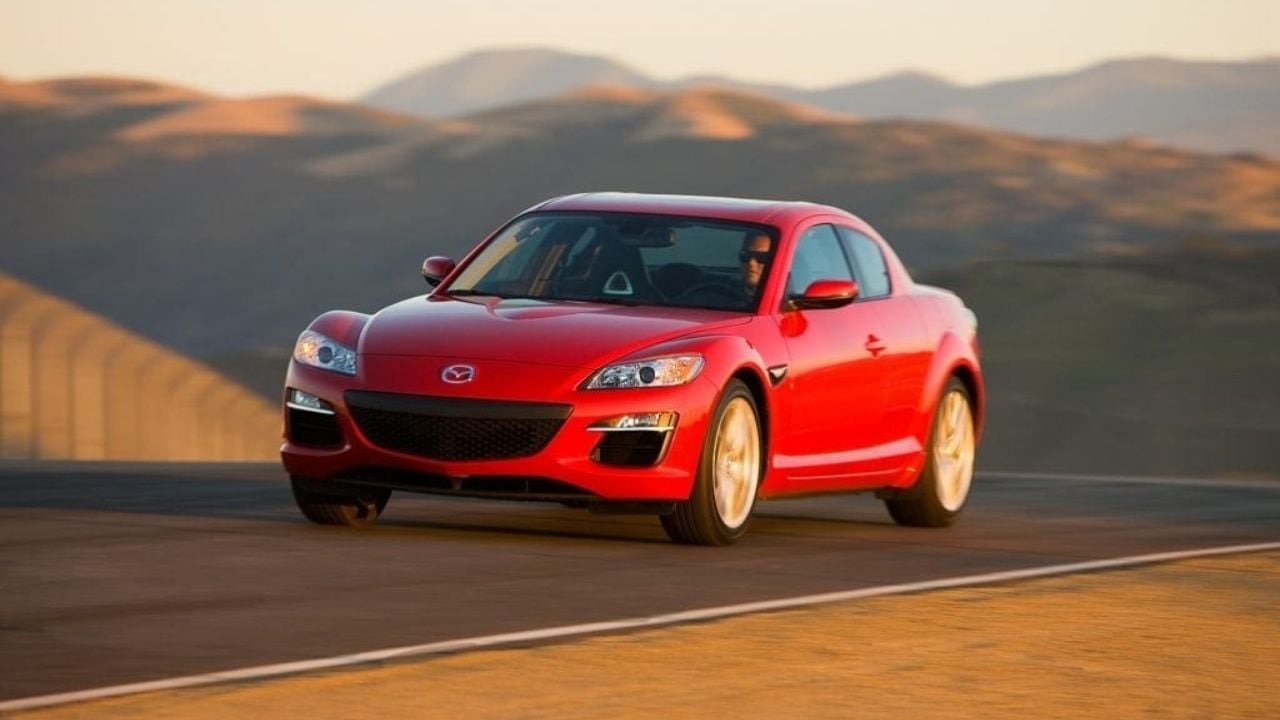
Rotary cars have always lived in their own corner of car culture. They sound different, rev differently, need different care, and attract owners who understand why a tiny engine with no pistons can feel more interesting than a much larger conventional motor.
Mazda kept that idea alive longer than any major automaker. The cars that carried its rotary engines are now getting harder to find in clean, original condition, especially as so many were modified, raced, neglected, or rebuilt without proper records.
The best examples are no longer just oddball enthusiast cars. They are pieces of engineering history tied to a powertrain that may never return in the same raw, high-revving, gasoline-powered form.
For buyers who understand compression checks, warm-start behavior, cooling-system health, oil consumption, and the importance of service history, these seven cars still offer a way into Mazda’s rotary story. Some are already serious collectibles, while others remain quieter plays for people who know what they are looking at.
Where Rotary Value Starts to Feel Serious

This selection focuses on rotary-powered cars with clear collector logic, not only nostalgia or internet hype. Each model needed a strong rotary identity, meaningful enthusiast demand, and enough market visibility to matter for U.S. readers.
Most of the cars here were sold new in the U.S. The Eunos Cosmo is the exception, but it earns its place because early 1990s examples are now old enough for legal U.S. import under the 25-year rule.
Condition matters more than the badge. A clean, original rotary car with records, strong compression, healthy cooling, and careful ownership can feel like a collector-grade find. A cheap one with poor modifications, unknown rebuild history, overheating problems, or weak compression can become expensive very quickly.
Modified cars are part of rotary culture, but the strongest collector argument usually belongs to original or carefully preserved examples. These are not guaranteed investments. They are the rotary cars with enough history, scarcity, and buyer interest to deserve close attention now.
1993 to 1995 Mazda RX-7 FD

The FD RX-7 is not hidden anymore. It is the car that defines modern rotary collecting: low, light, beautifully shaped, rear-wheel drive, and powered by the sequentially twin-turbocharged 13B-REW.
Mazda’s 1993 U.S. brochure listed the RX-7 at 255 hp, with sequential twin turbocharging and double-wishbone suspension. That combination gave the FD a level of sophistication and performance that felt exotic beside many early-1990s sports cars.
Classic.com currently tracks U.S. and Canadian base FD RX-7 examples with a market benchmark around $40,334, while R1 and R2 examples sit higher at about $58,205. That gap shows how strongly buyers separate trim, originality, mileage, and condition.
The FD belongs here because clean U.S.-market cars are getting harder to replace. Every rough build, tired engine, missing factory part, or undocumented modification makes the best survivors matter more. Buyers should look closely at compression numbers, turbo health, cooling upgrades, vacuum-line condition, and whether the car has avoided years of careless tuning.
1987 to 1992 Mazda RX-7 Turbo II
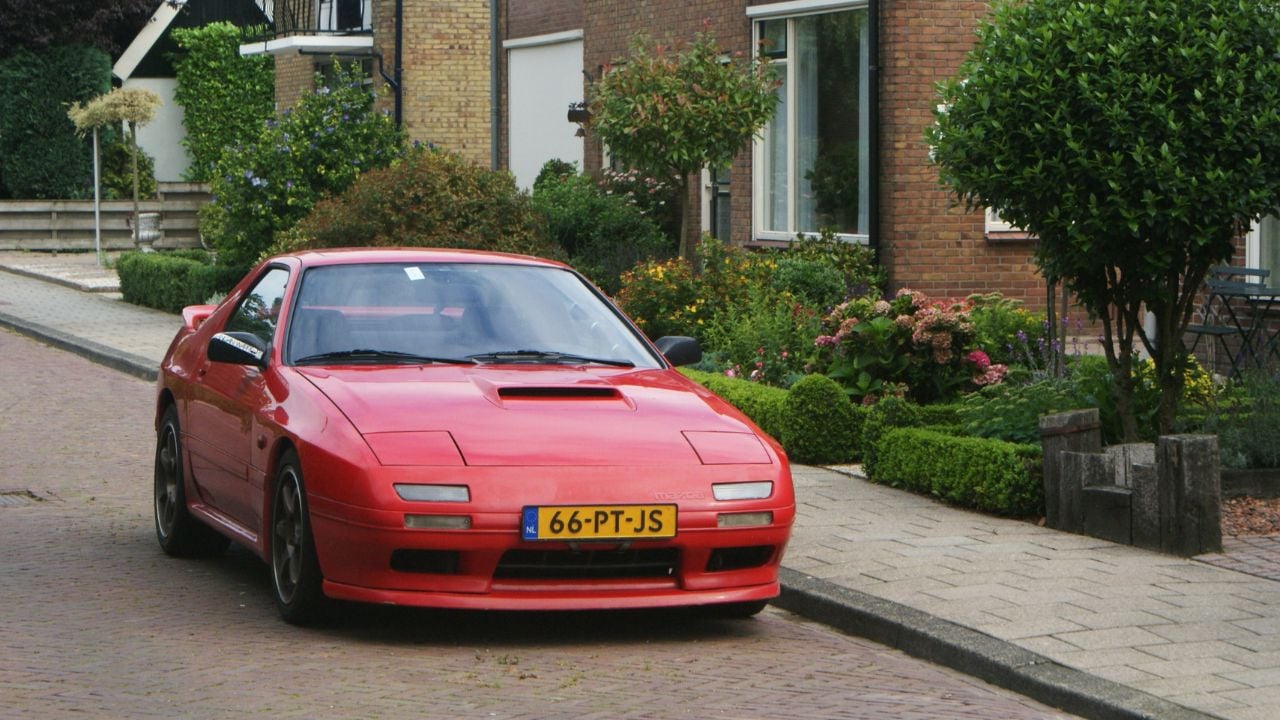
The FC RX-7 Turbo II has spent years in the FD’s shadow, but that makes it more interesting now. It has pop-up headlights, rear-wheel drive, a proper 1980s sports-car shape, and a turbocharged rotary engine without the same collector pressure as the later FD.
Hagerty notes that the Turbo II made 182 hp from Mazda’s 1.3-liter rotary, while Classic.com tracks the broader FC Turbo II market from 1987 to 1992 with a benchmark around $24,081.
The Turbo II is appealing because it still feels usable and analog. A good manual example gives the driver boost, steering feel, a compact cabin, and enough period character to stand apart from newer Japanese performance cars.
Buyers still need to be careful. Old turbo rotary cars can hide expensive problems, especially when previous owners turned up the boost without proper supporting work. Compression, turbo condition, cooling-system health, fuel delivery, oil leaks, and rebuild documentation matter more than shiny paint.
1984 to 1985 Mazda RX-7 GSL-SE
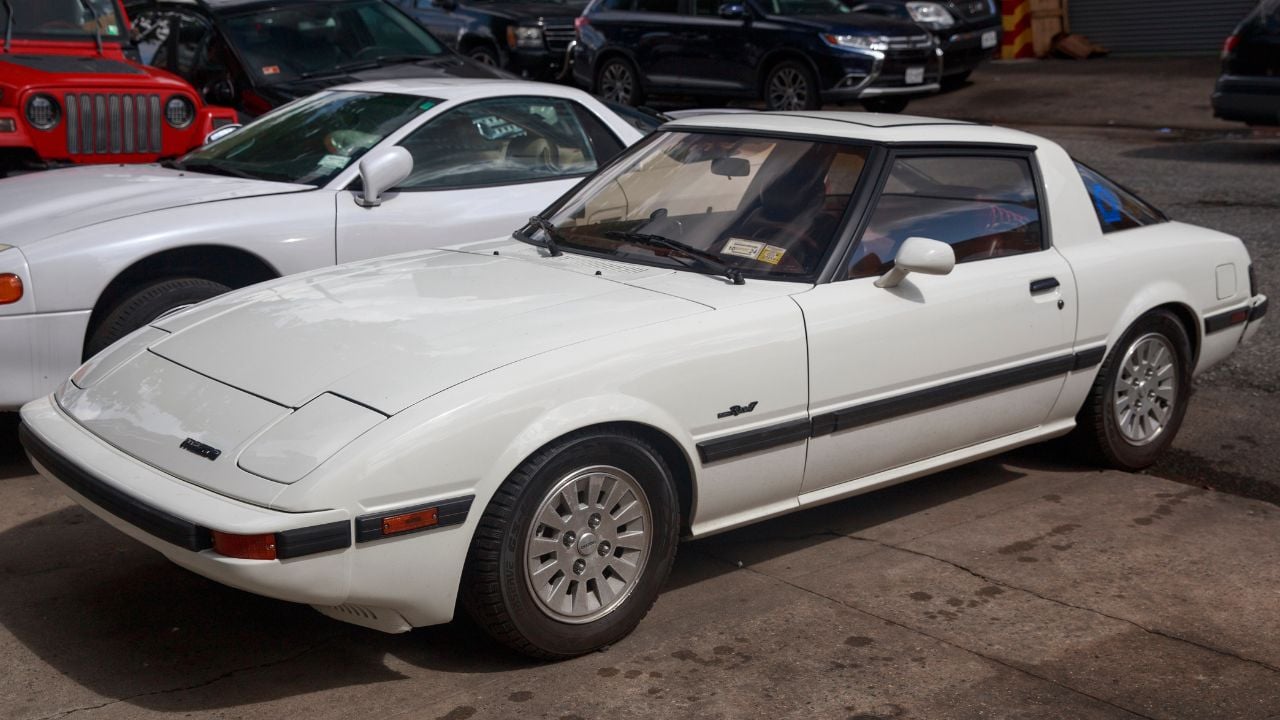
The first-generation RX-7 GSL-SE is the early RX-7 for buyers who want the simple original formula with the right mechanical upgrade. It keeps the light, compact feel of the SA/FB generation but adds the larger 13B rotary that made it the most desirable version of the first-generation car.
Hagerty notes that the 13B became available in 1984 as part of the GSL-SE package and made it the quickest version of the first-generation RX-7. Recent Classic.com results show GSL-SE activity well below FD money, including 1985 GSL-SE sales in the low-to-mid teens and a 1984 GSL-SE reaching $25,750 in July 2024.
The GSL-SE has the right kind of collector appeal. It is still approachable, still small, and still connected to the period when the RX-7 first made Mazda’s rotary sports-car idea feel serious.
The best examples are worth separating from average ones. Rust, interior condition, original trim, carburetion and fuel-injection condition, cooling-system health, and engine-compression history all affect the value. A clean GSL-SE feels honest in a way later, faster cars cannot fully copy.
2009 to 2011 Mazda RX-8 R3
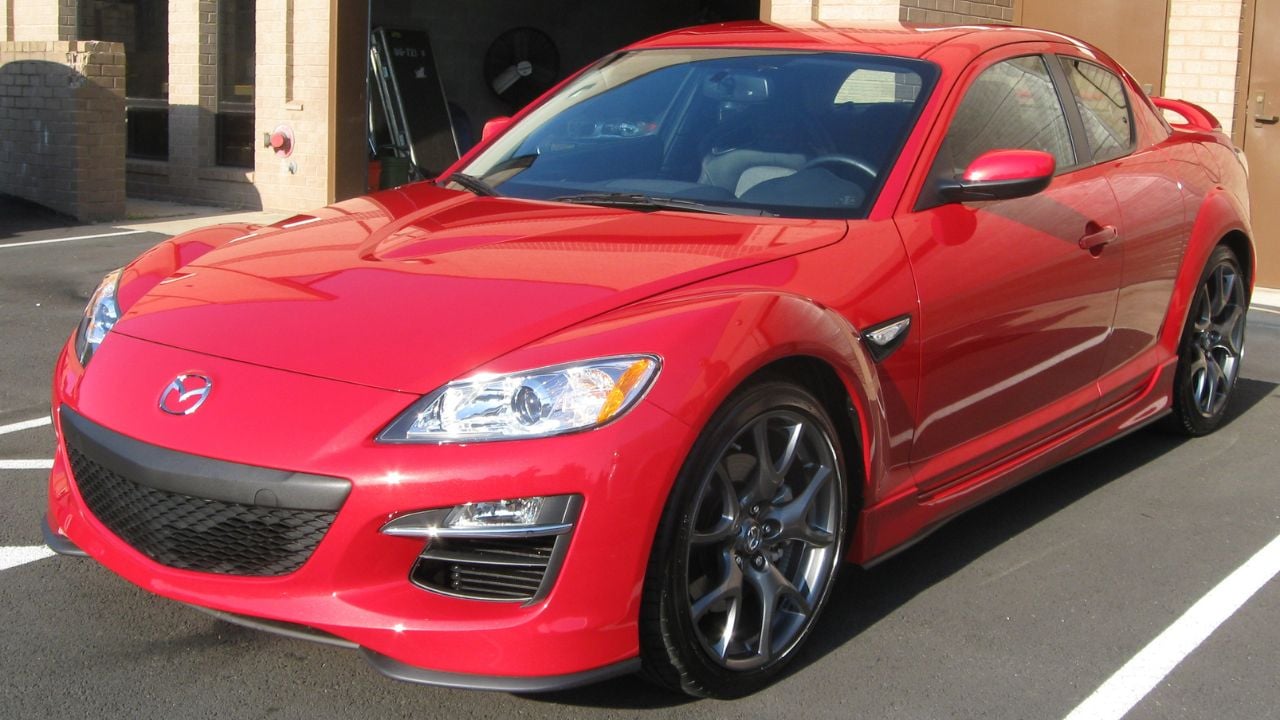
The RX-8 R3 is the sleeper of the modern rotary market. Many buyers still focus on the RX-7, while the final and sharpest RX-8 trim remains easier to overlook.
Mazda’s 2009 RX-8 specification sheet listed the manual car with a 1.3-liter rotary making 232 hp. The R3 trim added sport-tuned Bilstein shocks, 19-inch forged aluminum wheels, and leather-trimmed Recaro front sport seats.
Classic.com tracks the RX-8 R3 at an average price around $18,000, with a highest recorded sale of $33,250 for a 2010 model in October 2025. That still puts it in a very different price lane from top RX-7s.
The R3 deserves attention because it represents the last true rotary sports car Mazda sold in the U.S. It needs careful ownership, but that is part of the case. Buyers should insist on compression-test results, cold- and hot-start checks, ignition-system health, oiling awareness, and proof that the car was not treated like an ordinary piston-engine coupe.
1974 to 1977 Mazda Rotary Pickup
The Mazda Rotary Pickup may be the strangest vehicle here, and that is exactly why collectors notice it. It is not a sports car, but it has one of the strongest rotary hooks Mazda ever offered: a factory rotary-powered truck.
Classic.com records the highest Mazda B-Series sale at $31,100 for a 1974 Mazda Rotary Pickup in June 2025. Its second-generation B-Series data also shows Rotary Pickup sales ranging from the teens into the low $20,000s depending on year, condition, and modifications.
The appeal is easy to understand once you see one. The REPU has compact truck proportions, vintage Mazda details, rear-wheel drive, and an engine choice that seems almost impossible by modern pickup logic.
That oddness is the collector argument. A Rotary Pickup is useful, weird, rare, and tied directly to Mazda’s boldest engineering period. Buyers should pay close attention to rust, bed condition, trim, engine history, and whether the truck still feels like a preserved REPU rather than a hacked-up project.
1971 to 1978 Mazda RX-3

The RX-3 is one of the most serious early rotary collectibles, especially in coupe form. It has vintage Japanese proportions, a short, aggressive stance, and a deep connection to Mazda’s early rotary performance image.
Classic.com tracks the broader RX-3 market with an average sale price around $61,788, though that data includes modified cars, race cars, international examples, and multiple body styles. It also lists the highest recorded RX-3 sale at $100,000 for a 1973 RX-3 Super Deluxe, plus a 1976 RX-3 IMSA race car sale at $90,000.
The RX-3 is already expensive when the condition, originality, build quality, or competition history is right. Collectors keep chasing it because supply is thin and many cars were raced, modified, rusted, or used hard.
A clean RX-3 now feels like a compact rotary time capsule. It is not the cheapest way into Mazda rotary ownership, but it is one of the clearest links to the era when the company turned its unusual engine into a performance identity.
1990 to 1996 Eunos Cosmo 20B
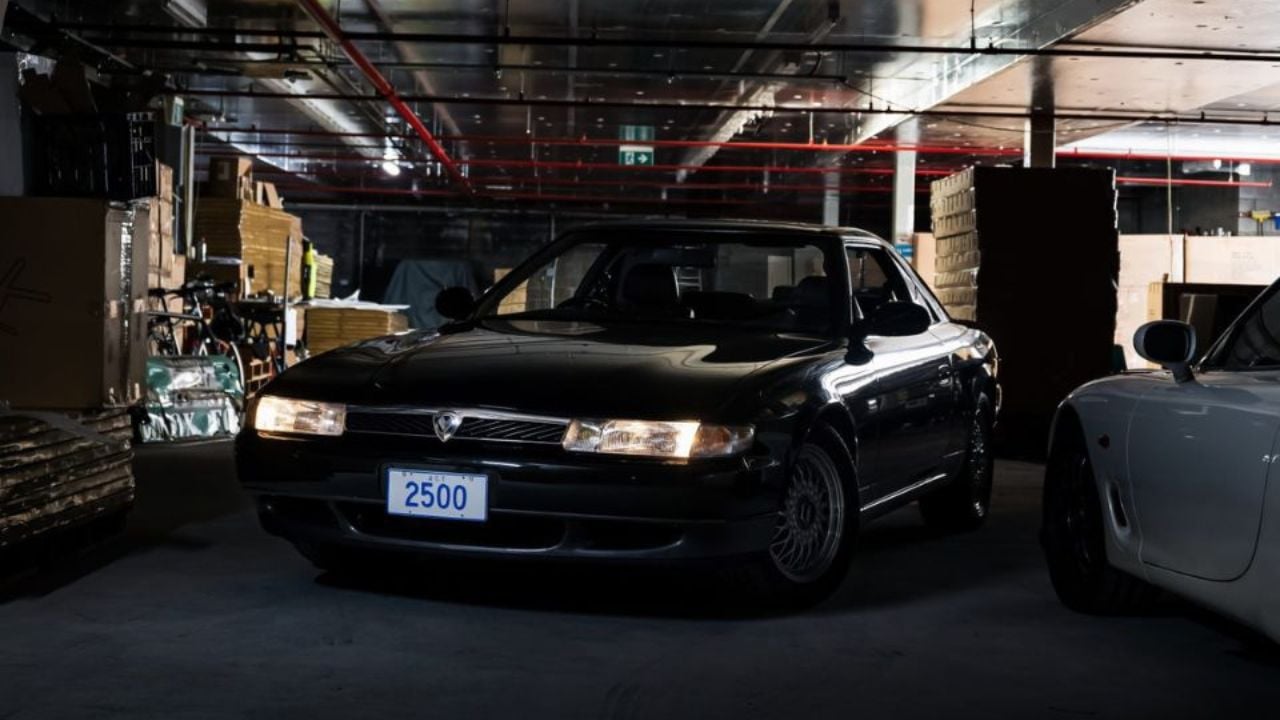
The Eunos Cosmo is the sophisticated outsider of the group. It was never sold new in the U.S., but early examples are now import-eligible for American buyers under the 25-year rule.
The Series JC Eunos Cosmo is most famous in 20B form, but not every car had the three-rotor engine. Classic.com notes that the model was offered with either the twin-sequential-turbo 13B-RE or the three-rotor 20B-REW, both paired with an electronically controlled 4-speed automatic.
Auto Data lists the 20B Type E at 280 hp, while Classic.com tracks the 1990 to 1996 JC Cosmo with a market benchmark around $24,574 and current listings. The numbers do not fully explain the car, though. Mazda put its most exotic rotary engine into a luxury grand touring coupe rather than a raw sports car.
That gives the Cosmo a very different collector identity from an RX-7. It is smooth, complicated, technology-heavy, and rare in the U.S. The 20B-REW connection makes it especially important, but buyers should confirm engine type, import paperwork, electronic systems, suspension condition, and parts availability before assuming a low entry price means easy ownership.
Why Rotary Cars Still Feel Like Hidden Treasure

Rotary cars are not easy collectibles in the usual sense. They ask for records, compression checks, careful cooling-system maintenance, oiling awareness, and owners who understand that these engines follow their own rules.
That is part of the attraction. The FD RX-7 is already a modern classic. The FC Turbo II and GSL-SE show how much depth exists inside the RX-7 story. The RX-8 R3 carries the final U.S. chapter. The Rotary Pickup proves Mazda put rotary engines in vehicles no other major automaker would have attempted. The RX-3 brings early performance history, while the Eunos Cosmo 20B offers a rare grand-touring route into three-rotor engineering.
These cars are not bought only for speed or value charts. They are bought because a rotary engine changes the entire character of the car: the sound, the revs, the smoothness, the maintenance routine, and the way owners talk about them.
As clean examples disappear and Mazda’s gasoline rotary era moves further into history, the best survivors become more than unusual used cars. They become proof that one major automaker spent decades building performance around an engine almost nobody else dared to keep alive.