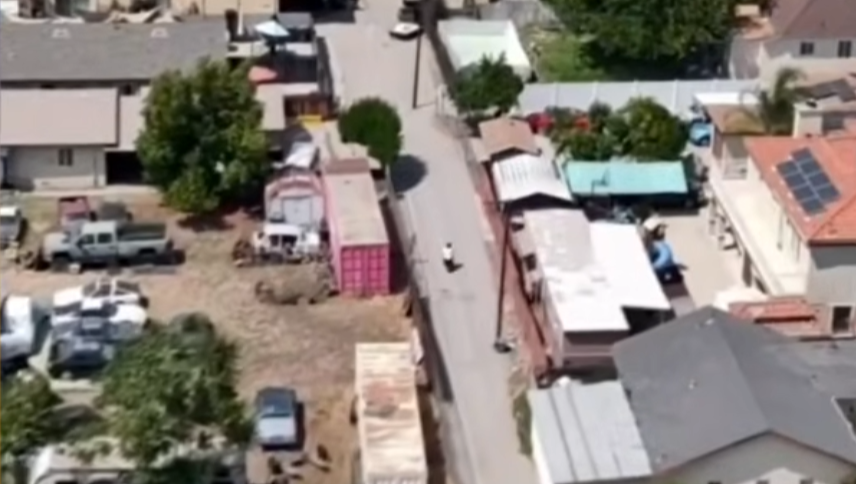
A police pursuit in Southern California ended with a suspect surrendering peacefully after officers used a drone to follow the rider from above, according to the Redlands Police Department.
Authorities say the incident began when officers spotted someone riding an electric motorcycle-style bike through the city while allegedly ignoring stop signs and driving into opposing traffic lanes. When police attempted a traffic stop, the rider reportedly accelerated and fled instead.
Rather than relying only on patrol vehicles, officers activated the department’s Drone First Responder program, known as DFR. A drone identified as “Mav-1” was launched to monitor the suspect’s movements from the air while officers coordinated on the ground.
The chase eventually led to a residential property where the rider allegedly tried to hide inside a home. Police said officers surrounded the location and persuaded the suspect to come out without further confrontation. The rider was taken into custody and the e-bike was impounded.
Drone Technology Played a Central Role
The Redlands Police Department leaned into humor while describing the arrest on social media, noting that it is difficult to hide when a drone is watching from hundreds of feet overhead.
According to the department, the drone maintained visual contact with the suspect throughout the pursuit, giving officers real-time updates without requiring dangerous high-speed driving through neighborhoods.
That capability is becoming increasingly important as police departments across the country invest in drone programs. Law enforcement agencies often argue that drones can reduce risks to officers, suspects, and bystanders by limiting the need for prolonged vehicle chases.
In this case, police suggested the drone effectively removed the suspect’s ability to disappear into side streets or residential areas unnoticed.
E-Bikes and Enforcement Challenges Continue to Grow
Electric bikes and motorcycle-style electric vehicles have exploded in popularity in recent years, especially in California communities where commuters and younger riders are embracing faster alternatives to traditional transportation.
But the rise in powerful e-bikes has also created headaches for police departments. Some models can travel at speeds comparable to small motorcycles while remaining quieter and more maneuverable than cars. Riders can quickly cut through alleys, sidewalks, and tight streets that patrol vehicles struggle to access safely.
That creates a unique challenge during pursuits. Officers must balance enforcement with public safety, especially in crowded residential areas where reckless driving can put pedestrians and other motorists at risk.
The Redlands incident reflects how departments are adapting by pairing traditional policing with aerial technology.
Police Have Not Released the Rider’s Identity
Authorities have not publicly identified the suspect involved in the chase, and potential charges were not immediately announced.
Police also did not specify what type of electric bike was involved or how fast the rider was traveling during the pursuit.
The department’s Instagram post focused heavily on the drone response itself, using the arrest as an example of how the DFR program can assist officers during rapidly evolving situations.
The agency joked that while someone may outrun a patrol vehicle, escaping “a bird with 4K vision” is another story entirely.
What Drivers and Riders Can Learn From the Incident
The situation serves as another reminder that modern police technology has changed the dynamics of fleeing from law enforcement.
Drones allow officers to monitor suspects from a distance without maintaining constant close pursuit, which can sometimes lower the chance of dangerous crashes. Instead of relying only on sirens and speeding patrol units, departments can now track movements from above with live aerial footage.
For riders, the case also underscores the importance of understanding local traffic laws governing electric bikes and similar vehicles. Even though many e-bikes are smaller than traditional motorcycles, riders are still expected to obey traffic signals and roadway rules.
As drone programs continue expanding nationwide, incidents like this may become increasingly common, especially in cities looking for safer alternatives to risky pursuits through busy streets.