Nissan might not always be the boldest brand on the showroom floor, some of its mainstream models play it safe, and updates can lag behind the competition. But every now and then, Nissan taps into something wild, weird, and wonderfully creative.
Beneath the sensible sedans and everyday crossovers lies a surprising legacy of experimentation. From retro-styled Pike cars and homologation specials to futuristic EV concepts and Le Mans prototypes, Nissan has a fun streak that shines brightest when it breaks the rules.
These rare, ambitious machines didn’t always make headlines or make it to production, but they showcase a side of Nissan we’d love to see more often: fearless, forward-thinking, and full of character.
Methodology
Nissan has never been a brand to play it safe. Beyond legends like the GT-R and Z, its history is packed with rare, ambitious, and sometimes downright eccentric creations. Some were road-legal racing versions, others were cutting-edge experiments, and a few were simply too bold for mass production. However, each of these machines proves that Nissan has always pushed boundaries.
This list spotlights some of Nissan’s rarest and most unconventional models, chosen based on their limited production, historical significance, and impact on the brand’s legacy. From wild tuner collaborations to groundbreaking concepts, these cars may not have filled showrooms, but they embody Nissan’s fearless approach to innovation.
R33 Nissan Skyline GT-R Nismo 400R

Let’s kick things off with the Nismo 400R—arguably the ultimate evolution of the R33 GT-R and a holy grail among Skyline enthusiasts. Built as a tribute to Nissan’s Le Mans efforts in the late 1990s, the 400R pushed the boundaries of a street-legal GT-R. It featured race-inspired aerodynamics, cutting-edge tech, and a drivetrain engineered for all-out performance.
Nissan originally planned to build 100 units, but just 44 were completed, making it one of the rarest GT-Rs ever produced. Under the hood sat the RB-X GT2, a heavily upgraded version of the RB26, developed by REINIK and good for 400 horsepower and 346 lb-ft of torque. More than just a collector’s item, the 400R is a statement of what happens when Nissan lets its motorsport DNA run wild.
Nissan R390
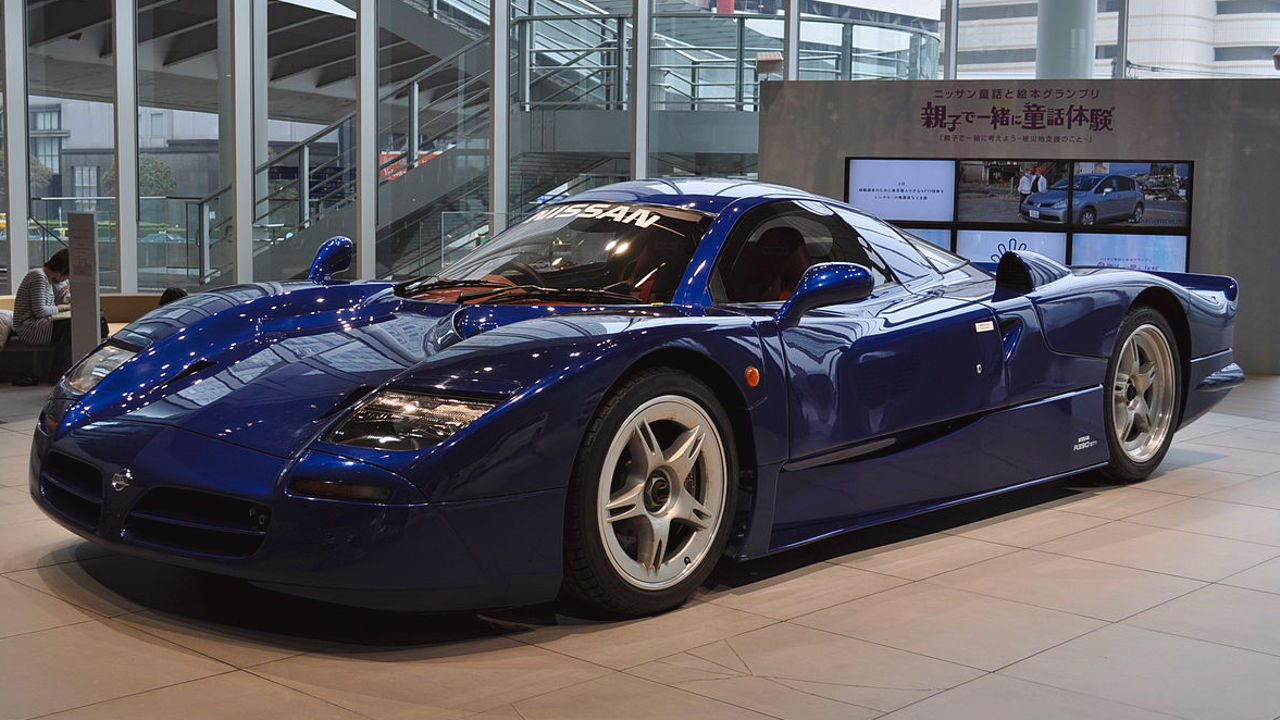
In the late 1990s, Nissan wanted to get back to racing at the 24 Hours of Le Mans, so it developed the R390. This LMGT1 car would debut at the French endurance race in 1997. However, to build it, Nissan had to produce a road-going version.
This led to a single road-going R390, which used a detuned version of the 3.5-liter twin-turbo VRH35L V8 developed for the GT1 program. Power output remained at 550 hp and 470 lb-ft of torque. The single example of the road-going R390 is still under Nissan ownership; however, Erik Comas converted an R390 GT1 to road use.
Nissan AZEAL

Unveiled at the 2005 North American International Auto Show, the Nissan AZEAL was a compact concept coupe aimed squarely at younger drivers. The mission? Blend sporty design with enough tech and attitude to make it stand out in a crowded market.
To that end, Nissan packed the AZEAL with then-trendy gadgetry like an integrated cell phone and MP3 player, wrapped in sharp, aggressive styling. While it never reached production, its influence lived on, some of its design DNA made its way into the 2007 Nissan Sentra. The AZEAL may have been all show and no go, but it showed Nissan was at least thinking about a fun future.
Nissan Nuvu

One of Nissan’s most bizzarre cocnept cars is the Nuvu. The little microcar is an all-electric city car that Nissan took the covers off at the 2008 Paris Motor Show. Nissan positioned it as a short-range urban EV focused on efficiency rather than outright performance, though detailed performance figures were never formally published.
However, the concept wasn’t a complete miss. Some of its technologies eventually made their way into the Nissan Leaf. While the Nuvu itself never saw production, its focus on practicality and innovative interior design helped shape Nissan’s approach to future models. Sometimes, even the most unconventional ideas serve as a stepping stone for something groundbreaking.
Nissan R34 Skyline GT-R V Spec II Nur

One of the other iconic Nissan Skyline versions is the R34 GT-R V Spec II Nur. This exceptional version of the GT-R packed a 2.6-liter RB26 under the hood with 276 hp and 289 lb-ft of torque.
Like the 400R and R32 HKS Zero-R, the Nur GT-R is rare. Nissan produced 1,003 Nür models in total, including 718 V·Spec II Nür and 285 M·Spec Nür. This would also prove to be the final production version of the R34 and, thus, the swansong of the Skyline GT-R until the new R35 GT-R appeared.
Nissan Delta Wing

When the DeltaWing debuted at the 2012 24 Hours of Le Mans, it turned heads immediately. Its ultra-narrow front track, lightweight chassis, and radical aerodynamics made it look more like a spaceship than a race car. But while the hype was huge, the results never quite followed.Despite significant attention, the DeltaWing never secured a major race victory, and several of its campaigns, including the 2016 Rolex 24 at Daytona, ended prematurely.
Still, the DeltaWing wasn’t about trophies. It boldly reimagined what a race car could be, prioritizing efficiency and minimal drag over brute power. Even without a victory, it remains one of modern motorsport’s most daring, and divisive, experiments.
Nissan Trail Runner

The idea of transforming a conventional or performance car into an off-roader isn’t new—brands like Porsche and Lamborghini have done it recently. However, Nissan has also taken a shot at this concept, experimenting with rugged, lifted versions of its own performance cars.
In 1997, Nissan developed the Trail Runner concept. This was an early effort by the Japanese manufacturer to create a hybrid crossover SUV and coupe. Under the hood was a 1.8-liter engine with 185 hp, but despite the promise, the Trail Runner did not enter production.
1989 Nissan Chapeau Concept

Even by concept car standards, the Nissan Chapeau was delightfully odd. From the outside, it looked quirky and futuristic. On the inside, it got even weirder—the cabin was tall enough to stand in, and yes, Nissan threw a phone in there for good measure.
Not much is known about the Chapeau beyond its reveal in 1989. It was powered by a modest 1.5-liter four-cylinder engine, but technical details were never the point. The Chapeau was more of a design experiment than a production preview. It never saw the light of day again, and its fate remains a mystery.
Some believe it was scrapped; others hope it’s sitting in a warehouse somewhere, waiting to weird us out all over again.
Nissan Concept 20-23

Nissan unveiled this wild concept car in late 2023, and as expected, it remains just that—a concept. While it turned heads with its bold design and futuristic features, Nissan has no plans to bring it into production.
That is a shame, however, as an electric three-door hot hatchback is very appealing. Especially when it looks as good as this, we know how good Nissan has been in the electric vehicle race. The concept has a massive rear wing, a front splitter, and imposing wheel arches to create a highly dramatic EV.
Nissan Figaro

At first glance, you’d be very easily forgiven for thinking that the Figaro came from the 1950s or 1960s. However, this little Nissan debuted in the early 1990s, and its looks were inspired by the original March/Micra design.
The Japanese manufacturer only produced the Figaro in 1991, and just 20,073 units left the Oppama Plant. Despite being sold exclusively in Japan, a few Nissan Figaros found their way overseas, with the UK being one of the most notable markets for these charming retro-styled cars. Under the hood, the Figaro packed a 987cc MA10ET turbocharged inline-four engine, delivering just enough power to match its fun, city-friendly personality.
Nissan Townpod

Nissan does have a thing for EV concept cars. At the 2010 Paris Motor Show, the manufacturer took the covers off the very unusual Nissan Townpod. As the name suggests, the Townpod is for urban and inner-city use.
The Nissan Townpod concept was designed to be the ultimate blend of versatility and futuristic style. Its most eye-catching feature? Van-style access and split rear doors were designed to make getting in and out easier, especially for urban use. Beneath its sleek exterior, it shared the same electric powertrain as the early Nissan Leaf, signaling a forward-thinking, eco-friendly approach to mobility. But, like many ambitious concepts, the Townpod never reached production. Instead, it remains a fascinating glimpse into what could have been, a forgotten experiment in practical, electric innovation.
Nissan R87E Group C Sports Car

For many, the peak of racing at Le Mans came during the fabled FIA Group C era from 1982 to 1993. Nissan was part of that era, specifically with the dramatic R87E.
The car would compete in the Fuji 500km race in 1987, ahead of its big debut at the Le Mans 24 Hours. However, reliability issues ultimately doomed the R87E. Reliability issues plagued the R87E’s program, including repeated engine failures at Le Mans, ultimately leading Nissan to move on to a successor, as the twin-turbocharged VEJ30 V8 engine proved to be its Achilles’ heel. Mechanical failures kept it from making a lasting impact on the track, but its struggles weren’t in vain. The lessons learned from the R87E’s shortcomings paved the way for the more dependable Nissan R88C, which would go on to improve the brand’s endurance racing efforts.
Nissan R88C

The R88C was Nissan’s response to the reliability issues that plagued its predecessor, the R87E. Debuting in the 1988 All-Japan Sports Prototype Championship, it showed promise early on, securing a 3rd-place finish at Fuji and earning more podiums throughout the season.
Powered by the improved VRH30T 3.0-liter twin-turbocharged V8, the R88C was far more dependable than the R87E. However, despite its 950-horsepower output, it still struggled with outright performance. At the 1988 24 Hours of Le Mans, Nissan entered two cars: one managed to finish in 15th place, while the other retired due to engine failure. Though not a dominant force, the R88C represented an important step in Nissan’s endurance racing evolution.
Nissan Judo

At the 1987 Tokyo Motor Show, Nissan went all in with its display. One of the cars it showed off was the Judo, a combination of a sports car and an SUV with an off-road chassis similar to the Jeep Wrangler.
The Nissan Judo was anything but ordinary. Dubbed an “all-terrain vehicle with cargo space,” it combined rugged capability with futuristic design. Its most jaw-dropping feature? A retractable hardtop, unlike any other—rather than folding away, the roof slid back and perched above the pickup-style bed, creating a bold and unconventional look. Despite its innovative engineering and undeniable cool factor, the Judo remained a one-off concept, never making it to production. Today, it stands as one of Nissan’s most obscure yet fascinating design experiments.
Nissan Skyline Silhouette GTS

The Silhouette GTS is a rare version of the Skyline that isn’t a GT-R. This particular sedan came from Nissan’s short-lived Special Vehicles Division for the Australian market.
The Nissan Silhouette GTS wasn’t designed to compete with European supercars—instead, its true rival was the Holden Commodore VL. Both cars featured a single-cam 3.0-liter inline-six, but the Silhouette GTS was a more budget-friendly, stripped-down version of its Japanese-market counterpart.
To keep costs down and simplify production, Nissan swapped out the independent rear suspension for a traditional live axle, altering its handling dynamics but making it more durable and affordable. The result was a unique blend of performance and practicality, proving that Nissan could deliver a capable sports sedan without breaking the bank.
Nissan Be-1

The Figaro isn’t the only retro-style car Nissan has created. In the late 1980s, Nissan introduced the Be-1, a small, two-door notchback sedan sold exclusively in Japan at the manufacturer’s Nissan Cherry stores.
The stunning-looking hatchback was incredibly rare, with Nissan producing just 10,000 examples. The Be-1 fell into the “Pike Cars” range due to its manufacturing at the Pike Factory, like the Figaro, the Pao, and the S-Cargo. In 2011, design critic Phil Patton called the Pike cars “the height of postmodernism.”
Nissan Pao

The Nissan Pao was another Pike Car created by Nissan in the 1980s and 1990s. Like the Be-1, it was a three-door retro-styled hatchback only available at Nissan Cherry stores.
Nissan produced more Paos than Be1s, with 31,352 total leaving the Pike Factory. However, there were over 51,000 applications for the Pao, and Nissan sold out of them in just three months. Powering the Pao was a small, 1.0-liter MA10S inline-four engine.
Nissan S-Cargo

The fourth of the Pike Cars was the Nissan S-Cargo. This retro-styled van was very different from the other three, and again, it was only available from the Nissan Cherry Stores.
The Citroen 2CV Fourgonnette delivery van inspired Nissan’s design. The Japanese manufacturer even inspired the 2CV’s interior, recreating the Citroen-style single-spoke steering wheel. The minivan’s name was a double entendre. S-Cargo stood for small cargo, which sounded like escargot, the French word for snail, which was also a nickname for the 2CV.
Nissan Rasheen Forza

Nissan would create some unusual cars in the 1990s, and the Rasheen was no exception to that rule. The Rasheen was a small, compact SUV, debuting in 1994 and remaining in production until 2000.
Early versions of the Nissan Rasheen came with a modest 1.5-liter engine, but Nissan wasn’t content to leave it at that. Wanting to inject some sportiness into the quirky little SUV, they introduced the Rasheen Forza—a more powerful variant featuring the 2.0-liter SR20DE engine. With this upgrade, output jumped to 143 horsepower, giving the Rasheen a livelier personality while maintaining its rugged charm.
Though still an oddball in Nissan’s lineup, the Rasheen Forza stands as proof that even practical crossovers can get a performance boost.
Nissan Concept 2020 Vision Gran Turismo

The Concept 2020 Vision Gran Turismo was Nissan’s bold contribution to the virtual world of Gran Turismo, the 2016 installment of the legendary PlayStation racing franchise. As part of the game’s tradition, major manufacturers designed futuristic concept cars exclusively for the digital track, and Nissan’s entry was one of the wildest.
With extreme aerodynamics, sharp lines, and an aggressive stance, the Concept 2020 looked like something straight out of a sci-fi movie. Though it remained a virtual creation, Nissan did build a full-scale model, giving fans a glimpse of what a next-generation GT-R might look like. While it never made it to production, it showcased Nissan’s forward-thinking approach to performance and design.
Nissan gave its young designers free rein to create the Concept 2020. The designers then handed the car over to Nissan Design Europe, who added to the original idea and put the final finishing touches on it before it entered the PlayStation game.
Nissan Serenity Concept

The Serenity Concept was Nissan’s attempt to create a sports sedan and MPV mixture. The ultimate aim was to create a “next-generation multipurpose saloon.” Nissan launched the sleek concept in 2003.
Nissan aimed to capture the tranquility of nature in its overall aesthetic. This influence is most evident in the windows, which are styled to resemble a traditional folding fan, creating a unique and elegant visual effect. The front end of the Serenity takes inspiration from Kabuki facial makeup, with bold lines and dramatic shapes that give it a striking presence. While purely a concept, the Serenity showcased Nissan’s ability to blend cultural artistry with futuristic automotive design.
Nissan Murano CrossCabriolet

One of Nissan’s rarest, and most head-scratching, creations came in the form of the Murano CrossCabriolet. Launched in the early 2010s, it answered a question almost no one was asking: what if a midsize SUV was also a convertible?
The result was… complicated. The Murano’s sleek crossover shape didn’t exactly shine with the roof chopped off, and the structural reinforcements significantly increased its curb weight compared to the standard Murano. Proportions were awkward, practicality took a hit, and reviews were mixed at best.
And yet, in true Nissan fashion, it found an audience. The CrossCabriolet has since gained a cult following for its sheer audacity, and used examples now float around the market as the oddball convertible you can’t help but notice.
For Every GT-R, There’s a Chapeau

Everyone knows the Z and GT-R, but Nissan’s story is packed with curveballs that never made it to the showroom floor. From retro Pike cars to race-bred prototypes and convertible SUVs, Nissan has never shied away from coloring outside the lines. Love them or not, these rare rides show just how far Nissan will go in pursuit of something memorable—even if it’s a snail-shaped cargo van.