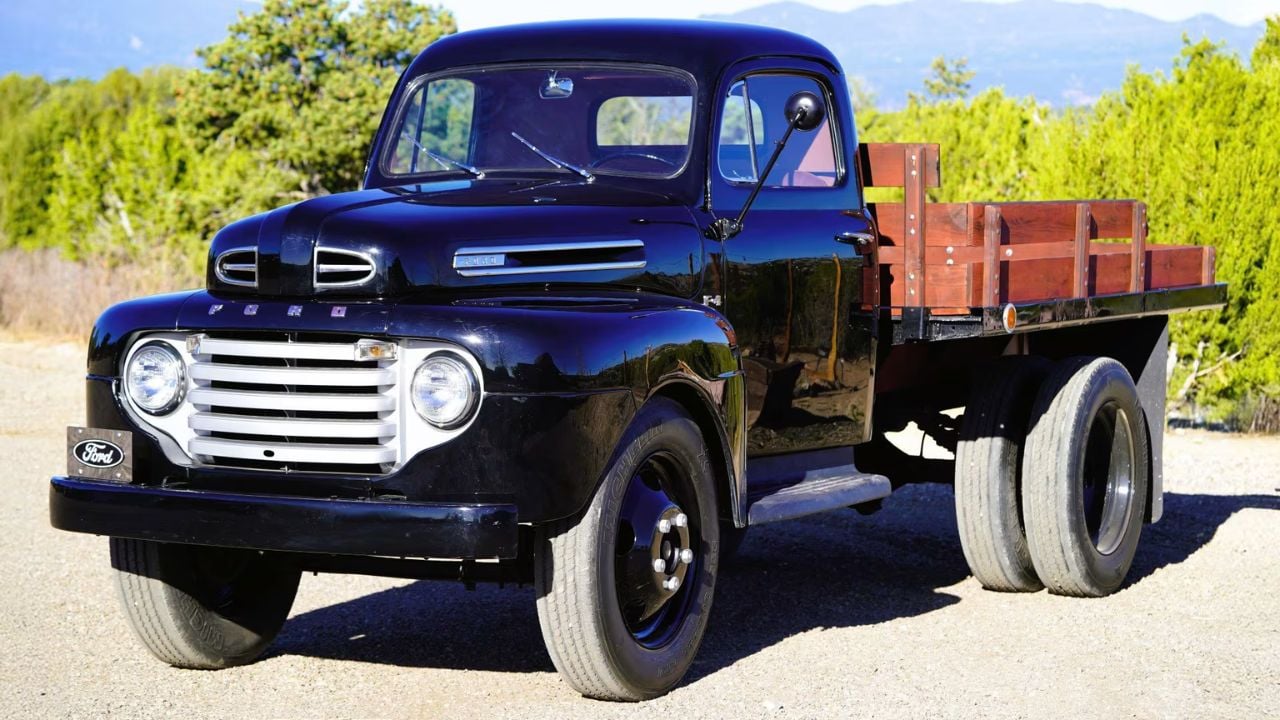
Heavy-duty trucks from the immediate post-war period rarely attract the same attention as classic pickups, but a 1949 Ford F-4 Dually Stake Bed now heading to the Mecum Tulsa Auction, June 5th, is set to turn heads. The medium-duty work truck represents the early years of Ford’s all-new F-Series. These were introduced in 1948 as the company’s first purpose-built truck lineup rather than modified passenger cars.
The F-4 sat in the middle of the range, designed for serious commercial use, with dual rear wheels, heavy-duty suspension, and a chassis capable of hauling significant loads. Many of these trucks melted into the background, so the surviving examples have become increasingly uncommon. This one reflects both the rugged practicality that defined early F-Series trucks and the growing collector interest in vintage commercial vehicles.
Built for Work in Ford’s First Purpose-Built Truck Era
The 1949 Ford F-4 was part of the first generation of Ford’s F-Series, introduced in 1948. This marked a major shift for Ford, which moved away from adapting passenger car platforms and instead engineered trucks specifically for commercial use. The new lineup ranged from light-duty pickups to medium- and heavy-duty work trucks, including the F-4. This was positioned for commercial hauling and fleet duty.
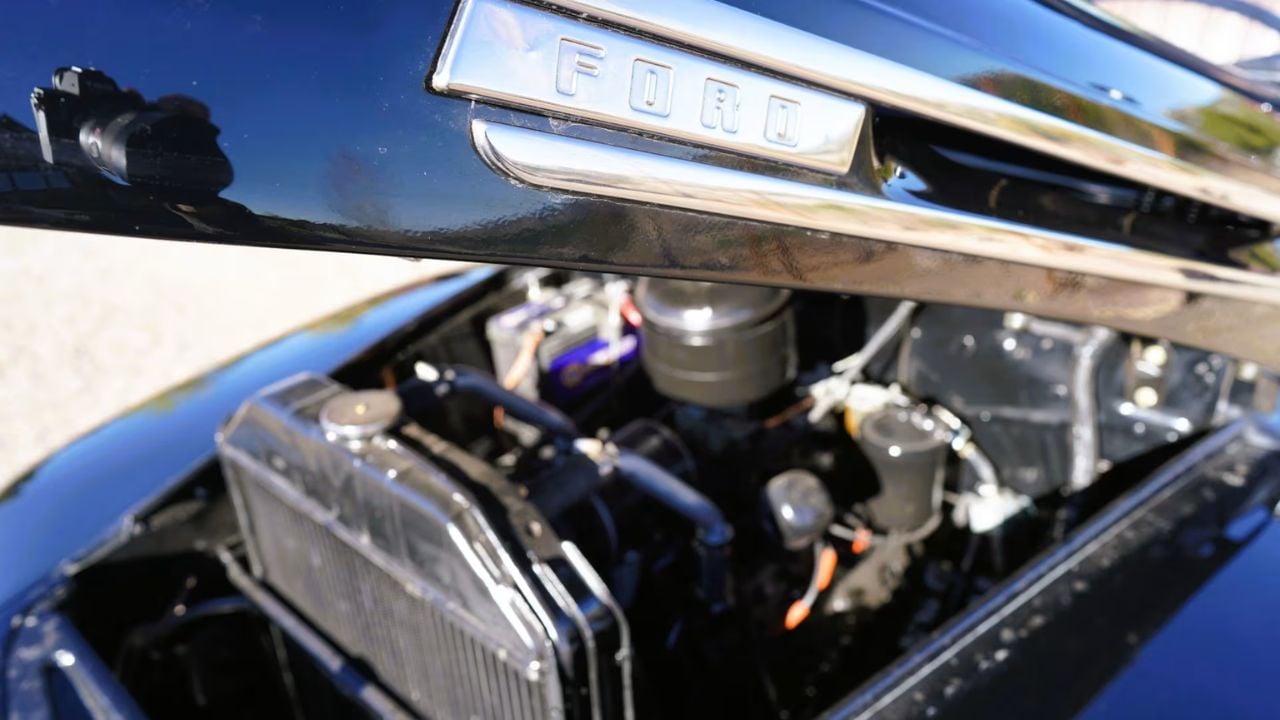
Under the hood, F-4 trucks typically used a flathead inline-six or an optional flathead V-8. The inline-six measured 226 cubic inches and produced approximately 95 horsepower, while the 239-cubic-inch flathead V-8 offered roughly 100 horsepower. Both were paired with manual transmissions designed for durability rather than speed, reflecting the truck’s intended role as a heavy-duty workhorse.
These specifications positioned the F-4 as a serious commercial platform capable of hauling lumber, farm supplies, construction materials, or agricultural equipment. Stake-bed configurations, such as the Mecum example, were especially common because they enabled flexible loading and unloading from multiple sides.
Stake Bed Design Meant for Versatility
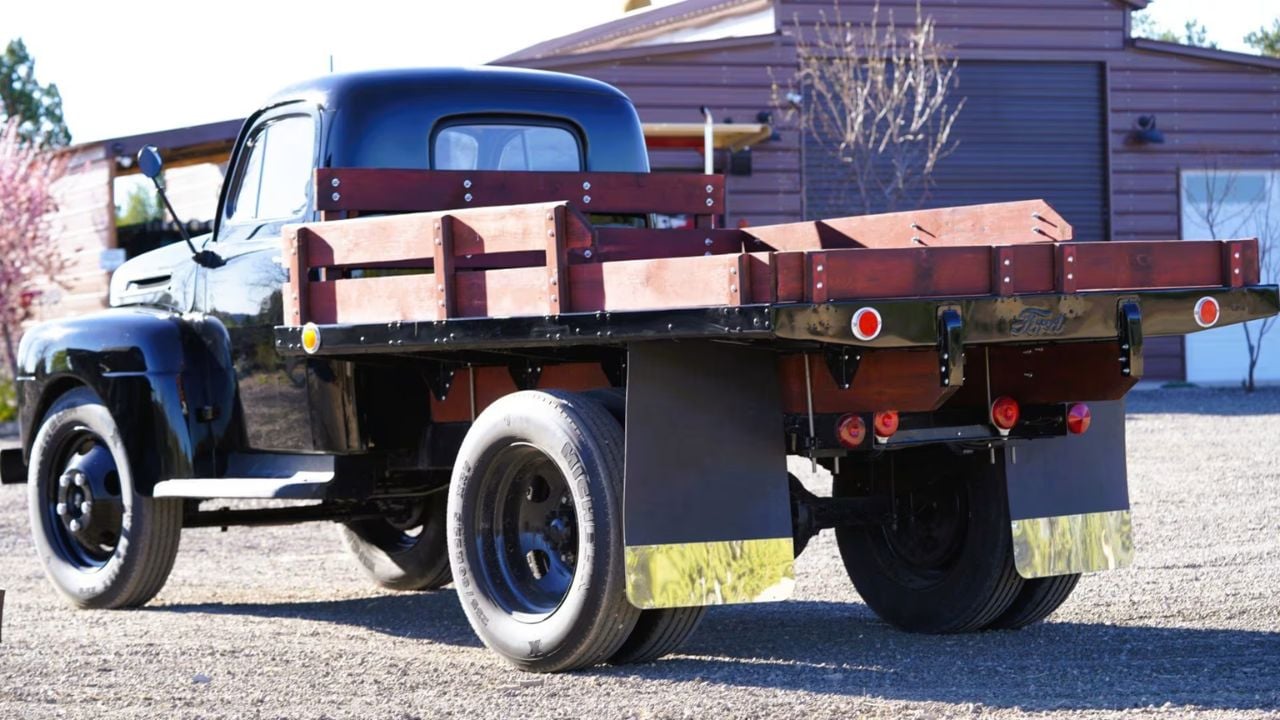
Stake-bed trucks were among the most practical commercial vehicles of the late 1940s, and Ford heavily promoted their versatility. The wooden stake sides could be removed or modified depending on the load, making them ideal for farms, construction crews, and municipal use.
Restored examples often feature hardwood decking and removable side rails, as these trucks were originally configured. F-4 stake trucks frequently carried heavy loads, such as lumber stacked above cab height. This was a testament to the truck’s robust chassis and suspension.
Ford also emphasized driver comfort for the era. The company invested in what it called the “Million Dollar Cab”, which offered wider doors, improved seating, better instrumentation, and increased headroom compared with pre-war trucks. While basic by modern standards, these improvements reflected Ford’s recognition that commercial drivers often spent long hours behind the wheel.
This focus on usability helped cement the F-Series’ reputation early on. The trucks were designed to be easy to service, rugged enough for harsh conditions, and adaptable across industries.
Growing Interest in Vintage Commercial Trucks
Unlike light-duty pickups, medium-duty trucks such as the F-4 were typically worked hard and then discarded. As a result, surviving examples are significantly rarer today. This scarcity, combined with their distinctive appearance and historical significance, has fueled growing collector interest.
The 1948-1952 generation introduced features that would define Ford trucks for decades, including purpose-built chassis design, multiple weight classes, and improved ergonomics. These innovations laid the foundation for what would become one of the longest-running and most successful truck lines in automotive history.
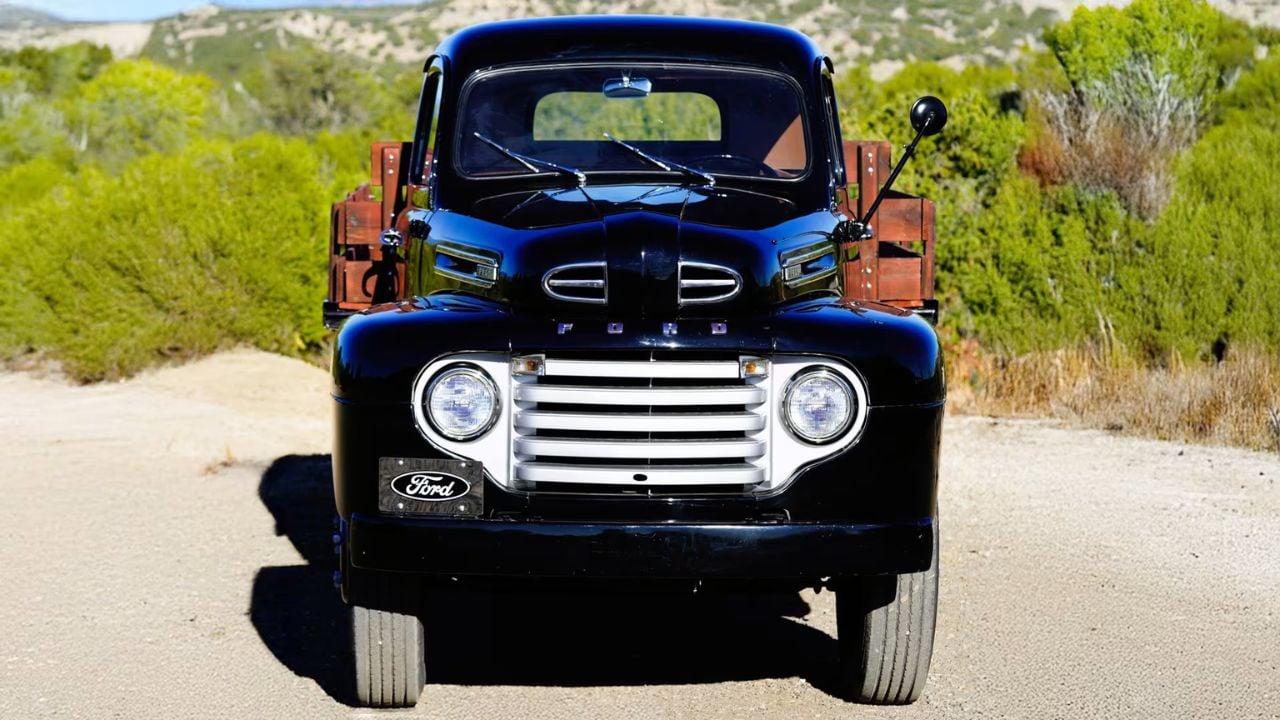
Stake-bed trucks in particular appeal to collectors seeking something different from the typical restored pickup. Their larger size, dual-rear-wheel stance, and wooden bed construction create a visual presence that stands apart at shows and auctions.
As this 1949 Ford F-4 Dually Stake Bed approaches auction, it represents more than just a vintage work truck. It reflects a turning point in Ford’s truck development and the enduring appeal of vehicles built to perform demanding jobs. With fewer surviving examples and growing appreciation for early commercial trucks, interest in trucks like this continues to rise among collectors and enthusiasts alike.