Remember flipping through car magazines as a kid and drooling over those wild concept cars at auto shows, thinking they’d never see the light of day? Well, some automakers actually had the guts to keep their design teams’ wildest ideas mostly intact and put them into production.
These are the cars that make people do double-takes in parking lots, the ones that still look futuristic years after launch. They’re proof that sometimes we get lucky, and the bean counters and safety engineers don’t completely water down a designer’s vision.
From angular wedges to flowing sculptures, these production vehicles maintained that concept car magic that makes you want to stare a little longer. Let’s celebrate the cars that dared to be different and somehow made it to dealership floors looking almost as crazy as they did on the auto show turntable.
Lamborghini Countach
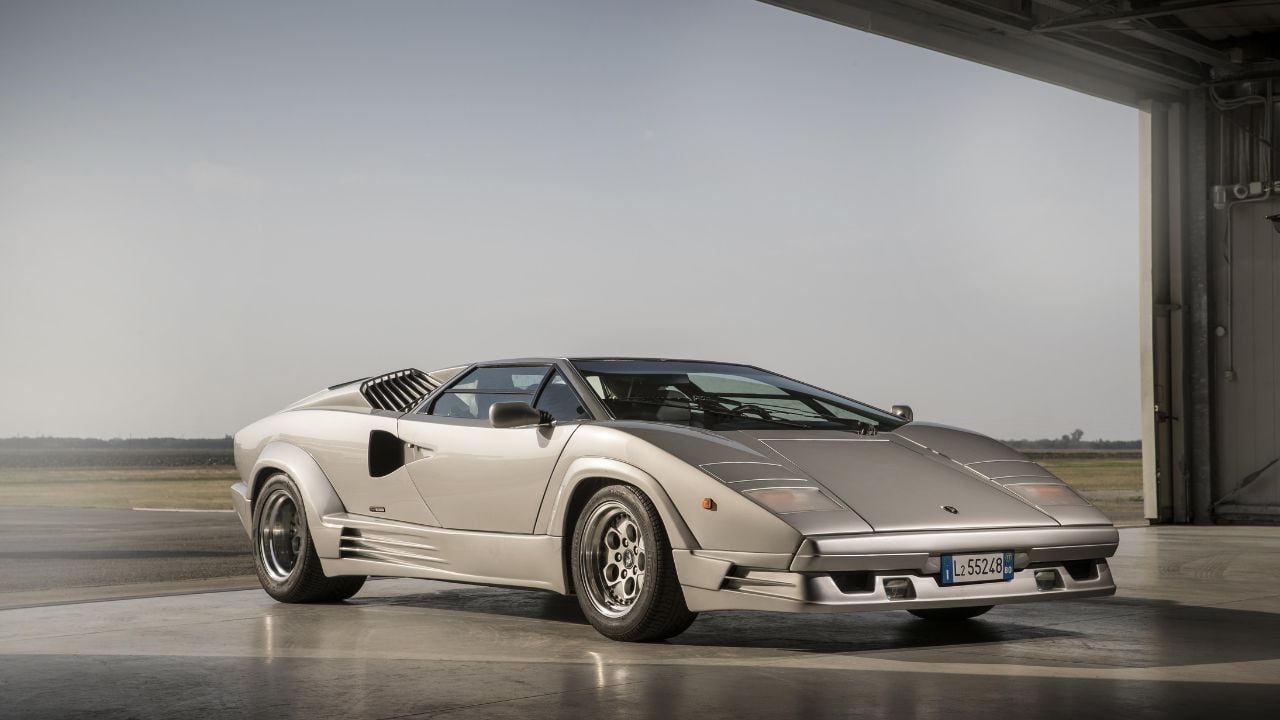
The Countach basically invented the “poster car” genre and looked like it was beamed down from another planet. Those scissor doors, that wedge shape, and those wild air intakes made it look more like a spaceship than something you’d register at the DMV.
Marcello Gandini’s design was so radical that it influenced supercar styling for decades, and even today, nothing quite captures that same aggressive wedge profile. The Countach started as a jaw-dropping concept in 1971 and somehow made it to production looking nearly identical, which was almost unheard of at the time.
Sure, it was a pain to drive in traffic and you couldn’t see anything when reversing, but nobody bought a Countach for practicality. Yuck. This was the car that taught us that sometimes form really can triumph over function, and we’re all better for it.
BMW i8

The i8 looked like it drove straight out of a sci-fi movie, with its butterfly doors and that distinctive two-tone design scheme that screamed “future.” BMW’s design team created something that felt genuinely futuristic without being cartoonish, blending sharp creases with flowing surfaces in a way that worked surprisingly well.
The layered bodywork and those blue accent pieces made it instantly recognizable from any angle, and the plug-in hybrid powertrain backed up the forward-thinking looks. What’s remarkable is how closely the production version matched the Vision EfficientDynamics concept from 2009, keeping those dramatic doors and the overall silhouette intact.
Starting at around $147,500, it was accessible by supercar standards and actually practical enough for daily use. The i8 proved that eco-friendly performance cars don’t have to look boring, and its design still turns heads today.
Tesla Cybertruck

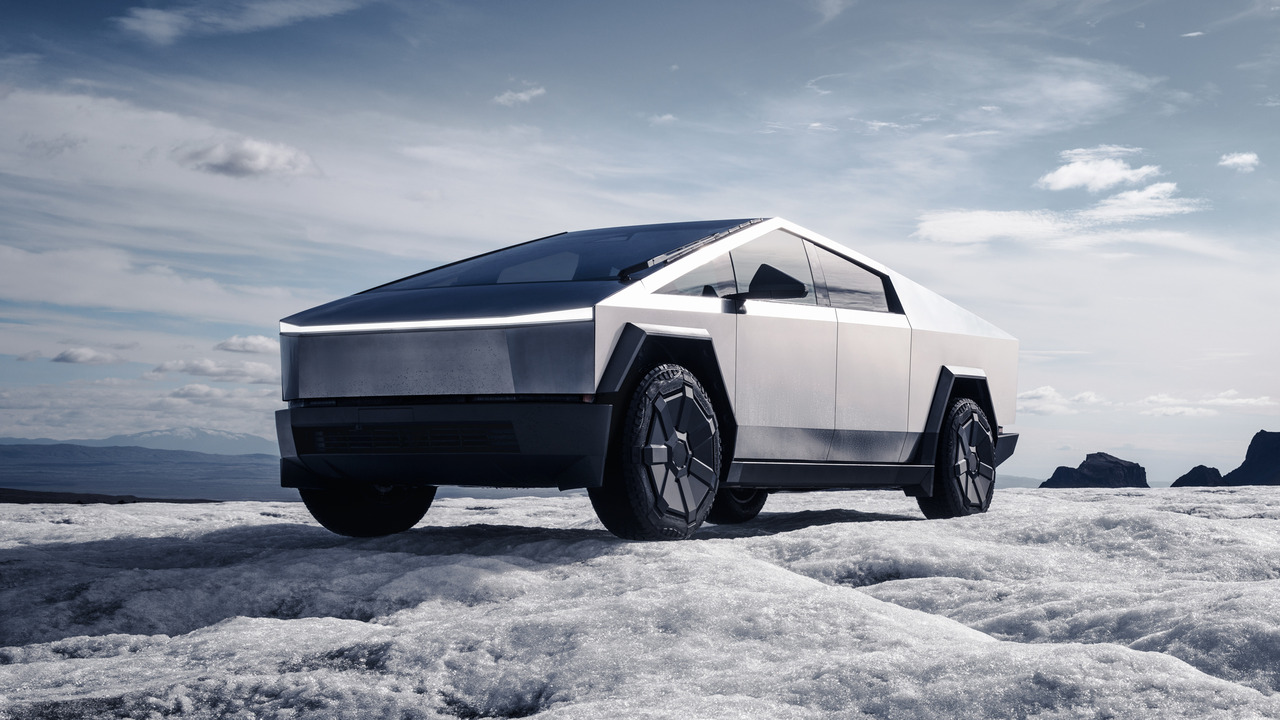
Love it or hate it, you cannot ignore the Cybertruck’s appearance, which looks like it was designed using only a ruler and some very strong opinions. Tesla basically took a child’s drawing of a truck, rendered it in stainless steel, and somehow convinced people to put down deposits for it.
The angular, geometric design is so polarizing that it’s become a cultural phenomenon beyond just the automotive world. What’s wild is that the production version is essentially identical to the concept unveiled in 2019, broken window demonstration and all. Starting around $60,990 for the base model, it delivers on Elon Musk’s promise of something completely different in the pickup segment.
Whether it’s beautiful or bizarre is up for debate, but there’s no question it achieved its goal of not looking like anything else on the road.
Honda CR-Z

The CR-Z brought back the spirit of the classic CRX with a modern hybrid twist and styling that looked genuinely sporty for an eco-focused car. Its low, wide stance and aggressive front fascia made it look more like a hot hatch concept than a fuel-sipper, complete with a center-mounted exhaust.
The swooping roofline and distinctive wedge profile gave it genuine coupe credibility in a market full of boring hybrids. Honda’s designers managed to translate the concept’s exciting proportions into production almost unchanged, which was refreshing in an era of conservative hybrids. With a starting price around $19,950 when new, it was affordable and fun, even if the hybrid powertrain wasn’t quite as sporty as the looks suggested.
The CR-Z proved that hybrid cars could have genuine style and personality instead of looking like uninspired appliances.
Mazda RX-8

Mazda’s rotary-powered sports car looked like a concept that accidentally made it past the production committee, with its dramatic curves and unique rear-hinged back doors. The RX-8’s flowing fender lines and low-slung profile created a presence that was both aggressive and elegant, a difficult balance to strike.
Those suicide doors were a brilliant solution to adding practicality without ruining the coupe silhouette, making it genuinely usable for four adults. The production version stayed remarkably true to the RX-Evolv concept, maintaining that distinctive face and those sculpted haunches. Starting around $26,780 when new, it offered rotary uniqueness and distinctive styling at a reasonable price point.
While the rotary engine had its quirks, there’s no denying the RX-8 brought concept car excitement to the everyday sports car segment.
Plymouth Prowler

The Prowler was basically a hot rod fever dream that somehow got approved for production, complete with exposed wheels and a design straight from a 1950s vision of the future.
Chrysler’s design team went all-in on the retro-futuristic aesthetic, creating something that looked equally at home at a car show or cruising Woodward Avenue. The open-wheel front end, the dramatically flowing fenders, and that motorcycle-inspired cockpit made it look more like a custom build than a factory product.
What’s impressive is how little changed between the 1993 concept and the production version, with Chrysler maintaining nearly all the wild styling elements. Starting at around $39,300, it was relatively accessible for such an exotic-looking machine, though purists wished for a V8 instead of the V6.
The Prowler proved that Detroit still had the courage to build something truly different, even if it was just for a few years.
Audi TT

The original TT’s Bauhaus-inspired design was so clean and purposeful that it looked like a rolling piece of modern art rather than just another sports coupe. Those simple, geometric forms and the distinctive aluminum accents created a design language that was both minimalist and striking.
The production version stayed incredibly faithful to the 1995 concept, maintaining those round headlights, taut surfaces, and that distinctive rear end. Audi basically said “yes, we can actually build that” and delivered a car that looked as good in driveways as it did on auto show turntables.
Starting around $30,000 in its first year, it made sophisticated design accessible to enthusiasts who wanted something more refined than a typical sports car. The TT’s design was so influential that it spawned countless imitators and established Audi’s reputation for bringing concept car aesthetics to production.
Nissan Juke

The Juke’s bold, almost insect-like styling made people either fall in love or recoil in confusion, with very little middle ground. Those stacked headlights, the muscular fenders, and the coupe-like roofline created something that looked more like a designer’s passion project than a sensible crossover.
Nissan’s team clearly decided that standing out was better than blending in, and the production version matched the concept’s quirky personality almost exactly. The interior continued the theme with a motorcycle-inspired center console and creative color options that felt genuinely youthful.
Starting around $18,960, it offered distinctive style at an entry-level price, making it accessible to younger buyers looking for personality. However, don’t go thinking that means Gen Z buyers want a DJ table and see-through floors on their EVs.
The Juke proved that even mainstream crossovers could take styling risks and find an audience that appreciated something different.
Chevrolet SSR

The SSR was Chevrolet’s answer to the question “what if we made a hot rod pickup truck with a retractable hardtop?” that nobody asked but everyone noticed. This convertible pickup blended 1940s styling cues with modern proportions in a way that was undeniably unique, if not exactly practical.
The production version maintained the concept’s bold grille, flowing fenders, and that party trick retractable roof that turned heads at every stoplight. Starting around $42,000, it was positioned as a lifestyle vehicle rather than a working truck, which made sense given its limited cargo capacity.
The SSR might not have been a commercial success, but it represented an era when GM was willing to take creative risks and build something memorable. It’s the kind of vehicle that shows up at car shows decades later and still generates conversations about its unusual concept.
Pontiac Aztek

The Aztek has become somewhat legendary for its polarizing design, but looking at it now, you have to admire Pontiac’s commitment to doing something radically different. Those aggressive angles, the multiple body-colored cladding options, and the versatile cargo system showed genuine innovation in thinking about what a crossover could be.
The production version actually softened some of the concept’s more extreme elements, but it still looked like nothing else on the road. What’s often forgotten is how functional it was, with camping features, configurable interiors, and genuine versatility that was ahead of its time. Starting around $21,000, it offered unique styling and serious utility at a competitive price point.
The Aztek’s reputation has improved with time, as people recognize it was simply too different for its era, rather than poorly designed.
Alfa Romeo 4C

The 4C looked like a shrunken supercar that somehow cost less than a well-equipped pickup truck, with styling that could’ve come straight from an auto show concept. Its compact proportions, dramatic curves, and those distinctive headlight clusters created an exotic appearance that punched way above its price point.
The production version stayed remarkably true to the 2011 concept, maintaining the carbon fiber tub, the mid-engine layout, and that gorgeous body shape. Starting at around $54,000, it offered genuine Italian sports car experience and looks that rivaled cars costing twice as much. The 4C proved that you didn’t need a six-figure budget to park something beautiful and exotic in your garage.
It’s one of those rare production cars that makes people pull out their phones to take pictures, just like they would with a concept on display.
Toyota FJ Cruiser

The FJ Cruiser brought back retro-cool Toyota Land Cruiser styling with a modern twist that made it look more concept than production SUV. Those distinctive round headlights, the white roof, and the bold, upright proportions created something that stood out in a sea of anonymous crossovers.
Toyota kept the design remarkably close to the 2003 concept, including those unique rear-hinged back doors and the overall rugged aesthetic. The production version maintained that toy-like quality that made it feel special, even though it was built on proven truck underpinnings. Starting around $22,000 initially, it offered genuine off-road capability wrapped in styling that looked like it belonged at a design exhibition.
The FJ Cruiser developed a cult following precisely because it looked and felt different from everything else Toyota was building at the time.
Conclusion
These production vehicles prove that automotive design doesn’t have to play it safe to succeed in the marketplace. Each of these cars made it from concept to reality with their bold visions largely intact, showing that sometimes courage in design pays off.
Sure, some sold better than others, but they all contributed something valuable: they made the automotive landscape more interesting. These are the cars that remind us why we fell in love with automobiles in the first place, beyond just transportation from point A to point B. They represent moments when designers, engineers, and executives aligned to create something genuinely special and different.
Whether you’d actually want to own one is up to personal taste, but there’s no denying they all made the roads more exciting just by existing.