Portland has long marketed itself as one of the most bicycle-friendly cities in the country, with dedicated bike lanes, a culture that takes cycling seriously, and infrastructure meant to back that reputation up. But lately, a different kind of reputation is forming around the city’s streets, and it’s coming with a considerable price tag.
A wave of lawsuits stemming from deteriorating road conditions has put Portland in the uncomfortable position of paying out settlements that would have more than covered the repairs that were never made in the first place.
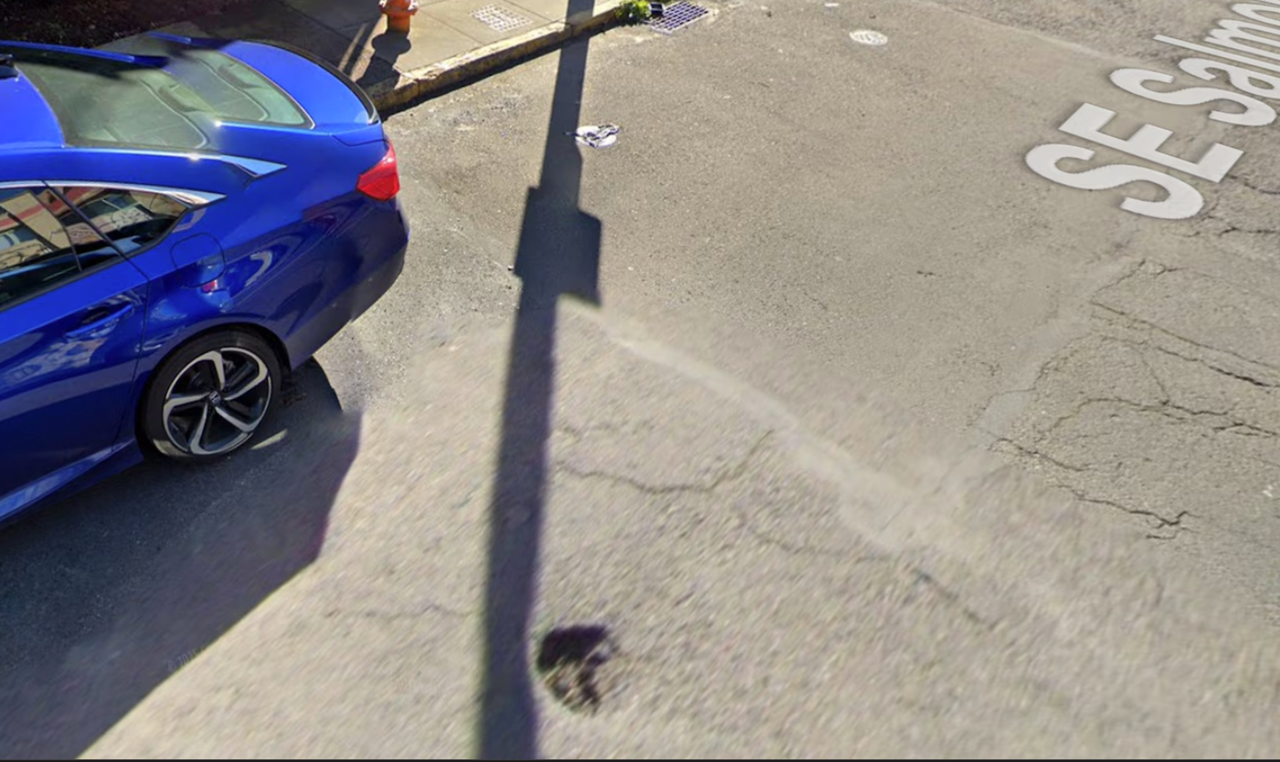
The latest case to make the rounds involves a cyclist named Dirk Orthmeyer, who was riding east on Southeast Salmon Street in June 2024 when he struck a pothole in front of a coffee shop and went down hard. He walked away from the crash with injuries to his shoulder, hand, pelvis, and hip, and has since filed a complaint in Multnomah County Circuit Court seeking $950,000 from the city.
What elevates this beyond a routine fall is the timeline surrounding that pothole. The same defect had been reported to the city a full month before Orthmeyer hit it, and a Google Maps image from 2022 shows it was already there years earlier. The pothole has since been filled, which does very little for Orthmeyer now.
That case would already be enough to raise eyebrows, but it arrives alongside an even more striking lawsuit involving a driver named Gillian Conroy. Conroy was traveling along Southwest Capitol Highway when her vehicle struck a pothole with enough force to send her head into the roof of the car, leaving her with a traumatic brain injury, tinnitus, and a torn rotator cuff.
According to reporting from OregonLive, the case resulted in a $3.6 million settlement that may stand as the largest roadway-related payout in Portland’s history. Conroy, who worked in technical sales at Intel, says the cognitive effects of her injuries have left her unable to focus on a computer screen and return to her career.
Neither of these cases exists in a vacuum. Portland is in the middle of an ongoing and very public reckoning over how it pays for road upkeep, and residents are running out of patience. Portland City Council is actively considering a monthly fee on utility bills to fund street maintenance and safety projects, a model already used by 31 other Oregon cities, with the goal of generating roughly $46.7 million per year. Whether that proposal moves forward or stalls, the lawsuits are already doing the math for everyone involved.
When a Pothole Report Goes Ignored, the Legal Math Changes Entirely
The Orthmeyer case illustrates something that road negligence attorneys have understood for years: prior notice is the linchpin of municipal liability. Cities frequently defend themselves by arguing that potholes are an unfortunate but inevitable consequence of weather and traffic, and that they cannot be expected to address every surface defect the moment it forms. That argument holds considerably less water when the defect was reported weeks or years in advance and still wasn’t fixed.
To successfully pursue a claim against a government agency, plaintiffs generally need to establish that the responsible body knew or should have known about the defect, failed to repair it within a reasonable timeframe, and that the failure created a foreseeable hazard.
In Orthmeyer’s situation, the pothole’s presence in a 2022 Google Maps image alongside a formal complaint filed a month before the crash gives his attorneys exactly the kind of documented history that puts municipalities in a difficult spot at the negotiating table.
Cities like Oakland have seen this play out repeatedly, with Oakland approving a $512,000 settlement in April 2026 alone for a cyclist injured on East 21st Street, and a separate $400,000 payment earlier that year to settle a pothole-related case on Grizzly Peak Boulevard. The pattern is consistent and well-established. Deferred maintenance has a compounding cost that eventual repairs cannot undo once someone has been hurt.
The Conroy Case and What It Says About Seatbelts and Severe Impacts
The Conroy settlement deserves its own attention because it challenges something most drivers assume: that wearing a seatbelt is sufficient protection against roadway hazards. Seatbelts are engineered primarily to restrain occupants during forward deceleration, which is the physics of a frontal collision or hard braking.
A pothole impact creates a fundamentally different motion, with the car’s suspension absorbing and releasing energy vertically, which can send the vehicle body upward and translate into occupant movement that a lap-and-shoulder belt simply is not designed to counter.
Conroy said she was properly restrained when the impact occurred, yet the force was enough to result in injuries that have prevented her from returning to work in a career that required sustained concentration at a computer. That combination of physical injury and documented career impact is exactly what drives settlement values into the millions, because damages in personal injury cases are not calculated solely on medical bills but on loss of income, quality of life, and projected future costs.
Portland Is Not an Isolated Case
In 2015, a Los Angeles resident named Peter Godefroy hit a pothole while cycling and sustained multiple fractures along with severe brain trauma. The Los Angeles City Council ultimately voted unanimously to award him a $6.5 million settlement, with the court persuaded by his attorneys’ argument that the roadway had become a concealed trap for cyclists.
That case helped establish the precedent that municipalities cannot simply point to general wear and tear when specific, chronic defects cause serious injuries.
According to the National Safety Council, over 13 percent of bike crashes involve a surface defect, and a Boston-based study found that at least 34 percent of crash victims were injured due to hazardous surface conditions including potholes. Those numbers reflect how common the issue is across the country, not just in cities with reputations for rough roads.
Nearly 200 million potholes are repaired in the United States every year, yet the demand for repairs consistently outpaces the pace at which cities address them.
The dollars accumulate quickly on both sides. AAA has estimated that pothole damage costs American drivers more than $26 billion annually in vehicle repairs alone, averaging close to $600 per incident for those who sustain damage significant enough to require a shop visit. Those figures account only for property damage. Personal injury settlements at the scale Portland is now absorbing operate on an entirely different financial level.
What This Means for Drivers and Cyclists Navigating Bad Roads
Portland is not unique in facing a structural funding gap for road maintenance, and the consequences being litigated there are a version of what plays out in municipalities across the country. The city’s current proposal to add a dedicated street maintenance fee is the kind of structural solution that, had it been in place years ago, might have prevented some of the lawsuits now draining public funds. But Portland is hardly alone in kicking that can down the road until the road itself became the liability.
For anyone on two wheels or four who hits a pothole and sustains injuries or vehicle damage, documentation is the most important thing to establish immediately. Photograph the defect before it is repaired, note the precise location and date, and file a formal complaint with the city to create a timestamped record.
In Portland, that means contacting the Portland Bureau of Transportation. In other cities, most public works departments operate equivalent reporting systems, and that record can prove essential if a claim ever moves into litigation.
The broader takeaway from both the Orthmeyer and Conroy cases is straightforward: roads that receive documented complaints and go unrepaired do not just become a public safety problem. They become a financial liability that, in the end, is paid by the same taxpayers who were driving or riding over the holes in the first place.