If you’ve ever gone car shopping recently and thought, “Hey, whatever happened to that perfectly good model everyone used to love?”, congratulations, you’re not going crazy. You’re just witnessing the automotive industry’s most insidious trick: the quiet disappearance. No send-offs, no ads… just gone, sometimes before their time. In the ever-twisting, profit-hungry, and increasingly insane world of automotive strategy (which is, apparently, just endless EVs and SUVs), even the most beloved, best-selling cars aren’t safe from the corporate chopping block.
In this exposé, we pull back the curtain on nine automakers who have discreetly, almost cowardly, ended their top-selling or most beloved models, often without much fanfare and sometimes even in spite of surprisingly strong sales. Prepare to be confused, annoyed, and maybe even feel a little personally betrayed. Because, let’s be honest, we’ve all had a reliable old friend vanish from our lives, but when it’s a car, it just feels different.
“Where’d They Go, Anyway?”

To compile this collection of dearly departed, we painstakingly tracked production schedules, cross-referenced automaker announcements (the ones they quietly slipped out on a Friday afternoon), and scoured dealership inventory across the last three model years.
Our focus was razor-sharp as we honed in exclusively on vehicles that were best-sellers for their segment or brand, not some niche, low-volume eccentricity or a limited-edition flop. These were the cars we never thought would leave us. Yet, they have, and no car has taken their place. Instead, carmakers are focused on their homogeneous EVs that can’t be told apart unless you memorize bumper shapes.
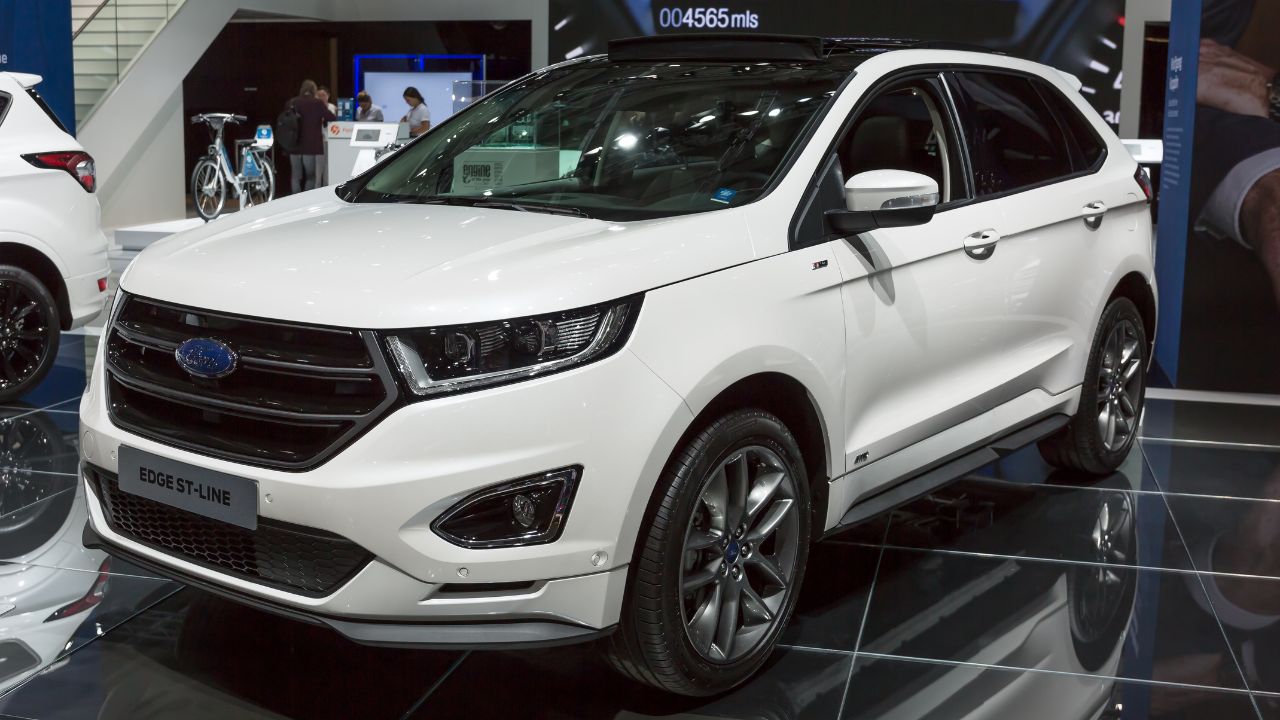
Ford: Saying Goodbye to the Edge

Ford’s decision to discontinue the Edge crossover after the 2024 model year feels less like a strategic business move and more like someone deleting your favorite, perfectly serviceable playlist while you’re still listening to it to replace it with EDM. The Edge was a mid-size SUV that, for nearly two decades, struck a sweet balance between practical size, comfortable performance, and a reasonable price point.
Since its debut for the 2007 model year, the Edge was a long-running staple in Ford’s lineup. In the U.S., it sold 106,098 units in 2023. So why cancel it?
Ford is revamping its Oakville, Ontario factory, where the Edge is built, to support future electric-vehicle production. The company seems fully committed to pushing the Mustang Mach-E and a wave of other electric models as your next choice, whether you asked for it or not. What’s especially ironic is that the Edge was still selling well. It’s not like buyers suddenly lost interest.
Some analysts speculate it was always an awkward middle child, stuck between the compact Escape and the larger Explorer, leading to an identity crisis Ford simply didn’t have the emotional bandwidth to manage. So, you’re not imagining it; your sensible, reliable SUV just got unceremoniously ghosted.
Toyota: Farewell Avalon, Hello Blandscape

Remember that time your boring neighbor you consistently waved to every morning suddenly packed up and moved away in the middle of night without a word? Yeah, that’s how it felt when Toyota axed the Avalon. The full-size sedan, long beloved for its supremely cushy ride, cavernous interior, and Lexus-lite feel, quietly drove off into retirement after the 2022 model year.
Despite having a surprisingly loyal fanbase (many of whom swore by its longevity and comfort) and decent sales (it sold 12,215 units in 2022, its final model year in the U.S.), it simply didn’t fit into Toyota’s aggressive, SUV-first strategy anymore. With sedans increasingly being edged out by SUVs and crossovers in North America, Toyota decided to funnel those few remaining full-size sedan buyers toward the peculiar Toyota Crown.
The new Crown is a hybrid sedan that’s kind of a car, kind of a crossover, and definitely not the Avalon. The company justified the decision with the usual PR mumbo-jumbo about “evolving market preferences” and “realigning production,” which, translated from corporate-speak, really just means “SUVs make more money, and we can’t be bothered with a segment we don’t dominate.” I guess it’s just more SUVs for us then, yipee…
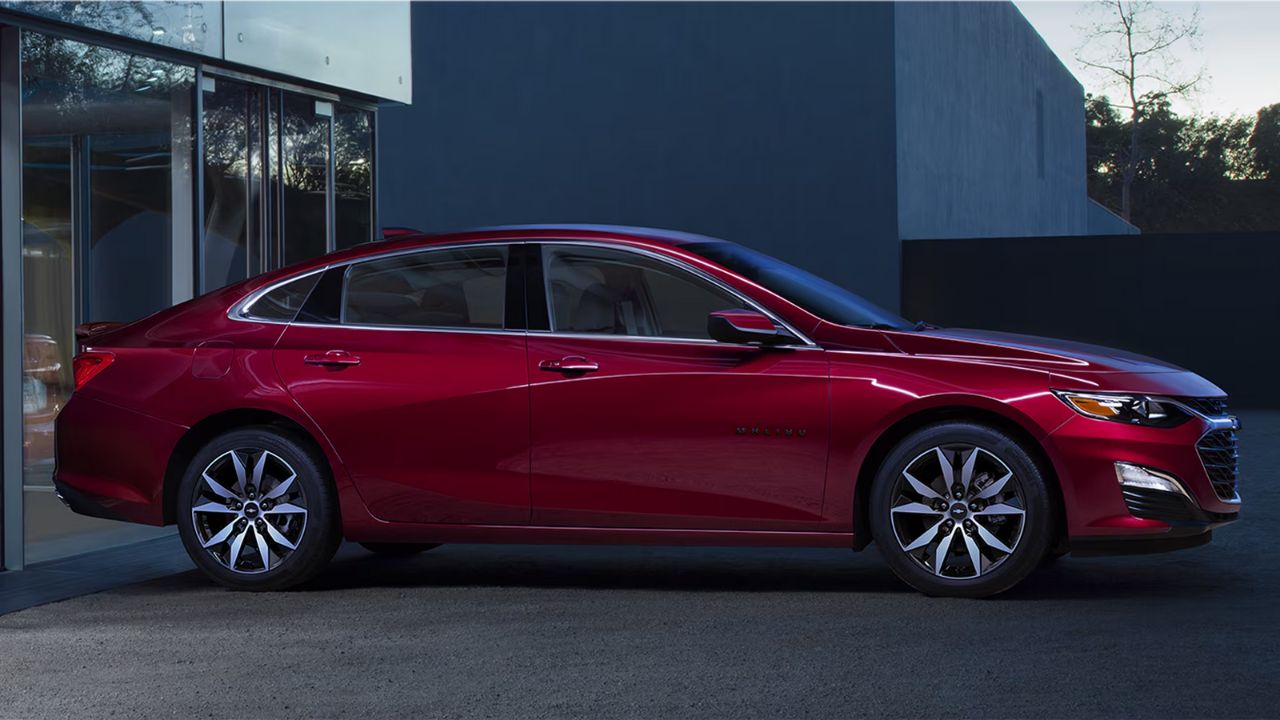
Chevrolet: The Malibu’s Fading Sunset

The Chevrolet Malibu has been on the chopping block for years, weathering more rumors of its demise than a soap opera villain. For a nameplate that once ruled the midsize sedan segment with unexpected swagger, its quiet retirement, while not entirely unexpected, still comes as a bit of a shock. Yes, sales have declined from their peak, but the Malibu sold about 130,000 units in 2023, a number that in any other era would be considered highly respectable for a single model line.
Chevy’s problem? It’s going all-in on EVs and crossovers now. The Fairfax Assembly plant in Kansas City, Kansas, which has been the Malibu’s home for decades, is being retooled to support EV production, including the next-generation Chevrolet Bolt EV, and eventually, new Ultium-based EVs. A tale as depressing as time.
There’s just no room for a humble, gas-powered, four-door sedan anymore in GM’s electric future. The Malibu’s exit is emblematic of Detroit’s ongoing identity crisis: it wants desperately to be Tesla but still produces cars that feel like your slightly uncle’s Impala. RIP to a car that once promised simple reliability and, against all odds, cool name recognition.
Chrysler: 300 Reasons to Miss It, None Left to Buy It

The Chrysler 300 is gone after a gloriously long, run that stretched from 2005 to late 2023. Its disappearance marks not just the end of a model, but a loss of Detroit’s last true full-size, rear-wheel-drive sedan that wasn’t wearing a Dodge badge.
First introduced in 2005, the 300, with its unapologetically bold, Bentley-esque styling, available HEMI V8 power (including the bonkers 300C with the 6.4L 485 hp HEMI for its farewell), and a sense of old-school American luxury, felt more like a rolling cigar lounge for the mob than a conventional car. It was big, it was brash, and it was stylish in a sea of shrinking, anonymous sedans.
Despite its age (the platform dated back to a DaimlerChrysler collaboration with Mercedes-Benz, using a DaimlerChrysler-era rear-wheel-drive architecture with Mercedes-Benz influences), the 300 still had loyal buyers, especially those who appreciated its subtle muscle car DNA and rear-drive dynamics without going full Charger. With Stellantis (Chrysler’s parent company) shifting focus almost exclusively to EVs and SUVs, the 300 was left out of future plans. Production officially ended in December 2023, with a limited-edition 300C model that felt more like a courtesy bow than a true celebration.
Its departure isthe end of an era when sedans could still flex with a V8. And now? Chrysler has no traditional sedans left in its lineup. Just a fading logo and a memory of when it once built some of the coolest cruisers on the road.
Honda: It No Longer Fit In

Jeez, only halfway through and I’m already getting bummed out. Well, here goes another car bowing down to the SUV. The Honda Fit was, for years, the automotive equivalent of a Swiss Army knife. Small on the outside, improbably roomy on the inside thanks to its ingenious “Magic Seat” folding system, and surprisingly fun to drive for a compact, it made sense in ways that few cars do anymore. But Honda, ever the pragmatist, ended U.S. sales of the Fit in 2020, opting instead to push buyers toward the more profitable HR-V crossover.
Why? Because Americans, bless their consumerist hearts, apparently love their “utility” (even if they never use it) and “ride height” (even if it just means more body roll). Never mind that the Fit was economical (achieving about 31–36 mpg combined, depending on year and transmission), relentlessly reliable, and actually kind of charming in its cheeky practicality; it simply didn’t fit into the SUV-obsessed landscape Honda saw dominating the market.
Globally, the Fit (or Jazz, as it’s known in other markets) is still alive and well, continuing its clever existence, just not in the land of Costco parking lots and unnecessarily large pickup trucks. A quiet, almost shameful, exit for a car that was quietly brilliant. A nostalgic loss for fans of practical, well-loved cars.
We’re suffering over here!
Subaru: Legacy No More as Subaru Quietly Ends an Era
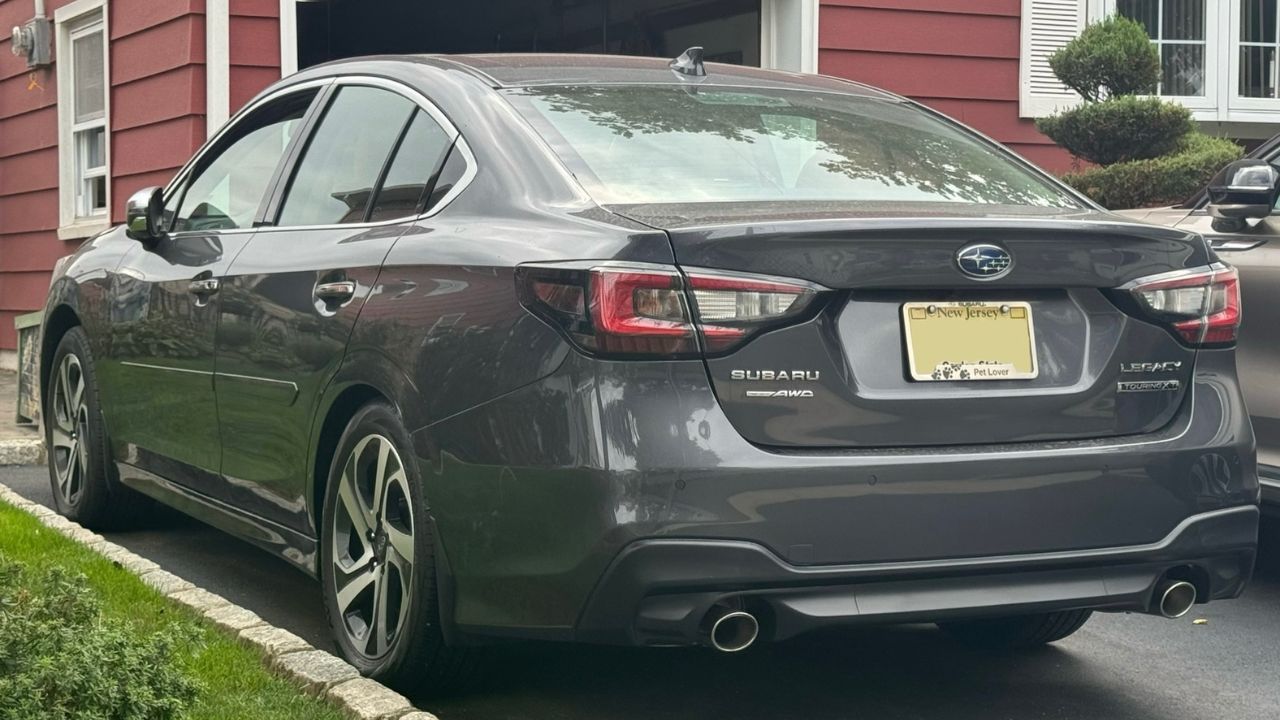
Subaru announced Legacy production would end in spring 2025, at the conclusion of the 2025 model year, and with it, a chapter in practical, all-wheel-drive sedans quietly closed. For decades, the Legacy was the unsung hero in snowy states, the sensible shoe of the Subaru lineup. It was a reliable, no-nonsense car that delivered unparalleled safety and confidence in adverse conditions without the bulk or perceived inefficiency of an SUV.
It wasn’t flashy, it wasn’t trendy, but it worked, year after year, through brutal winters, endless commutes, and family road trips. Its ultimate downfall? The overwhelming popularity and juicy profit margins of its crossover siblings, the Outback and Forester, which have ballooned into sales juggernauts.
In today’s market, sedans simply don’t sell in volume unless they look or act like SUVs. Subaru, once a quirky brand known for zigging when others zagged (all-wheel-drive on everything, boxer engines, wagons for days), has now largely joined the trend-chasing crowd. The Legacy’s exit may not have made headlines, but for loyalists, particularly those who remember its rally heritage, it feels like Subaru lost a little bit of its rugged, sedan-loving soul.
Nissan: The Maxima’s Final Lap

Remember the Nissan Maxima? It used to be Nissan’s flagship sedan, proudly (and perhaps audaciously) marketed as the “4-Door Sports Car” (or “4DSC”). It featured sharp, often aggressive, design, a strong V6 engine (like the 3.5-liter VQ35DE), and just the right amount of attitude to make it stand out from the Camry-Accord crowd. But after the 2023 model year, Nissan quietly put it to bed, citing rapidly declining sales and a shifting brand strategy focused on (you guessed it) SUVs and electrification. You too, Nissan? Who can you even trust anymore?
To be fair, the Maxima hadn’t received a full redesign in an eternity (the eighth generation launched in 2015), and it kind of felt like Nissan itself forgot it existed, leaving it to languish in showrooms. Still, it held onto a devoted fanbase who appreciated its more dynamic driving experience and offered more flair than the average appliance-like sedan.
Now, Nissan wants you to focus on the electric Ariya and the more mainstream Altima as its primary car offerings. Meanwhile, the Maxima fades away like the memory of a high school crush you thought you’d marry, still fondly remembered, but definitely not coming back. And no, don’t add the Maxima on Facebook.
Mazda: Mazda6’s Silent Exit

Mazda discontinued the Mazda6 for the 2022 model year in the U.S., making 2021 the last model year sold here, and arguably, barely anyone noticed. Which, for car people, is downright tragic, because it was one of the few midsize sedans with genuine soul. It boasted truly excellent steering feel, handsome “Kodo” design language that aged gracefully, and a cabin that felt way classier and more premium than its price tag suggested. Mazda even offered it with a potent 2.5-liter turbocharged engine making 250 horsepower, a rarity in its segment.
So why ax it? Because, as the mantra goes, sedans just don’t move the needle anymore, not in the numbers crossovers do. Mazda wants you to look at their excellent CX-50 and CX-5 SUVs now, which, admittedly, are very good. But still. The Mazda6 had driving dynamics, a tactile feel, and a level of engagement that made you completely forget you were buying something practical, things that soccer moms and road trip dads just don’t seem to care about these days. Its departure is less about performance inadequacy and more about profit margins, and we all know which factor wins in that cold, brutal battle. It was a victim of market trends, not its own quality.
Volkswagen: No More Passat, Just Electric Promises

The VW Passat was once the darling of the “sensible European sedan” crowd, spacious, efficient, and never too flashy. Ugh, just hearing the word “sedan,” you know that means an unavoidable death sentence in the Land of the EV and the Home of the SUV. The Passat was the car for people who didn’t want to shout, but still appreciated solid German engineering (or at least, German-designed engineering, as it was built in Chattanooga, Tennessee for the U.S. market).
But after the 2022 model year, it’s gone from the U.S. lineup, a victim of VW’s aggressive push into electrification. Volkswagen decided it desperately needed that Chattanooga plant to as the Chattanooga plant shifted toward EV production, including the ID.4
Let’s not sugarcoat it: the U.S.-spec Passat had been phoning it in lately. It hadn’t received a major redesign since 2011, and it became increasingly bland, offering no real thrills, just “adequate” transportation. But it still sold in respectable numbers (over 24,000 units in 2021) and was a quiet favorite for those actively avoiding the SUV trend. Volkswagen is hoping you’ll jump ship to the ID.7, but it remains to be seen if the same people who bought Passats are ready for EVs, or if they’ll just grumble, shake their heads, and reluctantly buy a Camry instead.
A Future That Sacrifices The Past
By now, you’ve likely given in to the SUV hype, like the last survivor in a zombie movie who decides to just get bitten and join the infected. Sometimes it’s just easier than clinging to your fading memories of mountain joyrides and fitting into a compact spot.
As these once-beloved models vanish from dealer lots, it’s clear that automakers are chasing a new dream: electric ambitions, crossover domination, and tech-first driving experiences. In that sprint to the future, they may be leaving behind the customers who built their brands in the first place. The folks who liked having buttons they could press without taking their eyes off the road. The ones who still mourn the Avalon because it did its job too well to be trendy. Or who can’t quite stomach the idea of a silent electric Charger because half the point of a muscle car was that glorious, window-rattling roar.
So yes, the industry is changing. But maybe die-hard car nerds have a point. Maybe the future doesn’t have to come at the expense of everything that made cars great in the first place. Because while it’s easy to get excited about what’s next, there’s a lot to be said for what worked. And if these nine automakers forgot that, well, someone had to say it.