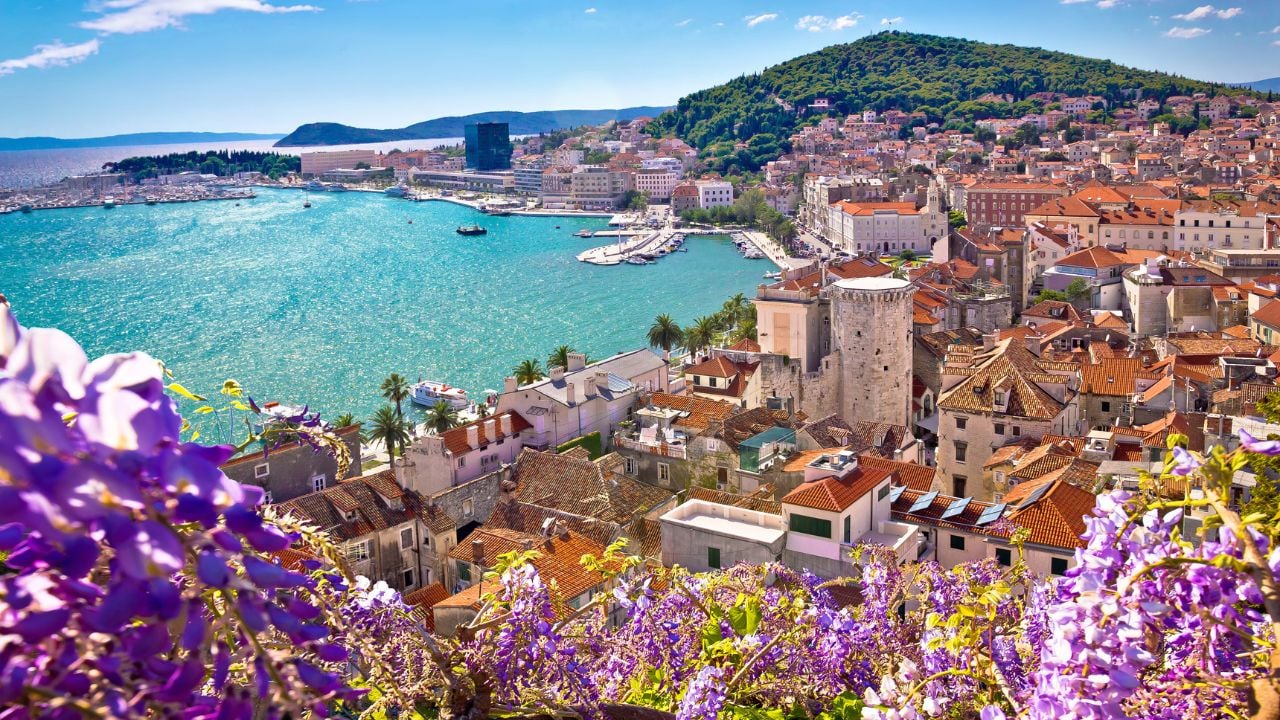
Croatia is famous for islands, stone old towns, and Adriatic water so blue it almost becomes the whole idea of the country. A better one-week route does not need to stare at that same horizon every day.
Start inland and Croatia opens differently. Zagreb has markets, tram noise, café terraces, and Upper Town roofs. Samobor brings custard cake and a small-town square. Varaždin and Trakošćan add baroque streets, parks, and a castle above a lake. Rastoke and Plitvice pull the route into river country, where water runs under wooden houses and drops through forested limestone.
The coast arrives later, which makes it feel fresh. Zadar brings Roman stone, a sea-powered organ, and sunset on the waterfront. Krka and Šibenik keep the water close but shift the scene toward river falls, stone lanes, and a cathedral carved into Dalmatian history. Near Split, Klis or Sinj gives the final day hills, fortress walls, and inland Dalmatia instead of another beach.
This route fits best with arrival in Zagreb and departure from Split. Zadar can also work as the finish if the southern section is shortened. The week still includes the Adriatic, but it does not let the coastline flatten everything else Croatia can show.
1. Day One: Start in Zagreb With Markets, Cafés, and Upper Town

Zagreb is the right opening because it does not behave like the Croatia most travelers imagine first. There is no island ferry, no beach towel, no harbor promenade demanding attention. The capital starts with tram tracks, old façades, bakery windows, café tables, and people moving through the center with shopping bags and workday routines.
Begin near Ban Jelačić Square and climb toward Dolac Market. Visit Zagreb describes Dolac as the city’s main open-air farmers’ market and the place where locals buy their food. Under the red umbrellas, the morning has produce, flowers, cheese, chatter, and the kind of ordinary Zagreb life that makes the first day feel grounded.
From Dolac, continue toward the Cathedral area, Tkalčićeva Street, and Upper Town. The streets narrow, the roofs turn more intimate, and the pace slows enough for coffee before the road trip begins. Zagreb is not only a practical airport city here; it gives the route a Central European start before forests, waterfalls, and stone coastlines take over.
Keep the first day walkable. Eat near the center, look at the city from the upper streets, and leave the museum list short unless the weather turns. The first evening should end with a proper meal or a long coffee, not with a tired push toward the next destination.
2. Day Two: Add Samobor for a Small-Town Food Break
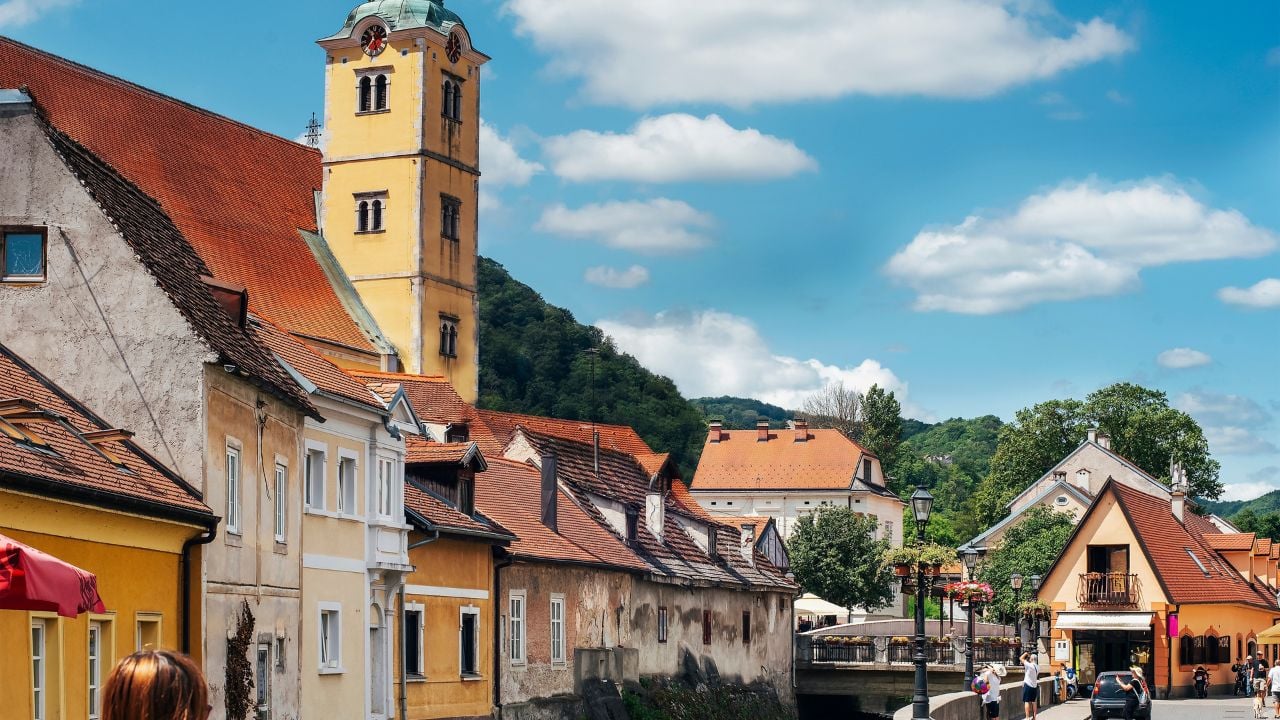
Samobor sits close enough to Zagreb for an easy day out, but the mood changes quickly. The town center is softer than the capital: a main square, low buildings, café terraces, nearby hills, and streets that invite a slow loop rather than a strict sightseeing plan.
The stop has one obvious ritual. Order samoborska kremšnita, the custard slice tied so strongly to the town that Zagreb County tourism presents it among Samobor’s protected food traditions. The cake is simple in the best way: crisp pastry, warm custard, powdered sugar, and the pleasure of eating something in the place that made it famous.
Walk first if you want the dessert to feel earned. Start around the square, follow the small streets, look toward the hills, and sit down when the town begins to slow your pace. Samobor is not a place where the memory has to be a major monument. It may be a pastry fork, a quiet café table, or a short walk that feels far more relaxed than the distance from Zagreb suggests.
Return to Zagreb for the night unless you want a slower northern loop. Dinner back in the capital keeps the logistics easy and gives the itinerary a second evening without moving luggage.
3. Day Three: Go North to Varaždin and Trakošćan Castle
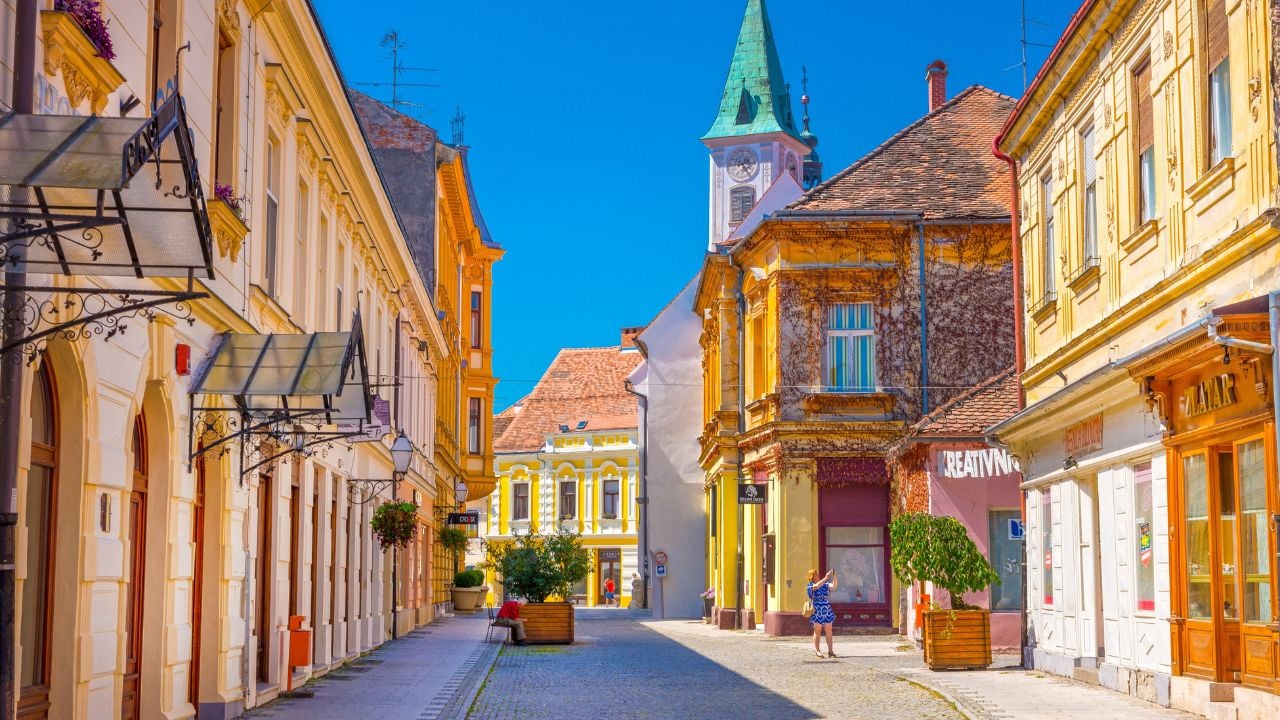
Northern Croatia brings the week into a different register again. Varaždin has baroque façades, tidy squares, park paths, church towers, pastel buildings, and a calmer, more continental elegance than the coastal towns most visitors picture first.
Varaždin County tourism calls Varaždin the Baroque capital of Croatia, and the description makes sense on foot. The old center is not dramatic in the same way as Dubrovnik or Split. Its charm is quieter: painted façades, small museums, music, flowers, bicycle traffic, and café tables that make the morning feel unhurried.
Trakošćan changes the scene from town to storybook landscape. The regional tourism site says Trakošćan Castle was built in the late 13th century as part of northwest Croatia’s defense system. Today, the castle above the lake gives the day a softer kind of drama: water, trees, towers, paths, and reflections rather than sea walls and island views.
Give the castle more than a photo stop. Walk near the lake, tour the museum if it is open, and let the northern landscape feel like a proper chapter of the trip. Return to Zagreb or overnight nearby, depending on how slowly you want the next morning to begin.
4. Day Four: Move Toward Rastoke and Plitvice Lakes

Day four should feel like a move into water and forest. Rastoke, near Slunj, is the right pause before Plitvice because it brings rivers, wooden houses, small falls, mill history, and the sound of moving water before the national park’s larger spectacle.
Stop for lunch or a walk rather than treating Rastoke as a roadside sign. The village works best when you slow down enough to hear the water running below the houses and see how the Slunjčica and Korana shape the place. It softens the transfer day and makes the drive toward Plitvice feel like part of the experience.
Plitvice Lakes National Park deserves a nearby overnight. The official park site says Plitvice is Croatia’s oldest and largest national park, declared the country’s first national park on April 8, 1949. UNESCO inscribed it in 1979, with the tufa formation process at the heart of its natural value.
Go early the next morning if possible, follow marked routes, and do not try to turn every viewpoint into a race. Plitvice is one of the week’s major stops: boardwalks, lakes, waterfalls, forest shade, changing water color, and crowds that are much easier to handle when the day starts calmly.
5. Day Five: Build in One Coastal Night in Zadar

After Zagreb, Samobor, Varaždin, Trakošćan, Rastoke, and Plitvice, Zadar feels like the coast arriving at the right moment. The air changes, the streets turn to pale stone, and the old peninsula gives the week its first full Adriatic evening.
Zadar’s old town has Roman remains, church towers, stone lanes, cafés, and a waterfront that becomes the natural place to end the day. The Sea Organ is the signature stop: Zadar Tourist Board describes it as a sound art object and experimental musical instrument that creates tones using the rolling power of sea waves. Nearby, the Greeting to the Sun adds light to the same waterfront ritual.
Arrive with enough time for sunset. Walk the peninsula, sit near the sea steps, listen to the organ’s low, strange notes, then stay outside as the evening lights come on. This is the coast, but it is not only a beach pause; it has stone, sound, history, and a public waterfront that gives the night a clear memory.
One night works well if the goal is balance. Zadar gives the week its Adriatic chapter without swallowing the inland story that came before it.
6. Day Six: Use Krka and Šibenik for Waterfalls, Stone Streets, and UNESCO History

Krka keeps the water theme alive, but the feeling is different from Zadar. This is river country: waterfalls, reeds, paths, bridges, boat routes, monastery views, and green water moving through limestone rather than open sea.
The official Krka National Park site points visitors toward Skradinski buk, Roški slap, Visovac Island, viewpoints, hiking, biking, boat excursions, and cultural heritage around the Krka River. Choose one focused section instead of trying to cover every locality. Skradinski buk alone can fill enough of the day, especially when summer heat and crowds are part of the equation.
Šibenik is the right city after the park because it returns the trip to stone without losing Dalmatia’s rougher texture. The streets climb, twist, and narrow; laundry hangs above old lanes; cats appear in doorways; and the sea stays close without turning the town into a resort scene.
The Cathedral of St James is the anchor. UNESCO dates it to 1431-1535 and notes its importance as a monument shaped by exchanges between Northern Italy, Dalmatia, and Tuscany in the 15th and 16th centuries. After waterfalls and boardwalks, the cathedral square gives the day a more architectural ending.
7. Day Seven: Finish Inland From Split With Klis or Sinj

The final day should not disappear into airport timing. If the route ends near Split, use the last stretch to see inland Dalmatia from above rather than sitting only on the Riva with luggage.
Klis is the easiest dramatic choice. Split-Dalmatia County tourism describes it as located above Split and notes its defensive fortress. From the heights, Split, the sea, the islands, and the mountains pull into one view, and the route’s final contrast becomes clear: the coast below, the inland stone behind it, and the road that brought you down from the north.
Sinj is the better option if you want the last day to move farther from the coast. The town sits in the Cetina region, surrounded by mountains and tied to traditions such as the Sinjska Alka. It gives the route a final inland note: river country, fields, horses, old stories, and a slower Dalmatian mood than the shoreline towns.
Either choice keeps the ending intentional. Croatia closes here with fortress walls, hills, river valleys, and a reminder that the country is not only the view from the water. The Adriatic is beautiful, but the inland roads are what make this week feel layered.