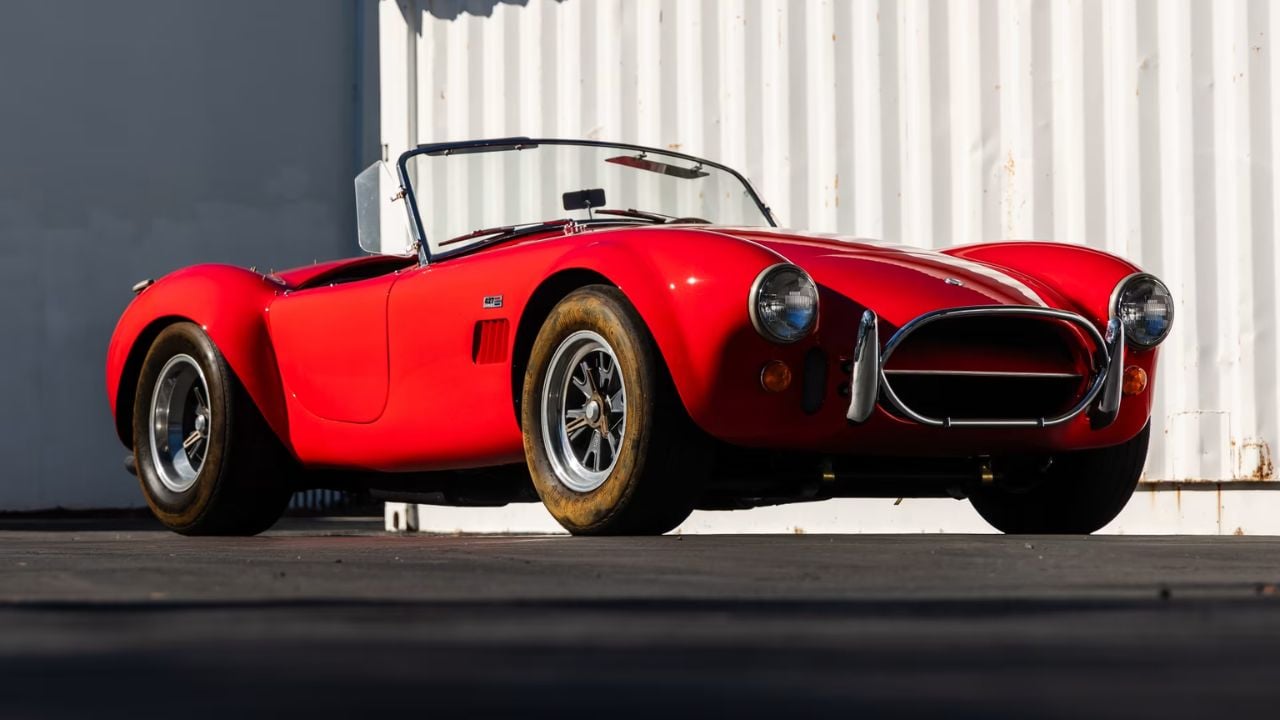
A 1966 Shelby 427 Cobra Roadster is scheduled for auction at Mecum’s Glendale 2026 event on March 21. The car, identified as chassis CSX3355, is part of the limited run of big-block Cobras produced during the mid-1960s muscle-car era.
According to the official Mecum auction listing, the roadster is powered by a 427-cubic-inch side-oiler V-8 paired with a four-speed manual transmission. Mecum notes that the car is one of roughly 260 street-spec 427 Cobra roadsters built during the model’s production run between 1965 and 1967.
Developed during a period when American manufacturers were chasing speed and international racing success, the Cobra combined lightweight British sports-car engineering with large Ford V-8 engines. The result was one of the most recognizable performance cars of the 1960s, and authentic examples remain highly sought after by collectors, according to historical information from the Shelby American Collection.
Big-Block Power and Lightweight Construction
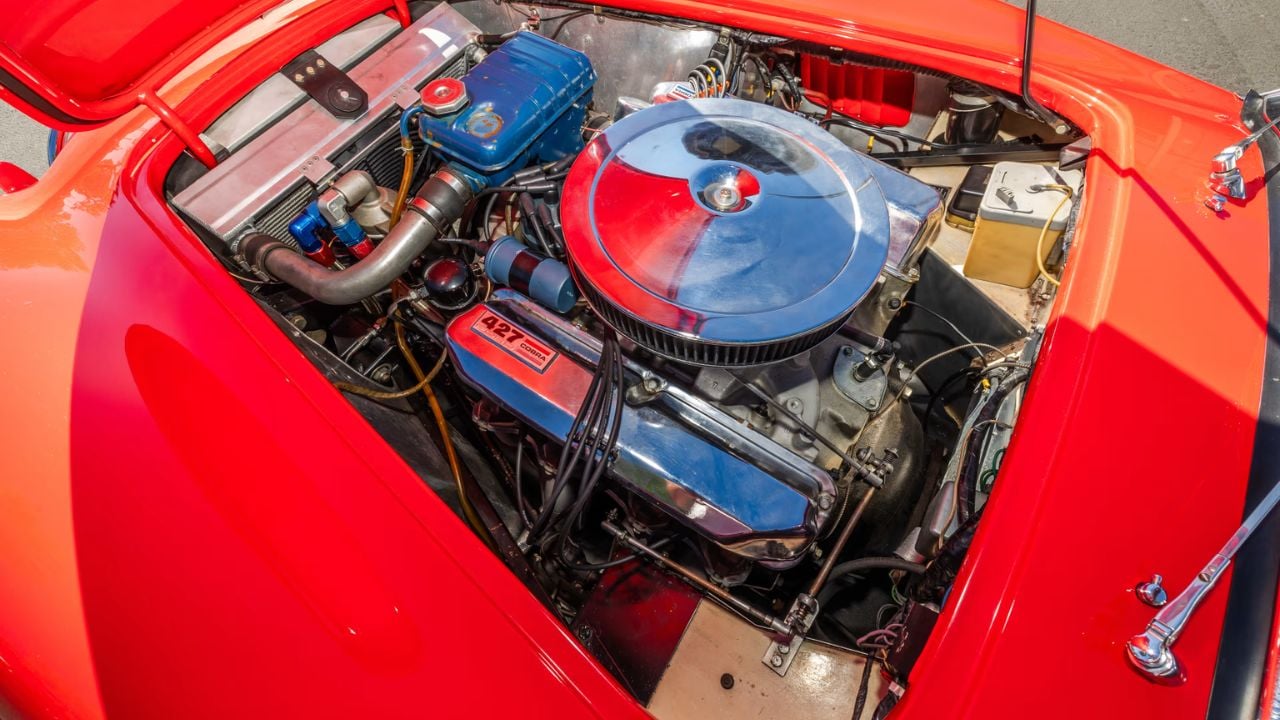
The Cobra’s reputation was built largely on its power-to-weight ratio. Period specifications place the 427 Cobra’s output at about 425 horsepower and roughly 480 lb-ft of torque, depending on engine configuration, figures supported by historical road tests, including a classic Car and Driver review of the model.
With a curb weight generally reported in the 2,300- to 2,400-pound range, testing in the 1960s showed the Cobra capable of accelerating from 0 to 60 mph in the low four-second range and reaching top speeds approaching 165 mph.
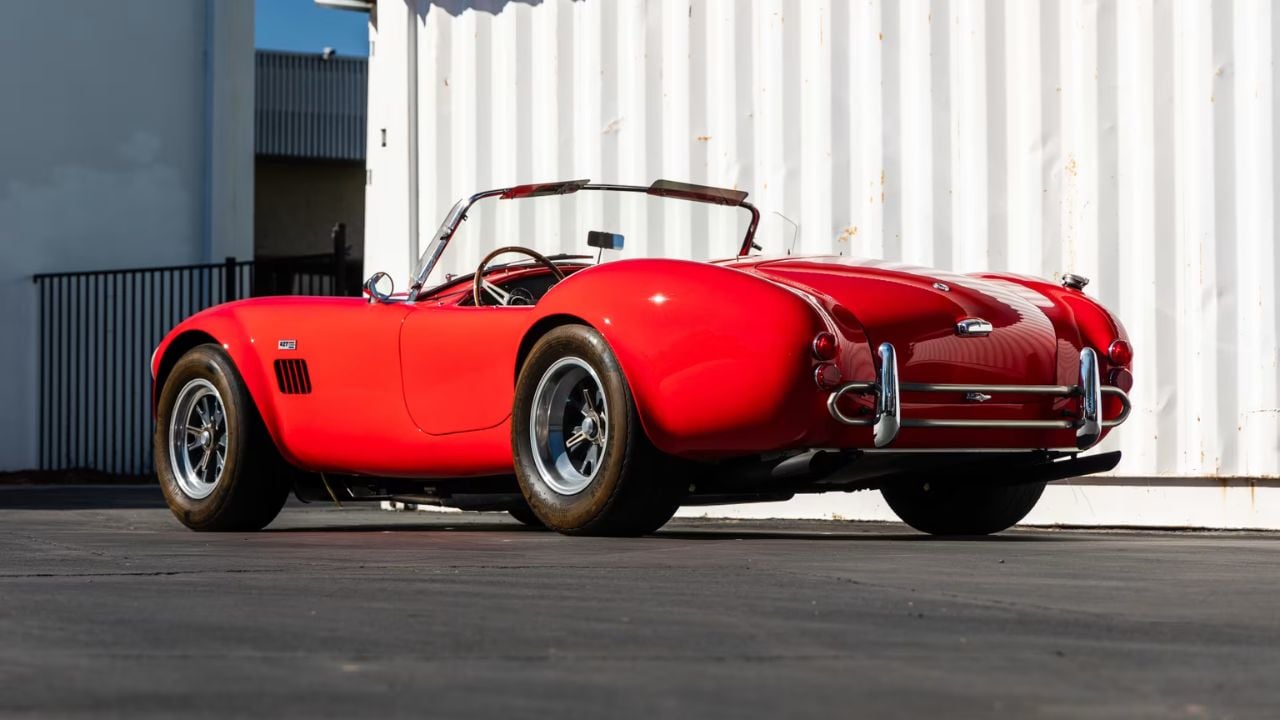
The chassis also played a major role in the car’s performance. Earlier Cobras used a leaf-spring suspension, but the 427 model introduced a redesigned Mark III chassis featuring larger frame tubes and coil-spring suspension on all four corners. Wider fenders and a larger radiator opening were added to accommodate larger tires and increased cooling demands, changes documented by automotive history sources, including the MotorCities National Heritage Area.
These changes transformed the Cobra from a compact sports car into a wider, more aggressive machine capable of handling the immense torque produced by Ford’s big-block engine.
The Origins of the Cobra Legend
The Cobra story began in the early 1960s when American racer and entrepreneur Carroll Shelby sought to create a competitive sports car capable of challenging European manufacturers. Shelby partnered with British automaker AC Cars, which supplied lightweight roadster chassis that were shipped to the United States without engines.
Shelby’s team then installed Ford V-8 engines, creating the original Cobra. Early versions used 260- and 289-cubic-inch small-block engines, but racing competition pushed Shelby to pursue more power.
The result was the Cobra 427, introduced in 1965 with a completely redesigned chassis engineered specifically to handle Ford’s FE big-block engine, according to historical documentation from Shelby American.
Limited Production Drives Collector Demand
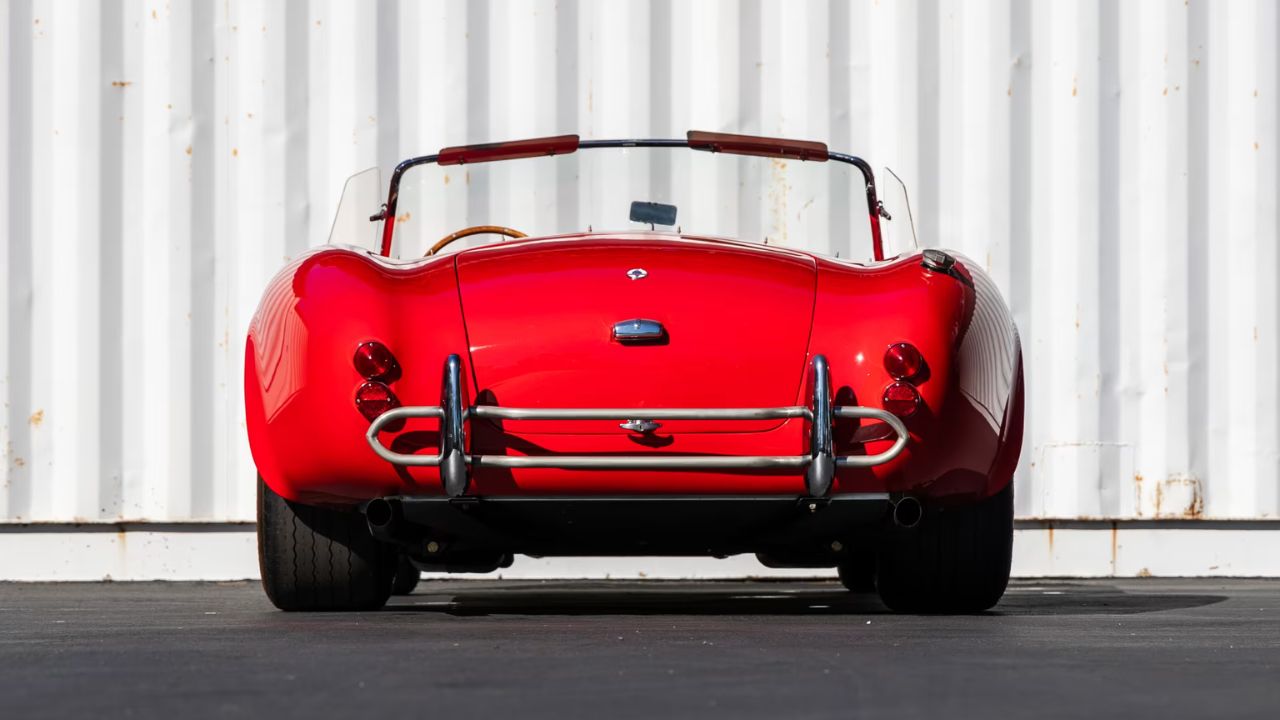
Authentic 427 Cobras are rare machines. Only about 260 street-spec Cobra 427 roadsters were produced between 1965 and 1967, a figure that helps explain their value in the collector-car market.
Cars like this frequently achieve multi-million-dollar sale prices. For example, a similar 1966 Shelby Cobra 427 sold for more than $2.1 million at a Mecum auction in 2024, according to reporting from The Car Guide.
Beyond rarity, the Cobra’s appeal lies in its uncompromising character. With massive power, minimal driver aids, and a lightweight body, the car delivers a driving experience closer to that of a race machine than to a traditional road car. The upcoming Mecum auction offers collectors another opportunity to acquire an authentic example of the legendary big-block Cobra.