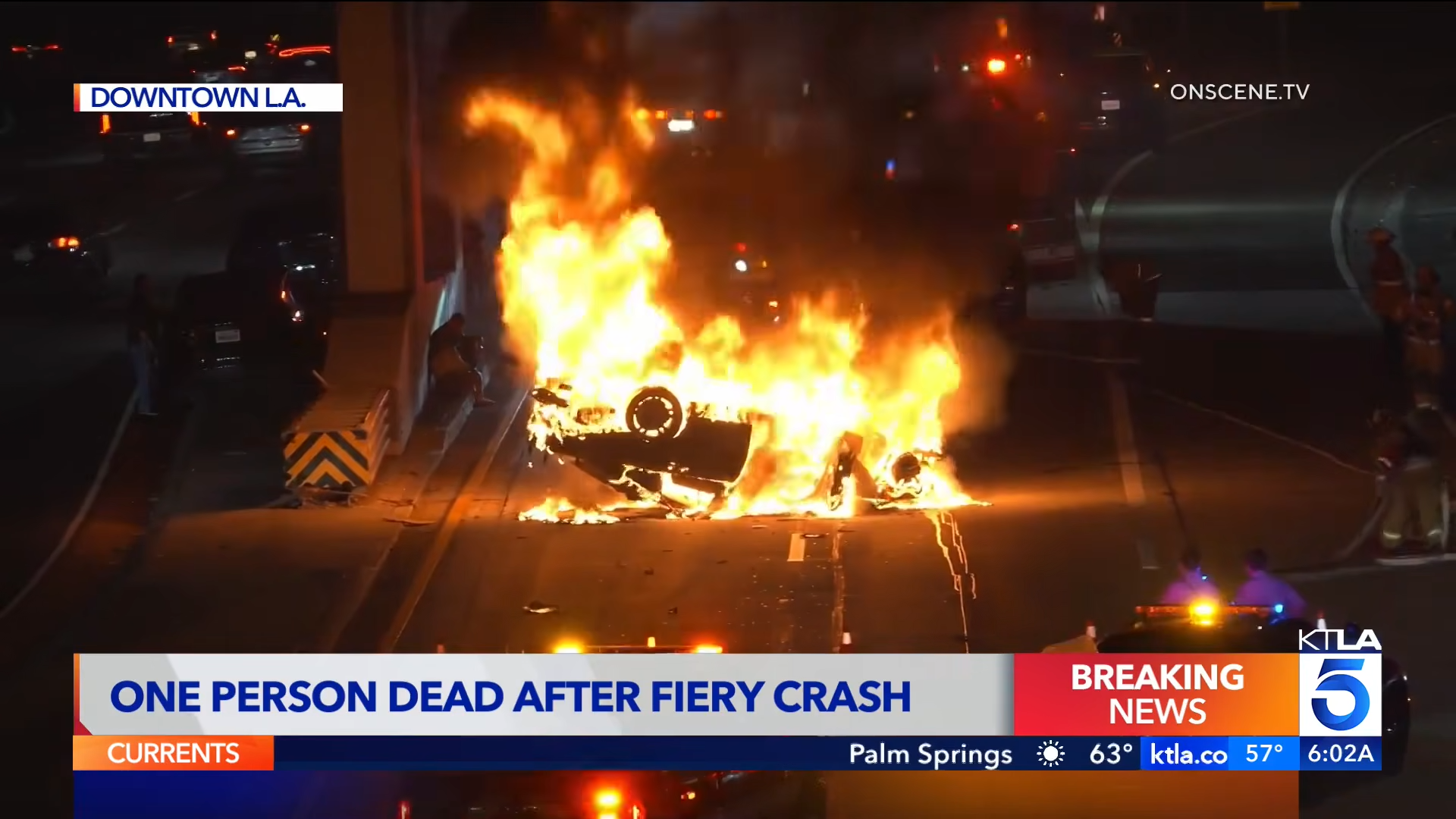
In a city where traffic can feel relentless, Sunday morning brought Los Angeles another stark reminder of how quickly things can go wrong on the 110 Freeway. Shortly before 2 a.m., a three-vehicle collision occurred near the Third Street on-ramp on the northbound side of the freeway. At least one of the vehicles overturned and caught fire.
When Los Angeles Fire Department crews arrived, they found one person dead at the scene. Authorities had not publicly confirmed the victim’s identity or gender at the time of reporting. A woman was transported to a nearby hospital in critical condition. Two other people involved in the crash were evaluated at the scene and did not require hospitalization.
What We Know
The California Highway Patrol confirmed the crash occurred around 1:50 a.m. on the northbound Interstate 110 near the Third Street on-ramp in downtown Los Angeles. The severity of the incident prompted a Sigalert at 2:11 a.m., closing the northbound lanes on West Sixth Street and nearby connectors.
The closure remained in place until roughly 8:30 a.m., disrupting traffic for more than six hours. Even on a Sunday morning, that stretch of freeway is a major route through downtown Los Angeles, and closures there can quickly ripple across surrounding roads.
The 110 Freeway Is One of Los Angeles’ Most Important Corridors
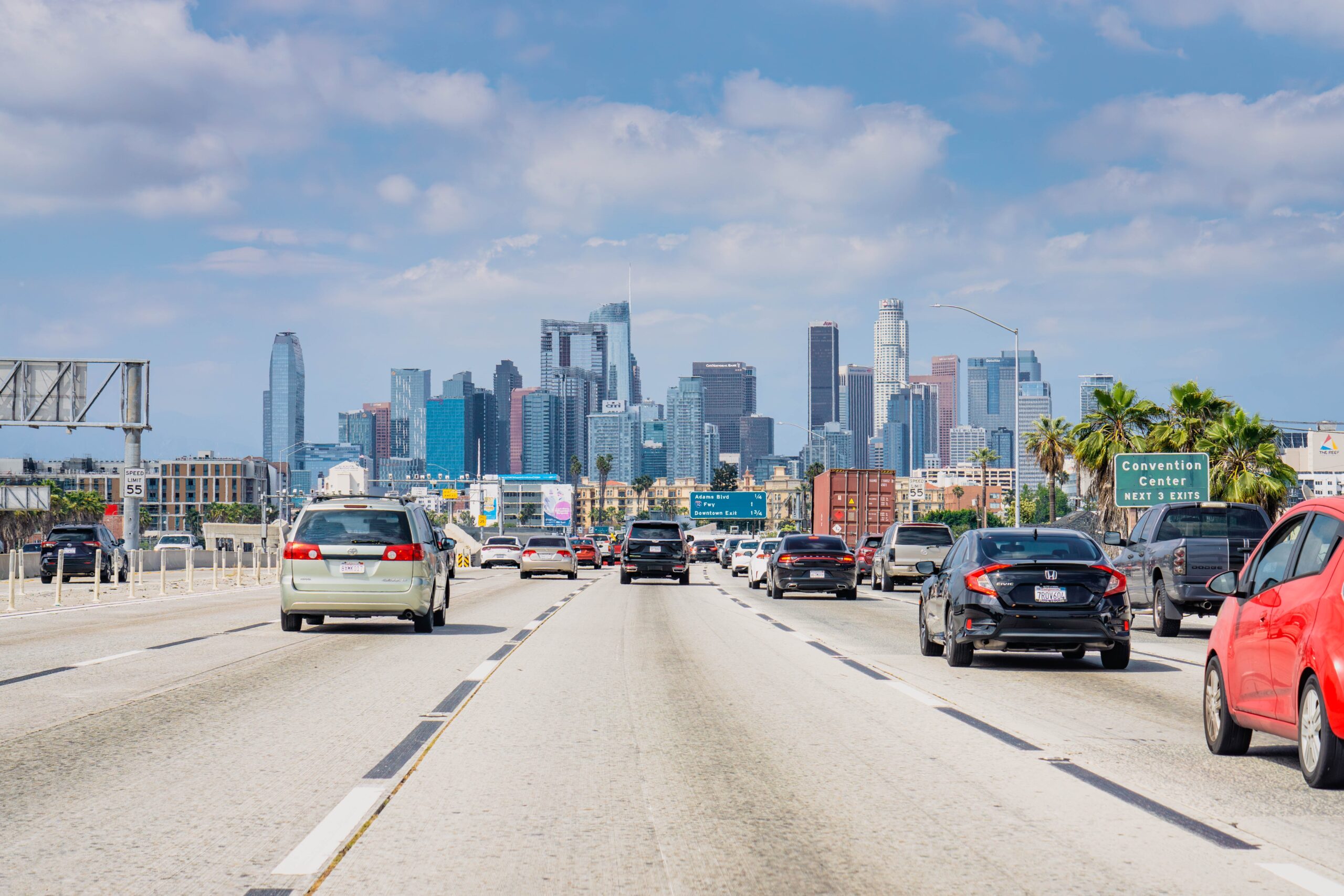
Interstate 110, often called the Harbor Freeway through much of Los Angeles, stretches from the Port of Los Angeles in San Pedro north through downtown before transitioning into the historic Arroyo Seco Parkway toward Pasadena. It serves as one of the region’s primary north–south transportation corridors.
According to data from the California Department of Transportation, portions of the Harbor Freeway carry well over 200,000 vehicles per day. That volume reflects the road’s importance not only for commuters, but also for freight moving between the ports of Los Angeles and Long Beach and the rest of Southern California.
Because the freeway connects several major interchanges, including Interstate 10, U.S. 101, and Interstate 5, the downtown segment functions as a central artery for the entire regional highway network. When a serious crash shuts down lanes along this corridor, the effects often spread quickly through surrounding surface streets and nearby freeways.
A Corridor With a Long Safety History
The downtown portion of Interstate 110 has long been recognized as one of the more complex driving environments in Los Angeles County. Closely spaced on-ramps, heavy merging traffic, and multiple freeway connectors create a situation where drivers often have to make quick lane decisions.
Research from the Los Angeles data outlet Crosstown has found that segments of I-110 North between I-105 and U.S. 101 rank among the most collision-prone freeway corridors in the county, with roughly 162 reported crashes per mile in some sections.
Part of that risk comes from the freeway’s layout. In several areas through downtown, the roadway splits into parallel sections that separate through traffic from vehicles entering or exiting the freeway. While the system helps manage traffic flow, it also requires drivers to anticipate merges and lane changes earlier than they might on a more traditional highway.
The Third Street area, where Sunday’s crash occurred, sits within one of these transition zones. Drivers entering from surface streets must merge quickly into fast-moving freeway traffic while other drivers are simultaneously positioning themselves for downtown exits.
Late-Night Driving Can Carry Different Risks
Crashes during overnight hours can pose different safety challenges than daytime collisions.
Traffic volumes are lower, which often allows vehicles to travel at higher speeds. At the same time, visibility is reduced, and drivers may encounter fatigue or impairment after late-night activities.
Transportation safety researchers have also found that a higher share of serious or fatal crashes tends to occur during overnight hours, even though the total number of vehicles on the road is lower.
When those factors combine with a dense urban freeway environment like downtown Los Angeles, a single mistake or sudden maneuver can quickly escalate into a multi-vehicle incident.
Traffic in Los Angeles Never Fully Stops
The Harbor Freeway connects several major destinations across the region, including the Port of Los Angeles, the University of Southern California, the Los Angeles Convention Center, and multiple downtown business districts.
North of downtown, the route transitions into the Arroyo Seco Parkway, one of the oldest freeways in the United States and a designated National Historic Landmark. Opened in 1940, the parkway still reflects design standards from an earlier era of highway construction, including shorter acceleration lanes and tighter curves than modern interstates typically use.
While the crash site itself lies on the more modern portion of the freeway, the broader route continues to carry enormous traffic demand from commuters, freight vehicles, rideshare drivers, and visitors moving across the region.
Looking Ahead
The investigation into the crash remains ongoing. CHP has not yet released the identities of those involved or a confirmed cause of the collision. The woman transported in critical condition had not been publicly identified at the time of reporting.
For the millions of drivers who rely on the 110 every week, incidents like this highlight how quickly conditions on a busy urban freeway can change. Even experienced drivers navigating familiar routes must remain alert, especially in dense corridors where merging traffic, high speeds, and heavy volumes intersect.