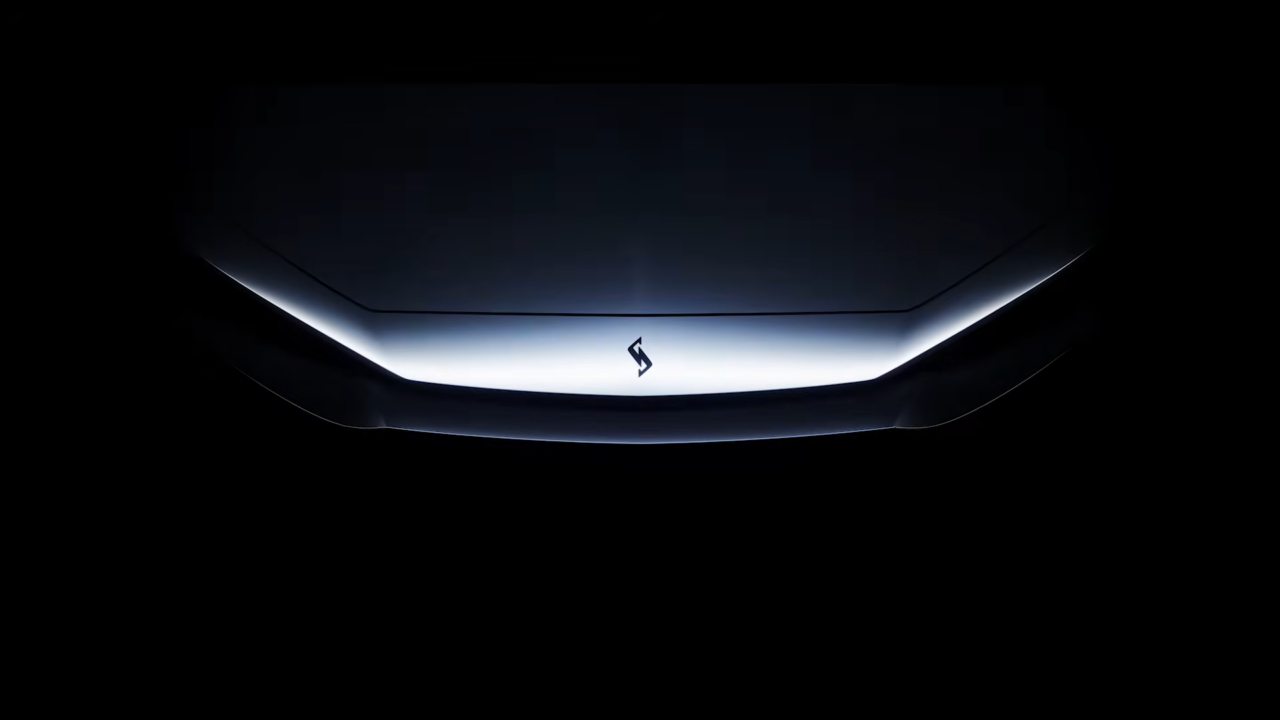
Nissan is shaking up its entire global strategy, cutting dozens of models, going all-in on hybrids, and somehow managed to bury the biggest news of all: the legendary Skyline nameplate is finally coming back. After 14 years of silence, one of the most iconic names in automotive history is returning, and car enthusiasts everywhere are losing their minds over a few blurry teaser photos.
But if you’re reading this from the United States, go ahead and start managing your expectations right now. The new Skyline is not coming here. Again. Just like its predecessor, this one is Japan-first, Japan-mostly, and probably Japan-only. It’s the kind of news that gives with one hand and waves goodbye with the other.
That said, there’s actually a lot more to this announcement than just a tease of a car most Americans can’t buy. Nissan unveiled an entirely new long-term vision called “Mobility Intelligence for Everyday Life,” and it touches everything from how many models the company will sell globally to what kind of engines will power them. It’s a sweeping overhaul from a brand that has been fighting to stay relevant in a market that has not been kind to it lately.
So what exactly did Nissan announce, what does it mean for drivers in the US, and is there any silver lining hiding in here for people who really, really want a new GT-R? Let’s break it all down.
The Skyline Is Back, and It Looks Mean
Nissan officially confirmed the V38 Skyline, the first new Skyline in 14 years. The company describes it as “a heartbeat model for Japan,” which in corporate speak means it’s the kind of car that makes people feel something again. Performance, precision, driver focus. All the words that make enthusiasts perk up.
The teaser images are not exactly generous. They’re blurry, shadowed, and clearly designed to make you lean into your screen. But what you can make out is promising: aggressive front styling, sharp lines, and a set of taillights at the rear that look unmistakably GT-R-inspired. The Skyline S badge is also visible, which is a meaningful detail.
Here’s the important nuance though: a new Skyline does not automatically mean a new GT-R. The GT-R has been its own standalone vehicle for years, completely separate from the Skyline family tree. It’s entirely possible this new model stays a performance sedan rather than evolving into something track-ready. We just don’t know yet, and Nissan is clearly in no rush to tell us.
Nissan Is Cutting 16 Models and Reshuffling the Whole Deck
The Skyline is the shiny object, but the bigger story is what Nissan is doing to its global product portfolio. Right now, the company sells 61 different vehicle models worldwide. That number is getting cut down to 45. That’s 16 models that will quietly disappear as Nissan redirects its development budget toward things that actually sell.
Going forward, every Nissan model will fall into one of four categories. Heartbeat models are the identity cars, the ones that define the brand image. Core models are the steady sales drivers like the Rogue. Growth models target expanding markets and new demand, like a Juke EV planned for Europe. Partner models are vehicles built in collaboration with companies like Renault.
The goal behind all of this is smarter spending. Instead of developing each car in isolation, Nissan plans to share platforms, powertrains, and software across models. Three core product families will account for more than 80% of global sales. Each model is expected to push 30% more sales volume than before. It’s a leaner, more focused company by design.
Hybrids Are In, Pure EVs Are Taking a Back Seat
If you expected Nissan to double down on electric vehicles after the success of the Leaf and the legacy of the brand being one of the earliest mainstream EV adopters, the new strategy might surprise you. The company is pivoting hard toward hybrids rather than full electrics in most markets.
For the US specifically, that means a new Rogue hybrid is coming, along with a return of the Xterra and new V6 and V6 hybrid options across its body-on-frame lineup. Nissan is also eyeing V6 powertrains for the D-segment, which includes the Rogue. Infiniti is getting three new models by 2028, and one of them could be a rear-wheel-drive manual V6 sports sedan, which sounds a lot like an American version of that new Skyline.
China is the exception, where Nissan plans to expand EV and PHEV offerings and use those vehicles as export platforms for the rest of Asia and Latin America. So the electrification push is still happening, just not evenly distributed across all markets.
Nissan also announced AI-powered driver assistance technology, called AI Drive, will be added to 90% of its lineup. The first vehicle to get it will be the Elgrand van in Japan this summer, with more advanced ProPilot autonomous features rolling out by the end of fiscal 2027.
What This Tells Us About Where the Auto Industry Is Heading
Nissan’s announcement is actually a pretty useful window into what the broader auto industry is wrestling with right now. The original EV rush that swept through every major automaker between 2020 and 2023 has cooled considerably. Hybrids are winning in the near term because they meet customers where they are rather than asking them to change their habits entirely.
The model-count reduction is also telling. Bloated lineups spread development resources thin and confuse buyers. Focused portfolios with fewer, better models have historically outperformed the “something for everyone” approach, and several automakers are learning that lesson at the same time.
The Skyline revival is a reminder that heritage and emotion still matter, even in a world obsessed with technology specs. People connect with nameplates that have history. Bringing back the Skyline, even as a Japan-only product, sends a signal about what kind of company Nissan wants to be again. Not just a utility appliance maker, but a brand that produces cars people actually care about.
Whether the full plan works is another question. Nissan said it wants to hit one million US sales by 2030, a number it has not reached since 2019. That’s ambitious but not outrageous, especially if the new Rogue hybrid lands well and Infiniti gets a genuine boost. More details on the full strategy and, hopefully, a clearer look at the Skyline are expected later this year.