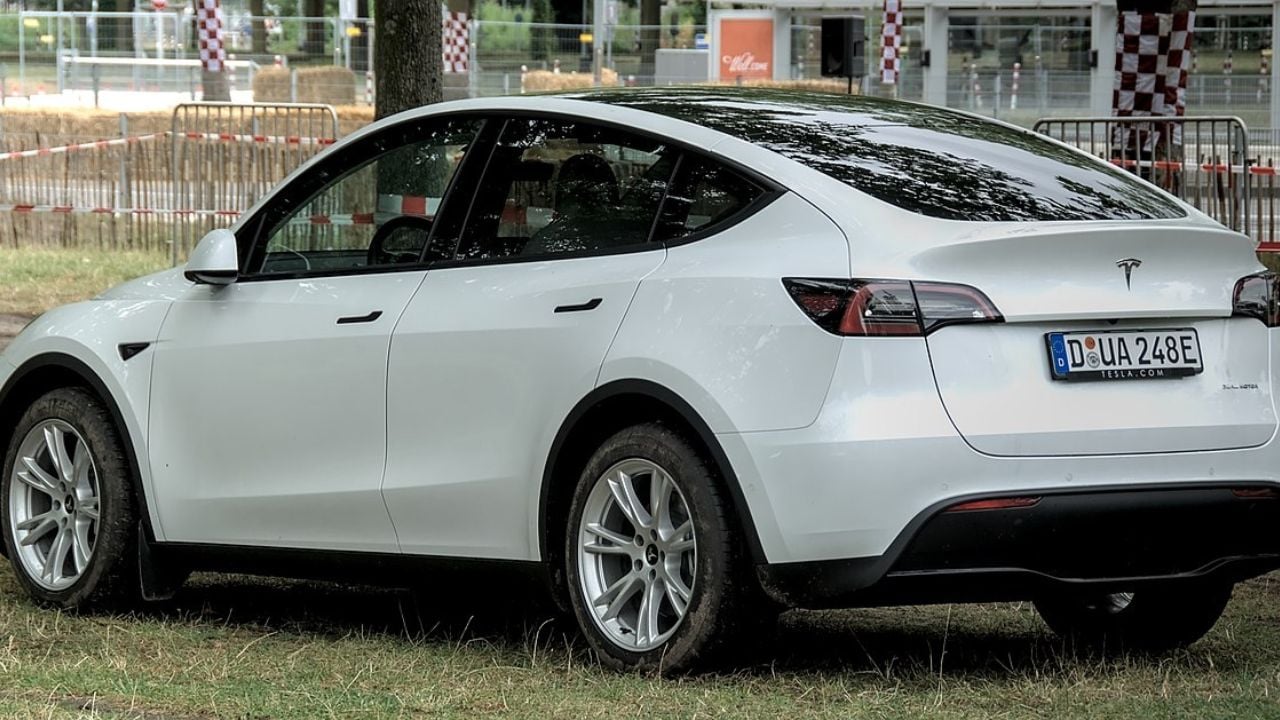

A disturbing clip making the round on social media just added a couple more logs to the fire of debate over autonomous vehicle safety. The clip shows a Tesla on Full Self-Driving mode appearing to steer its owner directly toward a lake, prompting shock, alarm, and fierce scrutiny online.
The video, posted to X by Tesla owner Daniel Milligan, quickly surpassed 1.2 million views as social media users watched in disbelief while the sedan’s steering guided it perilously close to the water’s edge.
The moment was captured clearly enough to raise urgent questions about how far autonomous driving technology has actually come and whether it belongs on public roads without far tighter controls.
A Boat Ramp Mistaken for a Road
The car, running the latest version at the time (FSD v14.2.2.4, build 2025.45.9.1), steered right onto what appeared to be a boat ramp and continued accelerating directly toward a lake at around 10 mph at night. Milligan had to intervene by braking and taking control, as shown when the “self-driving” indicator disappeared.
My Tesla tried to drive me into a lake today! FSD version 14.2.2.4 (2025.45.9.1)@Tesla @aelluswamy pic.twitter.com/ykWZFjUm8k
— Daniel Milligan (@lilmill2000) February 16, 2026
He posted the experience on X with the caption: “My Tesla tried to drive me into a lake today!” tagging Tesla and Ashok Elluswamy (Tesla’s head of Autopilot AI). The original post (from around February 15-16, 2026) quickly went viral, amassing over 1-1.5 million views, thousands of likes, and widespread reposts/discussion.
It has fueled renewed criticism of Tesla’s FSD safety, especially since Elon Musk has long promoted it as nearing unsupervised capability, yet incidents like this highlight persistent edge-case failures (e.g., misinterpreting a boat ramp as a drivable path).
While related reposts and discussions (e.g., by critics like Dan O’Dowd of The Dawn Project) amplified the issue further, often with embedded clips from the same incident, no reports indicate the car actually entered the water.
The driver intervened in time, but the near-miss underscores ongoing concerns about vision-only systems confusing reflective surfaces or unconventional paths. A big bonus point for Waymo’s multi-sensor suite (lidar, radar, and cameras) system.
A Troubling Pattern of FSD Failures
Part 2 with me re-creating the issue and showing my POV
https://t.co/BAmI4lCQT0— Daniel Milligan (@lilmill2000) February 17, 2026
The dramatic footage shows the Tesla gliding along a road with no human intervention beyond initial activation of the automaker’s so-called Full Self-Driving (FSD) system. Instead of maintaining a safe course, the vehicle’s path curved toward the lake, prompting its owner to intervene before what could have been a catastrophic plunge.
Tesla’s FSD version (2025.45.9.1) linked to the incident was one of the latest software iterations rolling out to Tesla’s fleet earlier this year. Despite being marketed as polished and fine-tuned, this particular build did not have new release notes that suggested significant changes from its immediate predecessor.
Tesla had touted improvements to neural network vision resolution and better handling of emergency vehicles, yet this incident shows such upgrades are far from foolproof.
The lake near-miss isn’t an isolated affair, either. Safety analysts and critics have spotlighted a string of frightening FSD failures over the past year. In May 2025, another Tesla on FSD abruptly veered off a road and flipped upside down, leaving the driver shaken and injured in a crash they said they couldn’t prevent.
Several months later in December, a Tesla being livestreamed while testing FSD in China caused a head-on collision after initiating a lane change directly into oncoming traffic. Two Tesla influencers embarking on a coast-to-coast FSD demonstration couldn’t even make it out of California before crashing into roadside debris.
Just tried it again during the day (same direction and destination) and it completely skipped the boat ramp.
My guess is that it could actually see the driveway up ahead in the daytime or could more clearly see the lake
— Daniel Milligan (@lilmill2000) February 16, 2026
These patterns have not escaped the attention of regulators. In October 2025, the U.S. National Highway Traffic Safety Administration (NHTSA) opened an expansive investigation into nearly 2.9 million Tesla vehicles in the United States, linking 58 incidents to FSD that included 14 crashes and 23 injuries.
Investigators are particularly troubled by instances of running red lights and straying into opposing traffic, basic failures that call into question the maturity of current autonomous driving systems.
Beyond that, NHTSA has separately opened a probe into Tesla’s reporting practices, alleging that the automaker failed to consistently report Autopilot and FSD crashes to authorities in a timely manner. Across all Tesla driver assistance systems—including Autopilot and FSD—more than 50 deaths have been connected to crashes over recent years.
The Shifting Landscape of Tesla’s FSD Strategy
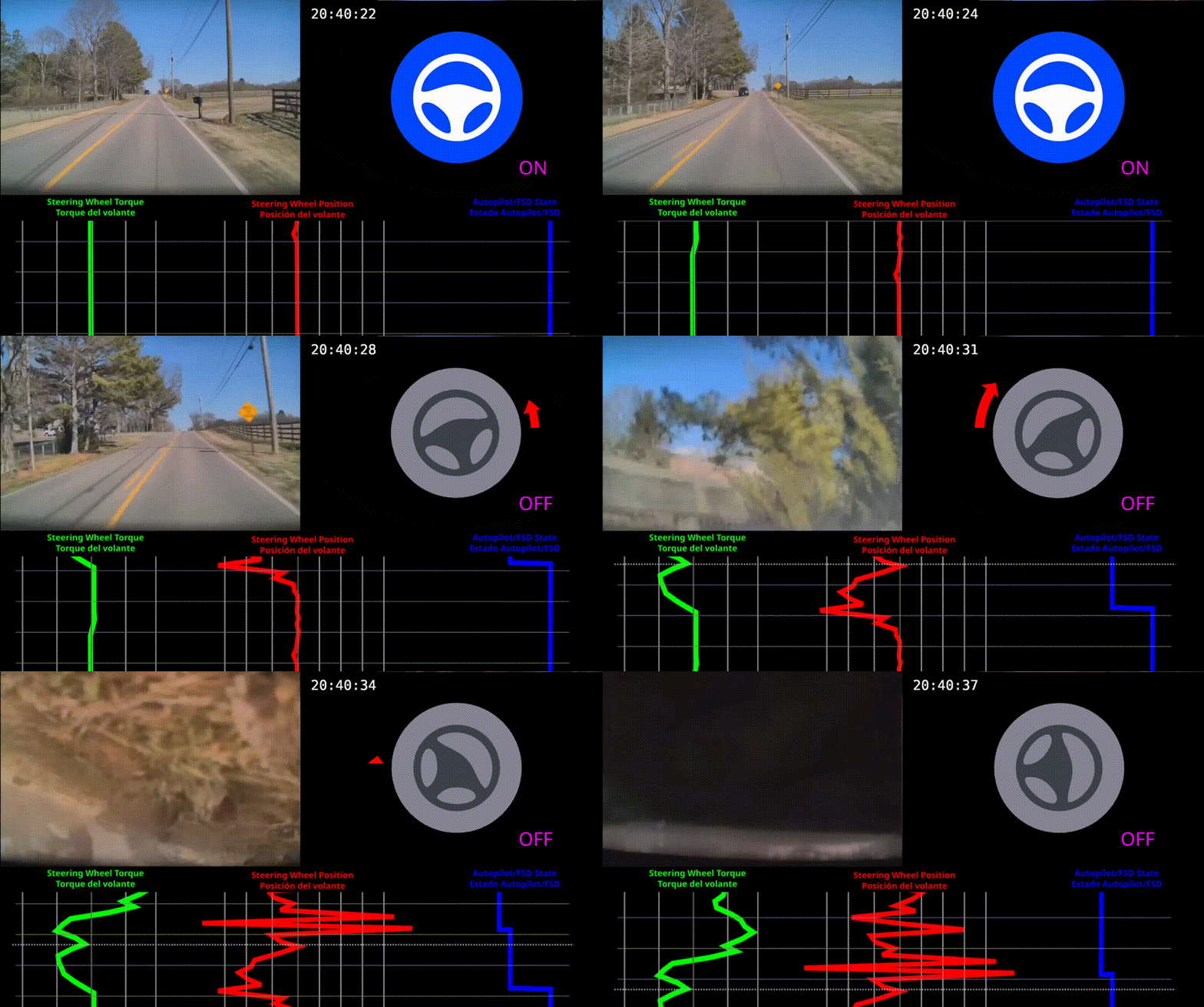
Tesla’s strategy in recent months has also shifted in a way that reflects shifting expectations. Rather than selling Full Self-Driving as a one-time purchase, the company now offers it on a $99 monthly subscription basis, effectively admitting that the software is still evolving and that consumers are paying for ongoing access to a system not yet capable of true autonomous operation.
The implication of this rebranding is that the technology remains experimental and that the name “Full Self-Driving” itself may be misleading given the limitations and risks that continue to surface.
For drivers like Milligan, the lake incident shows that current self-driving technology—no matter how advanced it may seem—still requires an attentive human behind the wheel, ready to act at a moment’s notice.
In the aftermath of this viral video, voices on social media and within regulatory circles are calling for clearer warnings, stricter oversight, and a reassessment of just how autonomous these systems should be before widespread deployment.