Germany wears its history openly. In its medieval towns, time doesn’t just linger, it breathes. Cobbled lanes twist past gabled houses, stone towers rise above red rooftops, and the scent of fresh bread drifts from bakeries that have stood for centuries.
Each town here tells a story, of trade and faith, music and craft, resilience and beauty. They survived wars, fires, and time itself, yet their spirit remains unbroken. Today, they invite you to slow down, wander without direction, and feel the heartbeat of the Old World beneath your feet.
From fairytale hamlets on rivers to walled cities frozen in time, these are Germany’s 14 most beautiful medieval towns, places where every step feels like turning a page in a living storybook.
Rothenburg ob der Tauber — The Fairytale That Never Ends
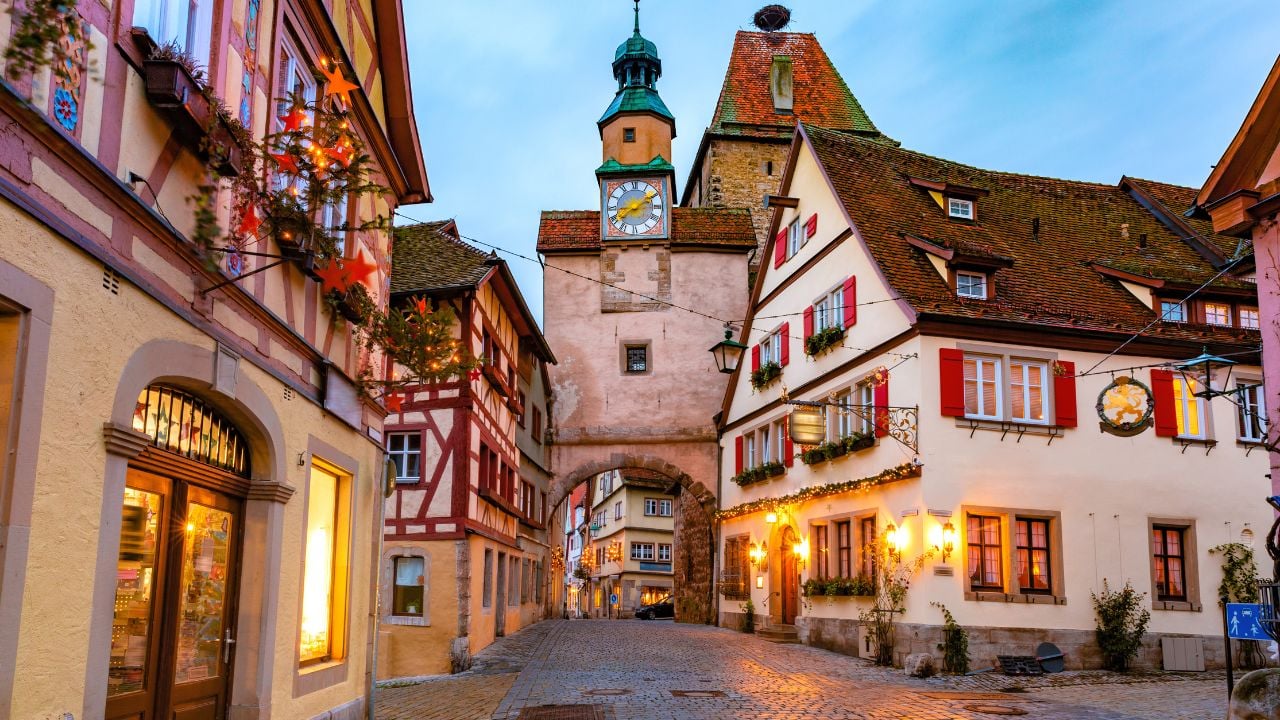
Rothenburg ob der Tauber isn’t just beautiful, it’s cinematic. Perched above the Tauber River in Bavaria, it’s a vision of medieval perfection: timbered houses painted in soft pastels, towers and turrets piercing the sky, and walls that still encircle the entire old town.
Walk through the Plönlein, that iconic yellow house framed by twin towers, and you’ll feel like you’ve stepped into a Brothers Grimm tale. The cobblestones echo with carriage wheels, the air smells of roasted nuts and mulled wine, and shop windows glow with handmade toys and Christmas ornaments.
At sunset, climb the old walls and watch the rooftops burn gold against a violet sky. When the town quiets and lanterns flicker in the alleys, Rothenburg feels eternal, a story that never really ends.
Quedlinburg — Half-Timbered Harmony

Quedlinburg, tucked in the Harz Mountains, is a masterpiece of preservation. With over 1,300 half-timbered houses spanning eight centuries, it feels like time stopped just to admire itself. The streets curve softly, lined with façades in green, ochre, and cream, each one slightly crooked, perfectly imperfect.
The Collegiate Church of St. Servatius, high on its sandstone hill, watches over it all, a symbol of the town’s ancient power and grace. Below, flower boxes spill color from windows, and local craftsmen sell woodcarvings, honey, and candles in tiny shops.
Walking Quedlinburg is like leafing through a medieval manuscript, intricate, warm, and full of quiet life.
Goslar — The Emperor’s Mountain Jewel

Nestled at the foot of the Harz Mountains, Goslar once glittered with imperial wealth. Founded on silver mining, it became one of the richest cities of the Holy Roman Empire, and today, that splendor still shines in its streets and squares.
The Kaiserpfalz, the Emperor’s Palace, rises like a stone poem above the town, its Romanesque halls echoing with history. Down below, the Market Square bustles with fountains, spires, and the melodic chime of the clock tower’s figurines reenacting centuries-old scenes.
Goslar’s magic lies in its mix of power and peace, a place where grand cathedrals and humble timbered houses coexist in perfect harmony, wrapped in mountain air and memory.
Dinkelsbühl — Bavaria’s Hidden Gem

Dinkelsbühl feels like Rothenburg’s quieter sister, just as beautiful, but softer, sleepier, less discovered. Its medieval walls still stand unbroken, and inside them, life flows gently between towers and tiled roofs that haven’t changed much in 500 years.
The Weinmarkt square bursts with color, red, yellow, and orange facades glowing in the afternoon sun. Locals sip wine at outdoor tables, children chase pigeons past Gothic fountains, and the sound of church bells floats through the air.
Each July, the town reenacts its rescue from Swedish troops during the Thirty Years’ War in the Kinderzeche Festival, a pageant of music, costumes, and joy that feels like stepping into the past.
Dinkelsbühl is a secret best discovered slowly, one step, one sigh, one cobblestone at a time.
Bamberg — The Seven-Hilled Wonder

Built across seven hills and divided by rivers and bridges, Bamberg is often called the “Franconian Rome.” Its old town, a UNESCO World Heritage site, is a tapestry of Gothic spires, Baroque palaces, and narrow alleys leading to the water’s edge.
The Altes Rathaus, the Old Town Hall, sits dramatically in the middle of the river, its half-timbered walls perched on stone arches above the current. Nearby, the Bamberg Cathedral looms proudly, and the scent of smoked beer drifts from traditional breweries that have perfected their craft over centuries.
At night, the reflections of bridges and lanterns shimmer in the water, and Bamberg feels suspended between heaven and earth, part dream, part devotion.
Monschau — The Town by the River Bend

Hidden deep in the Eifel hills near Belgium, Monschau is the kind of place that feels painted rather than built. The Rur River winds through it, hugged by rows of timbered houses that lean close as if whispering old secrets.
Stroll along the cobbled lanes to the Red House, once home to wealthy cloth merchants, or climb to the castle ruins for views that look like a postcard come alive. The air smells of wood smoke and waffles, and time moves gently here, measured not by clocks, but by the sound of the river.
Monschau’s charm lies in its simplicity. It’s not trying to impress you, it just exists beautifully.
Meersburg — The Castle Above the Lake

Perched high above Lake Constance, Meersburg feels like a storybook drawn in sunlight and water. Its medieval upper town, crowned by one of Germany’s oldest inhabited castles, cascades down toward vineyards and the shimmering lake below.
Walk through the Steigstraße, where flowered balconies lean over stone steps, and pause at a terrace café for a glass of crisp Riesling. The Old Castle looms above, its wooden galleries and knights’ halls echoing with tales of poets and princes.
From the promenade by the lake, the view stretches across to Switzerland, sailboats drifting, mountains rising in the haze. Meersburg is both regal and intimate, caught between history and horizon.
Wernigerode — The Harz in Color

They call Wernigerode “the colorful town in the Harz,” and one glance explains why. Every house seems painted in a different hue, their timber beams outlined like strokes on a canvas. The Town Hall, with its pointed towers and half-timbered façade, looks straight out of a fairytale.
Climb up to Wernigerode Castle, perched above the town, where views stretch across forests and red roofs. The narrow streets below are filled with the smell of pretzels, pine, and mountain wind.
Wernigerode feels cheerful, alive, yet deeply old, a blend of medieval whimsy and alpine calm that you’ll never forget.
Regensburg — Stone and River

Regensburg is one of Germany’s oldest cities, where Roman ruins still sleep beneath medieval streets. The Stone Bridge, built in the 12th century, arches elegantly over the Danube, leading to a maze of Gothic spires, pastel façades, and cobblestones that have seen a thousand years of footsteps.
The Cathedral of St. Peter dominates the skyline, its twin towers soaring above the rooftops, while riverside beer gardens offer shade, music, and the scent of grilled sausages drifting through the summer air.
In Regensburg, the medieval world isn’t a memory, it’s the foundation of daily life, alive in every window and worn doorstep.
Lindau — The Island of Light

Floating like a gem on Lake Constance, Lindau feels half-real, half-dream. Its medieval old town sits on an island connected by a single bridge, surrounded by water that mirrors the Alps beyond.
The Harbor Entrance, guarded by a Bavarian lion and a lighthouse, is one of the most iconic views in Germany. Behind it, narrow lanes twist past old merchant houses, arcades, and hidden courtyards filled with ivy and laughter.
As evening falls, the lake turns silver, and the lights of Lindau shimmer like reflections of the stars. Walking here feels like gliding, peaceful, infinite.
Celle — The Baroque Pearl of Lower Saxony

Celle is a feast of half-timbered architecture, over 400 perfectly preserved houses painted in shades of red, white, and green. The streets hum softly with life: bicycles rolling by, fountains trickling, the scent of pastries from centuries-old bakeries.
The Celle Palace adds a touch of grandeur, a mix of Renaissance and Baroque styles surrounded by manicured gardens. Yet even in its elegance, Celle feels grounded, human, real.
As dusk falls, the timbered façades glow warmly, and you realize why walking here feels like wandering through a living museum of light and craft.
Heidelberg — Romance on the Neckar

Heidelberg’s beauty is the kind that stays with you. Its castle ruins, wrapped in ivy, overlook a river crossed by ancient bridges and framed by hills that blush pink at sunset. It’s a town of poets, students, and dreamers, medieval at heart, timeless in spirit.
Stroll the Hauptstraße, one of Europe’s longest pedestrian streets, lined with bookstores, cafés, and Baroque façades. Then climb to Heidelberg Castle, where the view of red rooftops and the Neckar River will stop you cold.
Heidelberg isn’t just beautiful, it’s emotional, the kind of place that makes you fall in love with travel all over again.
Tübingen — Youth in an Old Soul

Tübingen hums with energy, a university town that somehow balances youthful spirit with medieval grace. The Neckar River flows past colorful gabled houses, and punts drift lazily under stone bridges as students read poetry or strum guitars on the embankment.
The old town rises in a tangle of narrow lanes leading to the Hohentübingen Castle, whose courtyard offers views over rooftops and treetops. Markets spill through the squares, filled with the scent of bread, flowers, and conversation.
Tübingen proves that medieval doesn’t mean frozen in time, it means alive, evolving, endlessly beautiful.
Lübeck — Queen of the Hanseatic League

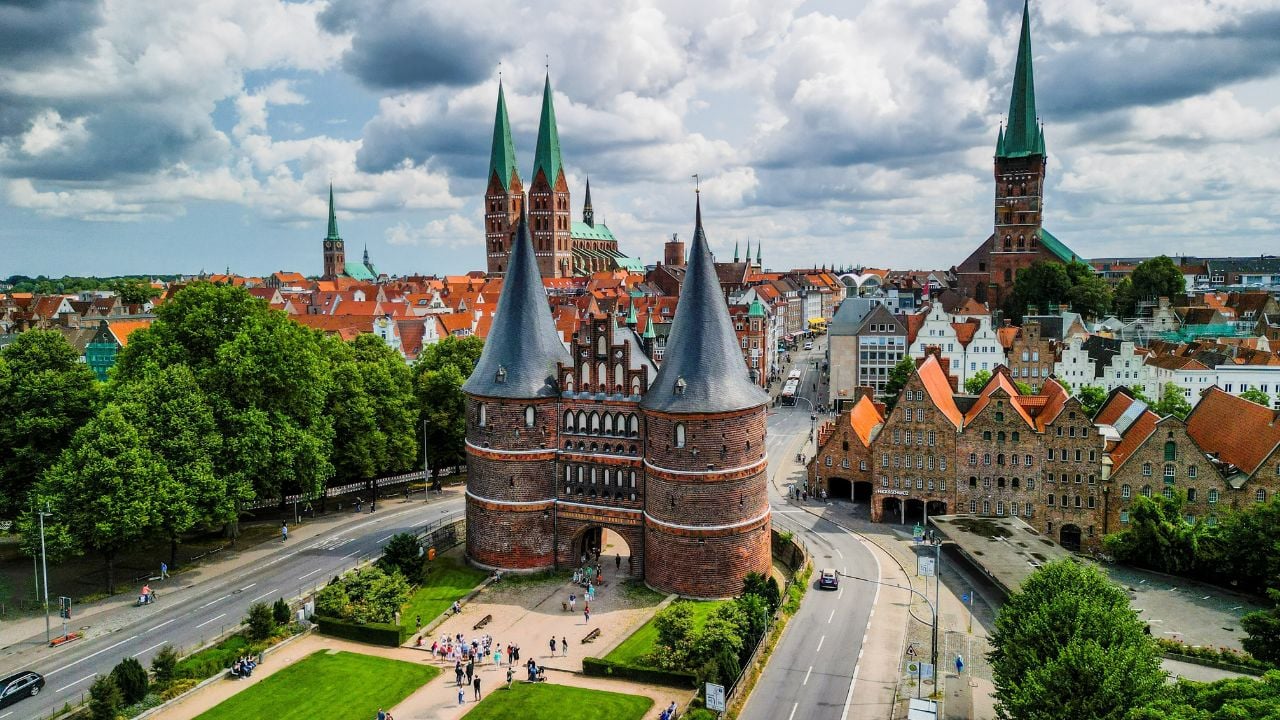
Lübeck is pure northern majesty, a city of spires and ships, salt and trade, once the capital of the Hanseatic League. Its red-brick Gothic architecture glows like embers at sunset, especially the Holstentor, the twin-towered gate that guards the old town like a crown.
Inside the walls, narrow alleys reveal secret courtyards, marzipan shops, and echoes of sailors’ songs. The Marienkirche soars above it all, its bells tolling over a skyline that hasn’t changed in centuries.
By the river, the air smells of the Baltic, briny, cold, eternal. Lübeck doesn’t whisper history; it sings it.