
From the sculpted profile of a closed-roof coupe to the wind-in-your-hair thrill of a convertible, today’s sports car hardtops deliver both worlds at the press of a button. In this roundup, we spotlight modern models that marry precision-engineered retractable roofs with aggressive styling and spine-tingling performance.
Read on to discover how these hardtop convertibles redefine driving excitement without sacrificing design integrity.
Mercedes SLK-Class

Mercedes-Benz introduced the first-gen SLK in 1996, and by the time its successor was introduced in 2004, over 300,000 units had been sold, as reported by Mercedes Heritage. The original SLK was one of the sports cars that pioneered the folding metal roof, or Vario Roof, of the modern era.
The early AMG model was the SLK 32 AMG, powered by a supercharged 3.2-liter V6 (349 hp). The second-generation SLK 55 AMG used a 5.4-liter V8 (355 hp), and the third-generation SLK 55 AMG arrived with a 5.5-liter V8 making over 400 hp.
Chevrolet SSR
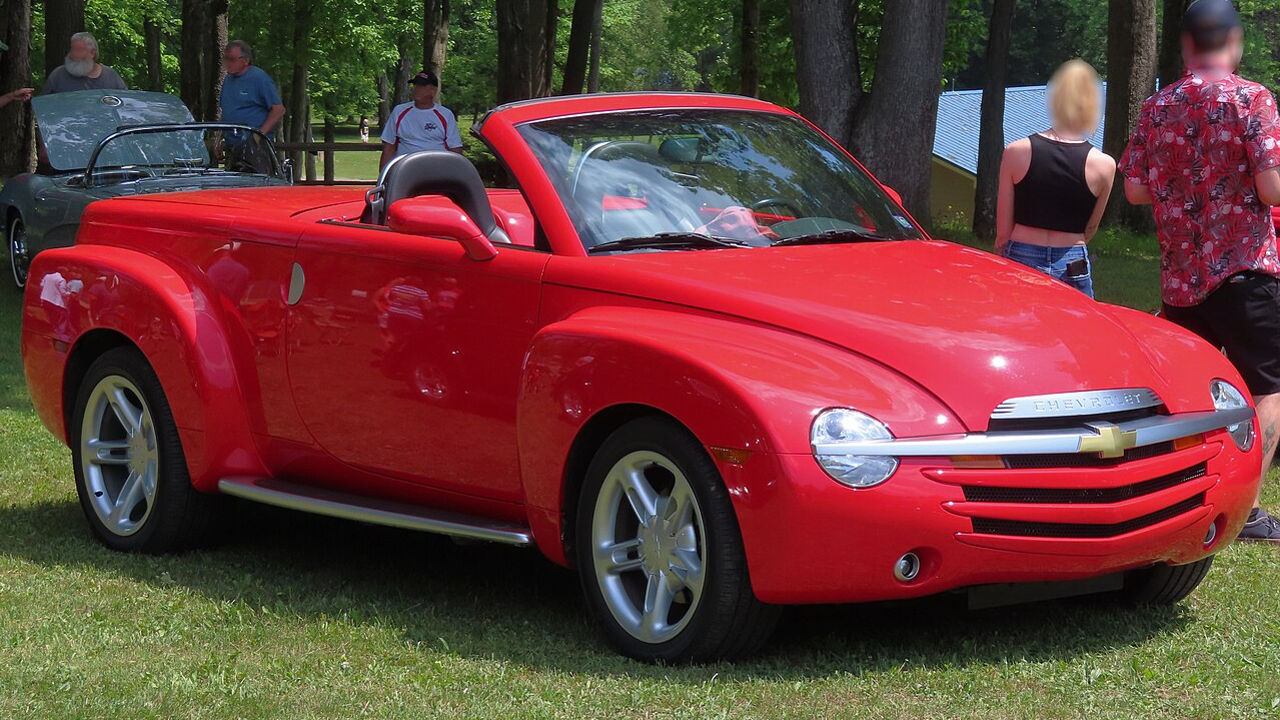
Chevrolet’s success stems from building sensible cars for well-established automotive segments, and they rarely deviate from that path. When they do, strange things tend to happen, like the SSR, a retro-styled convertible pickup truck with a hard top roof.
Granted, the SSR was largely ineffective as a truck, and some say it was even worse as a sports car; however, we must give credit where it’s due, because it is still a unique and clever mix of both that I personally think really works somehow. Hagerty reports that car enthusiasts weren’t feeling it when it first arrived, and the SSR proceeded to flop spectacularly. These days, people are warming up to it. Honestly, I like the idea behind it, even if it is utterly useless for anything other than showing off.
Cadillac XLR

Cadillac’s attempt to build a sports car didn’t end well. Not many people bought it, so production didn’t last long. Since it was based on the Corvette platform, but more expensive, heavier, and less powerful than the ‘Vette, it wasn’t a wise purchase when it was new.
However, these days, it’s an underrated modern classic at a bargain price. As pointed out by Thomas Hundal at The Autopian, the base model utilizes the 4.6-liter Northstar V8, producing 320 hp and 310 lb-ft of torque. There’s also the XLR-V with a supercharged 4.4-liter producing 443 hp. Don’t compare it to the Corvette; this is a Cadillac sports car with bold styling and a retractable hard top roof.
BMW E89 Z4
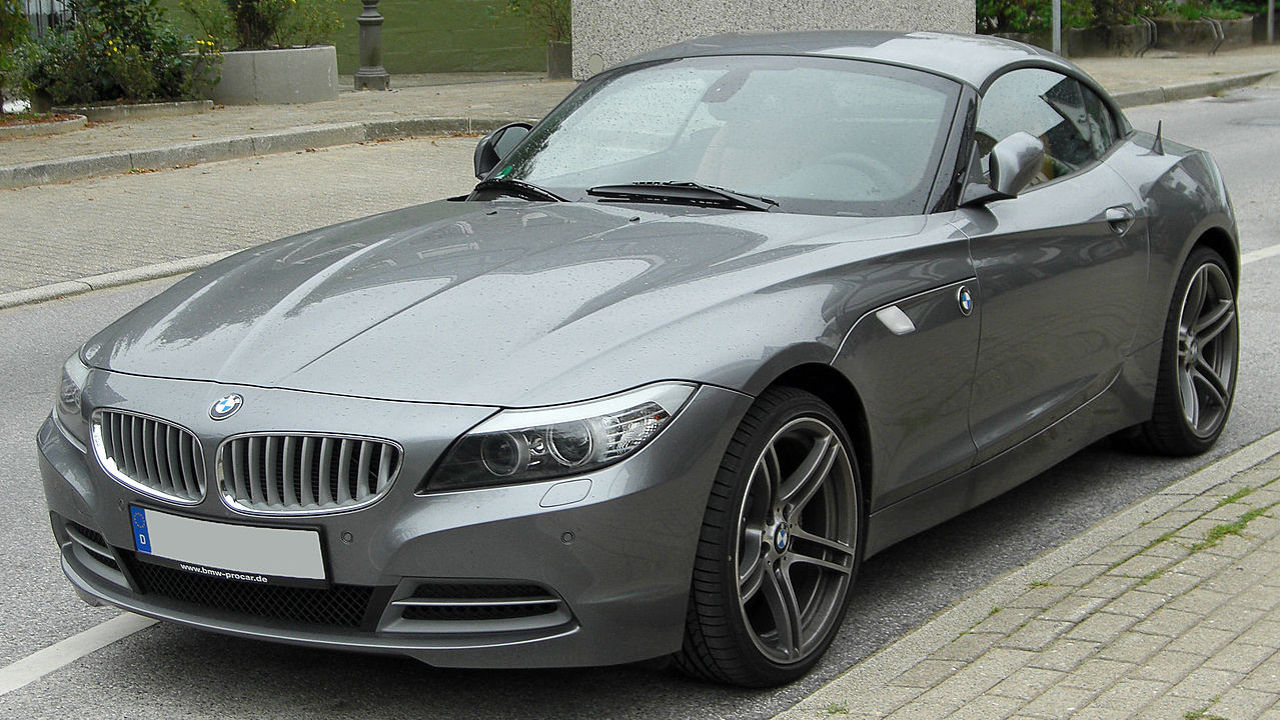
The e89 Z4 is slightly smaller than the current version, and it feels more like a traditional point-and-squirt sports car than a grand tourer, although it’s not exactly built for the track, either.
According to the BMW Blog, it’s more refined and less raw than the original Z4. Let’s just say it slots in somewhere between the Mazda Miata and Porsche Boxster, which isn’t a bad place to be.
BMW E93 M3 Convertible

Introduced in 2007, the E93 BMW M3 is rather unique. This is the only mass-produced M3 with a V8 engine under the hood. Its 4.0-liter mill is home to more than 400 thoroughbred horses, and with a double-clutch transmission, the BMW M3 Convertible sprints from 0 to 62 mph in about 5.1 seconds.
The V8 and transmission weren’t the only new innovations; the E93 also features an electro-hydraulic metal folding roof, making it more coupe-like when the roof is up and adding to its racetrack credentials.
Mercedes SL-Class

The Mercedes SL class is another luxury model that pioneered retractable hard tops, although it didn’t get that feature until the R230 generation debuted in 2001. Roughly two decades later, Mercedes switched the SL back to a fabric roof for its SL models.
According to Drive, the R231 SL was in production from 2012 to 2020, and it was made almost entirely of aluminum, which helped keep weight down. The hard top could be operated at speeds of up to 25 mph. It could be had with a variety of engines, ranging from the mild 3.5-liter V6 to the wild 6.0-liter V12.
Lexus SC 430

Once Top Gear declared that the Lexus SC430 was the Worst Car in the History of the World, all the haters jumped on the bandwagon. Granted, this Japanese yacht had a controversial design, but it also offered exceptional build quality and luxury.
Nowadays, many of the same people who complained about the SC430 are saying it’s an underrated gem, and they’re right. It offers near-bulletproof reliability, and Andy Carter at Driving Line says the V8 engine has plenty of power. I’d even argue that it looks somewhat stylish, at least with the top down, and it’s cheap, too.
Mazda MX-5 Miata RF

Mazda says RF means “retractable fastback,” referencing its hard convertible top, as opposed to the regular MX-5 Miata’s soft top. I still say it’s a targa-top. Those who don’t like the aforementioned PRHT, but would like a hard-top Miata, should check out this one.
Personally, I love the coupe-like design of the MX-5 Miata with the roof in place, but I prefer the standard model with the roof down. Other than the roof, everything is as you’d expect, with the same powertrain options as the soft top Miata.
Chevrolet Corvette C8 Convertible

Chevrolet’s latest Corvette combines a mid-engine V8 layout with exotic styling, high performance, and surprising affordability. In the Stingray, the V8 produces 495 hp and 470 lb-ft of torque, which are sent to the rear wheels via an 8-speed dual-clutch automatic transmission.
Car and Driver reports that the C8 Corvette offers only around a third more openness than the Targa model once the carbon-fiber roof panel has been removed. However, it also gives the convertible ‘Vette some distinct styling differences, as the C-pillars are turned into flying buttresses.
McLaren 720S Spider

The McLaren 720S Spider is one of the fastest convertibles ever made, and it may just be the best road-focused supercar on the market right now. Built for the road rather than the track, it has less downforce than the McLaren 765LT, resulting in a higher top speed for a lower price. What’s not to love about that?!
Speaking of performance, the 720S Spider is equipped with a twin-turbocharged 4.0-liter V8 engine that produces 710 horsepower. Power like that means it will sprint to 60 mph in just 2.8 seconds and continue going until reaching its 212 mph top speed. Those who want to feel the wind in their hair can push a button, and 11 seconds later, the carbon fiber roof panel is gone.
Ferrari 488 Pista Spider

Ferrari gave the race-inspired 488 Pista (Italian for track) several mechanical and exterior modifications to make it more capable than the standard 488. Exterior-wise, the most noticeable differences are evident at the front, where it now features more aggressive aerodynamics. Air flows through the air ducts in the front bumper and out via the hood vent. Behind the driver, the twin-turbocharged 3.9-liter V8 produces 710 hp and 568 lb-ft of torque.
The 488 Pista Spider can accelerate from 0 to 62 mph in 2.8 seconds and has a top speed of 211 mph. Somewhat surprisingly, the Spider is still about 100 kg heavier than the Pista coupe, even though it’s lighter than a regular 488 Spider.
Ferrari California

In 2008, Ferrari introduced the California as its entry-level model. Unlike its more track-focused, mid-engined siblings, the front-engined California is an excellent grand tourer. As WhatCar mentions, car enthusiasts weren’t overly enthusiastic when the California arrived, as it was viewed as a poor man’s Ferrari. It didn’t take long to silence them, though.
Under the hood, the Cali features a 4.3-liter V8 producing 460 hp (338 kW), with 0–100 km/h in about 4.0 seconds (Ferrari’s figure). This hard-top GT even has seating for four, but adults will likely find the back seat uncomfortable.
Ferrari F8 Spider

Ferrari introduced the F8 as the successor to the 488 and as a tribute to the mid-engined, V8-powered supercars the manufacturer has become known for.
Behind the driver, the F8 Spider has the same 3.9-liter twin-turbocharged V8 engine as the 488 Pista. It produces 710 hp and 568 lb-ft of torque, and Ferrari claimed it would sprint to 62 mph in 2.9 seconds and reach a top speed of 211 mph. The F8 Spider also features a folding hardtop that operates in 14 seconds and can be used while driving at speeds of up to 28 mph.
Ferrari Portofino M

The Ferrari Portofino M hard top convertible is an everyday usable Ferrari grand tourer with serious flair and power. Like the California, it’s a front-engined, V8-powered grand tourer, so it’s more comfortable and practical than the mid-engined models (although that rear seat doesn’t offer much legroom).
That said, it still packs a punch. It’s a Ferrari, after all. The twin-turbocharged 3.9-liter V8 houses 612 Italian stallions and 561 lb-ft of torque, which should send it to 60 mph in less than 3.5 seconds.
Folded Metal

As you’ve seen, the latest sports car hardtop convertibles prove that coupe aesthetics and open-top exhilaration are no longer mutually exclusive.
Whether you crave track-ready agility or grand touring comfort, there’s a hardtop convertible here to satisfy your appetite for speed and sophistication.
Which one would you choose for your next weekend escape? Let us know in the comments, and don’t forget to share this list with fellow enthusiasts.