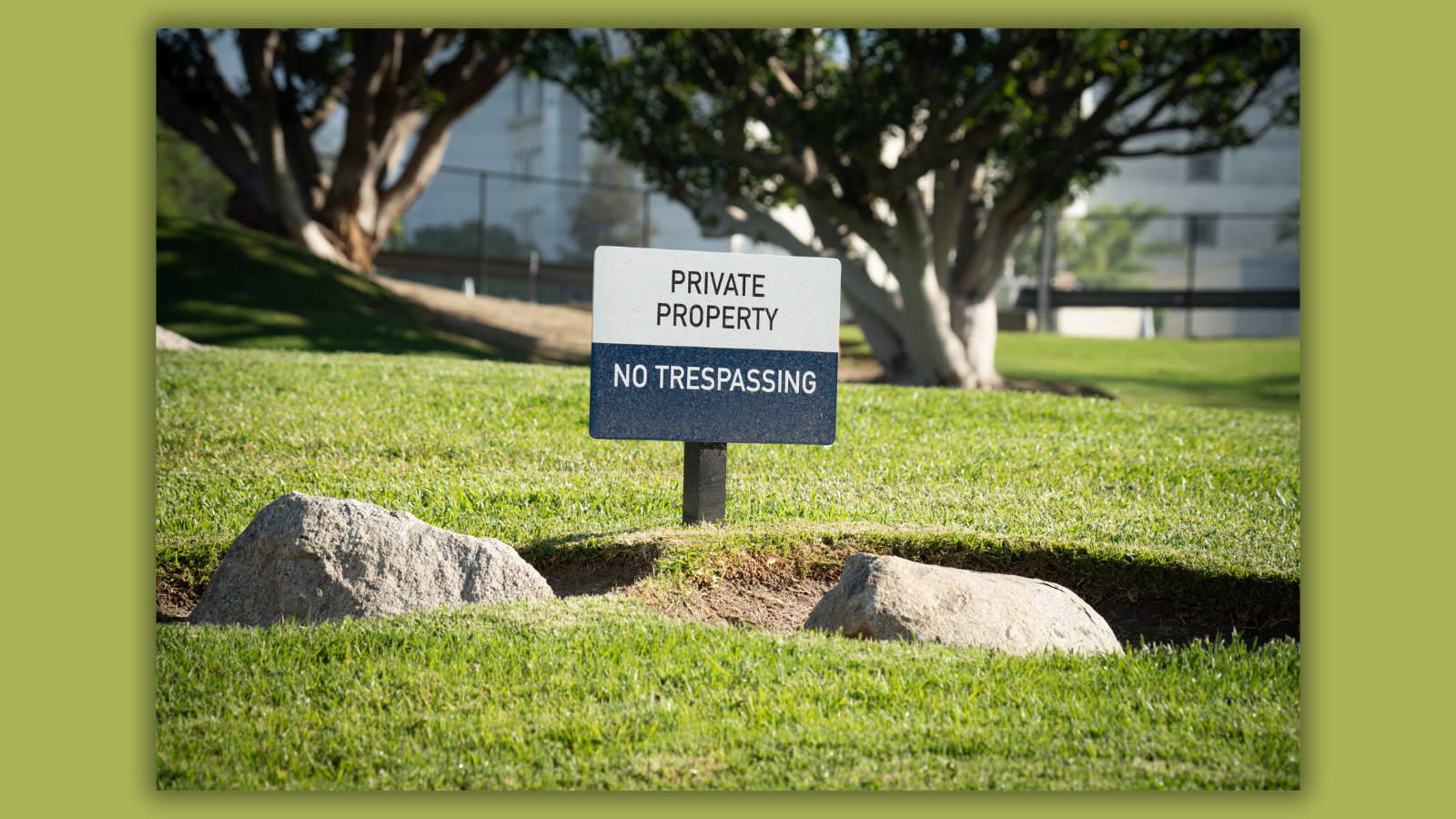
A Minnesota homeowner is facing criminal charges after police say he planted a homemade spike strip in his yard to stop children from cutting across his property on bicycles.
The case centers on a dispute that will sound familiar to many homeowners: neighborhood kids using a yard as a shortcut. The frustration escalated far beyond warning signs or complaints, leading to the placement of a device designed to damage bicycle tires and potentially cause injuries.
According to a report from CBS Minnesota, the device was discovered near Goodview Park in Wyoming, Minnesota, after a parent reported finding a strip of clear plastic embedded with dozens of screws. Authorities allege the strip contained approximately 40 three-inch screws and had been positioned in an area where children frequently rode their bikes through the yard.
The homeowner, 39-year-old Eric James Freier, was later charged with a gross misdemeanor under Minnesota law prohibiting dangerous devices commonly referred to as booby traps.
Police Say Homeowner Admitted He Was Frustrated With Trespassers
According to CBS Minnesota, investigators spoke with Freier after the device was discovered. He allegedly told police that children had crossed his property hundreds of times despite his efforts to stop them.
Court documents cited by the outlet state Freier allegedly admitted placing the device in the yard out of frustration with people repeatedly cutting across the property.
Fortunately, no injuries were reported before the device was discovered and removed.
The case has generated considerable debate online, with some arguing property owners should be able to take stronger measures against trespassers, while others say the alleged device crossed a dangerous legal line.
Why Courts Generally Treat Booby Traps Differently Than Fences or Cameras
While homeowners are generally allowed to use visible deterrents such as fences, security cameras, lighting, warning signs, and other security measures, courts have long treated hidden traps differently.
Legal experts frequently point to the Iowa Supreme Court’s 1971 decision in Katko v. Briney, a case involving a homeowner who rigged a shotgun to fire at intruders entering an unoccupied farmhouse. The court ultimately held that human safety outweighs the protection of property and that mechanical traps cannot exercise the judgment required when force is used against another person.
Courts have repeatedly noted that a hidden device cannot distinguish between a burglar, a child, a delivery driver, a utility worker, or a first responder responding to an emergency. Legal scholars have also emphasized that deadly or potentially serious force generally cannot be used solely to protect unattended property.
That principle has formed the basis of many modern laws prohibiting spring guns, hidden spike devices, and other traps designed to injure intruders.
Readers Are Divided
As news of the case spread online, many readers sympathized with the homeowner’s frustration over repeated trespassing but stopped short of supporting the alleged solution.
Others argued that parents should ensure children respect private property, while many pointed out that fences, landscaping barriers, motion-activated sprinklers, cameras, and trespassing complaints are all legal alternatives that don’t carry the same risks as hidden devices.
The charge against Freier remains an allegation, and he is presumed innocent unless and until proven guilty in court.
Don’t necessarily condone the spike strip idea, however the children are under age. After several times asking them to stop, they are under 18 Sue their parents for criminal trespassing.