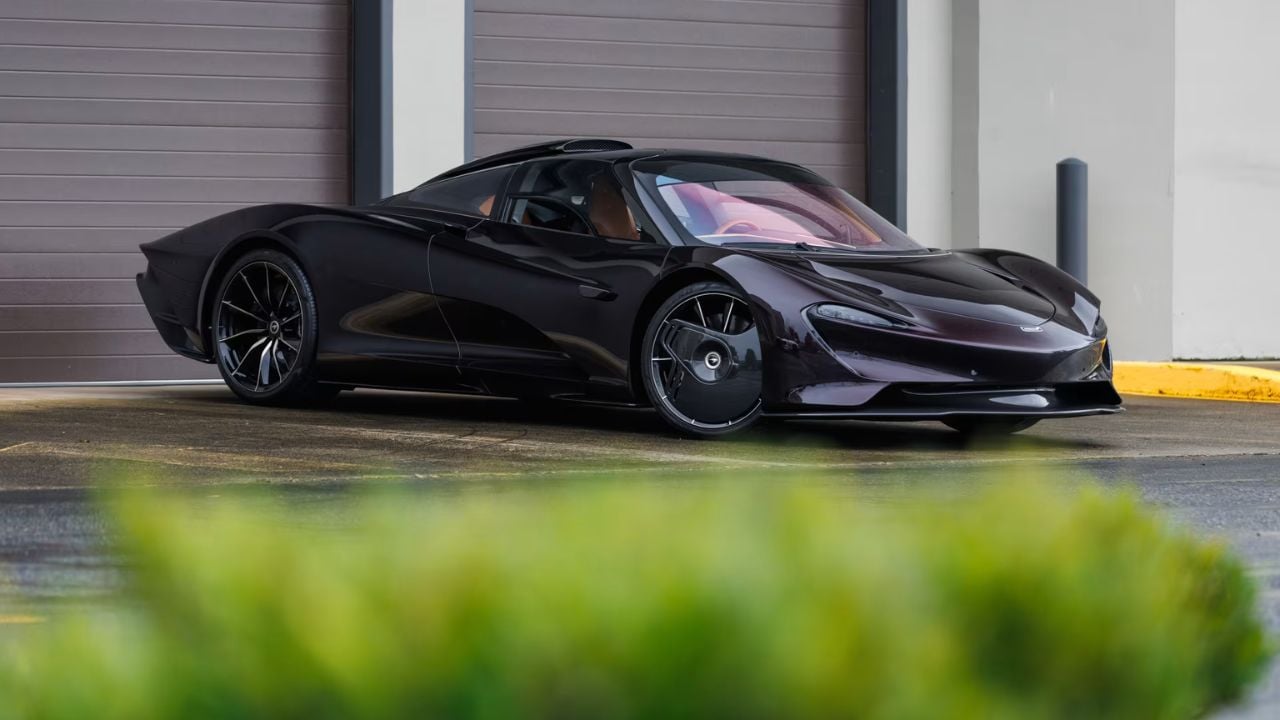
The McLaren Speedtail was never meant to be just another limited-production exotic. It was conceived as a very specific kind of flagship, one that chased top-speed efficiency, long-distance composure, and dramatic design rather than the stripped, lap-time-first aggression that defined cars like the Senna.
That makes this Mecum Indy 2026 example especially notable. Mecum lists it as Lot R720 for May 16, showing only 74 miles and identifying it as Speedtail number 85 of the model’s 106-car production run.
Those numbers matter because the Speedtail does not come to market often. Most examples went straight into major collections, and ultra-low-mile cars like this tend to surface only occasionally in public sales, which means each auction appearance becomes a useful marker for how collectors currently view McLaren’s most ambitious road car of the period.
It also helps that the Speedtail remains an unusual thing even by hypercar standards. This is a 1,035-horsepower hybrid with a central driving position, a body designed around minimum drag, and a mission that sits closer to the spirit of the McLaren F1 than to a conventional modern track special.
McLaren’s Hyper-GT Idea In Its Purest Form

McLaren itself described the Speedtail as its first Hyper-GT, and that framing is important. Where the Senna prioritized downforce and track capability, the Speedtail was engineered around aerodynamic slipperiness, extreme speed, and a more luxurious long-range character.
The powertrain backed that up. McLaren quoted a combined 1,035 PS from the hybridized twin-turbo 4.0-liter V-8 system, along with a 250-mph top speed and a 0-300 km/h time of just 12.8 seconds, figures that made it the fastest road-going McLaren at the time of launch.
Production was capped at 106 units, deliberately echoing the total built of the original McLaren F1. All were spoken for before production began, which immediately gave the Speedtail the kind of locked-in exclusivity collectors tend to notice.
This Mecum car fits that narrative cleanly. With only 74 miles shown, it reads less like a used hypercar and more like a preserved delivery-mile example being reintroduced to the market.
The F1 Influence Goes Well Beyond The Seating Layout
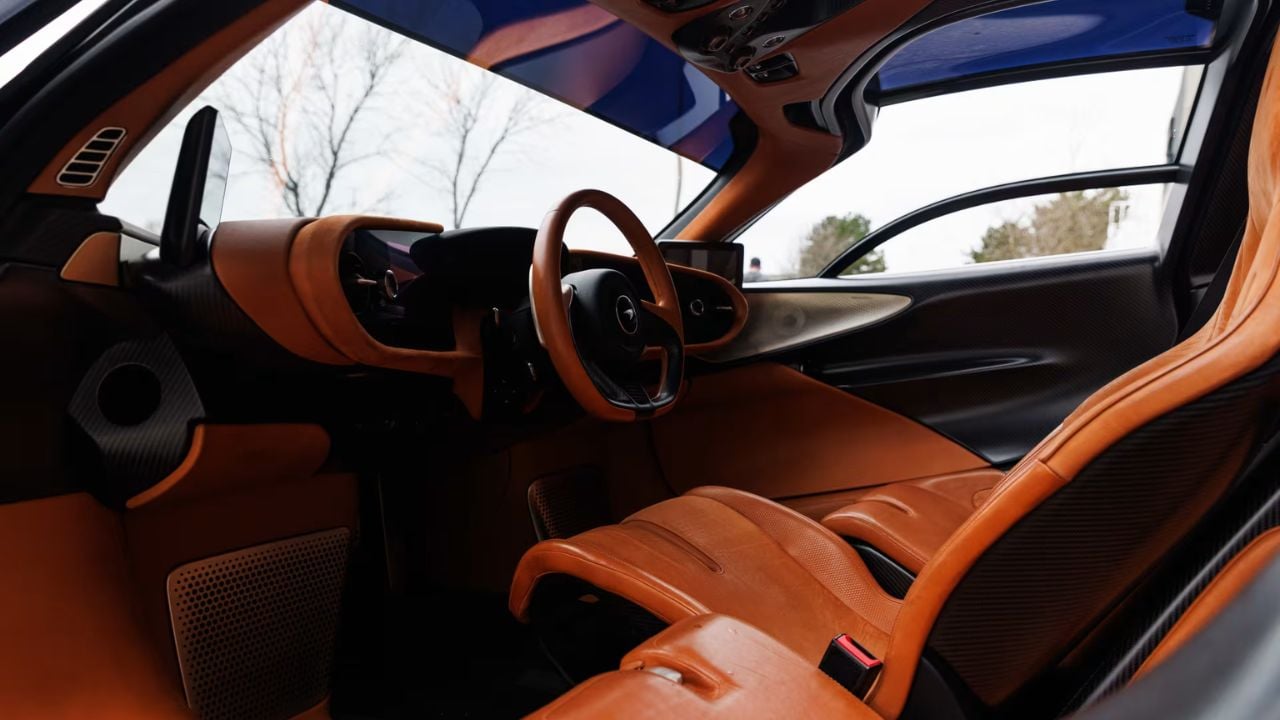
The most obvious link to the F1 is the cabin. Like McLaren’s 1990s landmark, the Speedtail places the driver in the center with passenger seats set slightly back on either side, a configuration that still feels extraordinary in a modern production car.
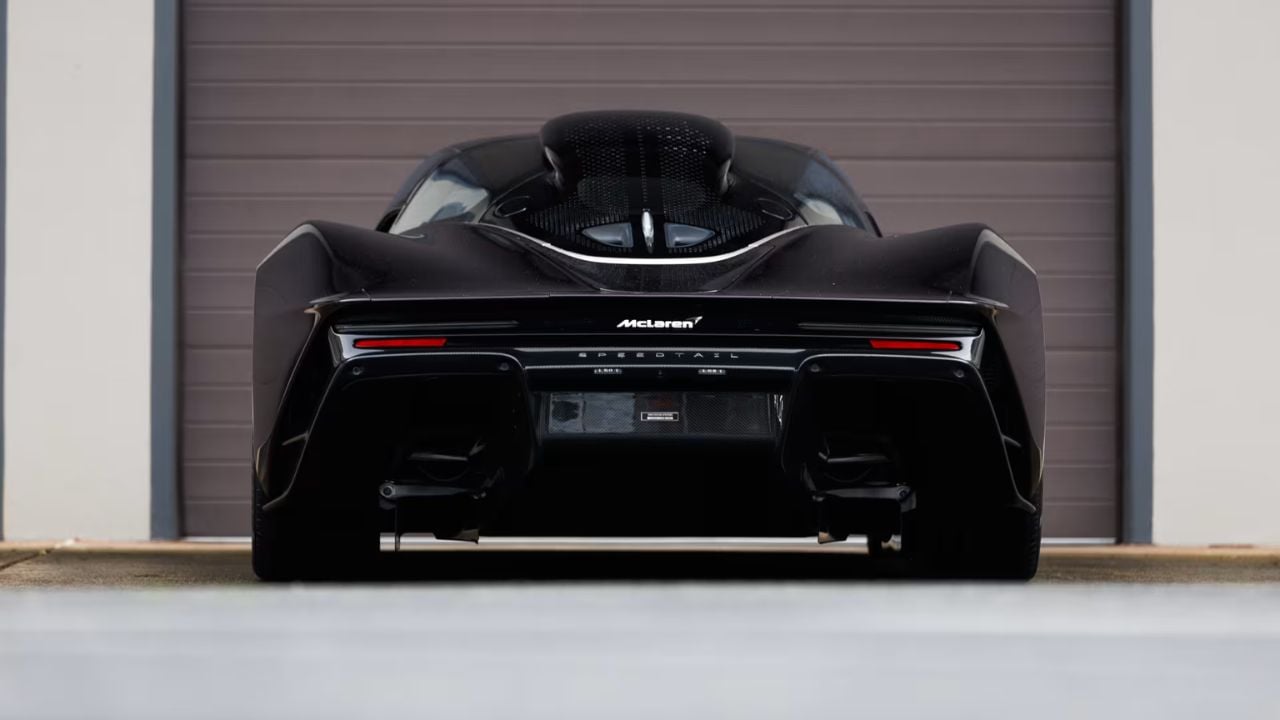
But the resemblance is deeper than that. The Speedtail was shaped around low drag and high-speed stability, with an elongated teardrop profile, covered front wheels, retractable cameras in place of traditional mirrors, and a body stretching to more than five meters in length, making it the longest McLaren road car yet built.
McLaren also leaned heavily on advanced materials. Thin-ply carbon construction, a carefully packaged hybrid battery system, and lightweight engineering throughout were all part of the car’s identity, helping it feel like a flagship technology project rather than simply a bigger, faster version of an existing McLaren.
Inside, the design reinforces that same idea. The central seat, broad digital display layout, and overhead controls make the cockpit feel futuristic without losing the sense that this car was meant to cover serious distance at serious speed.
A Rare Auction Appearance In A Still-Developing Market
The Speedtail’s market is still young enough that every public sale helps define it. Unlike older halo cars with decades of auction history behind them, this McLaren is only now starting to build a meaningful public record of transaction data.
That matters because the numbers are more grounded than generic hype often suggests. Classic.com currently tracks public Speedtail sales with an average around $2.41 million and a latest sale at $2.12 million, which is strong money but not the runaway $3 million-to-$5 million territory some casual commentary has implied.
That does not make this Mecum car ordinary. A 74-mile example with numbered production identity and near-delivery presentation is exactly the kind of Speedtail most likely to attract the deepest collector interest, especially from buyers who missed the original allocation process and want one of the purest surviving examples.
The upcoming Indy sale therefore feels significant even beyond this one chassis. It offers bidders a fresh public read on one of McLaren’s boldest road cars, and on how the market values a Speedtail when the mileage, rarity, and preservation level all line up the way they do here.