
Mazda’s story reads like a fever dream written by engineers who drank too much sake and watched too much anime. From its humble cork-manufacturing beginnings in Hiroshima (yes, cork, because apparently making wine stoppers is excellent preparation for building cars), the brand grew into the automotive world’s lovable mad scientist. While other manufacturers played it safe with boring four-cylinders, Mazda forged ahead with the rotary engine, a mechanical marvel that burns oil like a 1970s muscle car and sounds like your neighbor’s chainsaw at 5 in the morning.
The MX-5 Miata proved that happiness doesn’t require a mortgage payment, lightweight sports cars don’t need 500 horsepower, and sometimes the best answer is the simplest one. Beneath Mazda’s greatest hits lies a treasure trove of automotive oddities that make you wonder what the heck they were thinking, and why we should be grateful they thought it anyway.
These forgotten models aren’t just curiosities gathering dust in Japanese used car lots. They’re proof that Mazda has always marched to the beat of its own Wankel-powered drummer, creating cars that were either brilliantly ahead of their time or spectacularly missing the point. Either way, they’re fascinating.
Discovering Mazda’s Overlooked Masterpieces

Choosing which forgotten Mazdas to highlight was like sorting through a box of psychedelic chocolates. You never know what you’re going to get (and experience). I really had a fun time looking through Mazda’s wild timeline and wondering, “how does nobody remember these, they’re so weird.” So yes, this list is partially opinion. These are cars that I think are worth knowing about, worth admiring, even just for a moment here.
Each model earned its spot by being either criminally underrated, hilariously impractical, or so weird that it circles back to genius. Some were ahead of their time, a polite way of saying “nobody understood what the heck Mazda was trying to do.” Others were built for niche markets so specific that even the people in those niches didn’t know they existed.
These aren’t just random oddities we threw together. They’re statements of intent from a company that looked at conventional wisdom and decided it was more of a suggestion. They prove that Mazda’s willingness to be different isn’t a recent marketing strategy, it’s encoded in their corporate DNA like some sort of beautiful automotive mutation.
Mazda Luce Rotary Coupe

The Luce Rotary Coupe is what happens when you let Bertone design a car for a company obsessed with spinning triangles. Styled by Bertone (with design credited to Giorgetto Giugiaro), this gorgeous coupe used Mazda’s 1.3-liter 13A rotary rated at about 126 horsepower, which was pretty stout for 1969.
Built in numbers so limited that finding one today is like spotting a unicorn wearing a “Built in Hiroshima” t-shirt, the Luce Rotary Coupe was Mazda’s attempt to prove they could build something genuinely sophisticated. The interior featured more gauges than a NASA control room because, apparently, monitoring your rotary engine’s vital signs was serious business.
Why It Was Forgotten: It cost serious money when Mazda was still known for making three-wheelers and cork products. Asking customers to pay luxury prices for a rotary-powered grand tourer from a company famous for economy cars was like asking them to trust a sushi chef who trained at McDonald’s.
Why It Shouldn’t Be: This thing influenced every Mazda sedan that followed and proved the company could build something genuinely beautiful. Plus, finding one now makes you the coolest person at any cars and coffee event, assuming you can keep it running long enough to get there.
Mazda Eunos Cosmo

The Eunos Cosmo was Mazda’s moonshot, literally named after space travel and just as difficult to reach for most buyers. This was the only production car ever built with a triple-rotor engine, making it rarer than honest politicians and twice as expensive to maintain. The 20B-REW three-rotor produced 280 hp in a time when manufacturers were still pretending their cars made exactly that much due to gentlemen’s agreements.
But the Cosmo wasn’t just about straight-line speed. It featured one of the first touchscreen infotainment systems, GPS navigation (in 1990!), and more electronic wizardry than a Las Vegas magic show. The interior looked like it was designed for time travelers from 2010, complete with digital displays that would make a fighter pilot jealous.
Why It Was Forgotten: It cost more than a house in most countries and guzzled premium fuel like a Formula 1 car with a drinking problem. The complexity meant that when something broke, and something always broke, fixing it required either a PhD in rotary engineering or selling a kidney.
Why It Shouldn’t Be: You may not like it, but this was peak Mazda ambition in physical form. They built a car with technology that wouldn’t become mainstream for another decade, powered by an engine configuration that has never been repeated. It’s automotive art that happens to have three spinning triangles for a heart.
Mazda RX-3

The RX-3 was Mazda’s proof that good things come in small, rotary-powered packages. While American muscle cars were busy getting strangled by emissions regulations, this little Japanese rocket was making 105 hp from a 12A rotary and weighing about as much as a modern Miata’s spare parts collection.
What made the RX-3 special wasn’t just its power-to-weight ratio, it was the fact that Mazda took this unassuming compact car racing and proceeded to embarrass everything in sight. The RX-3 dominated touring car racing in the early ’70s, winning races against cars twice its size and proving that displacement is just a number when you’ve got spinning triangles and a complete lack of shame.
The street version featured flared wheel arches that looked like someone inflated a normal car with a bicycle pump, and a front end so aggressive it could start fights in parking lots. Inside, you got the usual array of rotary-monitoring gauges because apparently driving a rotary without constantly checking its oil pressure was considered reckless.
Why It Was Forgotten: It was a compact car when Americans wanted big cars, it had a weird engine when people wanted simplicity, and it required more maintenance than a championship racehorse. Also, most of them were either raced to death or rusted into oblivion.
Why It Shouldn’t Be: This little beast proved rotary engines belonged on racetracks and that Mazda could build legitimate performance cars. It’s the grandfather of every sporty Mazda that followed, and finding a clean one today is like discovering buried treasure that makes angry hornet noises.
Mazda Capella Rotary

The Capella Rotary, sold as the RX-2 in some markets, was Mazda’s answer to the question “What if we took a sensible family sedan and gave it the heart of a racing car?” The result was automotive schizophrenia in the best possible way, a car that could haul your kids to soccer practice on Saturday and embarrass sports cars at the track on Sunday.
Powered by the same 12A rotary as the RX-3 but wrapped in a more grown-up body, the Capella Rotary was the perfect sleeper. It looked like something your accountant would drive, but sounded like a swarm of mechanical bees having a nervous breakdown. The balanced chassis meant it could actually corner, unlike most family cars of the era that handled like drunk refrigerators.
Why It Was Forgotten: It was caught between two worlds, too weird for conservative sedan buyers, too tame for sports car enthusiasts. Plus, explaining to your neighbors why your family car sounded like a motorcycle and needed pre-mixing was more trouble than most people wanted.
Why It Shouldn’t Be: This was the car that proved rotary engines could work in everyday applications while still being fun to drive. It introduced thousands of drivers to the unique joy of rotary ownership, even if most of them didn’t understand what they were getting into.
Mazda RX-4

The styling was pure 1970s Japanese elegance, clean lines, subtle curves, and just enough chrome to look expensive without being gaudy. Inside, you actually got comfort features like air conditioning and power steering, proving that Mazda was learning that not every rotary car needed to be a stripped-out track weapon.
The RX-4 was also Mazda’s first serious attempt at building a car that could compete with European imports on refinement rather than just price. It rode better than its smaller siblings, was quieter at highway speeds, and could actually seat four adults without requiring a chiropractor appointment afterward.
Why It Was Forgotten: It arrived just as the oil crisis was making thirsty rotary engines about as popular as disco at a death metal concert. The timing couldn’t have been worse, introducing a smooth, powerful car right when everyone was obsessing over fuel economy.
Why It Shouldn’t Be: This was the most mature expression of Mazda’s rotary philosophy, proving they could build a sophisticated car around their spinning triangle obsession. It’s also gorgeous in a way that most 1970s cars definitely aren’t.
Mazda Bongo Friendee
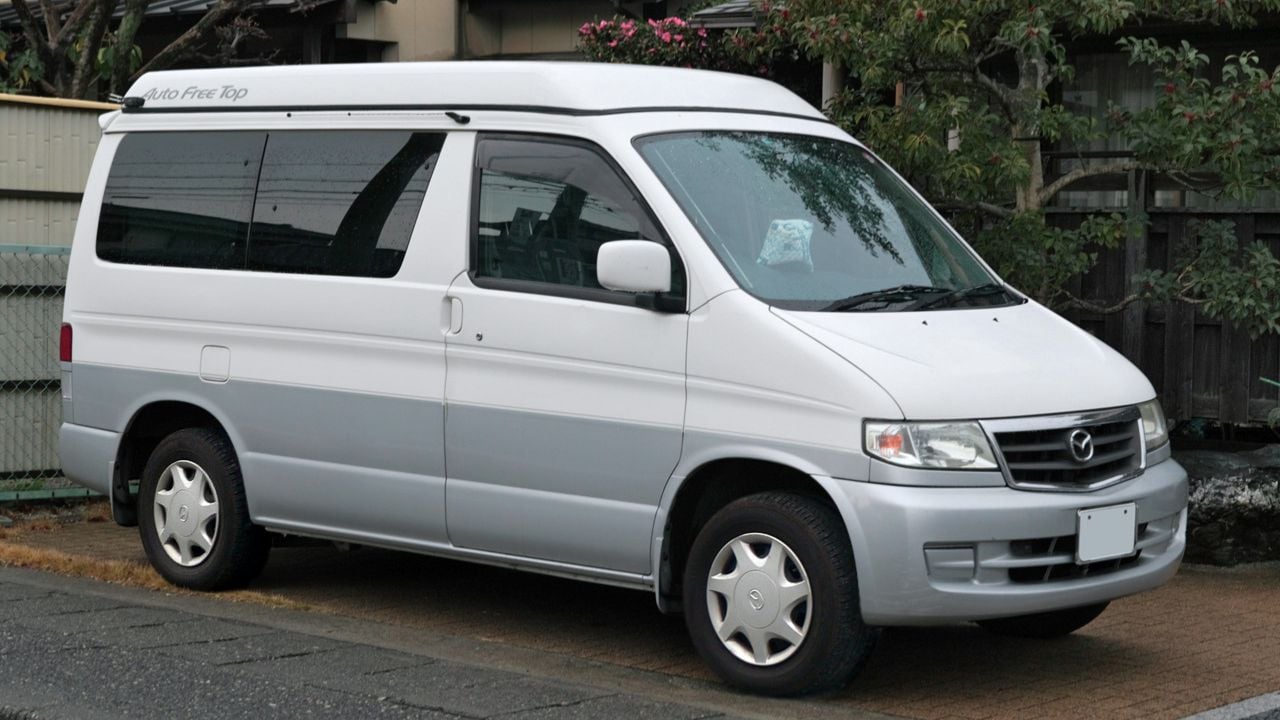
The Bongo Friendee sounds like something you’d name your overweight orange cat, but it was actually Mazda’s entry into the “lifestyle vehicle” market before anyone knew what that meant. This compact van came with a pop-up roof, making it part minivan, part camper, and entirely Japanese in its approach to solving problems nobody knew they had.
With seating for up to eight people (depending on how much you like the people you’re traveling with) and enough cargo space for a small expedition, the Friendee was designed for families who wanted to embrace their inner nomad without actually roughing it. The pop-up roof added valuable headroom and sleeping space, assuming you didn’t mind camping in something that looked like a toaster with delusions of grandeur.
The interior was peak 1990s Japan, lots of cup holders, storage cubbies in impossible places, and enough switches and buttons to make you feel like you were piloting a spaceship to the grocery store. Power came from various engines, including a turbodiesel that provided adequate motivation for hauling your entire life around Japan’s mountain roads.
Why It Was Forgotten: It was too weird for American tastes, too practical for Europeans, and only made sense in markets where space is at a premium and camping is a serious hobby. America, embrace the strange, c’mon! Also, explaining to your friends that you bought a van called “Friendee” required more confidence than most people possessed.
Why It Shouldn’t Be: This thing was Instagram-ready before Instagram existed. It’s the perfect vehicle for the van life movement, assuming you can find one that hasn’t been converted into someone’s mobile coffee shop or used as a prop in a quirky Japanese movie. Just add some bumper stickers and be on your way.
Mazda Roadpacer AP

The Roadpacer AP was what happened when Mazda engineers had too much sake and decided to stuff a rotary engine into an Australian Holden Premier. This wasn’t badge engineering: this was automotive mad science. They took a conventional luxury sedan, ripped out its V8, and replaced it with a 13B rotary because apparently normal wasn’t in Mazda’s vocabulary.
The result was a large, quiet sedan that delivered power like no other car on the road. The rotary engine’s smoothness made the Roadpacer incredibly refined, but also incredibly thirsty. We’re talking “gas station attendants knew you by name” levels of fuel consumption. It was designed for government officials and executives who valued comfort over common sense.
Only about 800 were built, making it rarer than most exotics and twice as weird. The engineering challenges of fitting a rotary into a car designed for a conventional engine meant lots of custom work and components that existed nowhere else in the automotive universe.
Why It Was Forgotten: It combined the worst aspects of both parent companies, Holden’s size and weight with Mazda’s rotary engine thirst. It was expensive to buy, expensive to run, and expensive to fix. Plus, explaining why your executive sedan sounded like a racing car required PowerPoint presentations.
Why It Shouldn’t Be: This represents peak automotive weirdness, a one-off collaboration that will never be repeated. It’s proof that engineers in the 1970s were willing to try anything at least once, consequences be damned.
Mazda Proceed Marvie

The Proceed Marvie was Mazda’s attempt at building a sport-utility vehicle before anyone really knew what those were supposed to look like. Based on Mazda’s Proceed/B-Series pickup (which Ford sold as the Courier in several markets), the Marvie added a rear cap and called it a day. It was part truck, part SUV, and entirely confused about its identity.
With four-wheel drive and enough ground clearance to tackle serious off-road terrain, the Marvie was actually quite capable when the pavement ended. The problem was that it looked like someone had accidentally welded a truck cab to the wrong body, creating something that wasn’t quite a pickup and wasn’t quite an SUV.
The interior was pure utilitarian Japanese design, everything was functional, nothing was fancy, and the radio was probably the most sophisticated piece of technology in the cabin. Power came from various four-cylinder engines that provided adequate motivation for weekend adventures, assuming your adventures didn’t involve highway speeds or steep hills.
Why It Was Forgotten: It arrived just as real SUVs were becoming popular, making the Marvie look like someone’s rough draft. The styling was awkward, the name was forgettable, and most people couldn’t figure out what it was supposed to be good at.
Why It Shouldn’t Be: This was Mazda’s early attempt at understanding the SUV market, and it actually got a lot of things right. It was smaller and more efficient than full-size SUVs, more capable than car-based crossovers, and probably more reliable than either. Plus, good luck finding another one.
Mazda Xedos 6

The Xedos 6 was Mazda’s attempt to crash the European luxury party, and it showed up dressed to impress. With curves that would make an Italian designer jealous and an interior that actually felt premium, this was Mazda trying to prove they could build something genuinely sophisticated.
Powered by a range of V6 engines (no rotaries in sight, apparently even Mazda knew when to quit), the Xedos 6 delivered smooth performance and surprisingly good handling. The styling was pure 1990s elegance: flowing lines, integrated design elements, and just enough presence to look expensive without being flashy.
Inside, you got real wood trim, leather upholstery that didn’t feel like vinyl, and build quality that actually rivaled the Germans. The driving experience was refined but not boring, comfortable but not soft, basically everything a European luxury sedan should be, except it came from a company known for rotary engines and affordable sports cars.
Why It Was Forgotten: Mazda’s reputation worked against it. People wanted luxury sedans from luxury brands, not from the company that made the Miata. It was also caught in the transition between Mazda’s economy image and their luxury aspirations, making it an orphan from both eras. Fine, Europe, have your too-tight white skinny jeans and fish and chips, we don’t want you either!
Why It Shouldn’t Be: This was the epitome of 1990s sedan design, and it’s aged better than most of its contemporaries. It proved Mazda could build a proper luxury car when they put their minds to it, and finding one today means owning something genuinely special.
Mazda Millenia

The Millenia was Mazda’s flagship sedan, and they decided to power it with something nobody had ever heard of, a Miller cycle engine. While other luxury sedans were content with boring V6s or thirsty V8s, Mazda built a supercharged V6 that used a complex valve timing system to extract maximum efficiency from every drop of fuel.
The Miller-cycle setup paired a supercharger with a 2.3-liter V6 to make about 210 horsepower, aiming for better efficiency than a conventional larger-displacement engine, while adding plenty of complexity. The supercharger helped make up for the lower compression ratio, while the complex valve timing optimized efficiency at every RPM. It was the kind of over-engineering that made German cars jealous.
The styling was sleek and aerodynamic, with a drag coefficient that would impress modern cars. Inside, the Millenia featured leather upholstery, wood trim, and enough gadgets to satisfy tech-obsessed buyers. It was genuinely luxurious in a way that most “luxury” cars weren’t.
Why It Was Forgotten: The Miller cycle engine was too complex for most people to understand and too expensive for most mechanics to fix. When it worked, it was brilliant. When it didn’t, it was a nightmare. Also, convincing luxury buyers to trust a Mazda required more faith than most people possessed.
Why It Shouldn’t Be: This represents peak Mazda engineering ambition, they built an engine configuration that nobody else bothered with and wrapped it in one of the best-looking sedans of the 1990s. It’s proof that sometimes the best ideas come from companies willing to be different.
Mazda Sentia

The Sentia was Mazda’s answer to the Lexus LS400, which, uh, seems like an unfair matchup (anyone remember when that influencer wanted to take on an aging, limping boxer?) While Toyota was busy building the most reliable luxury sedan in history, Mazda decided to build something with more character and less predictability. Just like that fight, we all knew who we wanted to win, even if they were the underdog.
Powered by V6 engines (including a 3.0-liter V6), the Sentia delivered genuine luxury performance. The styling was understated elegance the, kind of design that looked expensive without screaming about it. Inside, the cabin featured materials and build quality that rivaled anything from Germany or Japan.
The Sentia also featured some genuinely advanced technology for its time, including adaptive suspension, traction control, and enough electronic systems to make a space shuttle jealous. It was designed to be the ultimate expression of Japanese luxury – refined, sophisticated, and built to last.
Why It Was Forgotten: It arrived just as Lexus was redefining what Japanese luxury meant, making the Sentia look like yesterday’s news before it even launched. The badge didn’t carry the prestige of established luxury brands, and most buyers weren’t willing to take a chance on Mazda’s luxury aspirations.
Why It Shouldn’t Be: This was a genuinely excellent luxury sedan that happened to wear the wrong badge. It offered everything the competition did, often for less money, and with more character. Finding one today means owning a piece of automotive history that most people never knew existed.
Mazda 323 GTX

The 323 GTX was proof that Mazda’s engineers had been watching too much World Rally Championship and decided to build something that could embarrass cars costing twice as much. This unassuming hatchback packed a turbocharged 1.6-liter four-cylinder, all-wheel drive, and enough attitude to start fights in parking lots.
With 132 hp and a curb weight that barely registered on truck scales, the GTX delivered performance that would make modern hot hatches nervous. The all-wheel-drive system was borrowed from Mazda’s rally program, meaning it could put power down in conditions that would leave other cars spinning their wheels like teenagers on ice.
The styling was pure 1980s Japanese restraint, nothing flashy, nothing aggressive, just clean lines and functional design. Inside, you got supportive seats, a manual transmission that felt like it was machined from solid steel, and enough gauges to monitor your turbocharged adventure in real time.
Why It Was Forgotten: It was a rally car disguised as an economy car during an era when people wanted their performance cars to look the part. The GTX flew under the radar so successfully that most people didn’t know it existed until years later, when they were all used up or crashed.
Why It Shouldn’t Be: This was what 1980s performance engineering was all about: a car that prioritized substance over style and delivered genuine thrills for affordable money. It’s the kind of car that makes you wonder why modern hot hatches are so complicated when something this simple worked so well.
Why These Forgotten Mazdas Still Deserve Attention

These automotive orphans prove that Mazda has always been willing to take risks, even when those risks involved confusing customers, bankrupting themselves, or creating cars so weird that nobody knew what to do with them. They represent a company that values innovation over imitation, character over conformity, and engineering excellence over market research.
Each of these cars failed in the marketplace for different reasons, wrong timing, wrong price, wrong marketing, or just plain wrongness in general. But failure in the showroom doesn’t diminish their importance to automotive history. They’re proof that sometimes the most interesting cars are the ones that don’t make sense at the time.
For modern car enthusiasts drowning in a sea of generic crossovers and bland sedans, these forgotten Mazdas offer a glimpse into an era when manufacturers were willing to be different. They remind us that cars can be more than transportation: they can be statements, experiments, and expressions of pure automotive ambition.
These cars deserve recognition not because they were perfect, but because they were perfectly Mazda. They represent a company that looked at conventional wisdom and decided it was more of a suggestion than a rule. In an automotive landscape increasingly dominated by focus groups and profit margins, that kind of fearless creativity is worth celebrating, even if it sometimes resulted in rotary-powered Australian sedans and vans named after imaginary friends.
So the next time you see a snooze-worthy crossover in traffic, remember these forgotten gems and appreciate a company that was never afraid to be weird. Because in a world full of automotive beige, weird is exactly what we need.