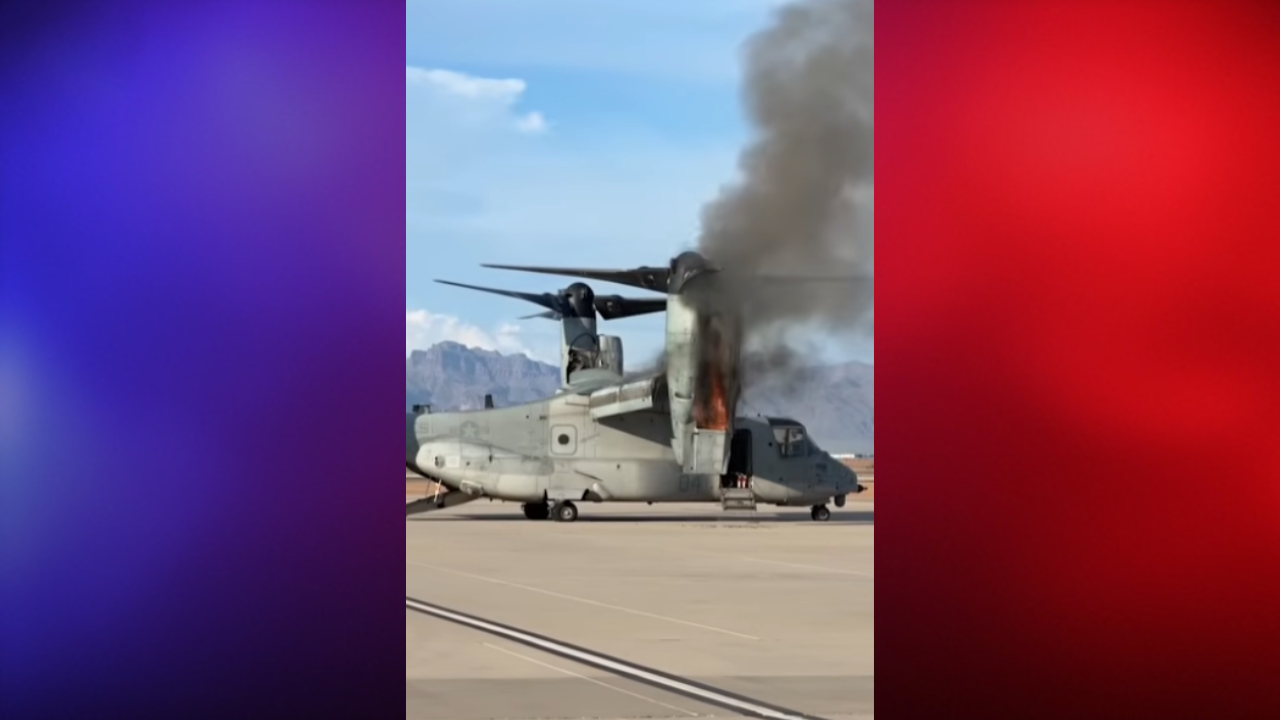
Sunday didn’t go quite as planned for one Marine Corps aircrew in Mesa, Arizona. A Marine Corps MV-22B Osprey, the tiltrotor aircraft that famously takes off like a helicopter and cruises like an airplane, caught fire on the ground at Mesa Gateway Airport during a joint Air Force training exercise. The good news right up front: everyone walked away.
The aircraft belonged to Marine Medium Tiltrotor Squadron-266, based out of Marine Corps Air Station New River in North Carolina, and it was in Arizona supporting Exercise Savage Jackal, an Air Force-led training event based at Davis-Monthan Air Force Base in Tucson. According to Marine Corps officials, the fire broke out in the right nacelle, which is the housing that covers the right engine and its related components.
The pilot and air crew handled it about as well as you’d hope anyone would in that situation, reported Military Times. They ran an emergency shutdown, got out, and nobody was hurt. A video posted to Instagram by a local Arizona pilot captured the aftermath, showing the right engine housing wrapped in flames while airport firefighters moved in with foam retardant to knock it down.
The Osprey has always been a bit of a lightning rod in aviation circles, part marvel of engineering and part cautionary tale, and this incident is sure to reignite that conversation. But for now, what we actually know is limited: a fire happened, it was contained, and everyone made it out fine. Investigators are still working to figure out the cause.
What Investigators Are Looking Into
View this post on Instagram
Maj. Joe Leitner, director of communication strategy and operations for the 2nd Aircraft Wing, confirmed a mishap investigation is underway. He hasn’t released an estimate of the damage or what repairs might cost. That’s pretty standard early on.
Nobody wants to guess at a cause before the folks who actually take the engine apart have had a look.
The Osprey’s Complicated Track Record
It’s no secret the V-22 platform has had a rough road. Since 2000, Osprey-related incidents have contributed to the deaths of 65 service members, and the entire fleet was grounded back in December 2023 after an Air Force CV-22B crashed off the coast of Japan, killing eight airmen. That crash was ultimately traced to a failed left-hand prop rotor gearbox, following an earlier 2022 mishap linked to a sprag clutch, the component responsible for keeping both rotors spinning in sync.
Coincidentally, Sunday’s fire happened roughly 65 miles from the site of the Marine Corps’ deadliest Osprey accident, a 2000 night training exercise near Tucson that claimed 19 Marines. That crash was later attributed to pilot error during a steep descent, though a follow-up investigation cleared the pilots of wrongdoing.
Production Winding Down
Despite the headlines, the Osprey isn’t going anywhere just yet. The Department of Defense has purchased 469 of these aircraft across the Marine Corps, Navy, and Air Force, and the production line isn’t slated to close until fiscal year 2028. Marine Corps MV-22s were also part of the massive July 4th military flyover in Washington, D.C. this year, though officials confirmed the aircraft involved in Sunday’s fire wasn’t among them.
For now, this one gets filed under “close call” rather than tragedy, and that’s a genuinely good outcome for everyone involved.